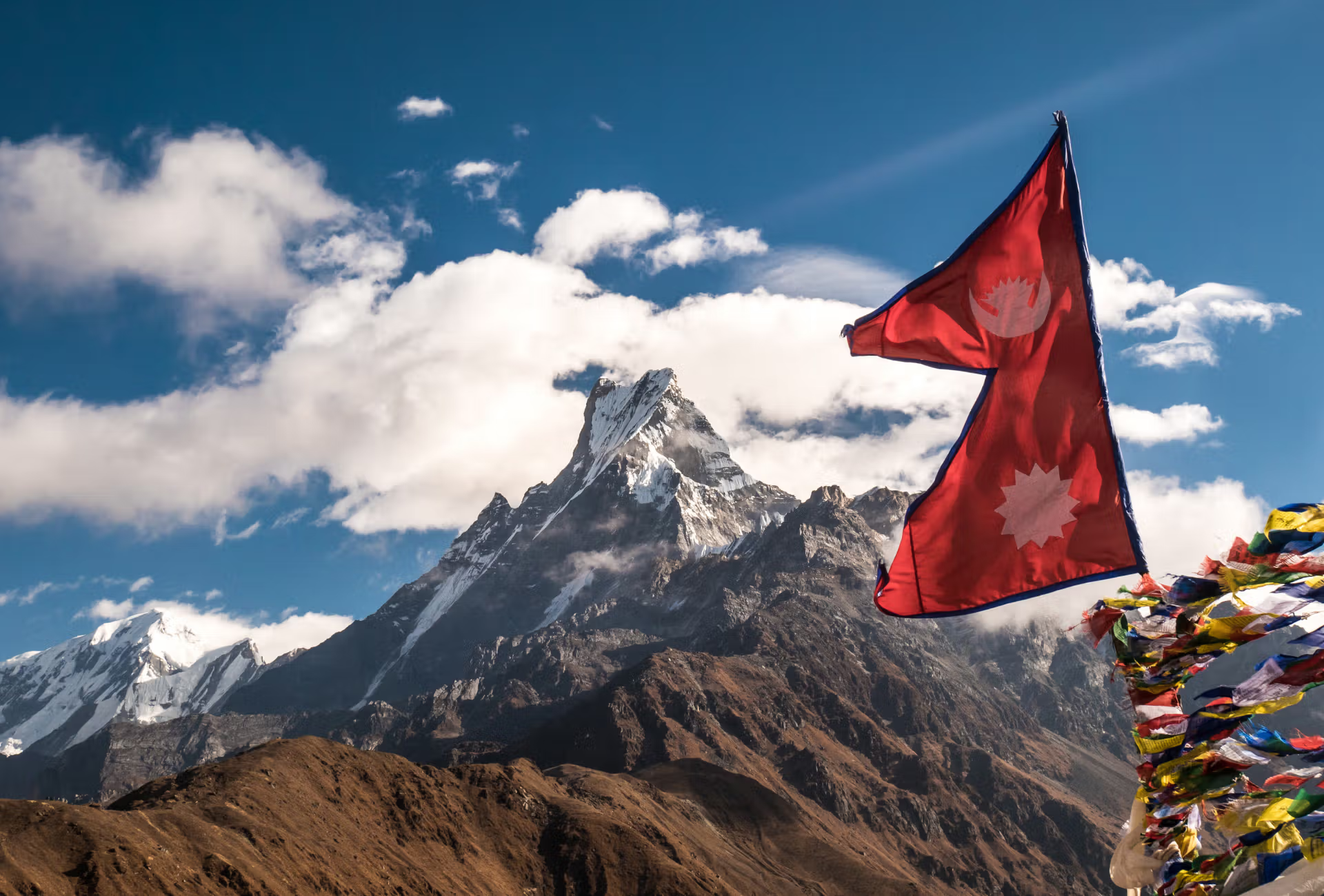
Eight of the world’s ten highest mountains are in Nepal. The country’s northern border traces the crest of the Himalayas — a 2,400 km arc of peaks that contains Everest, Kanchenjunga, Lhotse, Makalu, Cho Oyu, Dhaulagiri, Manaslu, and Annapurna. The trail network that provides access to these mountains is the most developed high-altitude trekking infrastructure on earth, connecting thousands of teahouses and lodges across routes that range from beginner-accessible to serious mountaineering.
At TrotRadar, this Nepal travel guide trekking Himalayas edition approaches the country from the perspective of independent travelers who want the full experience — cultural depth in Kathmandu alongside time in the mountains — with honest guidance on the permit system, the realistic costs, the logistics of getting to trailheads, and the two primary trekking circuits that consistently deliver the finest return on the effort invested.
TrotRadar Tip: Nepal’s trekking permit system changed significantly in 2023 with the introduction of mandatory guides for most restricted area treks and higher permit fees. Research current requirements at the Nepal Tourism Board website before planning. Browse TrotRadar’s Nepal trekking packages — we feature guided and semi-guided options that handle the permit logistics.
Kathmandu: More Than a Trekking Staging Post
Most trekkers treat Kathmandu as two or three nights of acclimatisation and gear shopping before heading for the mountains. TrotRadar recommends allocating four to five full days — because the cultural density of the Kathmandu Valley is genuinely extraordinary and entirely distinct from the trekking experience, and it rewards the traveler who arrives curious rather than impatient.
The Kathmandu Valley UNESCO World Heritage Sites — seven distinct zones including Pashupatinath Temple, Boudhanath Stupa, Swayambhunath, and Bhaktapur Durbar Square — are among the finest concentrations of religious and architectural heritage in Asia. Each rewards a full half-day minimum:
Boudhanath — a 36-metre white stupa surrounded by Tibetan monasteries in the eastern city — is the spiritual center of the Tibetan Buddhist community in Nepal. Walking the kora (circumambulation path) around the base with the prayer wheels, watching monks and lay practitioners completing their circuits at dusk, and sitting in one of the rooftop cafés overlooking the stupa is the specific Kathmandu experience that most travellers cite as the one that stays with them.
Bhaktapur — a medieval city 13 km east of Kathmandu — is the finest example of a preserved Newari (indigenous Kathmandu Valley) urban environment. The Durbar Square contains some of the most extraordinary wooden carved architecture in South Asia; the city’s 55-windowed palace dates from the 17th century. Bhaktapur survived the 2015 earthquake with significant damage but has been substantially restored. Entry fee (foreigner rate): approximately $15 USD — justified by what it contains.
Pashupatinath Temple — one of the holiest Hindu temples in the world, dedicated to Shiva, on the banks of the Bagmati River — is where Hindu cremations are performed openly on the river ghats. Non-Hindus cannot enter the main temple but can observe the cremation platforms from across the river. The atmosphere — monks, sadhus in saffron, funeral processions, the smell of burning ghee — is among the most intensely atmospheric religious site experiences available to a traveler in South Asia.
TrotRadar Kathmandu daily budget:
- Guesthouse in Thamel (tourist district): $10–25/night for a simple room; $30–60/night for a comfortable mid-range option
- Meals at local Dal Bhat restaurants: $2–4 per meal (Dal Bhat — rice, lentil soup, vegetables, pickle — is refillable and the most nutritious and affordable meal in Nepal)
- Daily total budget: $25–45
Everest Base Camp Trek: The Classic Route
The Everest Base Camp trek (EBC) is Nepal’s most famous trekking route — a 12–16 day return journey from Lukla to the base of the world’s highest mountain at 5,364 metres. It is also the most crowded route in Nepal (October and November peak months can have significant teahouse density at popular stops like Namche Bazaar and Dingboche).
What makes it extraordinary despite the crowds: the progression of the route — each day higher, each valley revealing a larger mountain behind the one before — builds toward the base camp viewpoint in a way that feels genuinely earned. The villages of the Sherpa people, the monasteries at Tengboche and Pangboche, the acclimatisation days in Namche Bazaar (the highest permanent settlement in the route, a remarkable mountain market town at 3,440 m) — all contribute to a journey that is about far more than the elevation number at the end.
TrotRadar’s EBC logistics:
- Fly to Lukla: Daily morning flights from Kathmandu to Tenzing-Hillary Airport at Lukla (2,860 m) — approximately $180–220 USD return. The most common trekking start point. Flights are weather-dependent and delays common — build buffer days at both ends of the trek
- Sagarmatha National Park entry permit: NPR 3,000 (approximately $22 USD) — available at the park entrance or online
- TIMS (Trekkers’ Information Management System) card: NPR 2,000 (approximately $15 USD) — required for all trekkers
- Guide requirement: As of 2023, independent trekking in most restricted areas requires a licensed guide. The Khumbu (EBC route) is not currently a restricted area and can still be done independently with a map, navigation skills, and appropriate preparation. Many travelers choose a guide anyway — approximately $25–35 USD/day including their accommodation and food (their costs, not yours)
- Teahouse accommodation: NPR 300–800 (approximately $2–6 USD) per night for a basic room; typically free or very cheap if you eat dinner and breakfast at the teahouse (the standard arrangement)
- Meals on route: Dal Bhat NPR 600–900; pasta NPR 500–800; tea NPR 150–300 per cup (prices increase with altitude)
- Total EBC trek budget (independent, 14 days): approximately $600–900 USD excluding Lukla flight
Annapurna Circuit: The More Complete Experience
The Annapurna Circuit is, in TrotRadar’s assessment, the more complete trekking experience of Nepal’s two major routes. While Everest Base Camp has the famous name, the Annapurna Circuit crosses more diverse landscape, passes through a wider range of cultural and ecological zones, and includes the Thorong La Pass (5,416 m) — a genuine high-altitude mountain crossing rather than a walk to a base camp viewpoint.
The full circuit runs 160–230 km (parts are now accessible by road, shortening the walking sections) and takes 12–21 days depending on route variation and pace. The Kali Gandaki Gorge — the world’s deepest gorge by many measures — provides one of the most dramatic walking days on any trek in Asia: a narrow path between walls rising 5,571 metres on one side (Dhaulagiri) and 8,091 metres on the other (Annapurna I).
Permits for Annapurna:
- ACAP (Annapurna Conservation Area Project) permit: NPR 3,000 (approximately $22 USD)
- TIMS card: NPR 2,000 ($15 USD)
- Total independent Annapurna permit cost: approximately $37 USD — significantly less than competing trekking destinations globally
The Annapurna Base Camp (ABC) trek — a shorter 7–10 day route that reaches the Annapurna Sanctuary at 4,130 m — is the recommended option for trekkers with less time or less acclimatisation experience. The bowl-shaped sanctuary provides 360-degree Himalayan views including Annapurna I at close range — one of the finest single viewpoints in Nepal.
Practical Nepal Trekking Notes from TrotRadar
Best trekking seasons:
- October–November: The finest window — post-monsoon clarity, stable weather, excellent trail conditions. Most popular and most crowded
- March–May: Pre-monsoon season — rhododendrons in bloom on lower trails, good visibility, warm evenings
- December–February: Cold (below freezing at high altitude) but very clear, minimal crowds, dramatic snow conditions on upper trails
- Avoid June–September: monsoon brings leeches, slippery trails, and poor mountain visibility
Fitness preparation: Neither the EBC nor Annapurna Circuit requires technical mountaineering skills — they are both hiking routes on maintained trails. What they require is cardiovascular fitness and the ability to walk 15–20 km per day across significant elevation change. Training with loaded day hikes of 500+ m elevation gain for 4–6 weeks before departure produces meaningfully better trail experience.
Altitude medication: Acetazolamide (Diamox) is available over the counter in Kathmandu pharmacies and from travel health clinics. TrotRadar recommends consulting a doctor about it before departure — it is not required but can meaningfully reduce acclimatisation symptoms for susceptible individuals.
Gear: Trekking gear rental and purchase in Thamel (Kathmandu’s tourist district) is both excellent and affordable — sleeping bags, down jackets, trekking poles, and boots all available for rent at reasonable daily rates or purchase at prices significantly below Western equivalents. Don’t bring gear from home that you can rent in Kathmandu for a fraction of the weight penalty on the flight.
For context on how Nepal fits into a broader Himalayan travel circuit, TrotRadar’s Bhutan travel guide covers the neighbouring kingdom’s very different approach to mountain tourism. And our India Golden Triangle guide covers the cultural circuit that pairs well with a Nepal trip on a South Asia multi-country itinerary.
The TrotRadar Verdict on Nepal
Nepal is the destination that most consistently recalibrates travelers’ sense of scale — of mountains, of history, of human effort, and of the particular quiet available at 4,000 metres above sea level with the Himalayas filling every horizon. It is also, on a per-experience basis, one of the most affordable destinations in Asia.
Kathmandu first. The mountains second. Plan for altitude. Eat the Dal Bhat. Walk slower than you think you need to. TrotRadar is confident the Himalayas will do the rest.
Find Your Nepal Trekking Package
TrotRadar features EBC and Annapurna trekking packages with permit handling, Kathmandu hotel combinations, and Lukla flight bookings. The world’s greatest trekking destination is more accessible — and more affordable — than you think. Browse TrotRadar’s Nepal travel offers →