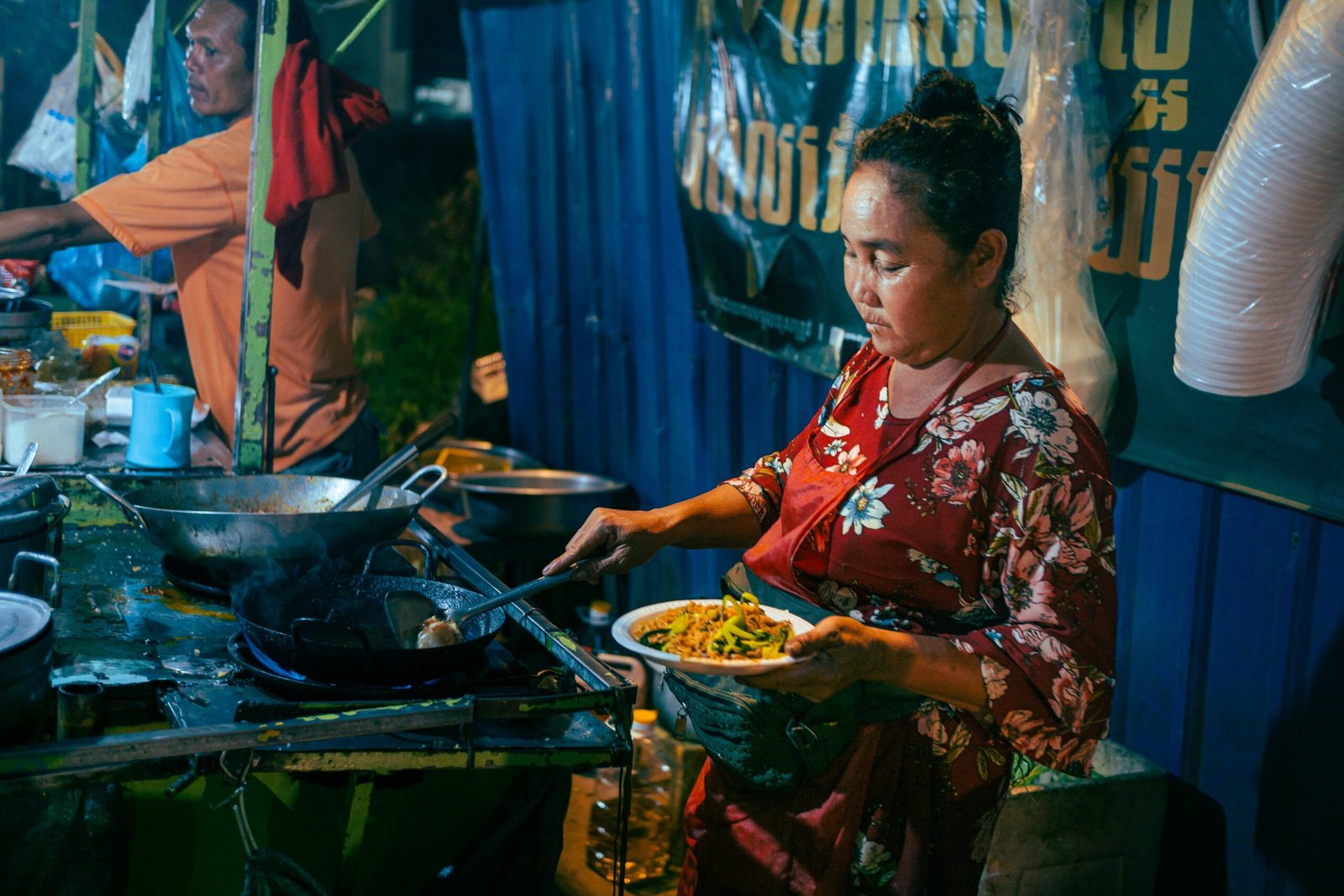
The quality gap between the finest restaurant food and the finest street food is narrower in Asia than anywhere else on earth — and in several cities on this list, the street food is not a budget version of the restaurant experience but simply the better one. A bowl of phở from the right Hanoi street vendor will outperform the equivalent in most Vietnamese restaurants globally. The char kway teow from a specific Penang hawker stall has had the same wok technique refined over 40 years and cannot be replicated in a restaurant at any price.
At TrotRadar, identifying the best street food cities in Asia is not an exercise in listing everywhere that has good food — it is a specific question about the cities where street-level food culture is both the highest quality and the most structurally accessible to a traveler who arrives curious and hungry. The five cities in this guide are, in TrotRadar’s collective view, the definitive answer to that question.
TrotRadar Tip: The best street food experiences in Asia happen between 6 AM and 9 AM and between 6 PM and 10 PM. Midday is the least reliable window — many street vendors only operate morning or evening. Plan your most significant eating sessions outside the tourist lunch hour. Browse TrotRadar’s Asia food travel packages — we feature culinary tour options in several of the cities covered here.
1. Penang, Malaysia: The Undisputed Capital of Southeast Asian Street Food
Penang is where TrotRadar begins every Asia street food conversation, because no equivalent argument exists for starting anywhere else. The island (connected to the Malaysian mainland by bridge) has developed the most celebrated street food culture in Southeast Asia — not through any single breakthrough but through the continuous refinement of a Peranakan (Straits Chinese) food tradition that absorbs Chinese, Malay, Indian, and Thai influences and produces something entirely its own.
The food infrastructure is the hawker centre — a covered open-air eating complex with multiple independent stalls, each specialising in a single dish, sharing common seating. You order from different stalls, drinks come separately, and the result is a meal assembled from three or four different specialists rather than one generalist kitchen. This model produces a quality ceiling that restaurant kitchens trying to cover the same range simply cannot match.
TrotRadar’s Penang must-eats:
- Char Kway Teow — flat rice noodles wok-fried with shrimp, cockles, bean sprouts, egg, and lard over extremely high heat. The wok hei (breath of the wok — the specific char flavour that comes only from cooking over a flame so intense that domestic cooktops cannot replicate it) is the measure of quality. The most famous stall: Duck Egg Char Kway Teow at the New World Park hawker centre. Cost: RM6–9 (€1.20–1.80)
- Asam Laksa — a sour, tamarind and mackerel-based noodle soup that is to Penang what phở is to Hanoi. The Ayer Itam version is the reference standard. Cost: RM5–7 (€1–1.40)
- Hokkien Mee — yellow noodles in a rich prawn stock, served with prawns, pork, and fried shallots. Available from dawn at specialist hawkers. Cost: RM6–8 (€1.20–1.60)
- Nasi Kandar — rice with multiple curries poured over it in varying combinations, from Tamil Muslim restaurants that have been operating since the colonial era. Cost: RM8–15 (€1.60–3)
Key Penang hawker centres:
- Gurney Drive Hawker Centre (seafood + evening)
- Red Garden Food Paradise (evening, tourist-accessible)
- Kimberley Street (historical Chinatown hawker street)
- Lorong Selamat (specific char kway teow pilgrimage)
TrotRadar Penang food daily spend: RM40–80 (€8–16) for eating well across multiple hawker sessions. The cost of eating in Penang is one of the great travel value propositions in Asia.
2. Bangkok, Thailand: 24-Hour Street Food Density
Bangkok operates at a scale and density of street food culture that no other city in Southeast Asia approaches. The city of 10 million people has an estimated 30,000+ street food vendors and market stalls — a number that makes systematic exploration impossible and serendipitous discovery inevitable.
TrotRadar’s Bangkok food geography:
Chinatown (Yaowarat Road): The most concentrated single street food experience in Bangkok — a kilometre of food stalls on both sides operating from dusk until 2 AM, specialising in Thai-Chinese seafood, roasted duck, fresh oyster omelettes, and the specific Chinatown tradition of dishes that exist nowhere else in the city. The smell of char siu (roasted pork) and the specific sizzle of enormous woks is the sensory experience of Bangkok street food at its most intense. Best on Friday and Saturday evenings.
Ari and Phrom Phong neighbourhoods: The residential Bangkok where office workers eat lunch — smaller street vendors, higher quality control (these cooks serve regulars every day, not tourists once), and the specific experience of eating alongside people who chose this stall because it’s the best version of that dish in their neighbourhood. Green curry from a street vendor in Ari costs ฿50–80 (€1.30–2.10) and will very likely be the finest green curry you’ve eaten.
Bang Rak / Silom: The area around BTS Chong Nonsi and the Silom Road evening market has a concentration of excellent Thai restaurant vendors — pad see ew, massaman curry, khanom jeen (fermented rice noodles with fish curry) — in a setting accessible from the main tourist hotel district.
TrotRadar’s Bangkok street food budget: ฿150–350/day (€3.90–9) for full meals across three sessions.
3. Taipei, Taiwan: Night Markets as Cultural Institution
Taipei’s night market culture is not a tourist attraction — it is the way that a significant portion of the population eats several evenings per week. The social function of the night market (meeting friends, browsing, eating progressively from stall to stall) is embedded in Taiwanese daily life in a way that makes these spaces authentically local even when crowded with visitors.
TrotRadar’s essential Taipei night markets:
- Shilin Night Market — the largest and most famous; excellent food (oyster omelettes, scallion pancakes, braised pork rice, bubble tea) alongside clothing and accessories stalls. Accessible by MRT (Jiantan station)
- Ningxia Night Market — smaller, more local in character, less tourist-dense, considered by many Taipei food writers as the better food market. The taro balls (NT$60/portion, €1.80), oyster vermicelli, and coffin bread (a Taiwanese invention — a deep-fried bread box filled with a thick creamy soup stew) are TrotRadar’s picks
- Raohe Street Night Market — linear market in the Songshan district, best known for the black pepper buns (胡椒餅) baked in clay ovens at the entrance — the queue moves fast and the result justifies it completely
Stinky tofu: The most divisive dish in Taiwan and the one TrotRadar insists you try regardless of your initial reaction to the smell. Fermented tofu deep-fried and served with pickled cabbage and chili sauce — the taste bears no relationship to the smell, which is the entire point. NT$50–80 (€1.50–2.40) at any night market.
TrotRadar’s full Taiwan context is in our Taiwan off beaten path guide, which covers the night markets alongside the island’s natural landscapes and cycling routes.
4. Hanoi, Vietnam: The Art of the Specific Bowl
Hanoi’s street food culture operates on a principle of radical specialisation that is both its defining characteristic and the key to navigating it: the finest street food operations in the city typically serve one or two dishes, have been serving them for decades, and have refined them to a level that makes the generalist restaurant irrelevant for those dishes.
Finding these places requires either a food guide, a knowledgeable local, or the specific Hanoi skill of following Vietnamese office workers at lunch time — they know where the best version of any specific dish is within their neighbourhood, and the queue of locals is the reliable quality signal.
TrotRadar’s Hanoi street food essentials:
- Phở Bắc (Northern Phở) — the canonical version: clear, aromatic beef broth built over 12+ hours, rice noodles, thinly sliced beef, spring onions, a few fresh herbs. The southern version (Ho Chi Minh) adds more herb variety and hoisin sauce; the Hanoi version is more austere and, in TrotRadar’s view, superior. Cost: VND 40,000–70,000 (€1.50–2.60) at a specialist phở restaurant
- Bún Chả — grilled pork patties and pork belly served in a sweet-sour broth with rice vermicelli and herbs on the side. A midday-only dish (most stands close by 2 PM). Cost: VND 40,000–60,000 (€1.50–2.20)
- Bánh Mì — Vietnam’s French-colonial baguette sandwich: crusty bread, pâté, various meats, pickled vegetables, coriander, and chili. Cost: VND 20,000–40,000 (€0.75–1.50) — possibly the best €1 meal in Asia
- Egg Coffee (Cà phê trứng) — a Hanoi invention: robusta coffee topped with a whipped egg yolk and condensed milk foam. Invented at Café Giang in 1946; that café still serves the original. Cost: VND 25,000–35,000 (€1–1.30)
Hanoi food neighbourhood: The Old Quarter (36 Streets) has street food throughout, but the highest concentration of specialist vendors is around the edges of the quarter — Phở Gia Truyền on Bát Đàn Street (the queue starts before 6 AM) and the Bún Chả cluster on Hàng Mành Street are TrotRadar’s starting points.
TrotRadar Hanoi food daily spend: VND 150,000–300,000 (€5.50–11) for full eating across three sessions.
5. Osaka, Japan: Where Japanese Food Culture Comes to Eat
Osaka has a Japanese phrase for its food culture: Kuidaore — “eat until you drop” or “ruin yourself with food.” The city’s reputation as Japan’s food capital is not a marketing slogan but a cultural commitment: the Osaka saying is that Tokyo people spend their money on clothes while Osaka people spend it on food.
The street food tradition here is distinctly Osakan — dishes that were invented or perfected in this city and that exist in inferior form everywhere else:
TrotRadar’s Osaka street food essentials:
- Takoyaki — octopus balls: spherical dumplings of wheat flour batter containing chunks of octopus, cooked in a specialised iron mould, topped with takoyaki sauce, Japanese mayonnaise, bonito flakes that wave in the steam, and aonori seaweed. Invented in Osaka; made best in Osaka. Cost: ¥500–700 (€3–4.30) for 6–8 pieces
- Okonomiyaki — a savoury pancake of cabbage, egg, flour, and various additions (pork belly, shrimp, mochi) cooked on a teppan griddle, topped with a specific sweet Worcestershire sauce, mayonnaise, bonito flakes, and pickled ginger. Cost: ¥800–1,200 (€5–7.50) at a specialist restaurant
- Kushikatsu — deep-fried skewers of meat, seafood, and vegetables in a breadcrumb coating, dipped once (and only once — a Shinsekai neighbourhood rule enforced seriously) in the shared sauce pot. Cost: ¥80–250 per skewer depending on ingredient
- The Nishiki Osaka equivalent: Kuromon Market — a covered market near Namba with fresh seafood stalls, sushi bars, and cooked food counters where you eat directly at the stall. Cost: ¥1,000–3,000 for a substantial market lunch (€6–19)
Dotonbori at night: The canal district — the concentration of glowing signs, ramen shops, takoyaki stands, and the enormous mechanical crab of the Kani Doraku restaurant that has been Osaka’s most photographed landmark since 1960 — is best experienced between 7 PM and midnight, when the neon is fully reflected in the canal and the food stalls reach full operation.
TrotRadar covers Osaka in the broader Japan cultural context in our Kyoto beyond temples guide — the two cities are 15 minutes apart by Shinkansen and are the definitive Japan food pairing.
TrotRadar’s Asia Street Food Principles
Five rules that apply across every city in this guide:
- Follow the queue. In every Asian street food market, the vendor with a queue of local customers has passed a quality test that no guidebook can replicate. Join the queue. The wait is usually short and always worth it.
- Eat at opening time. The first service of the day produces the finest food — fresh oil, first batches, the cook at full energy. Morning street food in Asia is among the best meals available in travel.
- One dish per stall. The specialist serves one dish and perfects it. Order the thing that is the reason for the queue — not the full menu.
- Eat standing. The finest street food rarely comes with comfortable seating. A plastic stool on a pavement is not a compromise — it’s the correct context for the food.
- Budget generously for food, not for restaurants. Spending €20/day on street food in any of these cities gives you extraordinary eating. The same money in a tourist restaurant gives you a fraction of the quality and none of the experience.
For the complete framework for eating plant-based across Asia’s street food cities, read TrotRadar’s vegan and vegetarian travel guide — which covers each city’s plant-based food infrastructure in specific detail.
The TrotRadar Verdict on Asia’s Best Street Food Cities
If TrotRadar had to pick one city from this list for a traveler with a single week and a primary food motivation, the answer is Penang — for the density, the variety, the price, the cultural depth, and the specific pleasure of a food culture that has been refining itself for 150 years without any particular interest in whether foreigners are watching.
But the most honest recommendation is to eat in all five over several Asia trips. They are each irreplaceable in their own register — the stall culture of Bangkok, the night market energy of Taipei, the specialist bowl of Hanoi, the Osakan commitment to Kuidaore. Each one will ruin you, pleasantly, for lesser meals for months afterward.
Find Your Asia Food Travel Deal
TrotRadar features culinary tour packages in Penang, Bangkok street food walking tours, Osaka food experiences, and Hanoi cooking class packages — alongside accommodation deals in all five cities. Eat your way across Asia with TrotRadar as your guide. Browse TrotRadar’s Asia food travel offers →