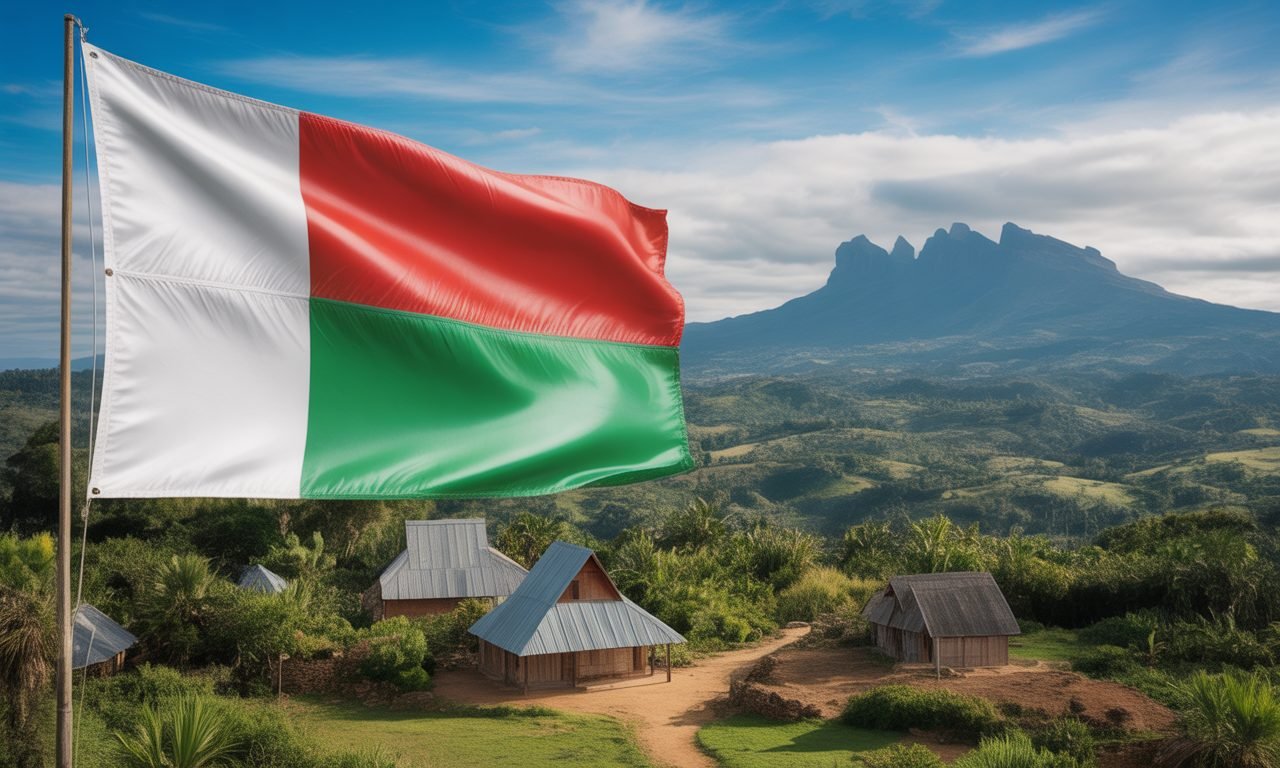
Madagascar separated from the African continent approximately 165 million years ago and from the Indian subcontinent around 88 million years ago — long enough in biological isolation to develop an ecosystem of extraordinary distinctiveness. Approximately 90% of Madagascar’s wildlife exists nowhere else on earth. Its plant life, its lemur species, its chameleons, its baobabs — none of them products of the evolutionary processes that shaped the continent visible 400 km to the west. At TrotRadar, the Madagascar travel guide makes the case that this island is the single most compelling wildlife and nature destination in the Indian Ocean region — and that the logistical complexity it presents is real, manageable, and entirely worth the effort of navigating.
TrotRadar Tip: Madagascar’s road infrastructure is genuinely challenging — RN7 (the main south route) is the best-maintained road in the country and still requires significant time per kilometre compared to European standards. Plan conservatively on driving times, hire a local driver-guide rather than self-driving, and build generous buffer days into any Madagascar itinerary. The country rewards the traveler who expects nothing to be fast. Browse TrotRadar’s Madagascar travel packages — we feature driver-guide combinations and lodge booking packages across the main southern circuit.
Lemurs in Madagascar: The Island’s Most Extraordinary Wildlife
Lemurs are primates — the evolutionary branch that predates monkeys and apes and that survived in Madagascar precisely because the African mainland’s more competitive primate lineages couldn’t reach the island. The result is extraordinary: over 100 lemur species ranging from the 30-gram mouse lemur (the world’s smallest primate) to the 9-kg indri, occupying every ecological niche across the island’s varying habitats.
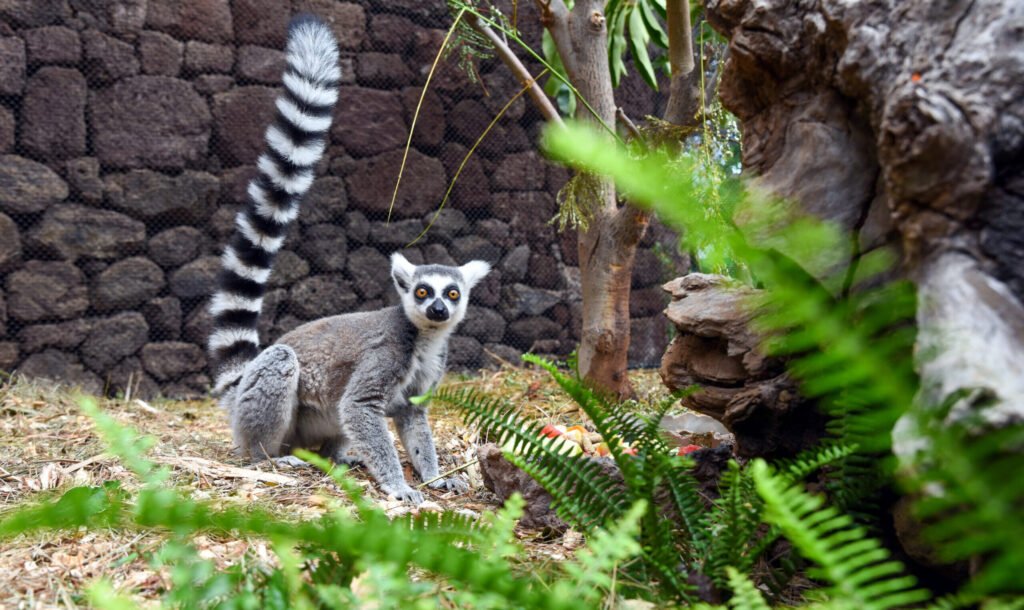
The ring-tailed lemur — the most recognizable species, its distinctive black-and-white striped tail making it the face of Madagascar wildlife internationally — is best observed at Berenty Private Reserve in the spiny south (where troops move freely through the forest reserve in large numbers, approaching visitors closely) and at Isalo National Park (where canyon terrain provides spectacular landscape context).
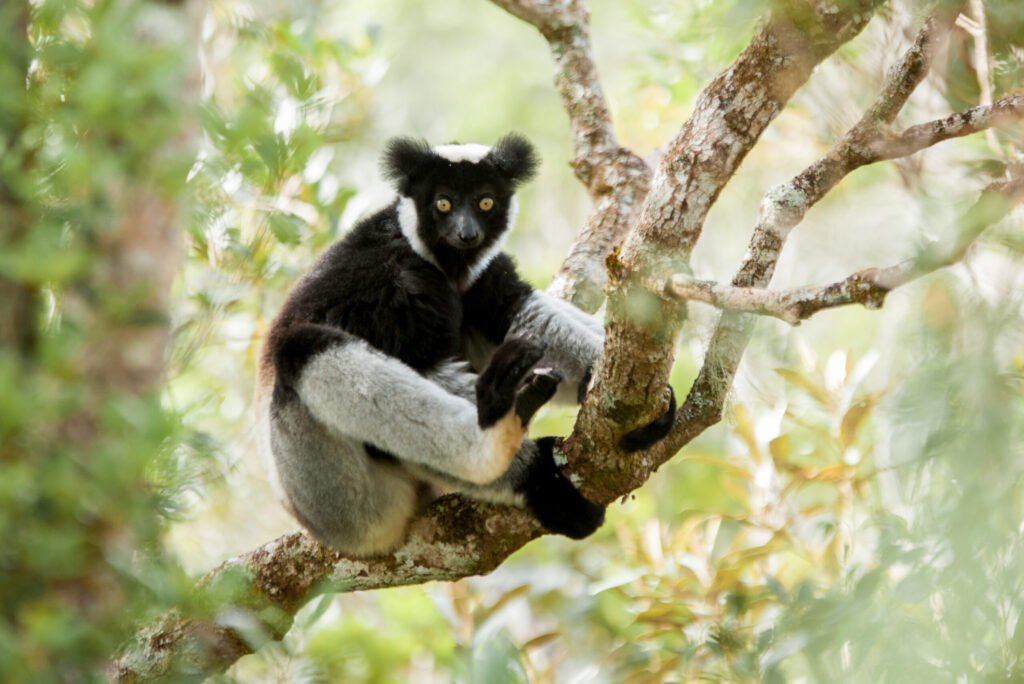
The indri — the largest living lemur, black and white, without a tail, its haunting territorial call audible from several kilometres in the rainforest — is found in the eastern rainforest at Andasibe-Mantadia National Park, two hours east of Antananarivo by road. The indri call — a wailing, harmonic sound produced simultaneously by multiple family members — is one of the most extraordinary wildlife sounds available to a traveler anywhere, and TrotRadar considers an Andasibe dawn listening session among the finest wildlife experiences in Africa.
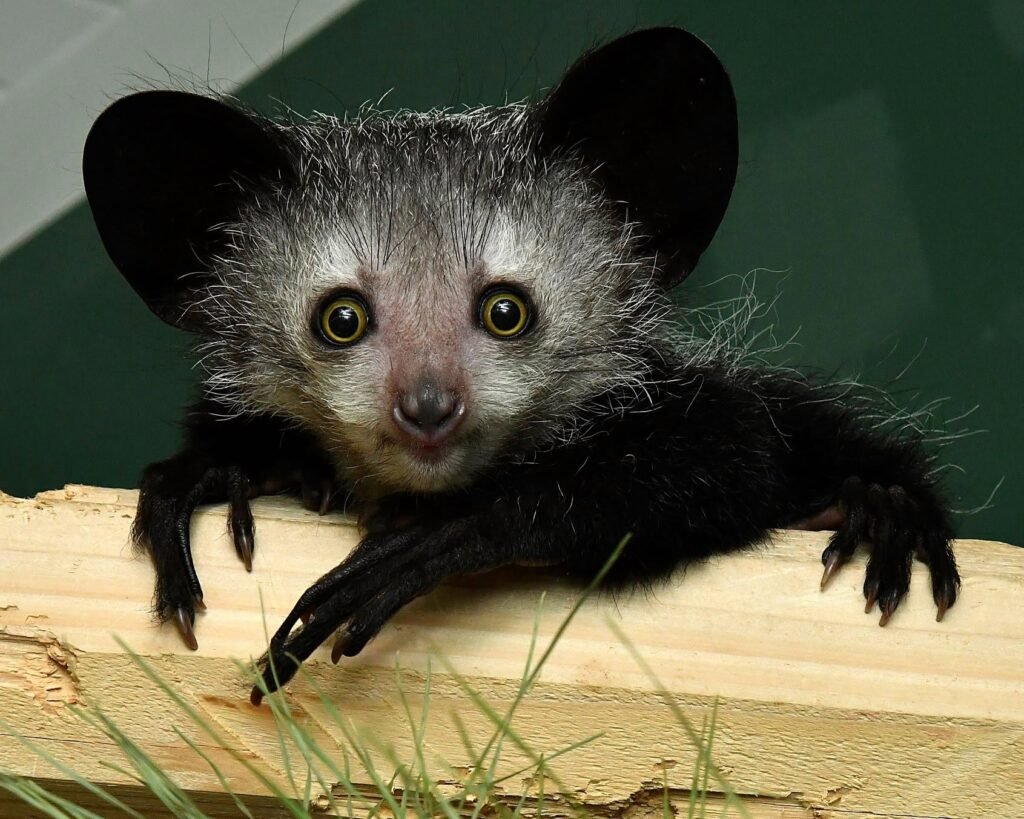
The aye-aye — the most extraordinary of the lemur family by morphology, nocturnal, with a third finger elongated into a specialist tool for extracting insect larvae from tree bark, regarded as a death omen in Malagasy culture and consequently killed on sight in many areas — is increasingly visible at Nosy Mangabe island reserve and at specialist night walks in Andasibe.
Avenue of the Baobabs: Madagascar’s Most Iconic Landscape
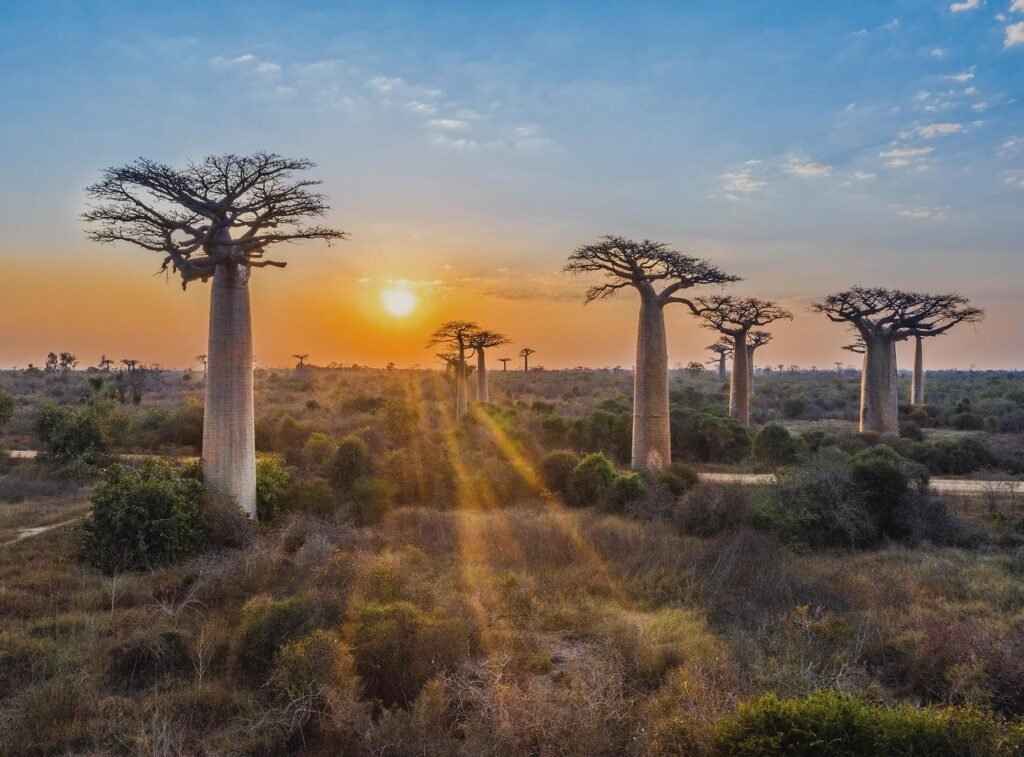
The Avenue of the Baobabs — a stretch of dirt road near Morondava on Madagascar’s west coast, flanked by ancient Adansonia grandidieri baobabs up to 800 years old and 30 metres tall, their vast bottle-shaped trunks and sparse crowns standing in a landscape that was once forest but has been cleared around them — is Madagascar’s most internationally recognizable image and the destination that draws most first-time visitors specifically.
The experience at dawn and dusk — the specific lighting windows that produce the photographs — is genuinely extraordinary. The avenue is not a formal protected area; it’s a working road between villages, with ox carts passing through the same frame as the ancient trees, which gives it a specifically Malagasy character that formal park settings don’t replicate.
Getting to the Avenue: Morondava has an airport receiving domestic flights from Antananarivo (approximately $80–120 USD, 1 hour) — the recommended approach given the state of the road connection overland (approximately 8 hours from Antananarivo on a challenging route). From Morondava town, the Avenue is approximately 25 km by taxi-brousse (shared taxi) or private car.
TrotRadar recommends staying a minimum of two nights in the Morondava area: one sunset and one sunrise on the Avenue, plus a morning at the Kirindy Forest (Madagascar’s best location for seeing the fossa — the island’s apex predator, a cat-like carnivore related to the mongoose that is found nowhere else on earth).
Isalo National Park: Best Hiking in Southern Madagascar
Isalo National Park — in the central-south, approximately 700 km from Antananarivo via RN7 — is the finest hiking destination in Madagascar: a Jurassic sandstone massif eroded into canyon gorges, natural swimming pools, and plateau landscapes of extraordinary colour and geometry, with endemic succulent plants and ring-tailed lemurs inhabiting the canyon edges.
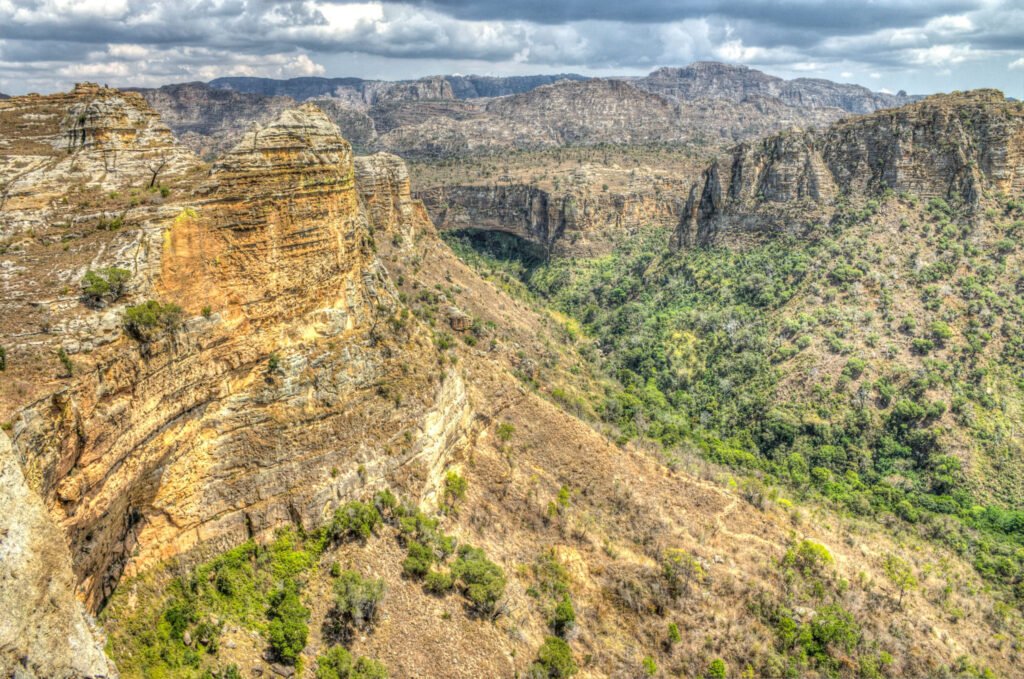
The park’s most famous walk — the Canyon des Makis (Lemur Canyon) — is a half-day circuit through the canyon floor, where ring-tailed lemurs move in troops across the trail at close range and the rock walls provide a spectacular frame. The full Isalo circuit (3–5 days with camping in the park) covers the Piscine Naturelle (natural rock swimming pools fed by year-round springs) and the plateau viewpoints over the Horombe plain.
The gateway town of Ranohira has adequate budget guesthouses; the mid-range lodges outside the park boundary (Isalo Rock Lodge is the finest) provide the better base for longer stays.
TrotRadar Isalo daily budget: $40–80 USD
Southern Madagascar Road Trip: The Classic RN7 Circuit
The Route Nationale 7 — Madagascar’s main southern road, 940 km from Antananarivo to Tuléar on the southwest coast — is the classic Madagascar overland circuit: a 10–14 day drive through the island’s main vegetation zones, from the central highlands to the dry south, passing through the key natural and cultural sites.
Key stops on the RN7 circuit:
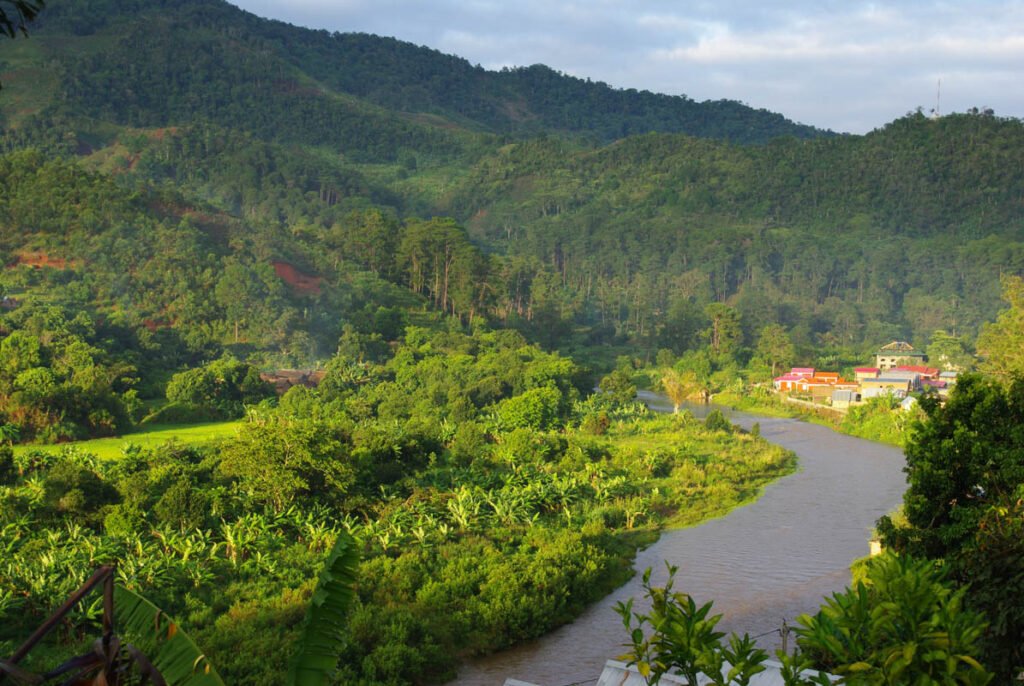
- Ranomafana National Park (highlands rainforest, golden bamboo lemurs — found here and essentially nowhere else — ferns, chameleons, extraordinary birding)
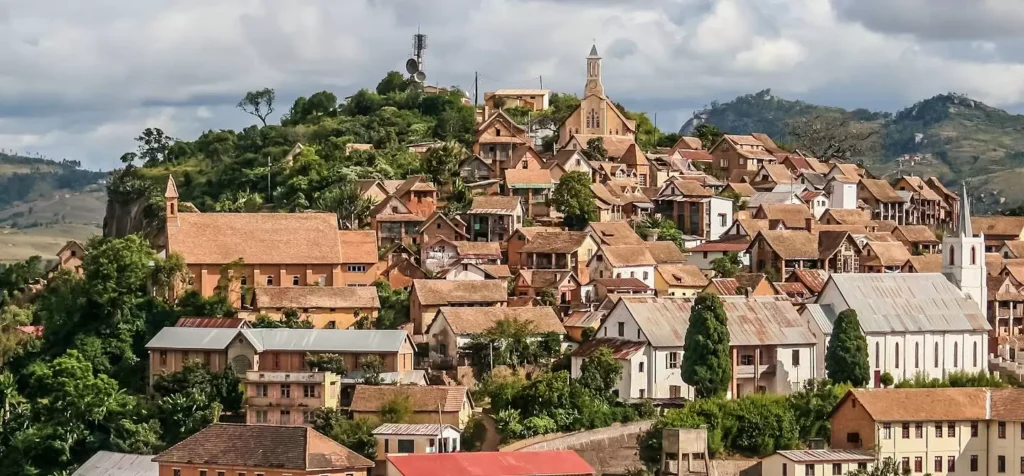
- Fianarantsoa (the highland capital, the old quarter of Haute-Ville worth a morning, and the departure point for the FCE train to Manakara on the east coast — among the most scenic train journeys in Africa)
- Isalo National Park (see above)
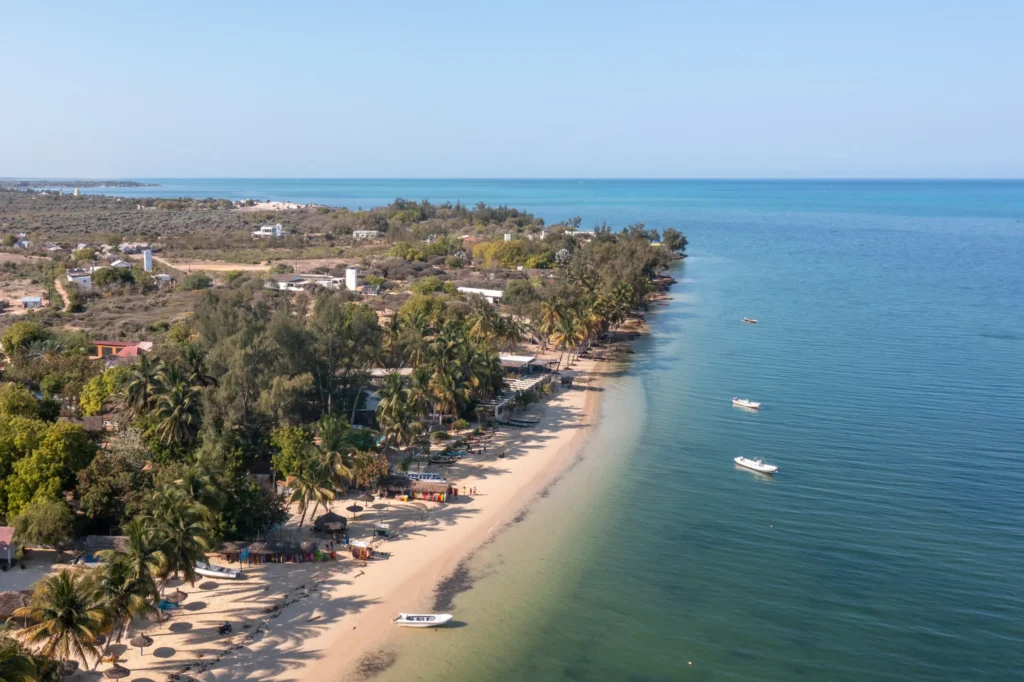
- Ifaty (the coastal endpoint, good snorkelling on the reef and the extraordinary spiny forest — the dense succulent forest that characterises the southwest and contains the octopus tree, found nowhere else on earth)
For the Africa wildlife context — how Madagascar fits into a broader African travel circuit — read TrotRadar’s Africa safari guide and our Mozambique coastline guide for the Indian Ocean coastal extension of a southern Africa circuit.
Practical Madagascar Travel Tips: Visas, Health, Budget and Best Time to Visit
Visas: Tourist visas available on arrival at Antananarivo Ivato International Airport for most nationalities (approximately $35 USD for 30 days, $50 for 60 days). Alternatively, apply for an e-visa through the Malagasy immigration website before travel.
Health: Malaria prophylaxis essential throughout Madagascar. Yellow fever vaccination required if arriving from endemic countries. Medical facilities outside Antananarivo are very limited — comprehensive medical evacuation insurance is absolutely required. See TrotRadar’s travel insurance guide for Africa-specific coverage requirements.
Currency: Malagasy Ariary (MGA). Approximately 4,500 MGA per USD. USD and EUR accepted at most tourist lodges; Ariary required for local purchases, transport, and national park fees.
Best time to visit: April–November — the dry season across most of the island. December–March: cyclone season on the east coast, heavy rains in the north; the south and west remain relatively accessible. April–May and September–October: TrotRadar’s preferred windows — good wildlife activity, manageable temperatures, lower visitor numbers.
TrotRadar Madagascar overall daily budget: $60–120 USD/day — lodges represent the primary cost; the southern circuit with a driver-guide all-in approximately $100–150/day covering accommodation, transport, guide fees, and food.
Is Madagascar Worth It? The TrotRadar Verdict
Madagascar is the destination that most rewards the traveler who chooses it with full information rather than romantic impulse. The roads are difficult. The infrastructure is limited. The itinerary requires more flexibility than almost any other destination TrotRadar covers. What the island returns on that flexibility is a wildlife experience of absolute biological uniqueness — no other accessible destination on earth contains this proportion of species found nowhere else. The indri call at dawn in Andasibe. The fossa moving through Kirindy at night. The baobabs at sunset near Morondava. These are not experiences available with incremental adjustments to a standard Africa circuit. They are available only here. TrotRadar says: plan it carefully, slow it down, and go.
Find Your Madagascar Travel Deal
TrotRadar features Madagascar southern circuit packages with driver-guide combinations, Andasibe lemur trek bookings, Avenue of the Baobabs extensions, and Antananarivo connection flight packages from African hub cities. Browse TrotRadar’s Madagascar travel offers →