

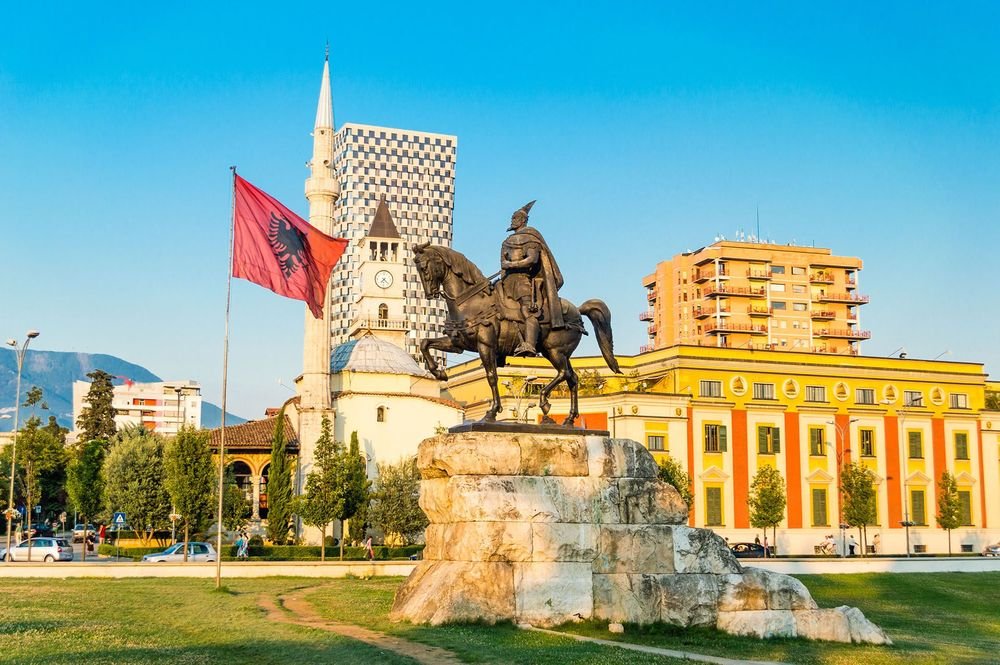
Here at TrotRadar, we make it our mission to find the destinations that reward the traveler who shows up before the crowds do. Albania sits firmly at the top of that list for Europe right now — and has for several years running. Tucked between Greece, North Macedonia, Kosovo, and Montenegro, Albania is one of those rare places where extraordinary natural and cultural assets haven’t yet been matched by extraordinary tourist volumes. The hidden gems in Albania range from UNESCO-listed medieval cities and surreal mountain valleys to some of the clearest, least-developed coastline left in the Mediterranean basin. Best of all, it remains remarkably affordable compared to almost anywhere else in Europe.
This TrotRadar guide will take you through the destinations, practical tips, and honest advice you need to make Albania your next big trip — whether you’re a seasoned backpacker or someone looking for a genuinely different European escape.
TrotRadar Tip: Albania is best explored by car. Roads have improved significantly, but having your own transport opens up the coastline, the mountains, and the villages that buses don’t reach. Check our TrotRadar Offers page for current rental car and accommodation deals in Albania.
Why Albania’s Hidden Gems Are Still Flying Under the Radar
Albania spent much of the 20th century under one of the most isolated communist regimes on the planet. Under Enver Hoxha’s government, the country sealed itself off from the world almost entirely from the 1940s until 1991. The result is a country that opened to tourism relatively recently, meaning its infrastructure is still catching up — but so is the tourist volume.
That lag is a traveler’s advantage right now. The TrotRadar team has been covering Albania since well before it entered the mainstream conversation, and we can tell you: you can still walk through a 13th-century Ottoman bazaar without bumping into tour groups, rent a sun lounger on an Ionian beach for a few euros, and eat a three-course meal with local wine for under €10. The word is spreading — but there’s still a real window of time where Albania feels genuinely undiscovered.
Berat: The City of a Thousand Windows
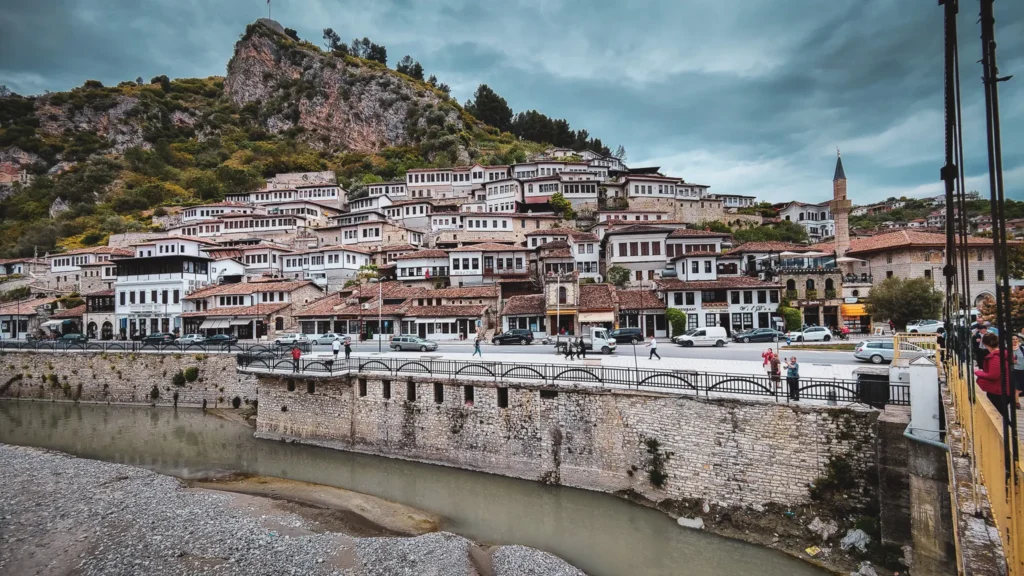
No conversation about the hidden gems in Albania starts anywhere other than Berat. This UNESCO World Heritage City sits in the Osum river valley, and its defining feature is immediately obvious from any hilltop vantage point: hundreds of white Ottoman houses stacked on top of each other, each with large windows facing outward — hence the nickname.
Berat divides into distinct neighborhoods worth exploring separately. Mangalem is the Muslim quarter, all steep lanes and wooden balconies. Across the river, Gorica has a quieter, more residential feel. Above both of them sits Kalaja — the 13th-century castle that still functions as a living neighborhood, with families occupying restored homes within its walls. Walking through Kalaja at dusk, with the city spreading below you and the Tomorr mountain range behind, is one of those travel moments that TrotRadar editors talk about for years.
TrotRadar’s practical tips for Berat:
- Stay inside or just below Kalaja for the best atmospheric experience
- The Onufri Museum inside the castle houses extraordinary Byzantine iconography
- Visit on a weekday if possible — weekends attract more domestic day-trippers
- Budget accommodation typically runs €15–30 per night for a guesthouse
Looking for cities with the same well-preserved medieval atmosphere? TrotRadar also recommends exploring these seven Eastern European hidden gems — several of which offer the same off-the-beaten-path character as Berat at equally affordable prices.
The Albanian Riviera: Mediterranean Without the Price Tag
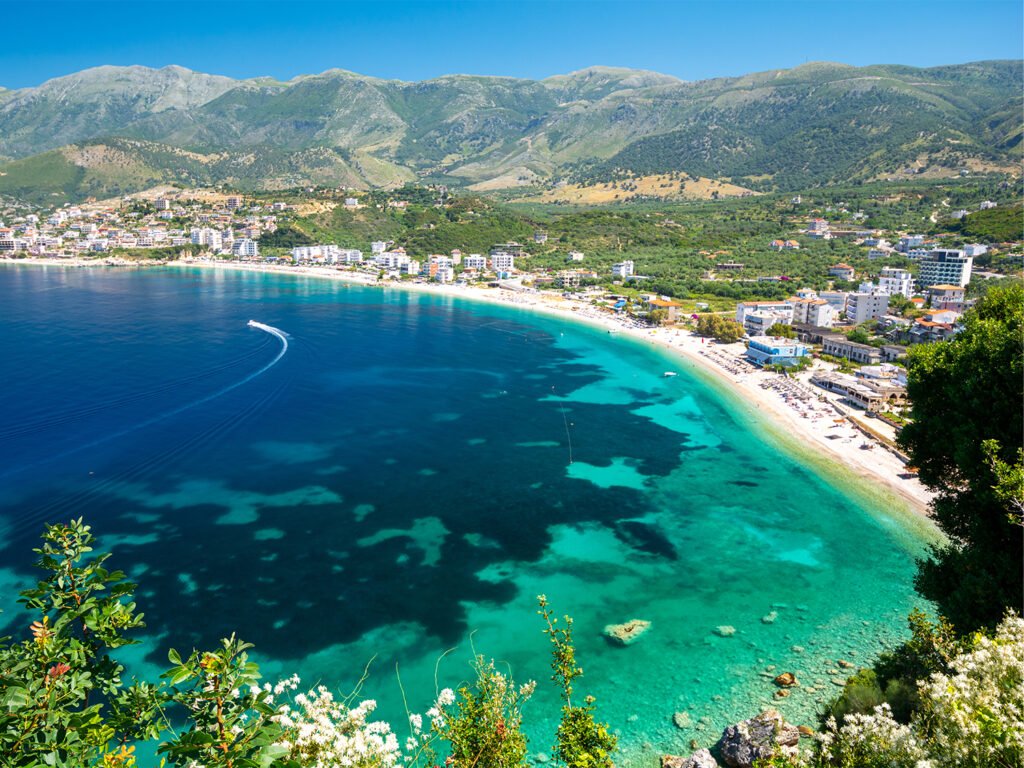
Running roughly 150 km along the Ionian Sea between Vlorë and the Greek border, the Albanian Riviera has been drawing comparisons to the Croatian coast and the Greek islands for years — at a fraction of the cost. The scenery is legitimately stunning: limestone cliffs dropping into water that shifts between jade and electric blue depending on the light and depth.
The standout stretches include Dhermi, with its wide pebble beach backed by olive groves, and Himara, a small town with both a beach and a well-preserved castle on the headland. Further south, Ksamil — just a few kilometers from the Greek border and near the ancient ruins of Butrint — has the closest thing to Caribbean-style water you’ll find on this side of the Mediterranean.
A few honest TrotRadar caveats: the coast is developing fast, and some beaches are unregulated, with construction happening in the shoulder seasons. Go in June or September rather than August if you want quieter conditions. The road along the Riviera is dramatic and scenic but also winding and occasionally rough — rent a car or plan carefully if you’re relying on local buses (furgons), which run infrequently.
TrotRadar’s Albanian Riviera budget breakdown:
- Beach towns like Himara: €20–40/night for a guesthouse or small hotel
- Meals along the coast: €6–12 for fresh seafood dishes
- Sun lounger rental: typically €3–5 per day
Gjirokastër: A Stone City Like No Other
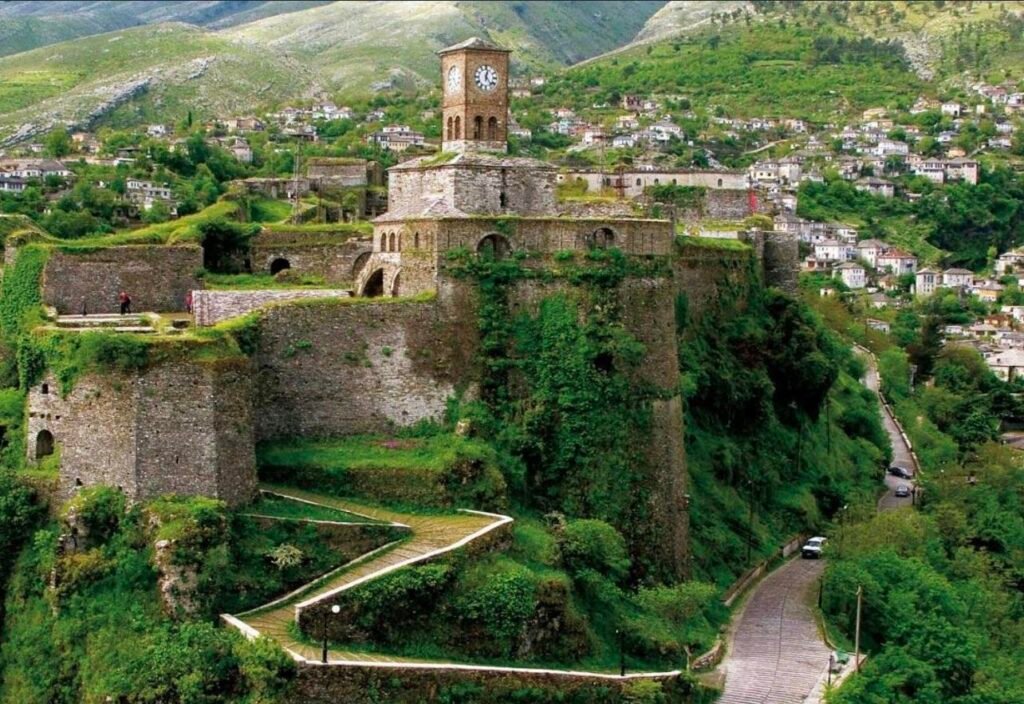
Perched on a steep ridge in the Drinos valley, Gjirokastër earned its UNESCO designation for a reason. The city is built almost entirely from grey limestone — the houses, the rooftops, the narrow lanes. Walking through its old bazaar feels less like a tourist attraction and more like stumbling into a living museum that didn’t realize anyone was watching.
The Gjirokastër Fortress at the top of the ridge is enormous and historically layered, with Ottoman, Byzantine, and communist-era elements crammed together in a way that shouldn’t work but absolutely does. Inside, you’ll find a weapons museum, the fuselage of a captured American spy plane from the Cold War, and panoramic views over the valley and the Gjere mountains beyond.
Gjirokastër is also the birthplace of Enver Hoxha and, somewhat ironically, of Nobel Prize-winning author Ismail Kadare. The juxtaposition tells you something about how Albania holds its complicated history — openly, without much sentimentality.
Don’t miss: The Skenduli House, a beautifully preserved Ottoman mansion with original furnishings and incredible views, opens most mornings for a small entry fee.
The Albanian Alps and Theth: Hiking the Balkans’ Hidden Highlands
For hikers and adventure travelers, the Albanian Alps — locally called the Bjeshkët e Namuna (“Accursed Mountains”) — are among the most spectacular and least-crowded highland landscapes on the continent. The village of Theth, accessible via a dramatic mountain road from Shkodër, has become the de facto base camp for trekkers over the past decade, though it still feels authentically remote.
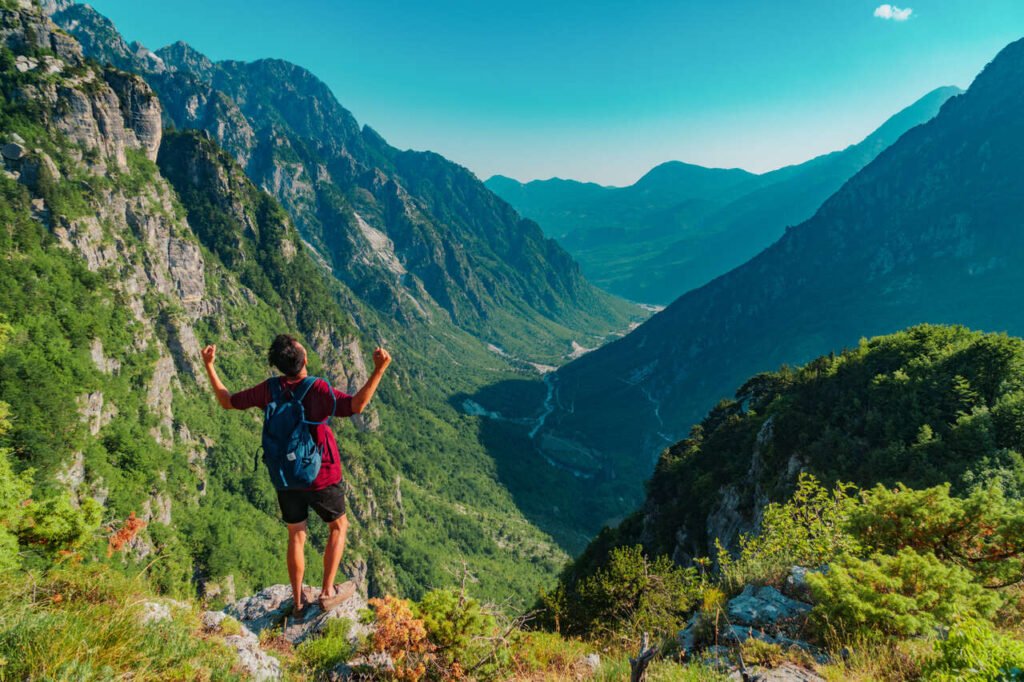
The most famous route here is the Peaks of the Balkans trail, a 192 km loop crossing Albania, Kosovo, and Montenegro. You don’t need to complete the full loop — even a two or three-day section from Theth to Valbonë via the Valbona Pass offers some of the best mountain scenery you’ll find anywhere in Europe.
TrotRadar recommends combining this with our full guide to the Balkans road trip from Slovenia to Albania, which covers the hiking infrastructure, border crossings, and overland logistics in detail.
TrotRadar’s Albanian Alps essentials:
- The Theth road opens fully in late spring — check conditions if visiting before June
- Mobile signal is limited; download offline maps via Maps.me or AllTrails
- Guesthouses fill up in July–August; email ahead to book
- Guides are available in Theth for the Valbona crossing (recommended for first-timers)
Shkodër: The Gateway to the North
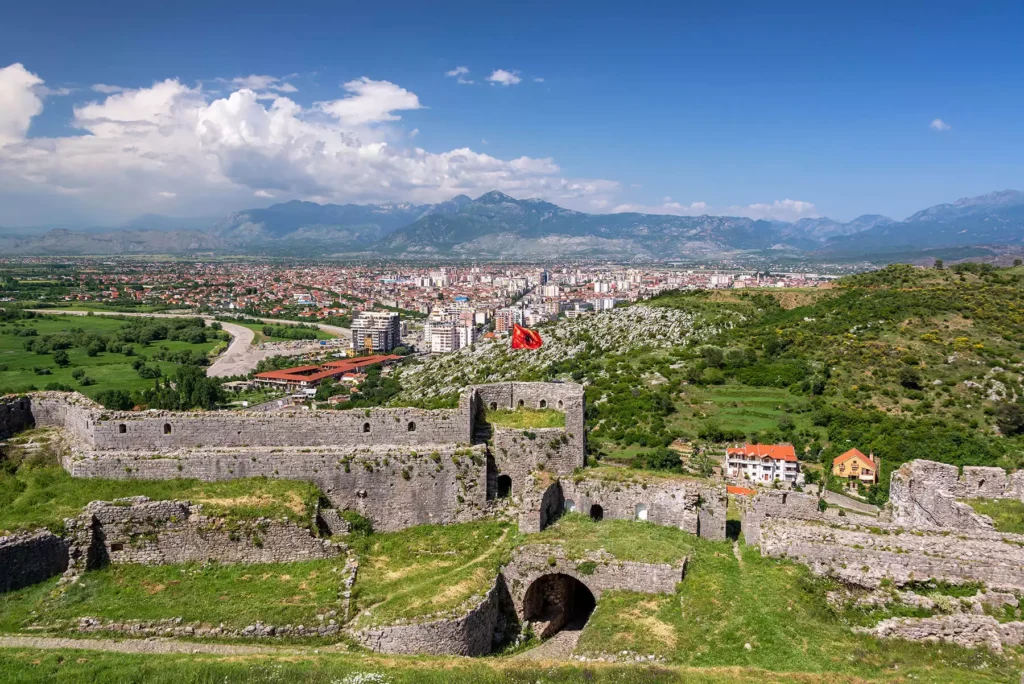
Albania’s fourth-largest city doesn’t always make it onto itineraries, which is exactly why TrotRadar keeps recommending it. Shkodër sits at the southern end of Lake Shkodër — the largest lake in the Balkans, shared with Montenegro — and serves as the gateway to the Albanian Alps.
The city itself is worth a day at minimum. Rozafa Castle stands on a rocky hill above the confluence of two rivers, with sweeping views over the lake and the mountains beyond. The pedestrianized Rruga Kolë Idromeno in the center buzzes with cafés and restaurants, and the cycling culture here is unusually strong for Albania — bikes are a genuinely viable way to get around.
Practical Albania Travel Tips from the TrotRadar Team
Getting there: Tirana’s Mother Teresa International Airport (TIA) is served by a growing number of European carriers including Wizz Air, Ryanair, and Air Albania. Fares from Western Europe are often under €60 one way.
Getting around: Furgons (shared minibuses) are the backbone of Albanian intercity transport — cheap, frequent on main routes, and an experience in themselves. Car rental is worth considering if you plan to explore the coast or the north.
Currency and costs: Albania uses the Albanian Lek (ALL). As of recent reports, 1 EUR converts to approximately 100–105 ALL. Albania is genuinely one of the most affordable countries in Europe — a comfortable daily budget of €40–60 covers accommodation, meals, transport, and entry fees in most areas.
Language: English is spoken widely among younger Albanians and in tourist areas. Italian is also surprisingly useful.
Safety: Albania is a broadly safe country to travel. Solo travelers — including solo women — generally report positive experiences. For more specific safety guidance, read TrotRadar’s full guide to the best countries for solo travel, which includes a detailed Albania assessment.
The Bottom Line on Albania’s Hidden Gems
The hidden gems in Albania are not actually hidden anymore — they’re simply overlooked by travelers who defaulted to Greece or Croatia because those destinations came up first in a search. That’s changing, and it’s changing fast enough that the window of “pre-tourism” Albania is genuinely narrowing.
What you get right now is a country with extraordinary natural and cultural assets, rock-bottom prices by European standards, genuinely warm hospitality, and the particular pleasure of feeling like you’ve discovered something real. The TrotRadar verdict: plan the trip, pack your hiking shoes, and go before everyone else works out what you already know.
Ready to Book Your Albania Trip?
The TrotRadar team has curated a selection of current deals on flights, accommodation, and guided tours in Albania and the wider Balkans region. Browse our Albania and Balkans travel offers →
