The $30-a-day backpacking target has been a fixture of travel conversation for decades, and its achievability has shifted considerably over that time. In 2012, $30/day was comfortable in Southeast Asia. In 2026, it is still achievable — but it requires more deliberate management, a sharper understanding of which destinations still support it, and the intellectual honesty to acknowledge that some things will be sacrificed in exchange for the budget floor.
At TrotRadar, we don’t romanticise extreme budget travel or present it as universally superior to better-funded approaches. Backpacking on $30 a day is a legitimate travel mode with genuine advantages — it extends trip length, builds resourcefulness, forces engagement with local economies — alongside genuine trade-offs that are worth naming honestly. This guide does both.
TrotRadar Tip: The $30/day budget works best when treated as a weekly average rather than a daily ceiling. A $15 day at a slow rural guesthouse earning its own food offsets a $45 day at a major city with museum entry and a proper restaurant meal. Managing the weekly average gives you the flexibility to travel well rather than travelling cheaply in a way that becomes miserable. Browse TrotRadar’s budget accommodation deals — we feature hostels, guesthouses, and budget packages across all the destinations covered here.
Where $30 a Day Is Genuinely Achievable in 2026
Not all budget destinations are equal. TrotRadar’s current assessment of where the $30/day target is realistic without extreme privation:
Southeast Asia — The Classic Budget Zone
Vietnam remains the strongest $30/day proposition in Southeast Asia. A dorm bed in a well-reviewed hostel runs $5–8. Three street food meals cost $4–7 combined. A day of local transport (Grab motorbike, local bus) costs $2–4. Entry to most sites in the non-Hanoi/HCMC areas costs $1–3. Total: $12–22, with $8–18 left for activities, occasional café, or a private room upgrade.
Cambodia sits similarly — $30/day is comfortable at most destinations outside Siem Reap during peak Angkor season, where accommodation demand pushes hostel dorms to $8–12.
Laos is the most relaxed $30/day experience in Southeast Asia — low costs, very few expensive paid attractions (most Laotian temples charge $0–2), and a pace of life that naturally reduces spending by reducing the impulse to rush.
Thailand at $30/day requires more strategy: Chiang Mai remains achievable; Bangkok is possible in the guesthouse-heavy Banglamphu district; the islands are not possible at this budget during peak season. Hostel dorms in Chiang Mai run $5–9; a full day of eating locally costs $6–10.
For the full Southeast Asia budget framework, read TrotRadar’s complete Southeast Asia budget travel guide — which covers each country’s cost structure in granular detail.
South Asia — Budget Without Backpacking Cliché
Nepal at $30/day works well in Kathmandu (dorms from $5–8, dal bhat from $2–4) and on the trekking trails (teahouse accommodation from $2–5, meals from $3–6). The major permit costs (Annapurna: $37, EBC area: $22+) should be treated as pre-trip fixed costs rather than daily budget items.
India varies dramatically by region. Rajasthan, Varanasi, and the south can all sustain $30/day with a mix of guesthouse and hostel accommodation ($6–12) and local food ($4–8/day). Mumbai and Delhi are possible but tighter. Goa during peak season is not.
Central America — The Americas’ Budget Corridor
Guatemala and Nicaragua are the strongest $30/day propositions in the Americas — significantly more affordable than Costa Rica or Panama, with extraordinary cultural and natural assets. In Antigua (Guatemala), a dorm costs $8–12; a full local meal costs $3–5. In León (Nicaragua), these figures drop further.
Eastern Europe — The European Budget Floor
As covered in TrotRadar’s cheapest countries in Europe guide, the Western Balkans (Albania, North Macedonia, Kosovo, Bosnia) support $30/day in smaller cities and rural areas. The capital cities push the average to $35–45.
The $30/Day Infrastructure: What You’re Actually Choosing
Accommodation: The primary lever. Dorm beds in well-reviewed hostels ($5–12 depending on destination) versus private rooms ($15–35). The $30/day budget assumes dorms for most nights, with private rooms occasionally when the price difference is small or the hostel dorm situation is genuinely poor.
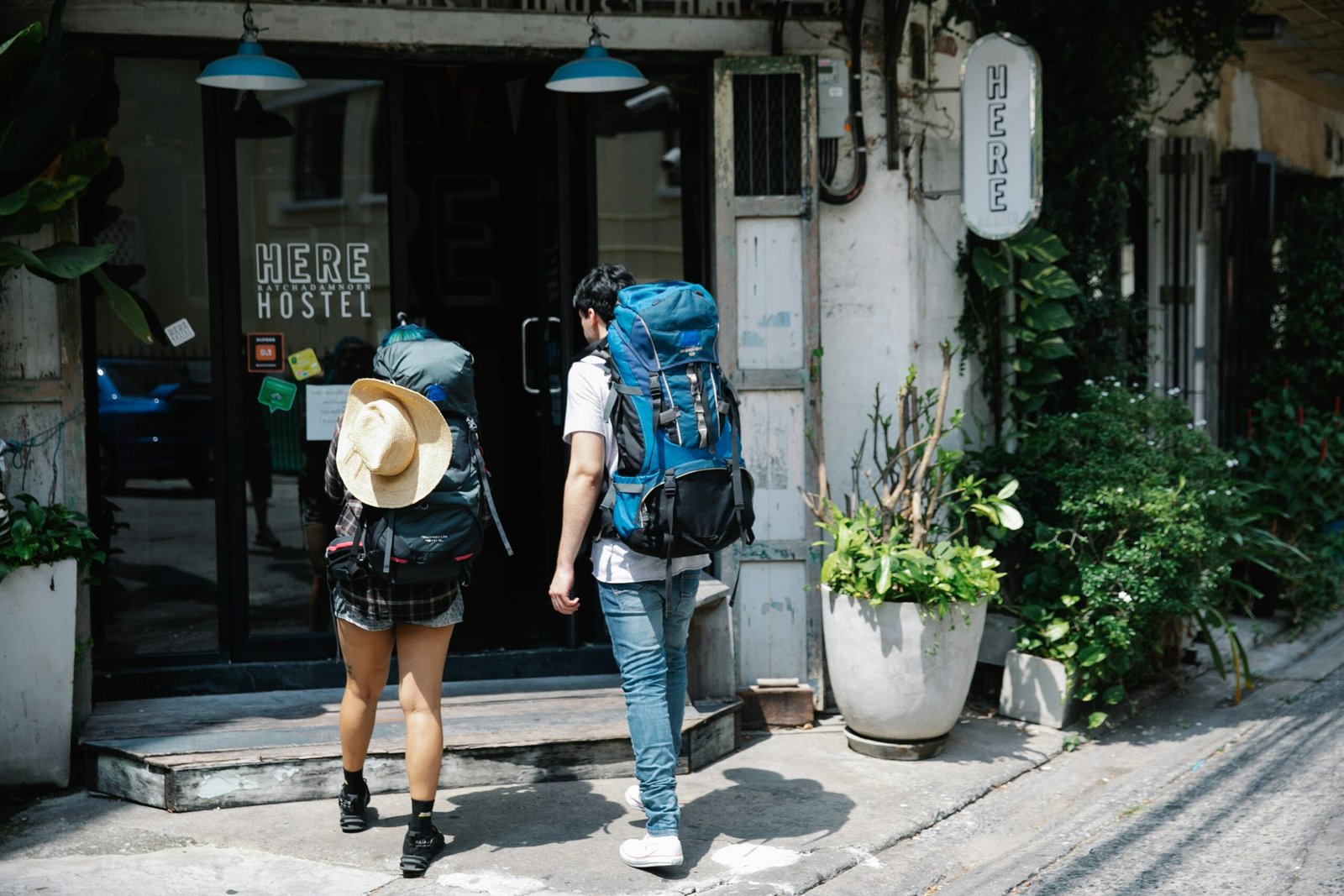
The quality of the $30/day hostel experience has improved substantially over the past decade. Modern hostels in Hanoi, Kathmandu, and Guatemala City have pod-style dorms, individual reading lights and power points, decent bathrooms, and social spaces that function as genuine community hubs. TrotRadar no longer treats dorm accommodation as a privation — it’s a different experience from a private room, with social dimensions that many travelers value specifically.
Food: Street food and local restaurants rather than tourist-facing establishments. The price gap between a bowl of phở from a Hanoi street vendor ($1.50) and the same dish at a tourist restaurant ($4–6) compounds across three meals per day into a meaningful daily budget difference.
Transport: Overland over flights wherever the time cost is acceptable. Bus rather than taxi. Local bus rather than tourist minibus (where both exist, the local bus is typically 30–60% cheaper for the same journey). Night buses that eliminate accommodation costs on transit days.
Activities: The $30/day traveler prioritises free and low-cost activities — markets, temples, hiking, beaches, city walking — while treating paid activities as occasional budget exceptions rather than daily line items. A $25 guided hike is fine on a week where three days cost $15 each. It’s not fine if it’s one of five paid activities in a week of $30/day targets.
The Four Habits That Make $30/Day Work
After tracking traveler budgets across dozens of destinations, TrotRadar has identified four habits that separate the travelers who consistently hit $30/day from those who find themselves at $45 despite trying:
1. Cook occasionally, buy strategically. Most hostel-quality accommodation in budget destinations has a guest kitchen. A supermarket breakfast (bread, peanut butter, banana: $1.50–2) saves $3–4 compared with a café breakfast. Doing this three mornings a week saves $9–12 per week — enough to fund a night in a private room or a paid activity.
2. Slow down. The hidden cost of fast travel is transport. Every move between cities costs money — bus tickets, arrival transport, the temptation to eat somewhere familiar on arrival before knowing the local food options. Staying five nights somewhere instead of two eliminates three sets of arrival costs, allows weekly accommodation rates to kick in, and gives you time to find the $2 lunch rather than the $6 one that was nearest the bus station. TrotRadar’s full case for this is in our slow travel benefits guide.
3. Walk everything walkable. A tuk-tuk in Phnom Penh for a 2 km journey costs $2–3. Walking it costs nothing. Across a week of daily rides, the saving is $14–21 — a significant proportion of the $30 daily allowance recovered.
4. Track spending daily. Not obsessively, but honestly. A quick evening total of the day’s spending reveals which days are running over and gives you the data to adjust before a week’s average is blown. Apps like Trail Wallet or a simple notes-app list work equally well. The traveler who checks their running total daily consistently outperforms the one who reviews weekly by approximately 15–20%.
The Honest Trade-Offs at $30/Day
TrotRadar values honesty over aspiration in budget travel guidance. These are the genuine trade-offs at the $30/day level:
Privacy is limited. Dorm accommodation is comfortable but shared. Light sleepers, early risers, and people who value a quiet morning will find this harder than those who don’t. An occasional private room night (budgeted as a “mental health recovery” line item) is a legitimate $30/day supplement, not a failure.
Spontaneity costs money. The $30/day budget rewards planning ahead — last-minute bus tickets, unresearched restaurants, and unplanned activity bookings all cost more than their pre-researched equivalents. The experienced budget traveler builds a loose structure rather than arriving completely open-ended.
Comfort is lower. Hot showers are not always available. Air conditioning is usually not included at this price tier in Southeast Asia (a significant comfort issue in lowland tropical cities). Food that doesn’t agree with your stomach is statistically more likely when eating exclusively at the lowest price tier. Acknowledging these honestly allows you to plan for them rather than being blindsided.
Some experiences are out of reach. Gorilla trekking ($1,500 permit), the Galápagos (budget minimum $150/day on-island), the Maldives resort experience — these simply don’t work at $30/day, and pretending otherwise wastes planning time. The $30/day destinations are what they are, and they are genuinely extraordinary for what they offer.
The $30/Day Itinerary That TrotRadar Would Plan
A 30-day Southeast Asia circuit at a genuine $30/day average (weekly tracking):
| Destination | Days | Est. Daily | Subtotal |
|---|---|---|---|
| Hanoi (hostel dorm + street food) | 4 | $22 | $88 |
| Hội An (guesthouse + cooking class day) | 5 | $28 | $140 |
| Ho Chi Minh City (hostel + street food) | 3 | $24 | $72 |
| Kampot, Cambodia (slow travel, budget guesthouse) | 5 | $18 | $90 |
| Siem Reap (hostel + Angkor day) | 4 | $32 | $128 |
| Bangkok (Banglamphu guesthouse) | 4 | $27 | $108 |
| Chiang Mai (hostel + day trips) | 5 | $30 | $150 |
| Total 30 days | 30 | $25.87 avg | $776 |
Internal transport (overnight buses, one Cambodia border bus): approximately $80. Total on-the-ground: approximately $856 for 30 days — well within the $900 ($30 × 30) theoretical ceiling, with budget remaining for activities or occasional private room upgrades.
The TrotRadar Verdict on $30/Day Travel
Backpacking on $30 a day in 2026 is not a marketing fantasy — it is an achievable travel mode in specific destinations with specific habits. It produces a form of engagement with place that higher-budget travel frequently doesn’t — you eat where the budget forces you to eat, which is usually where the best food is; you move at the pace the budget supports, which is usually slower than the pace that misses things; you meet people in hostel common rooms who are doing the same thing, which is one of the best and most enduring social experiences in independent travel.
Do it deliberately. Track it honestly. Slow down more than you think you need to. And plan one budget splurge per week — the $25 cooking class, the $30 kayaking day, the private room in the town you love — because budget travel that never deviates from the floor becomes its own kind of constraint.
Find Budget Accommodation and Travel Deals
TrotRadar features hostel recommendations, budget guesthouse packages, and overland transport options across Southeast Asia, South Asia, and Central America — all curated for the $30/day traveler who doesn’t want to sacrifice experience for the budget. Browse TrotRadar’s budget travel offers →