
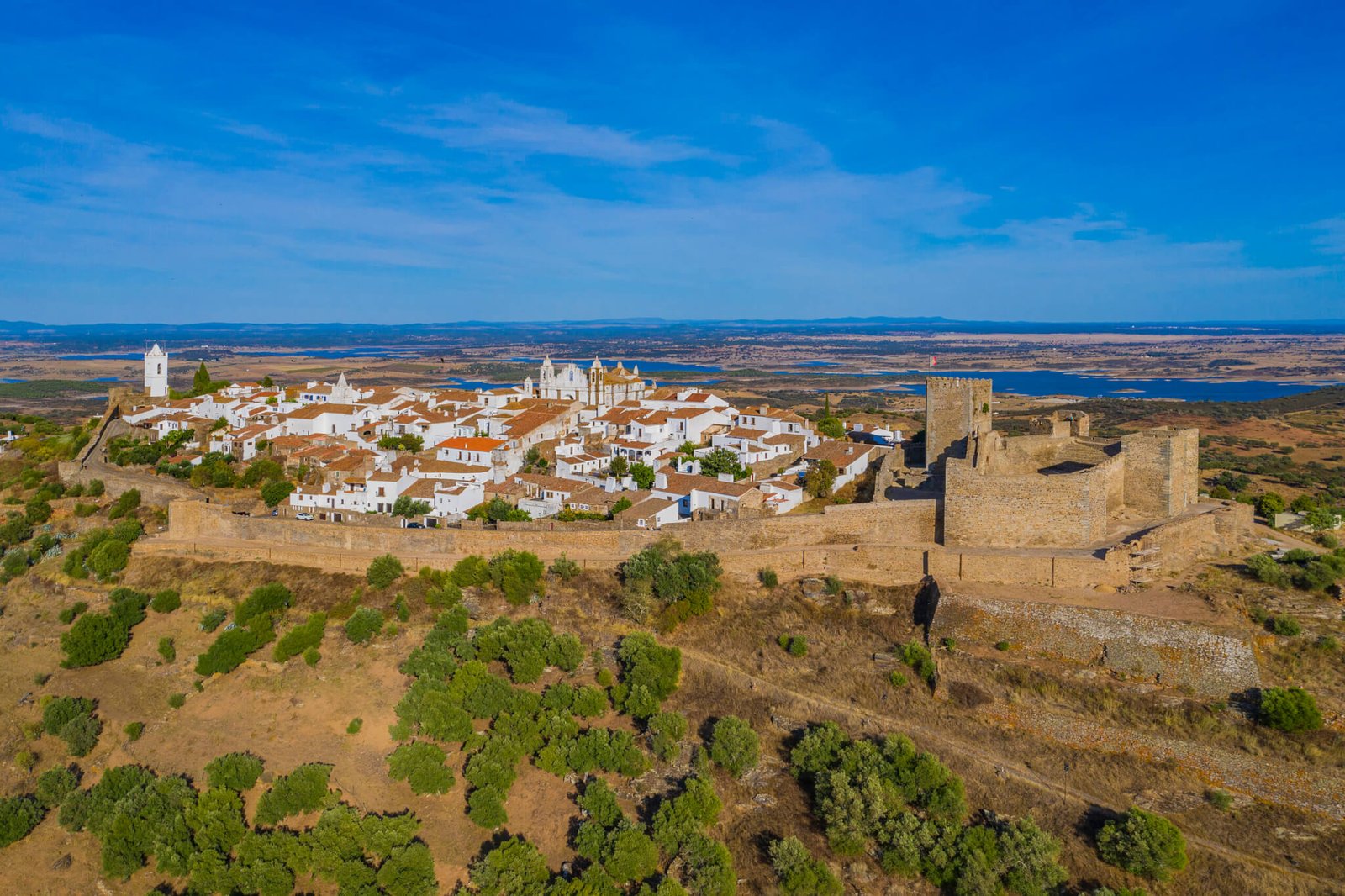
Alentejo is Portugal at its slowest and most spacious: a region of whitewashed hilltop villages, cork oak forests, acclaimed wine estates, and long lunches under a powerful southern sun.
This Alentejo Portugal travel guide covers the best places to visit—including Évora, Monsaraz, Marvão, and Estremoz—plus wine experiences, regional food, the best time to go, and practical advice for a self-drive trip from Lisbon.
Most visitors explore Alentejo by car. A two- to three-day itinerary gives you time for Évora’s historic centre, a wine estate stay, and sunset over the Alqueva reservoir without rushing.
TrotRadar Tip: The Alentejo is best explored by car. Distances between the hilltop villages and wine estates are manageable, the roads are largely empty, and the landscape between destinations is as worth experiencing as the destinations themselves. A two to three day self-drive circuit from Lisbon (2 hours to Évora) covers the essential Alentejo without rushing. Browse TrotRadar’s Alentejo rental car and wine estate deals — we feature quinta stays and self-drive itinerary packages.
Évora: The Roman Temple in the Town Center
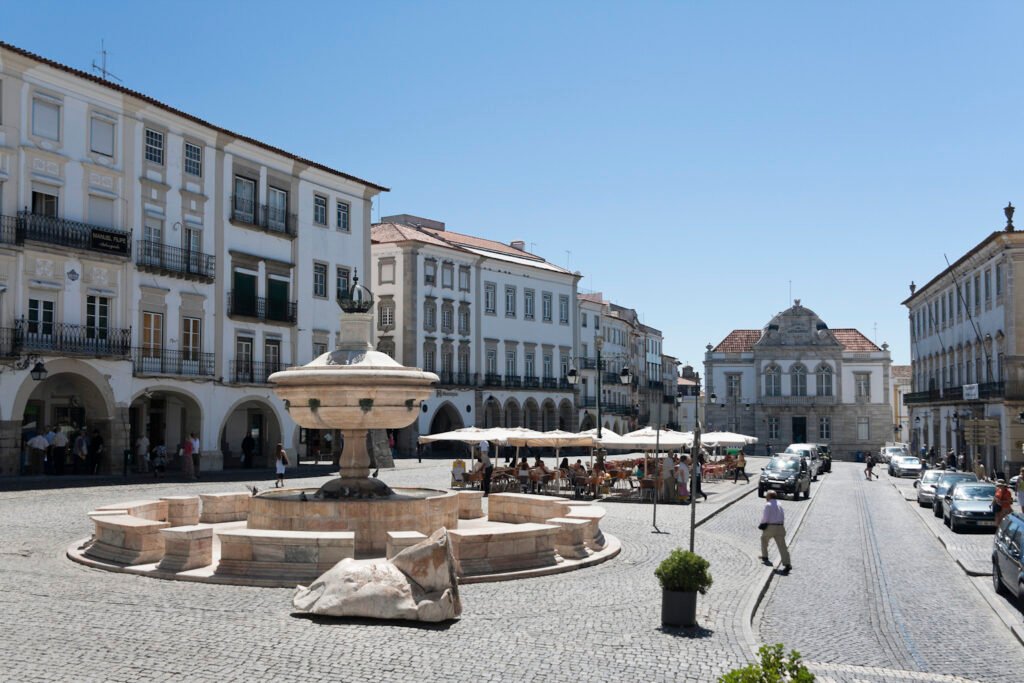
Évora — the Alentejo’s capital, 130 km east of Lisbon, a UNESCO World Heritage city of 55,000 people — is the correct starting point for any Alentejo visit and rewards more than the day trip that most Lisbon-based travelers allow it. The city’s historic center contains the Temple of Diana (actually dedicated to the imperial cult rather than Diana — a naming convention adopted in the medieval period that stuck), a 2nd-century CE Roman temple whose fourteen surviving Corinthian columns stand in a city square, surrounded by medieval Portuguese walls and an outdoor café terrace, in a juxtaposition so extraordinary that first-time visitors typically stop walking and just look.
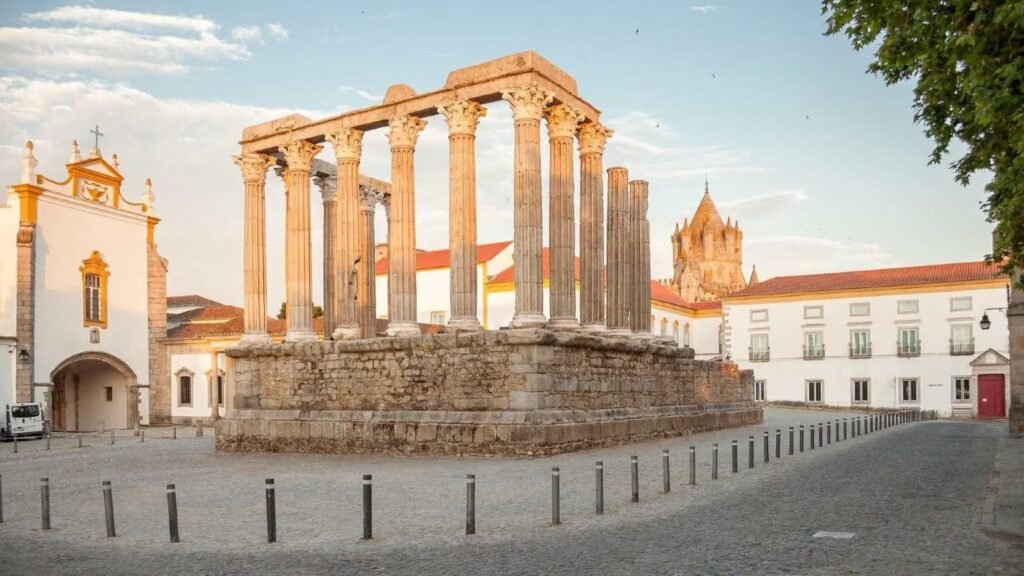
The Chapel of Bones (Capela dos Ossos) — attached to the Church of São Francisco — is the other unmissable Évora experience. Built by Franciscan monks in the 16th century using bones from approximately 5,000 skeletons exhumed from local cemeteries, the interior walls and columns are entirely covered in skulls and femurs set in decorative patterns. The entrance inscription reads: “We bones that are here, await yours.” TrotRadar considers this one of the most contemplatively extraordinary spaces in Portugal — not morbid as described but genuinely moving in a way that the chapel’s macabre reputation doesn’t quite capture. Entry: approximately €4.
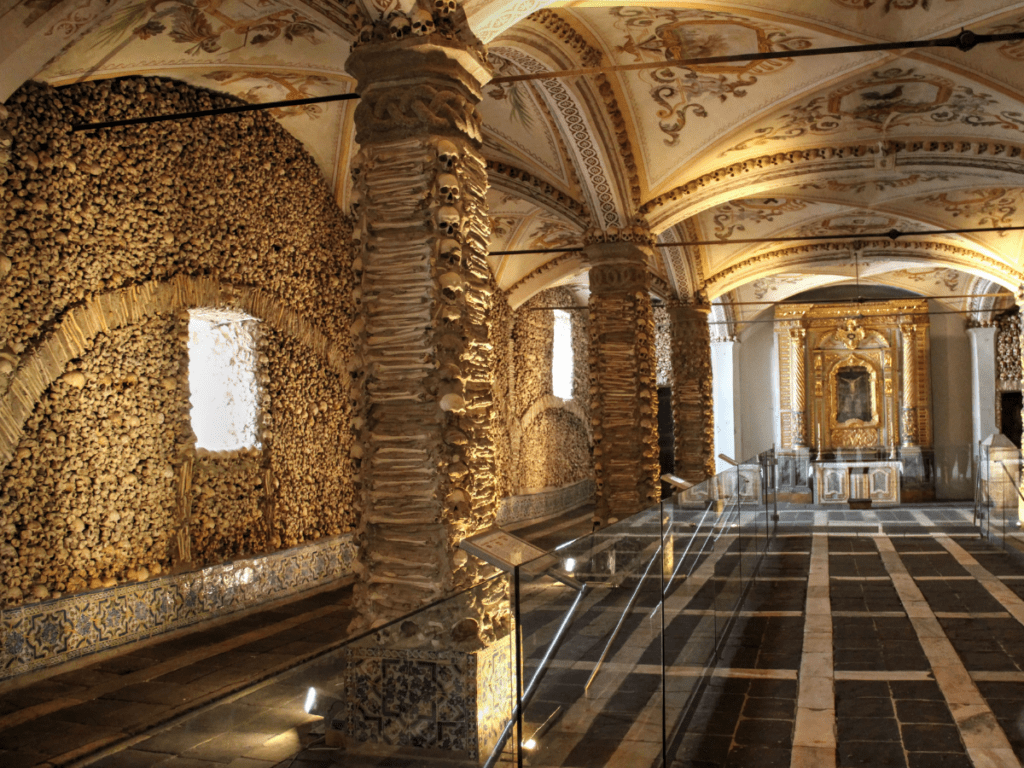
The Praça do Giraldo — Évora’s magnificent central square, with its 16th-century fountain, surrounding granite arcades, and the church of Santo Antão at its head — is the finest public square in the Alentejo and one of the most attractive in Portugal. Sitting at a café table here in the late afternoon, with the light on the white and yellow façades, a glass of Alentejo wine, and the particular unhurried quality of an Évora afternoon, is the specific experience that makes people plan a return trip.
TrotRadar Évora daily budget:
- Guesthouse or boutique hotel: €50–100/night
- Full lunch at a local restaurant: €10–18
- Glass of Alentejo wine at a café: €2–4
- Daily total: €65–100
The Alentejo Wine Circuit: Beyond the Label
Alentejo is Portugal’s most significant wine region by volume and, increasingly, by critical reputation — a warm, continental climate producing bold, full-bodied reds from indigenous varieties (Aragonez/Tempranillo, Alicante Bouschet, Trincadeira) that have earned international recognition without yet commanding international prices. A bottle of excellent Alentejo red at the producer costs €6–12; the equivalent quality level in Tuscany or the Rhône Valley costs €20–40.
The wine route centers on the sub-regions of Borba, Redondo, Reguengos de Monsaraz, and Vidigueira — each with its own cooperative winery open to visitors and a scattering of private quintas offering more personal tastings. TrotRadar’s standout estate experiences:
Herdade do Esporão (near Reguengos de Monsaraz) — one of the most established Alentejo producers, with excellent organised tour and tasting programs, a contemporary visitor center, and organic vineyards viewable from the estate restaurant. Tour and tasting: approximately €15–25.
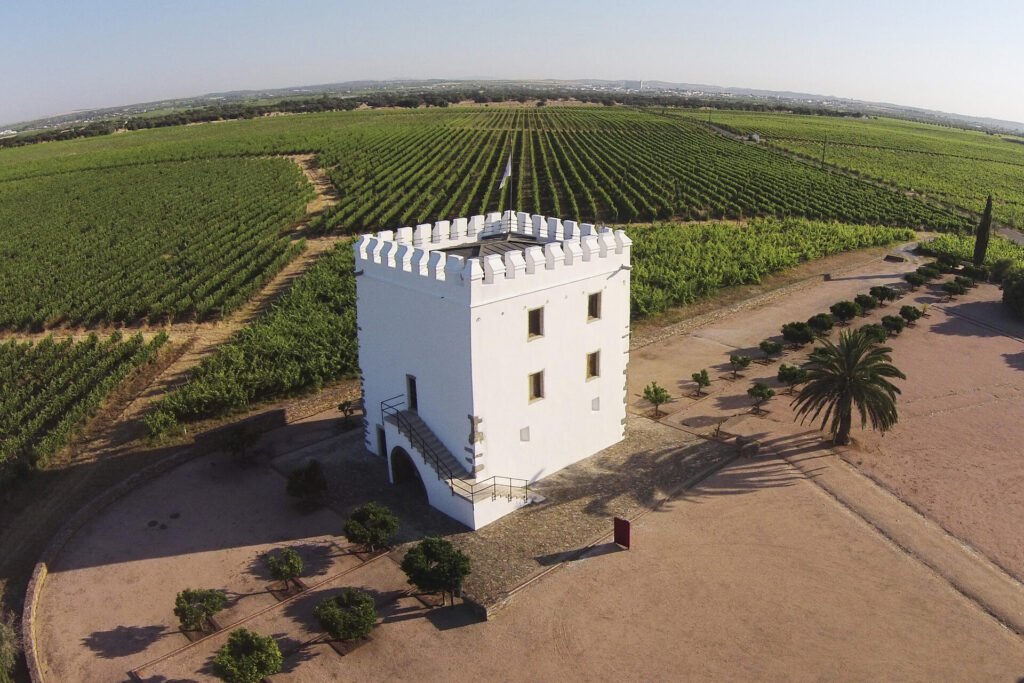
Herdade das Servas (near Estremoz) — a smaller, family-run estate offering informal tastings and the specific warmth of an estate that didn’t design its visitor experience around tourism. TrotRadar’s recommendation for travelers who want the authentic producer relationship rather than the polished visitor center.
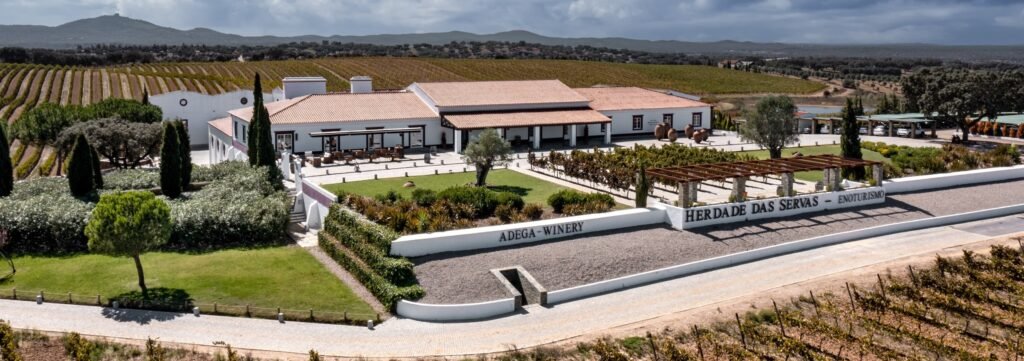
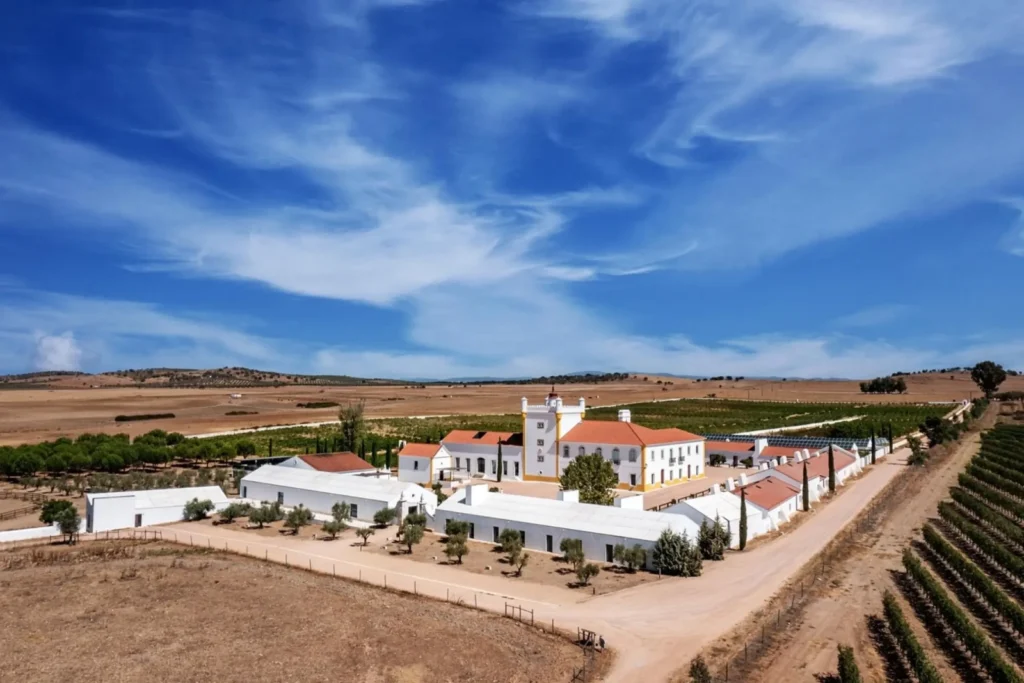
The quinta stay option — staying at a working wine estate — is one of the finest accommodation experiences in Portugal. Several Alentejo quintas offer rooms in the main farmhouse or converted estate buildings at €80–150/night, including wine tastings and occasionally dinner at the estate table. TrotRadar considers this the most specifically Alentejo way to experience the region and the highest value accommodation category in southern Portugal. For comparison with Italy’s agriturismo equivalent, see TrotRadar’s Tuscany beyond Florence guide.
The Alentejo Hilltop Villages
The Alentejo’s aldeias históricas (historic villages) — perched on rocky promontories above the plain, their medieval walls and whitewashed houses intact, their populations small enough to retain genuine character — are the visual signature of the region and the destinations that make the self-drive approach essential.
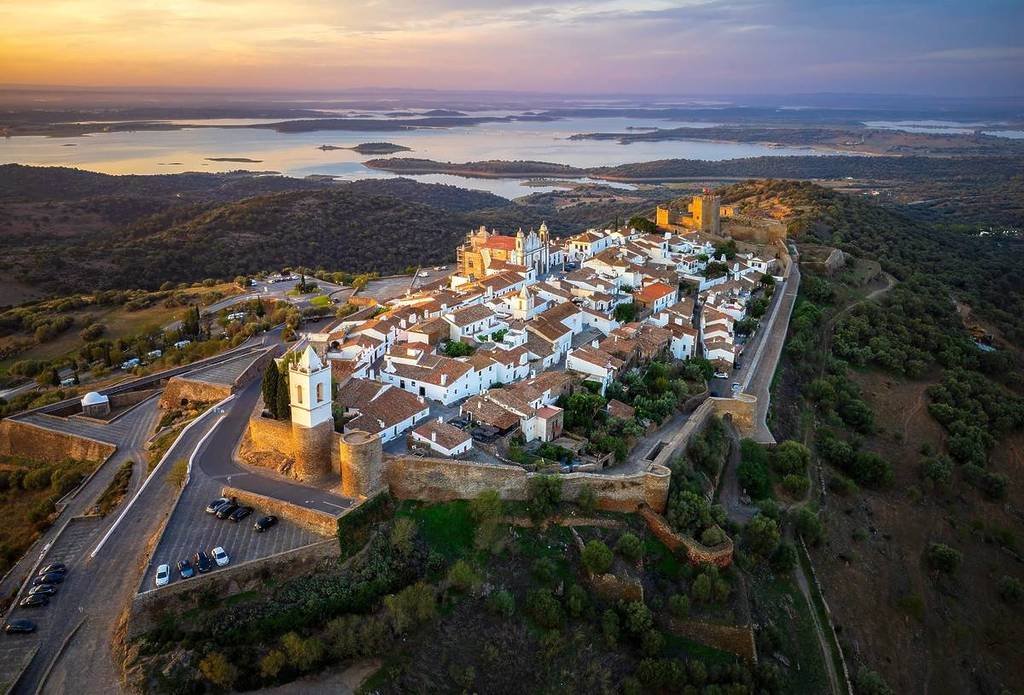
Monsaraz — a tiny walled village above the Alqueva reservoir (Europe’s largest artificial lake, created in 2002, its 250 km² of water visible from the village ramparts) — is TrotRadar’s strongest single hilltop village recommendation. The village has fewer than 200 permanent residents; its main street can be walked end-to-end in ten minutes; and the view from the castle walls over the reservoir, the plain, and the Spanish border mountains at golden hour is genuinely extraordinary.
Marvão — in the northern Alentejo near the Spanish border, at 862 metres — is the highest hilltop village in the Alentejo and one of the finest in Portugal: a medieval village enclosed by 13th-century walls, the castle on the summit providing views over three countries (Portugal, Spain, and the Portuguese Serra de São Mamede national park below) on clear days.
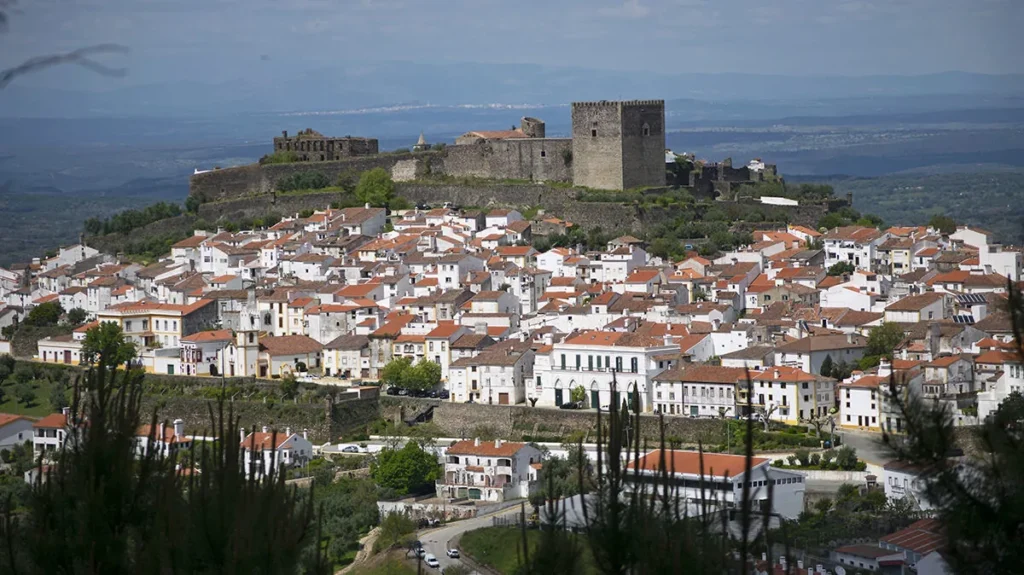
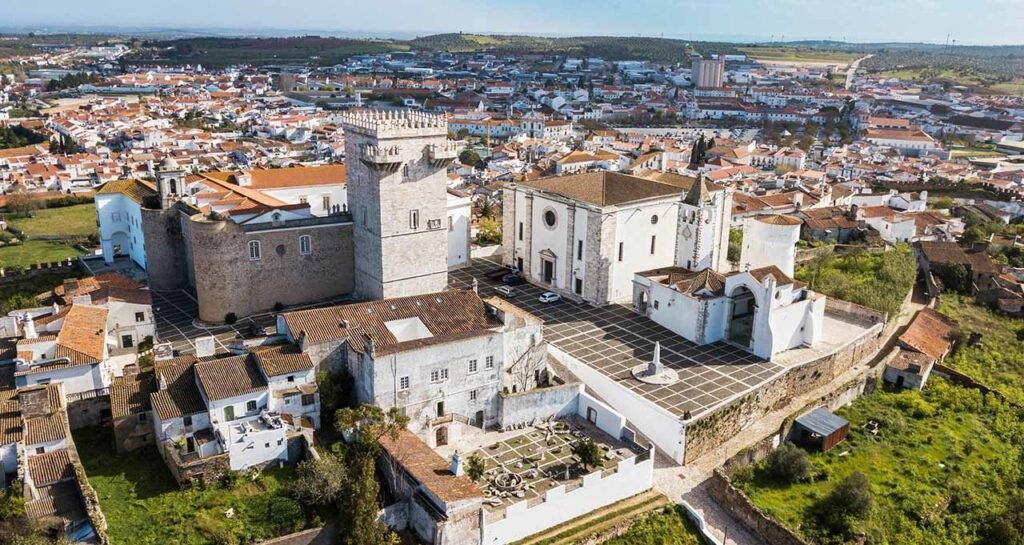
Estremoz — a market town rather than a purely tourist village — has the finest Saturday market in the Alentejo: ceramics, local produce, antiques, and the bonecas de Estremoz (hand-painted clay figurines, a UNESCO-recognised craft tradition) that are among the most distinctive regional crafts in Portugal. The marble quarries surrounding the town (Estremoz marble is used in the Washington Monument among other international commissions) give the entire town a specific white luminosity.
Alentejo Food: The Pork Tradition That Built the Region
The Alentejano black pig (Porco Preto) — a semi-wild breed raised on acorns in the cork oak forests, producing meat of extraordinary quality — is the foundation of the regional food tradition. The cured meats (presunto, paio, chouriço) from the black pig are considered among the finest in Portugal; the pluma and secretos cuts on a restaurant grill are TrotRadar’s recommended Alentejo meat experience.
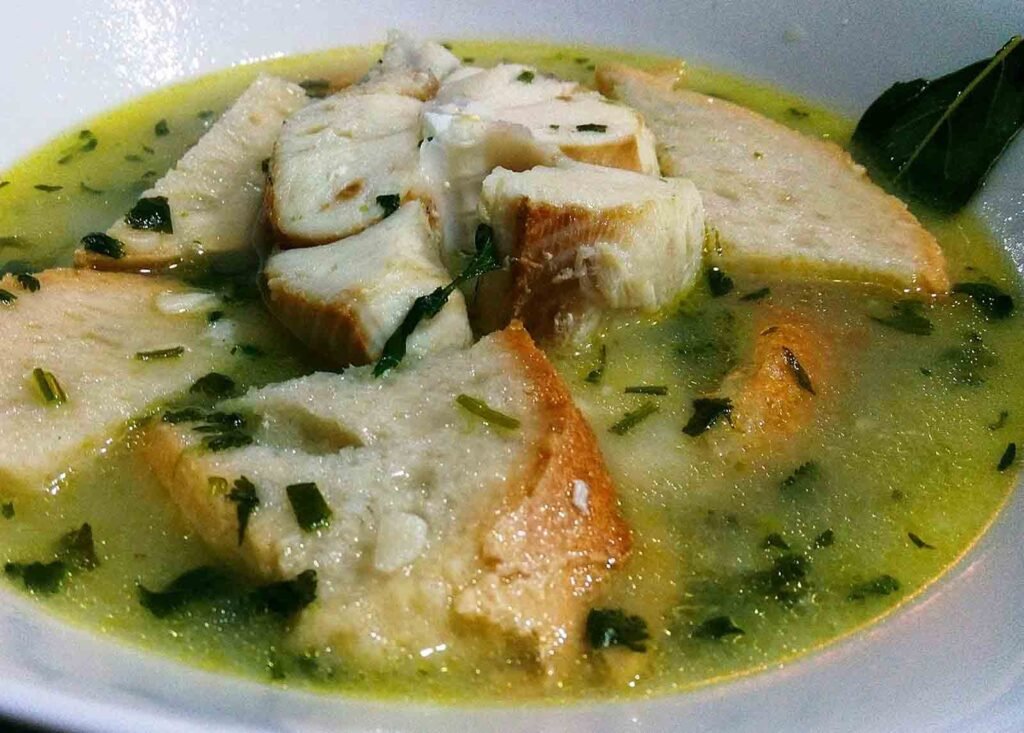
Beyond pork, the Alentejo bread tradition — a dense, sourdough-leavened loaf that forms the base of açorda (a bread soup with garlic, olive oil, and eggs) and migas (fried breadcrumbs, often served with pork) — is a cuisine that evolved to sustain agricultural workers through hard days and produces a specific satisfaction that lighter cuisines don’t replicate.

The cozido à portuguesa (a meat and vegetable stew) and the sopa de cação (dogfish soup with coriander — specific to the coastal Alentejo near Setúbal) complete the regional picture. A full Alentejo lunch at a local restaurant: €12–20 including wine.
For the comparable slow food and wine region experience in a neighboring country, read TrotRadar’s Tuscany travel guide and our best countries for budget food travel guide, which covers Portugal in the broader European food context.
The Cork Oak Forests: Europe’s Oldest Sustainable Industry
The montado — the cork oak savanna ecosystem that covers much of the Alentejo — is one of Europe’s most significant biodiversity habitats and the world’s primary source of cork. Cork oak trees are harvested by hand every nine years (the bark is stripped without cutting the tree, which regenerates fully and lives for 200+ years) — a sustainable harvest tradition that has operated in the Alentejo continuously since the Roman period.
The harvested tree trunks — stripped to reveal the deep red-brown inner bark that regenerates over the next nine years — are one of the most vivid visual elements of the Alentejo landscape in summer. Walking through a recently harvested montado, where numbered trees indicate their harvest year, is one of those quietly extraordinary experiences that the Alentejo provides without announcing itself.
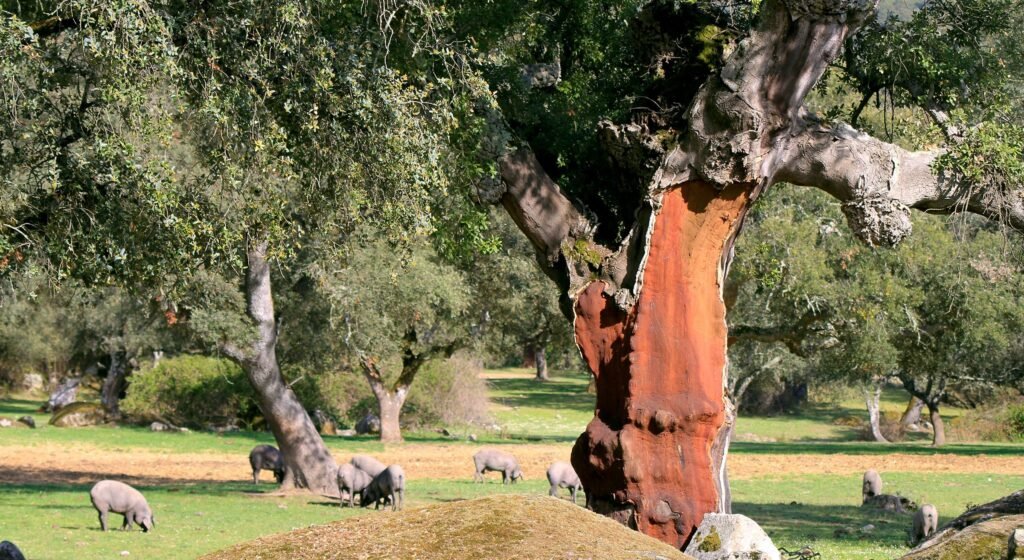
The montado ecosystem supports extraordinary wildlife: the Iberian lynx (the world’s most endangered wild cat, recovering from near-extinction through an active reintroduction program), black storks, imperial eagles, and the specific dense population of wild boar that occasionally disrupts vineyard harvests.
3-Day Alentejo Itinerary From Lisbon
Day 1: Lisbon to Évora
Explore the Roman Temple, Chapel of Bones, and Praça do Giraldo. Stay overnight in Évora and enjoy a relaxed Alentejo dinner.
Day 2: Wine country and Monsaraz
Drive through Reguengos de Monsaraz, visit a wine estate, then continue to Monsaraz for the castle walls and sunset views over Alqueva reservoir.
Day 3: Estremoz or Marvão
Choose Estremoz for its market, marble architecture, and local crafts, or head north to Marvão for dramatic mountain views and medieval fortifications. Return to Lisbon in the evening or extend your stay at a quinta.
This targets the valuable itinerary-style search intent while using destinations already covered by the article.
Practical Alentejo Travel Notes from TrotRadar
Getting there: Évora is 1.5 hours from Lisbon by bus (Rede Expressos, approximately €12) or 2 hours by car. Trains from Lisbon to Évora take approximately 1.5 hours (approximately €10). A rental car from Lisbon for a 3-day Alentejo circuit: approximately €35–55/day.
Best time to visit: March–May (wildflowers, cooler temperatures, the green before the summer harvest) and September–October (harvest season, the first new wine tastings, golden light on the cork oak forests) are TrotRadar’s preferred windows. July–August: very hot (35–42°C), but the stark summer landscape has its own austere beauty.
Alentejo Dark Sky Reserve: The Alentejo interior has been designated a Starlight Reserve — one of the least light-polluted areas in Western Europe. The Alqueva reservoir area around Monsaraz has developed specific astrotourism infrastructure (telescope observatories, guided stargazing). TrotRadar considers a summer night stargazing from the Monsaraz ramparts one of the finest free experiences in Portugal.
For the broader Portugal travel context — how the Alentejo connects to Lisbon, Porto, and the Azores — read TrotRadar’s Azores Portugal travel guide, which covers the other major expression of Portuguese natural and cultural heritage.
The TrotRadar Verdict on the Alentejo
The Alentejo Portugal travel guide conclusion is that this is the region that most consistently surprises travelers who arrive expecting a gentler version of the Lisbon or Porto experience and find something entirely its own: a landscape of biblical scale and quiet, a food and wine culture of extraordinary depth, and the particular Portuguese quality of being in a place that knows exactly what it is and makes no concessions to being anything else. Take the car. Slow down. Stay for lunch. Come back for dinner.
Find Your Alentejo Travel Deal
TrotRadar features Alentejo quinta wine estate stays, Évora boutique hotel packages, self-drive itinerary combinations from Lisbon, and village guesthouse bookings across Monsaraz, Marvão, and Estremoz. Browse TrotRadar’s Alentejo travel offers →