
Vietnam is a country shaped like a bamboo pole with a rice basket on each end — the geographic metaphor used locally to describe the broad agricultural deltas of the north and south connected by the narrow central waist of the country. Traveling it from top to bottom is one of those journeys that exists in travel consciousness as an aspiration and delivers, in practice, on that aspiration more consistently than most. At TrotRadar, the complete north-to-south Vietnam route is the single strongest value proposition in Southeast Asian travel — the food, the landscape variety, the transport infrastructure, and the daily cost combine into a journey that consistently outperforms the expectations of travelers arriving from more expensive regions.
This Vietnam travel guide Hanoi Ho Chi Minh edition covers the complete route — what to prioritise in each major destination, the transport connections that work, the honest timing guide, and the specific food and neighbourhood recommendations that separate a good Vietnam trip from a great one.
TrotRadar Tip: Vietnam’s train and bus network means you can arrive in Hanoi and depart from Ho Chi Minh City (or vice versa) without any backtracking — making an open-jaw flight the correct booking approach. Browse TrotRadar’s Vietnam flight and train pass deals — we feature open-jaw options and the Vietnam Railways pass that covers the full north-to-south corridor.
Hanoi: Three Days in the Capital That Rewards Slow Looking
Hanoi is the city that most first-time Vietnam travelers underestimate — arriving with low expectations and departing with the particular fondness that cities with genuine character rather than curated tourism experiences tend to generate. Three days is the TrotRadar minimum; four is better.
The Old Quarter — 36 streets named for the trades historically conducted on each (Silk Street, Paper Street, Tin Street) — remains the city’s most atmospheric neighborhood and the correct starting point for any Hanoi visit. The streets are genuinely still organized by trade in several cases: Hàng Bạc is still the silver and jewellery street; Hàng Gai still has silk shops. Walking without agenda through the Old Quarter at 7 AM — when the street food vendors are at full production and the motorbike density is lower — is the finest free hour in Hanoi.
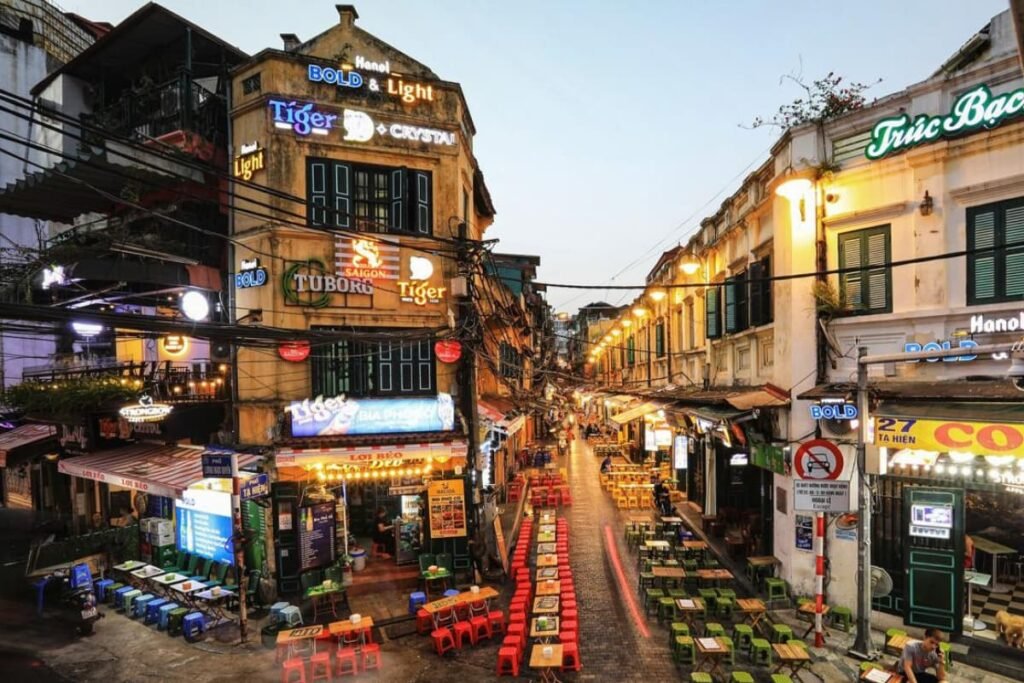
TrotRadar’s Hanoi food priorities:
- Phở Bắc (Northern Phở): The specialist on Bát Đàn Street (queue from 6 AM; closes when the pot is empty, typically by 10 AM). The canonical version — clear broth, clean flavour, no embellishment. Cost: VND 55,000–70,000 (€2–2.60)
- Bún Chả: Grilled pork patties in sweet-sour broth with vermicelli — a midday-only dish. The cluster on Hàng Mành Street is TrotRadar’s reference point. Cost: VND 40,000–60,000 (€1.50–2.20)
- Bánh Cuốn: Steamed rice rolls filled with seasoned pork and wood ear mushroom — the finest breakfast in Hanoi and available from the specialist on Tô Hiến Thành Street from 6 AM. Cost: VND 35,000–50,000 (€1.30–1.85)
- Egg coffee (Cà Phê Trứng): The Hanoi invention — robusta coffee beneath a foam of whipped egg yolk and condensed milk. Café Giang on Hàng Gai, the original since 1946. Cost: VND 25,000–35,000 (€0.93–1.30)
Hoan Kiem Lake and the Temple of the Jade Mountain: The small lake at the heart of the Old Quarter, with its red bridge and island temple, is Hanoi’s social center — the morning tai chi crowd, the weekend pedestrianization of the surrounding streets, and the particular quality of the lake reflecting the Tortoise Tower at dusk. Entry to the temple: VND 30,000 (€1.10).

The Ho Chi Minh Mausoleum complex — the President’s preserved body in a Stalinist granite building modelled on Lenin’s mausoleum in Moscow — is free to visit (Tuesday, Thursday, Saturday and Sunday mornings, with strict dress and behaviour requirements), and the surrounding complex includes Ho Chi Minh’s stilt house (where he lived deliberately simply) and the One Pillar Pagoda — worth a full morning.

TrotRadar Hanoi daily budget:
- Hostel dorm: $6–10/night
- Guesthouse private room: $15–30/night
- Full day eating locally: $8–15
- Daily total: $20–40
Halong Bay: The Overnight Cruise Worth the Investment
Halong Bay — a UNESCO World Heritage Site of 1,600+ limestone karst islands in the Gulf of Tonkin, 165 km from Hanoi — is the northern Vietnam experience that most travelers plan before anything else, and with justification. The landscape is genuinely extraordinary in the way that no amount of pre-trip image saturation quite prepares for: 2,000 islands rising from flat calm water, the mist and the morning light combining at specific hours to produce something that looks deliberately composed.
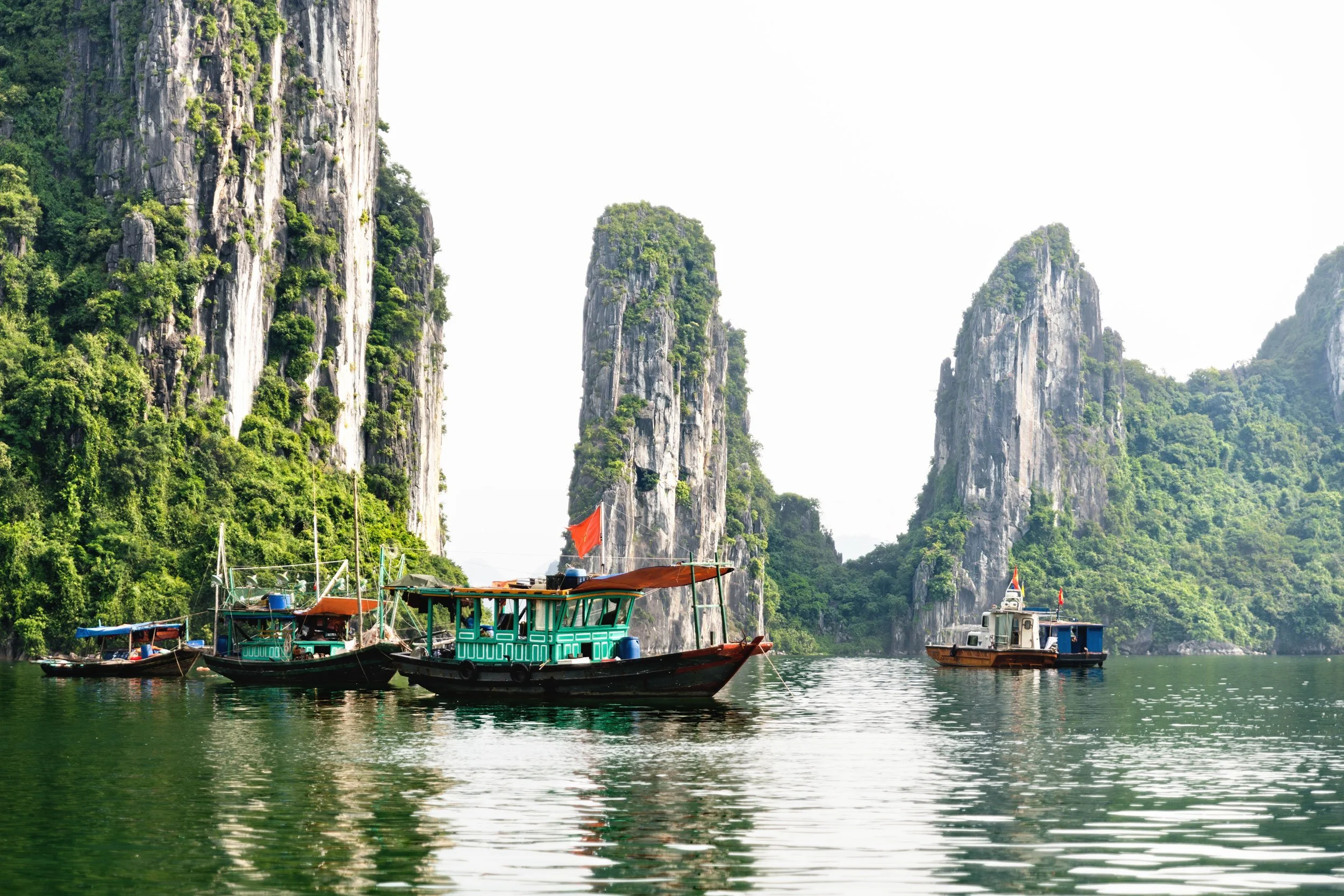
TrotRadar’s non-negotiable Halong Bay advice: book the 2-night/3-day cruise rather than a day trip or 1-night cruise. The overnight experience — waking up anchored in a limestone bay with no other boat visible before the day-trip convoys arrive — is categorically different from the day-trip version of the same geography.
Cruise category guidance:
- Budget cruise ($80–120 USD/person, 2-night): functional, the landscape is identical to premium — the boat is simpler, meals are more standard
- Mid-range ($150–250 USD/person, 2-night): genuinely comfortable cabins, good food, kayaking included — TrotRadar’s recommended tier
- Premium ($300–600 USD/person): boutique boats with excellent food and exclusive bay anchoring — genuinely different experience
Bái Tử Long Bay (adjacent to Halong, less visited, equally beautiful) and Lan Hạ Bay (near Cat Ba Island, quieter than main Halong) are alternatives that TrotRadar recommends for travelers who want the same landscape with fewer cruise boats in frame.

Hội An: The Town Most Travelers Stay Longest In
Hội An in the Quảng Nam province is the Vietnam destination that most consistently produces itinerary extension — travelers who planned three nights find themselves booking a fifth and sixth because the town has a specific quality of life in the second week that the first doesn’t quite reach.
The Ancient Town — a UNESCO World Heritage Site of preserved 15th–19th century merchant architecture, the historic trading port where Japanese, Chinese, Dutch, and Portuguese merchants once coexisted — is the visual heart: yellow-walled lanes, the Japanese Covered Bridge, merchant houses with communal assembly halls built by the Chinese trading communities. A combined ticket for five heritage sites costs VND 120,000 (€4.45).

The food: Hội An has its own specific food traditions distinct from the rest of Vietnam:
- Cao Lầu — thick rice noodles in a reduced pork broth with crispy croutons and greens, made with water traditionally drawn from a specific Hội An well. Available only here. Cost: VND 35,000–55,000 (€1.30–2.05)
- White Rose Dumplings (Bánh Vạc): Translucent shrimp dumplings folded into rose shapes — a Hội An specialty made by one family and distributed to restaurants throughout the town. Cost: VND 45,000–65,000 (€1.67–2.41)
- Bánh Mì Phượng: The baguette sandwich that Anthony Bourdain called “the greatest sandwich in the world” — from a specific shop on Phan Châu Trinh Street that has been producing this specific sandwich since 1985. Cost: VND 25,000–35,000 (€0.93–1.30)
An Bàng Beach — 4 km from the Ancient Town by bicycle — is the closest good swimming beach, with beach clubs, good seafood restaurants, and the relative quiet of a beach that isn’t trying to be Đà Nẵng. The cycling route through rice paddies and vegetable farms is itself one of the finest short rides in Vietnam.

Cooking classes: Hội An has the finest concentration of genuinely good cooking class operators in Vietnam — including the market tour and boat trip to a river herb garden format that TrotRadar considers the best half-day activity in the town. Cost: $25–45 USD for a half-day class.
The Central Coast: Đà Nẵng and the Marble Mountains
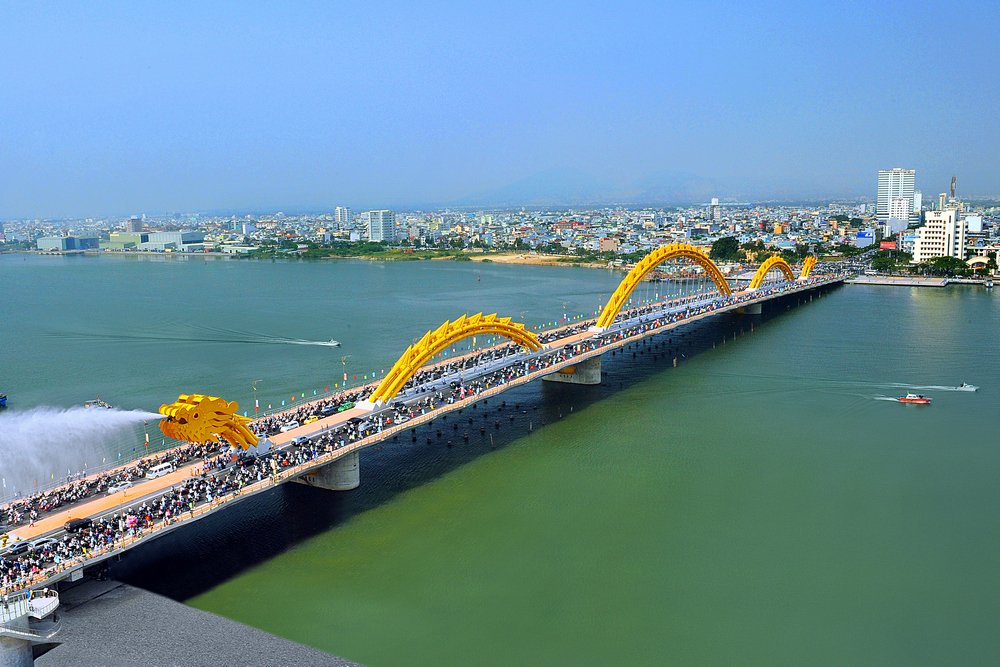
Đà Nẵng — 30 km north of Hội An, connected by regular bus and taxi — is Vietnam’s third-largest city and primarily relevant to the north-south traveler as an airport hub and beach city. The Mỹ Khê Beach (consistently rated among Asia’s finest urban beaches) and the Dragon Bridge (a bridge in the shape of a dragon that breathes fire on Friday and Saturday nights) are worth a day.
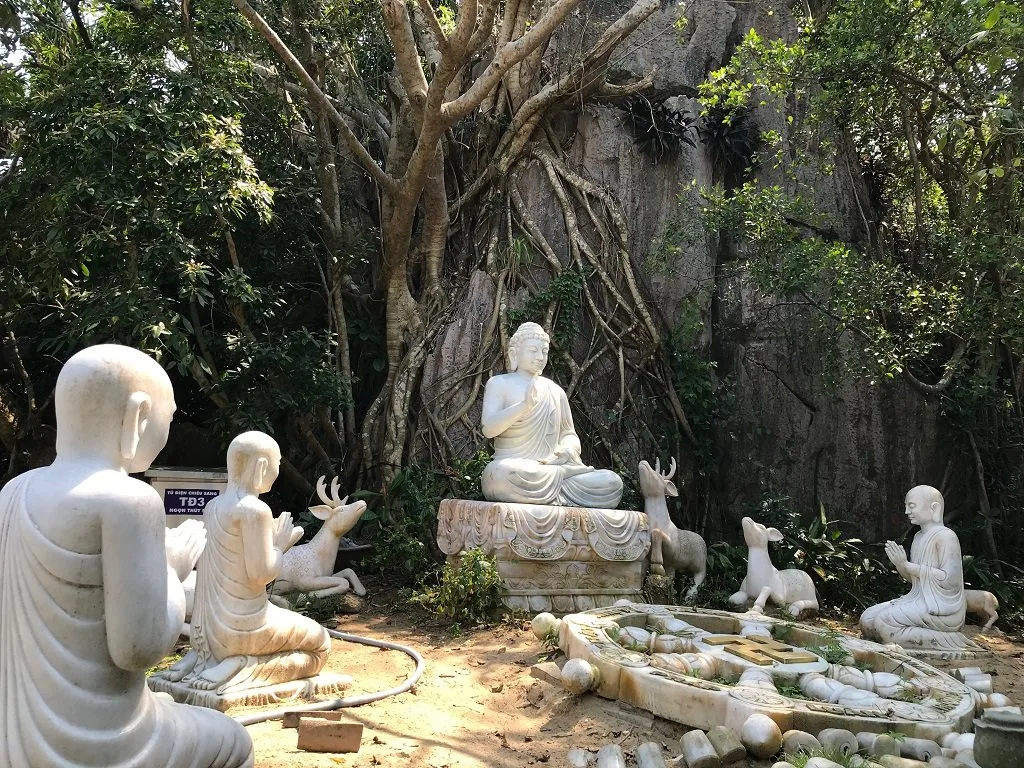
The Marble Mountains — five marble and limestone hills rising from the flat coastal plain between Đà Nẵng and Hội An, each containing caves, shrines, and viewpoints — are a 30-minute motorbike ride from either city and a genuinely surprising half-day experience: cave temples with natural light shafts illuminating Buddhist altars, and summit views over the coastline that no photograph at the base of the hills predicts. Entry: VND 40,000 (€1.50).
Ho Chi Minh City: The Chaotic, Vital South
Ho Chi Minh City (Saigon) is the counterpoint to Hanoi — faster, hotter, more commercially intense, less obviously atmospheric, and in the specific ways that reveal themselves in the second and third day, more surprising. TrotRadar gives it three full days and finds the third consistently the best.
War Remnants Museum: The most-visited museum in Ho Chi Minh City and one of the most confronting war museums on earth — documenting the American War (Vietnam’s name for the conflict) from the Vietnamese perspective with a directness that is historically significant and emotionally demanding. TrotRadar considers it essential context for understanding modern Vietnam’s relationship with its own history and with Western visitors. Entry: VND 40,000 (€1.50). Allow 2–3 hours minimum.

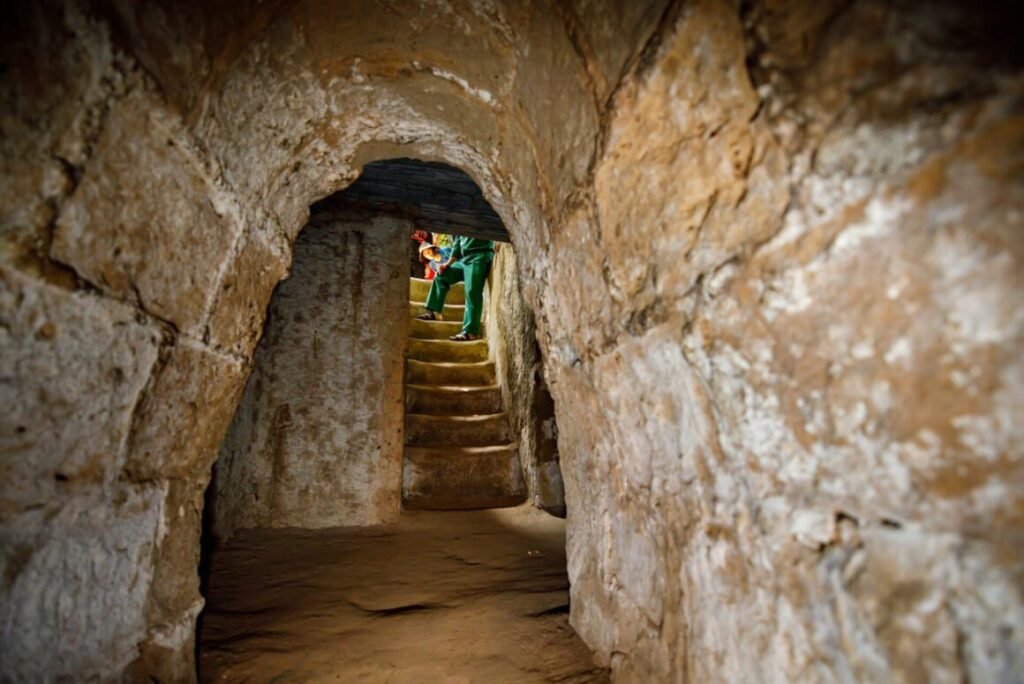
The Củ Chi Tunnels — 75 km northwest of the city, accessible by day-trip tour or by local bus — are the 250 km underground network used by Viet Cong fighters during the war. Visitors can crawl through extended sections (the tourist tunnels have been widened to accommodate Western body sizes but remain extremely narrow). The scale of the engineering — underground hospitals, kitchens, schools, and weapons workshops — provides a specific understanding of the conflict that no museum exhibit achieves. Tour cost: approximately $10–15 USD.
District 1 food and the Bến Thành area: Bến Thành Market itself is tourist-priced and primarily worth a walk-through for the atmosphere. The streets surrounding it — particularly the food stalls on Lý Tự Trọng Street and the bánh mì vendors outside the market’s eastern entrance — are where TrotRadar eats.

District 3 and Bình Thạnh: The residential neighborhoods northwest of the tourist center are where Ho Chi Minh City’s café culture, local restaurants, and architectural character (the French colonial villas) are most intact. A morning spent cycling or walking through District 3 is the most authentic HCMC experience available without a guide.
For the complete Vietnam food culture context, read TrotRadar’s Asia street food guide — which covers Hanoi’s street food in dedicated detail. And for how Vietnam fits into the broader Southeast Asia circuit, our Southeast Asia budget travel guide covers the regional logistics and costs.
Transport: Moving South Through Vietnam
Vietnam’s north-to-south transport options have three primary modes:
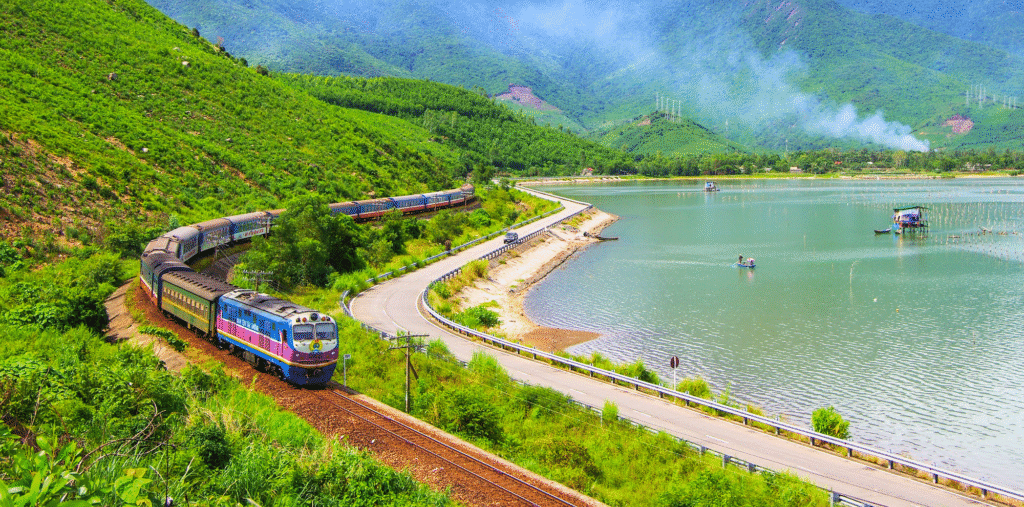
Vietnam Railways (Reunification Express): The train between Hanoi and Ho Chi Minh City covers 1,726 km in 30–40 hours (depending on service). Most travelers break the journey into segments — Hanoi–Đà Nẵng (16–18 hours, soft sleeper from VND 350,000–650,000/€13–24), Đà Nẵng–Nha Trang (10 hours), Nha Trang–Ho Chi Minh City (8 hours). TrotRadar considers the train the most atmospheric way to move the full length of the country — the coastal sections between Đà Nẵng and Nha Trang are among the finest rail scenery in Asia. Book at dsvn.vn or through 12go.asia.
Open Bus Ticket: Budget bus networks (The Sinh Tourist, Phuong Trang) sell open-ended bus passes covering the full Hanoi–Ho Chi Minh corridor with stops at all major tourist destinations. Approximately $35–50 USD for the full journey with unlimited stops. Less atmospheric than the train but more flexible for budget travelers.
Domestic flights: Vietnam Airlines, Vietjet, and Bamboo Airways offer frequent and inexpensive connections between major cities. A Hanoi–Ho Chi Minh City flight can cost as little as VND 500,000 (€18.60) booked in advance — faster but skipping the scenery between.
Practical Vietnam Notes from TrotRadar
Visas: Most nationalities can obtain a Vietnam e-visa (evisa.xuatnhapcanh.gov.vn) for a 90-day single or multiple entry at $25 USD. Process takes 3 business days; apply at least 1 week before travel.
Currency: Vietnamese Đồng (VND). Approximately 27,000 VND per €1. Cash is still the most reliable payment method in local restaurants, markets, and transport. ATMs widely available in cities.
Getting online: A Vietnamese SIM card with unlimited data costs approximately VND 150,000–200,000 (€5.55–7.40) for 30 days — available at the airport on arrival. Viettel and Mobifone are the most reliable networks.
TrotRadar Vietnam north-to-south daily budget:
- Budget: $18–28/day
- Mid-range: $35–60/day
- Halong Bay cruise: treat as a separate fixed cost of $80–250 per person
The TrotRadar Verdict on Vietnam End-to-End
The complete Vietnam route — Hanoi to Ho Chi Minh City, north to south, by train and bus through the country’s full length — is one of the finest continuous travel experiences available in Asia. The food changes as you move south. The architecture shifts from Chinese-influenced to French colonial to modern Vietnamese. The landscape alternates between mountain, coast, delta, and rice paddy with a variety that three weeks barely exhausts.
Eat the phở early. Sleep on the overnight train. Stay in Hội An longer than you planned. TrotRadar is confident the country earns it.
Find Your Vietnam Travel Deal
TrotRadar features open-jaw flights into Hanoi and out of Ho Chi Minh City, Halong Bay cruise packages, Hội An guesthouse deals, and Vietnam Railways booking support. The north-to-south route, planned properly. Browse TrotRadar’s Vietnam travel offers →