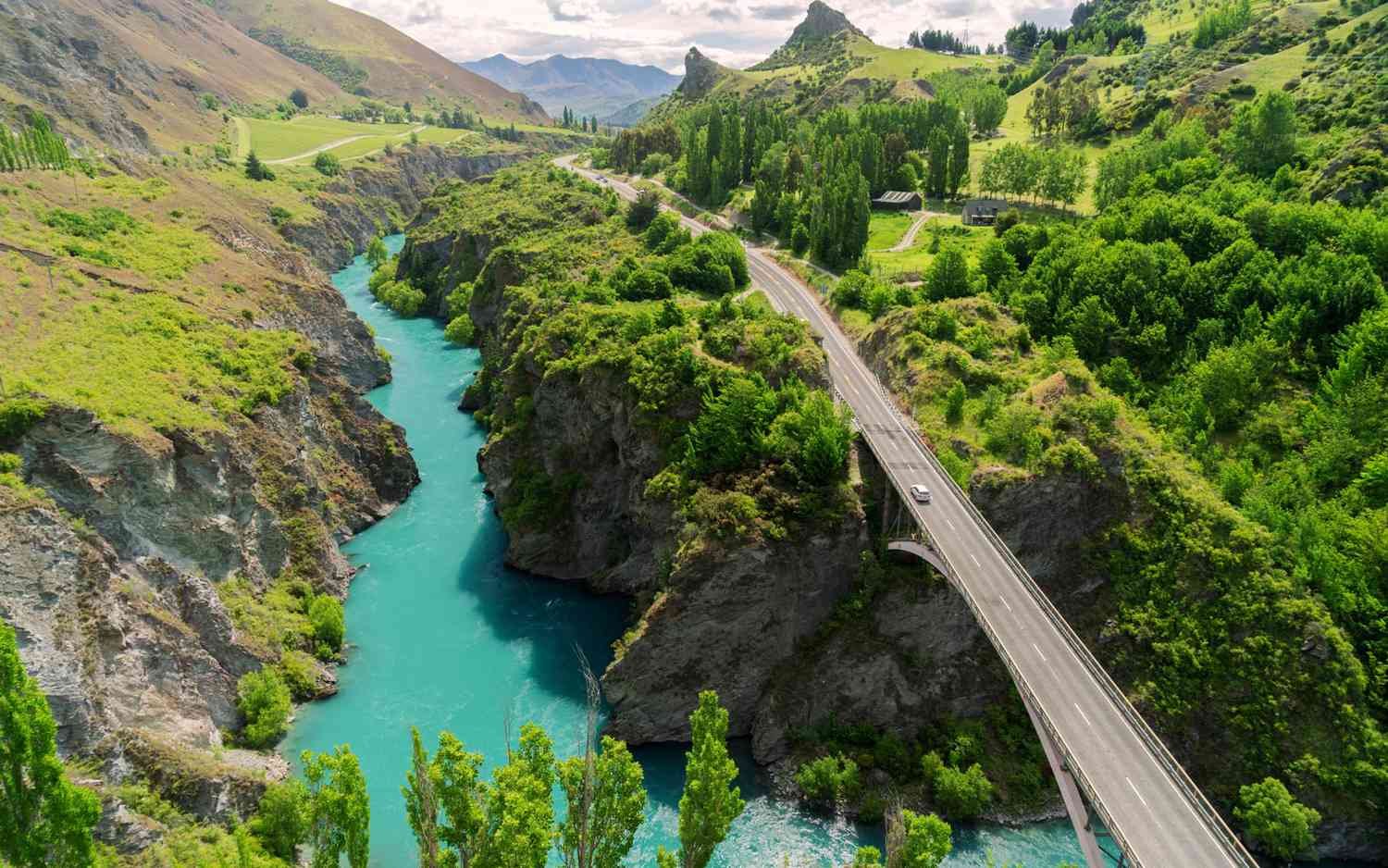
There is a calibration that happens on the South Island of New Zealand that most travelers don’t anticipate — a gradual revision of what constitutes a “dramatic landscape” based on what you’ve actually stood in front of during the preceding days. By the time you’ve driven from Marlborough to the West Coast, seen Fiordland from a boat, and watched the Aoraki/Mount Cook ranges materialize out of cloud as you drive south from the Mackenzie Basin, the word “dramatic” has expanded to contain things it didn’t before you arrived.
At TrotRadar, the New Zealand South Island travel guide is one we approach with a specific challenge: the landscape is so consistently extraordinary that recommendation becomes superlative inflation unless you’re specific about what each part of the island delivers and what it doesn’t. This guide is specific — and honest about the cost reality of a destination that is genuinely premium by global standards.
TrotRadar Tip: The South Island requires a rental car. There is no meaningful public transport network between the major natural attractions, and the experience of the island is fundamentally a driving experience — pulling over on the Arthur’s Pass road when the cloud clears, arriving at Milford Sound before the tour buses, choosing your own pace through the Mackenzie Basin. Book your car before your flights. Browse TrotRadar’s New Zealand campervan and car rental deals — we feature vehicles from Christchurch and Queenstown at competitive rates.
The South Island Road Trip: Structure and Timing
The South Island is approximately 150,000 square kilometres — comparable to England in area, with a population of under a million people. The road network connects the major natural areas in a circuit that most travelers complete clockwise or counterclockwise from either Christchurch (the main international hub on the east coast) or Queenstown (the most connected domestic and trans-Tasman hub).
TrotRadar’s recommended 14-day clockwise circuit from Christchurch:
- Christchurch (1 night) — Botanic Gardens, Cardboard Cathedral, the post-earthquake urban art scene
- Kaikōura (1 night) — whale watching, seal colonies, mountains meeting the sea
- Marlborough / Blenheim (2 nights) — Sauvignon Blanc wine region, Marlborough Sounds day trip
- Nelson (1 night) — Abel Tasman day trip, Nelson Lakes
- Westport / Punakaiki (1 night) — Pancake Rocks, West Coast weather, the wild Tasman Sea coast
- Franz Josef / Fox Glacier (2 nights) — West Coast glacier access, rainforest, heli-hike options
- Haast Pass / Wānaka (2 nights) — the most extraordinary mountain pass road in New Zealand, Wānaka lake and town
- Queenstown (2 nights) — adventure activities, Remarkables, Fiordland day trip base
- Milford Sound day trip (included above)
- Aoraki/Mount Cook (1 night) — the highest peak in Australasia, Hooker Valley Track
This circuit covers the primary South Island highlights without excessive rushing. A 10-day version is possible but requires choosing between Marlborough, Abel Tasman, and Kaikōura in the north. TrotRadar recommends 14 days as the minimum for the full experience.
Fiordland: The Most Extraordinary Landscape in New Zealand
Fiordland National Park — 1.2 million hectares of UNESCO World Heritage wilderness in the southwest corner of the South Island — is the largest national park in New Zealand and contains what TrotRadar considers the most consistently extraordinary concentration of natural landscape accessible to non-specialist travelers anywhere in the southern hemisphere.
Milford Sound — technically a fiord rather than a sound, carved by glaciers into the rock of the Darran Mountains and flooded by the sea — is the destination that most travelers organize their Fiordland experience around. The approach road (State Highway 94, 120 km from Te Anau through the Homer Tunnel) is itself extraordinary — a single-lane tunnel bored through 1.2 km of solid rock, emerging in a hanging valley above the sound. The boat cruise on the fiord — Mitre Peak at 1,692 metres rising directly from the water, waterfalls dropping from temporary cliff-side rivers (Fiordland receives up to 9 metres of rain per year; temporary waterfalls cascade everywhere after rain) — costs approximately NZD $75–120 (€42–67) for a 2-hour cruise.
TrotRadar’s Milford Sound strategy:
- Arrive before 9 AM to beat the Queenstown day-trip coaches
- Consider a kayak tour (NZD $180–220, half-day) over the boat cruise for a more intimate experience of the fiord walls and waterfalls
- Stay in Te Anau rather than Queenstown for the Milford day — it cuts the morning drive by an hour each way
- The Milford Track (a 4-day guided or independent multi-day walk) is one of New Zealand’s “Great Walks” and requires advance booking through DOC (Department of Conservation); independent hut passes cost NZD $90–120 per person per night
Doubtful Sound — accessible only via a 3-hour boat and bus journey from Manapouri, significantly quieter than Milford, and by most objective measures more dramatic — is TrotRadar’s recommendation for travelers who want the Fiordland experience with fewer fellow travelers. Full-day tours from Queenstown run approximately NZD $230–280.
The West Coast: Rain, Glaciers, and the Tasman Sea
The West Coast of the South Island is New Zealand’s wettest region — and its most dramatically untamed. The Pancake Rocks at Punakaiki — limestone formations eroded into horizontal layers that stack like books, with blowholes that shoot water through gaps in the rock during high seas — are accessible on a free 30-minute loop walk directly from the highway and are among the finest coastal geological features in the country.
Franz Josef Glacier and Fox Glacier — both within 25 km of each other on the West Coast — are the only glaciers in the temperate world that descend from 3,000 metres to near sea level through rainforest. The accessibility is extraordinary: you can walk within metres of the glacier terminal face on free valley floor walks (note: the face has retreated significantly due to climate change — the current accessible point is further from the terminal than it was a decade ago).
For direct glacier access, helicopter flights land on the snow fields above the terminal and offer guided ice walks: approximately NZD $250–350 per person for a 2-hour heli-hike experience. TrotRadar considers this the finest glacier experience accessible to non-mountaineers in the world — the combination of landing on a living glacier in a helicopter, walking on blue ice surrounded by crevasses, and returning to rainforest within 30 minutes is genuinely unique.
Queenstown: Adventure Capital and Day Trip Hub
Queenstown needs honest framing: it is New Zealand’s most expensive town for accommodation (peak season hotel rooms from NZD $200+/night) and most commercially developed for tourism, with the specific energy of a resort town that has optimised for visitor revenue over residential character. The surrounding landscape — Lake Wakatipu, the Remarkables mountain range — is genuinely extraordinary. The town itself is a means of accessing that landscape.
As an adventure activity base, it has no peer: bungee jumping (the original AJ Hackett Kawarau Bridge bungee, NZD $230), skydiving (NZD $250–350 for 15,000 ft), jet boating on the Shotover River (NZD $130–150), and paragliding over the lake are all available within minutes of the town center.
TrotRadar’s recommendation: use Queenstown as a 2-night hub for Fiordland and Aoraki/Mount Cook access, do one or two adventure activities, and move on rather than treating it as a destination in itself. Wānaka, 80 km north, offers similar lake-and-mountain scenery at lower cost with a more characterful town center — TrotRadar consistently prefers it to Queenstown as a base.
Aoraki/Mount Cook: New Zealand’s Highest Peak
Aoraki/Mount Cook National Park — in the Mackenzie Basin of the central South Island, roughly equidistant between Queenstown and Christchurch — contains New Zealand’s highest mountain (3,724 m) and some of its most accessible alpine walking.
The Hooker Valley Track (10 km return, 3 hours, flat) crosses three swing bridges to reach the Hooker Glacier terminal lake — with icebergs floating in the foreground and the South Face of Aoraki filling the frame behind. It is one of the finest accessible valley walks in New Zealand and requires no equipment beyond comfortable shoes and layers. TotRadar considers it the single best free walk in the South Island.
Stargazing at Aoraki: The Mackenzie Basin is designated a Dark Sky Reserve — one of the largest and best-protected from light pollution in the world. On clear nights (common in the dry basin climate), the Milky Way is visible overhead in a way that most travelers have never seen from less protected skies. The Earth & Sky observatory on the hill above the village offers guided stargazing sessions (NZD $145) — worth it for the telescope access; the naked-eye sky from any dark spot in the park is free and equally extraordinary.
Practical South Island Travel Notes from TrotRadar
Getting there: International flights arrive primarily in Christchurch (CHC) from Australia, Singapore, and several Asian hubs. Queenstown (ZQN) receives direct flights from Australia. Air New Zealand and Qantas dominate trans-Tasman routes; budget carrier Jetstar operates on some routes.
Driving on the left: New Zealand drives on the left. Single-lane bridges (requiring right-of-way negotiation with oncoming traffic) are common on rural roads. Gravel roads (check rental agreement for coverage) access some of the finest landscapes — particularly the route to Milford Sound’s Gertrude Saddle and several West Coast access roads.
Weather reality: New Zealand weather is highly changeable — particularly on the West Coast (among the wettest places in the world) and around Fiordland (where Milford Sound averages 182 rainy days per year). TrotRadar’s approach: treat rain as atmosphere rather than obstacle. Milford Sound in heavy rain, with temporary waterfalls appearing on every cliff face simultaneously, is in many respects more extraordinary than on a clear day.
TrotRadar South Island daily budget:
- Campervan (accommodation included): NZD $100–180/day vehicle + NZD $20–35/night camping = NZD $130–220/day total
- Hostel accommodation: NZD $35–55/night dorm; NZD $80–130 private room
- Self-catering food: NZD $30–50/day
- Activities (budgeted separately): NZD $100–350 per major activity
- Realistic mid-range total: NZD $150–250 (€85–140)/day
For the full long-haul context on New Zealand — including how the flight cost factors into the total trip value — read TrotRadar’s best long-haul destinations for every budget guide, which covers New Zealand specifically in the premium tier analysis. And our best countries for solo travel guide covers New Zealand’s excellent solo travel infrastructure in the Adventure Travel section.
The TrotRadar Verdict on the New Zealand South Island
The New Zealand South Island travel guide conclusion is that this is one of a very small number of destinations on earth where the superlatives in the travel writing are accurate rather than inflated — and where the specific thing that the superlatives are trying to describe (the scale, the variety, the combination of landscape types within a single two-week drive) is genuinely unavailable in equivalent form anywhere else in the world.
It costs what it costs. It takes the flight it takes. It requires the rental car it requires. TrotRadar’s position: these are not objections but the cost of access to something worth the cost.
Find Your New Zealand South Island Deal
TrotRadar features South Island campervan packages, car rental deals from Christchurch and Queenstown, Fiordland cruise bookings, and Milford Sound day trip packages. The road trip of a lifetime is ready to book. Browse TrotRadar’s New Zealand travel offers →