Taiwan sits in a peculiar position in the travel landscape: consistently rated by the travelers who visit it as one of the finest destinations in Asia, yet often absent from mainstream top-ten lists. This Taiwan off-the-beaten-path guide covers the places, routes, and experiences that make the island especially rewarding for independent travelers.
At TrotRadar, this Taiwan travel guide off beaten path is one we’ve been wanting to write for years, because Taiwan is among the most consistent overperformers in our coverage — the destination that travelers return from describing in ways that make you feel you missed something, regardless of how many Asia trips you’ve already taken.
TrotRadar Tip: Taiwan’s national rail and MRT networks are among the finest in Asia — fast, clean, bilingual in English, and remarkably affordable. The Taiwan Railways Administration (TRA) connects the whole island; the high-speed THSR connects Taipei to Kaohsiung in 90 minutes. An EasyCard (rechargeable transit card) works across all networks. Browse TrotRadar’s Taiwan travel deals — we feature rail-pass options and Taipei hotel packages at genuinely competitive rates.
Why Taiwan Works for Every Type of Traveler
TrotRadar’s case for Taiwan begins with its versatility — the range of experiences available on an island of 36,000 square kilometres is genuinely extraordinary:
- Urban food culture that rivals Tokyo and Hong Kong in sophistication and surpasses both in affordability
- Natural landscapes — from the marble canyon of Taroko Gorge to the volcanic hot springs of Beitou to the tropical forests of Kenting — compressed into a single island
- Cycling infrastructure of rare quality — dedicated lanes around Sun Moon Lake and the East Rift Valley route rank among the finest cycling experiences in Asia
- Temple culture that is living and participatory rather than preserved and museumified — the Taiwanese Daoist and Buddhist temple tradition involves ghost festivals, spirit money burning, and communal pilgrimages that visitors can observe and sometimes join
- Exceptional safety — consistently ranked among the safest countries in Asia for solo travelers of any gender

Taipei: Start Here, But Don’t Stay Only Here
Taipei is a genuinely excellent city — but the TrotRadar instruction is to use it as a base rather than treating it as the destination. The city deserves 3–4 days; Taiwan deserves 10–14. The travelers who stay primarily in Taipei leave with a good experience of Taiwan. The ones who use the rail network to reach the rest of the island leave with an extraordinary one.
That said, the 3–4 days Taipei deserves:
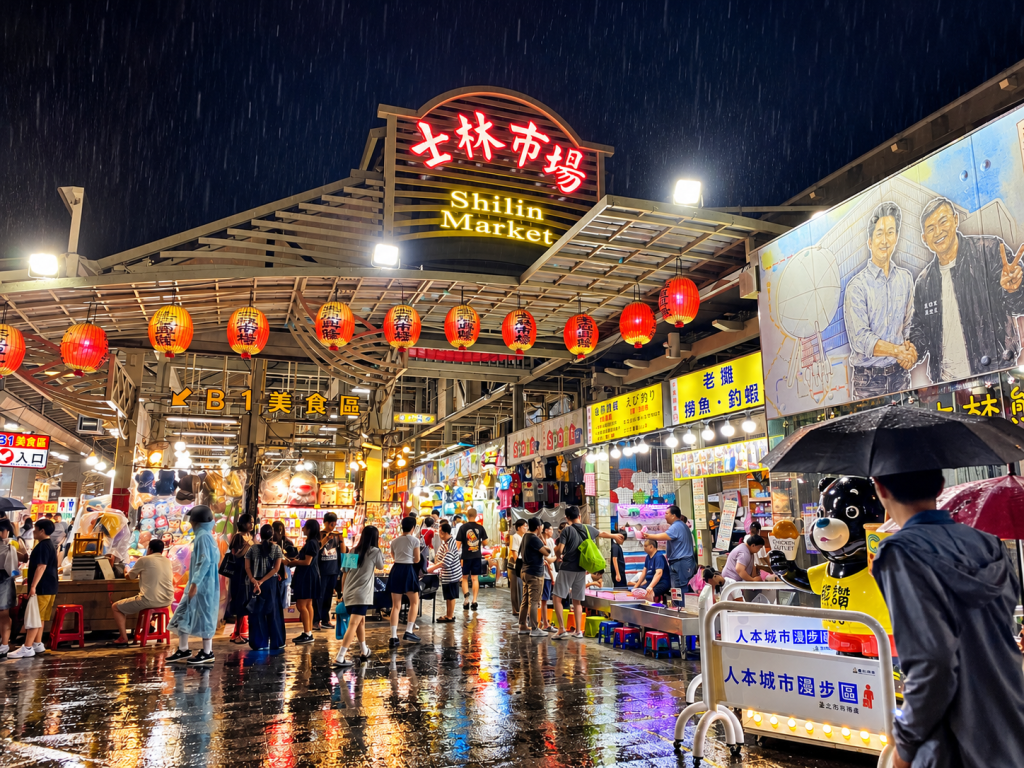
Shilin Night Market — the most famous and largest of Taipei’s night markets — is the correct starting point for understanding the Taiwanese street food culture. The food is outstanding: oyster omelettes, stinky tofu (an acquired smell that leads to a genuinely excellent taste), bubble tea as made by its inventors rather than exported approximations, scallion pancakes, and the braised pork rice (lu rou fan) that TrotRadar considers one of the finest simple comfort dishes in Asian cuisine. Total spend for a full evening of market eating: approximately NT$250–400 (€7–12).
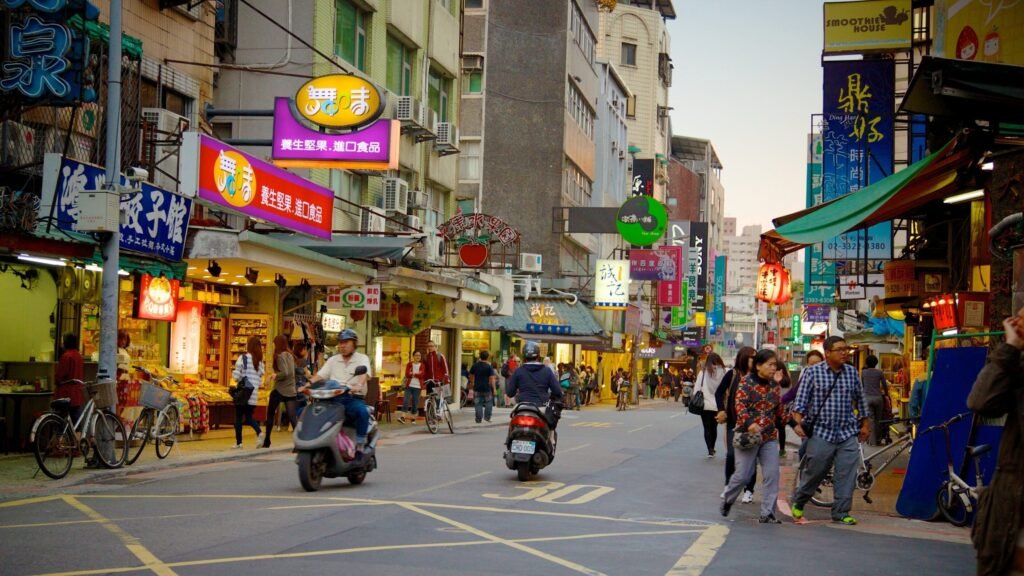
Da’an and Yongkang Street — Taipei’s most liveable residential neighbourhood — is where TrotRadar recommends spending a morning: independent cafés, small restaurants, Din Tai Fung‘s original location (the soup dumpling restaurant that has spawned a global chain; the original is still the best), and the browsable independent bookshops of Shida Road.
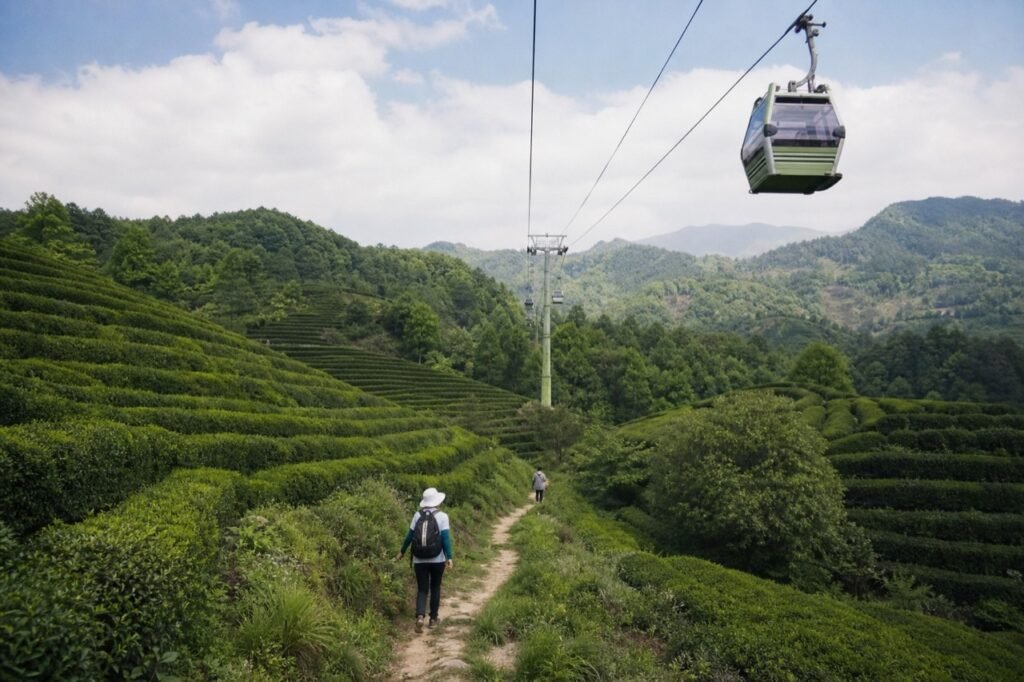
Maokong Gondola and Tea Farms: A gondola from the Taipei Zoo MRT station rises to the Maokong area — a hillside of working tea farms and teahouses overlooking the city. Afternoon tea in a traditional teahouse with the city below costs approximately NT$200–400 (€6–12) for a full tea service with accompaniments.
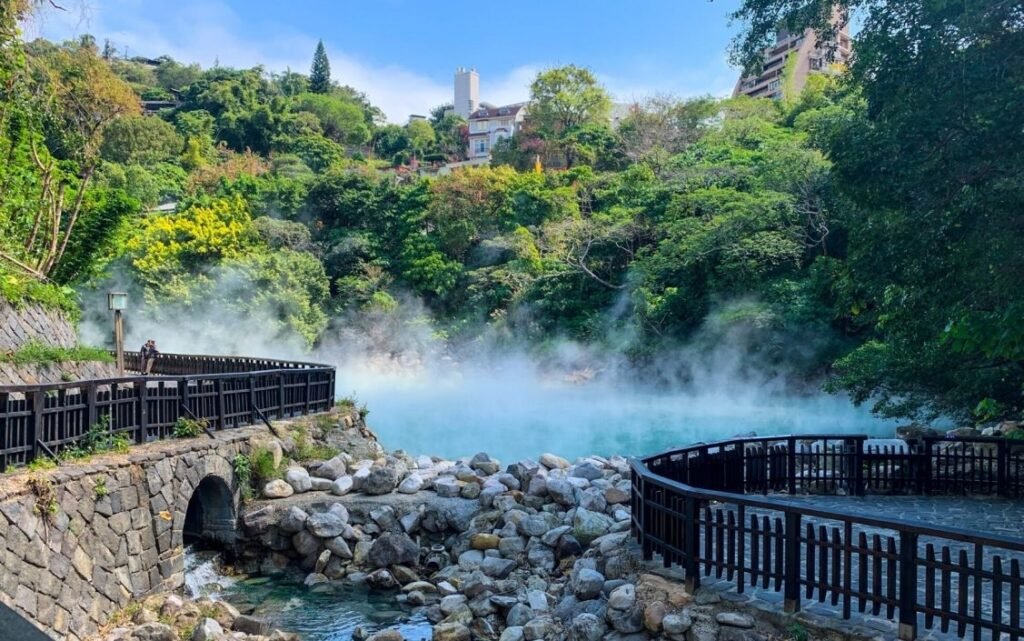
Beitou Hot Springs District: 30 minutes by MRT from the city centre, the volcanic Beitou valley has been developed around its geothermal springs since the Japanese colonial period (1895–1945). Public bath facilities from NT$100 (€3); private pools from NT$500–1,500 (€15–45).
Taroko Gorge: One of Asia’s Great Natural Wonders
Taroko Gorge — on Taiwan’s east coast, accessible from Hualien by bus or taxi — is the natural landscape that consistently appears in travelers’ “best thing I saw in Asia” lists, and with complete justification. The Liwu River has carved a 20-kilometre gorge through the marble and quartzite of Taiwan’s Central Mountain Range, creating sheer canyon walls of extraordinary colour — the marble ranging from pure white to grey to green depending on mineral content — above water that runs from turquoise to jade depending on the light.
The gorge is a national park with a road running through it — the Central Cross-Island Highway — connecting a series of trails, temples, and viewpoints. The most accessible:
- Shakadang Trail: A riverside walk along the canyon floor, flat and easy, with extraordinary close-range marble scenery — 4.4 km one way, 1.5–2 hours at a comfortable pace
- Swallow Grotto (Yanzikou): A section of the main road where pot-holes eroded by the river create natural cavities in the cliff face — the swifts nest in these holes, producing the constant movement of birds against the marble wall that gives the site its name
- Eternal Spring Shrine (Changchun): A Daoist shrine built into the cliff face above a waterfall — one of the defining images of Taroko and a 20-minute walk from the nearest road access point

Staying in Taroko: Hualien (the nearest city, 40 minutes by bus from the gorge entrance) has good accommodation at €30–70/night. Booking a place in Hualien rather than a resort inside the gorge gives better value and access to the city’s excellent seafood restaurants and night market.
For the full East Asia circuit context, TrotRadar’s Kyoto beyond temples guide covers Japan alongside Taiwan as the two strongest destinations in East Asia for independent travelers.
Sun Moon Lake: Taiwan’s Most Beautiful Body of Water
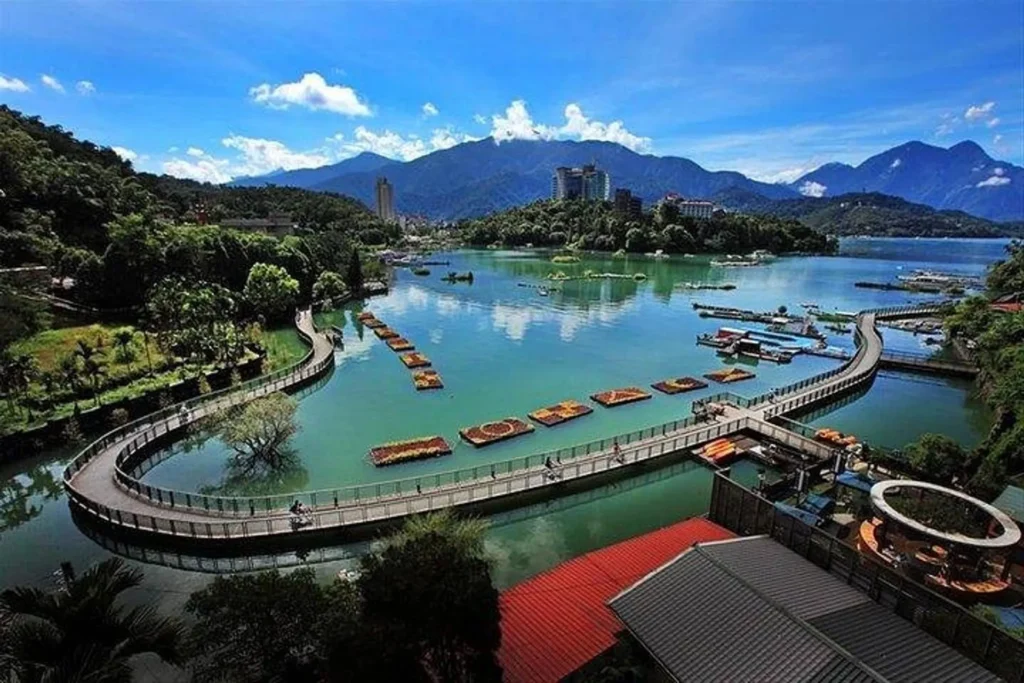
Sun Moon Lake — Taiwan’s largest lake, situated at 748 metres in the central highlands — is the island’s most celebrated scenic area for domestic tourism and one that international travelers consistently rate higher than expected.
The lake is named for its shape — the eastern section is roughly circular (the “sun”), the western section elongated (the “moon”). The surrounding landscape of tea farms, cypress forests, and the villages of the Thao indigenous community (one of Taiwan’s 16 officially recognised indigenous peoples, with a cultural tradition centred on the lake) gives the area a depth beyond the scenery alone.
Cycling around Sun Moon Lake: A 33-km dedicated cycling path circuits the lake — the most scenic single bike ride in Taiwan and one of the finest lake cycling routes in Asia. Bikes rent for approximately NT$200–300 (€6–9) per day from several shops near the main ferry dock. The full circuit takes 3–4 hours at a comfortable pace; the section from the main pier to the Xuanguang Temple (6 km, flat to moderate) delivers the finest lake views in the shortest distance.
Getting there: Bus from Taichung High-Speed Rail Station (75 minutes, approximately NT$200 — €6) is the simplest connection from Taipei (40 minutes on THSR to Taichung).
TrotRadar Sun Moon Lake budget: Lakeside accommodation from NT$1,200–2,500 (€35–73)/night; budget guesthouses in Shuili (20 km away) from NT$600–1,000 (€18–30).
The East Rift Valley: Cycling Taiwan’s Finest Landscape
Between the Central Mountain Range and the Coastal Mountain Range on Taiwan’s eastern side, the Huadong Valley (East Rift Valley) runs 180 km from Hualien to Taitung — a broad, flat valley of rice paddies and indigenous villages flanked by mountain ridges on both sides, with bicycle paths running the length of it.
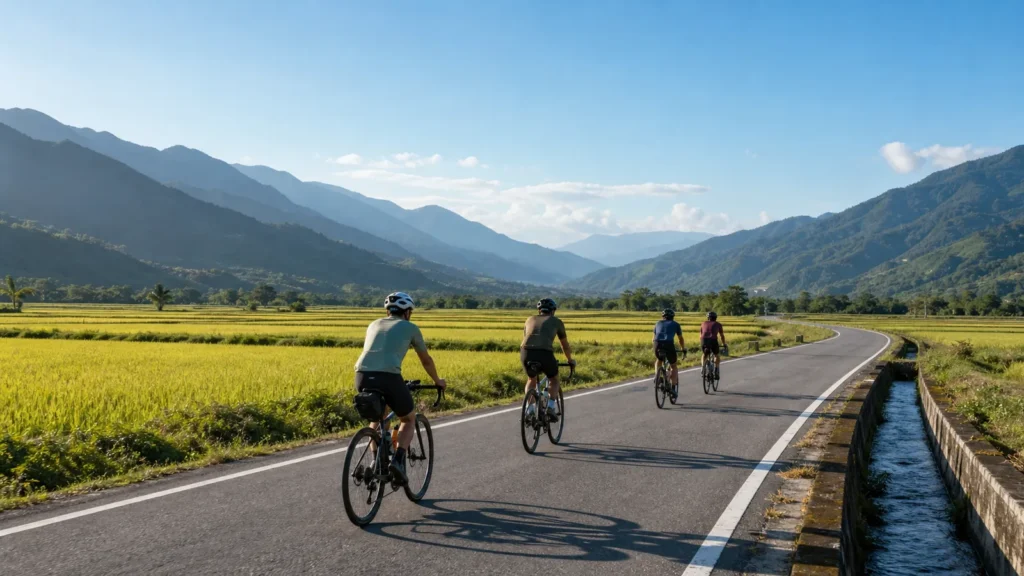
The Hualien to Taitung cycling route — typically done over 3–4 days with overnight stops in indigenous guesthouses along the valley — is TrotRadar’s single strongest recommendation for a slow travel activity in Taiwan. The infrastructure exists (signage in English, rental shops at both ends, accommodation at regular intervals), the scenery is consistently extraordinary, and the indigenous communities along the route — Amis, Bunun, and Puyuma peoples primarily — have developed cultural tourism offerings (indigenous cuisine, traditional crafts, cultural performances) that are worth seeking out specifically.

Vegetarian and Vegan Taiwan: The Buddhist Food Tradition
Taiwan’s strong Buddhist community has developed one of the world’s most sophisticated vegetarian food traditions — and the practical result for plant-based travelers is extraordinary. The 素食 (sùshí — vegetarian food) sign on a restaurant or stall indicates a vegetarian-friendly establishment; these are common enough throughout the island that eating vegan or vegetarian in Taiwan is genuinely easier than in most Western cities.
The Buddhist vegetarian tradition here avoids meat but also the “five pungent roots” (garlic, onion, chives, leeks, shallots) — producing a flavour profile quite different from conventional Taiwanese cuisine. The buffet-style vegetarian self-service restaurant format — pay by weight or by plate — is available in every city and most smaller towns, with exceptional variety at approximately NT$100–200 (€3–6) for a full meal. TrotRadar covers the complete framework for plant-based travel in our vegan and vegetarian travel guide.

Practical Taiwan Travel Notes from TrotRadar
Visas: Most Western nationalities (EU, UK, US, Canada, Australia, Japan, and many others) receive visa-free entry to Taiwan for 90 days. Check the Bureau of Consular Affairs website for current eligibility — the list has expanded significantly in recent years.
Currency: New Taiwan Dollar (NT$). As of recent rates, approximately NT$33 per €1. Widely accepted — cash is still preferred at night markets and smaller restaurants; card acceptance is growing in urban areas.
Mobile data: A SIM card with unlimited data is available at the airport on arrival for NT$300–500 (€9–15) for 30 days — one of the best-value travel SIM arrangements in Asia.
TrotRadar Taiwan daily budget:
- Budget traveler (hostel + night market eating + public transport): NT$1,200–2,000 (€35–60)
- Mid-range (guesthouse + mix of restaurants): NT$2,500–4,000 (€75–120)
- One of the best-value mid-range travel destinations in East Asia
The TrotRadar Verdict on Taiwan
Taiwan is not truly off the beaten path—it is simply undermarketed relative to its quality. Plan 10–14 days, use the rail network, eat at night markets, cycle a lake or valley, and spend one night in a mountain hot-spring ryokan.
Find Your Taiwan Travel Deal
TrotRadar features Taiwan rail pass options, Taipei hotel packages, Hualien guesthouse deals for Taroko Gorge access, and flight deals from Europe and North America. Asia’s most underrated island is ready for you. Browse TrotRadar’s Taiwan travel offers →