The Mediterranean Sea contains approximately 3,000 islands. The ones that appear in most travel content represent a small, intensely marketed fraction of that number — and they’ve been marketed so comprehensively, for so long, that their peak-season experience has become substantially about managing the consequences of their own fame. Santorini’s caldera at sunset is genuinely one of the most beautiful views in Europe; it is also genuinely one of the most crowded, photographed, and expensive views in Europe, with the queues at Oia’s viewpoint now requiring earlier positioning each year than the last.
At TrotRadar, we’ve been making the case for underrated Mediterranean islands for as long as we’ve been covering the region. The Mediterranean is the same sea everywhere — the same water clarity, the same quality of light, the same evening warmth, the same smell of thyme and salt and sunwarmed stone. What differs between a famous island and an overlooked one is primarily the density of people pursuing it.
When we talk about underrated Mediterranean islands, we mean destinations that share the same beaches, food, and climate as famous spots like Santorini or Ibiza, but with fewer visitors and lower prices.
TrotRadar Tip: The best-value Mediterranean island strategy is to fly into a major hub (Dubrovnik, Athens, Palermo, Valletta) and take a ferry to the quieter islands — rather than flying directly to the famous islands at premium prices. Ferry tickets across the Mediterranean average €10–40 for most short crossings. Browse TrotRadar’s Mediterranean island packages — we feature ferry-and-stay combinations that make island hopping genuinely affordable.
Vis, Croatia: Things to Do, Beaches & How to Visit
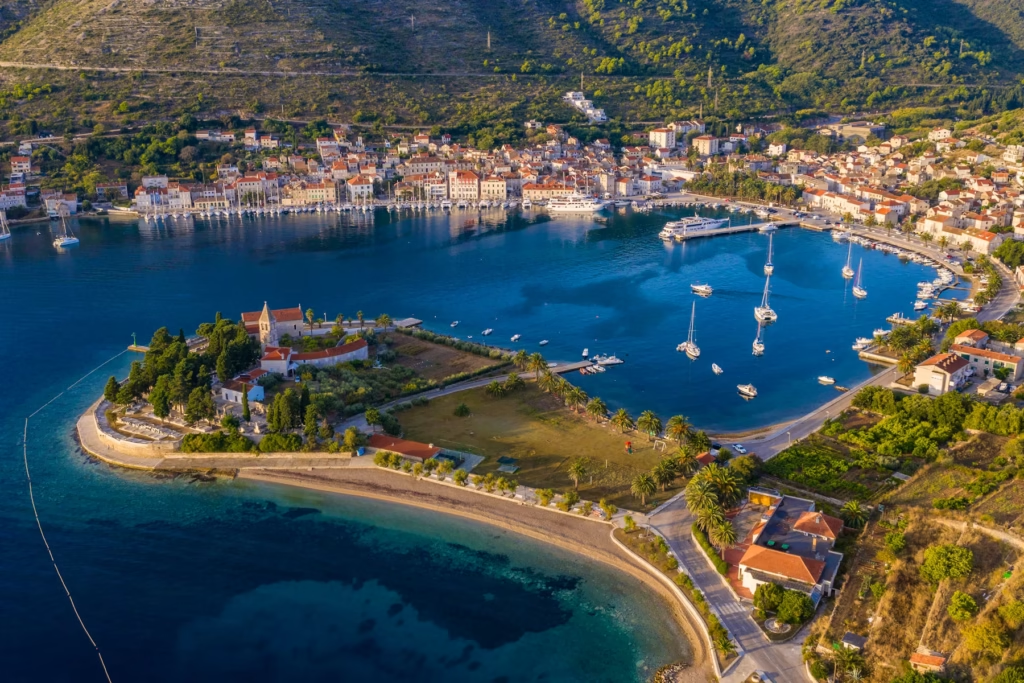
Vis was a Yugoslav Navy base until 1989 — closed to foreign visitors for most of the postwar period — which means it missed the wave of tourism development that transformed Hvar, Korčula, and Brač during the same decades. The result is the most architecturally intact and least overtouristed of Croatia’s outer islands: small fishing villages where the konoba (tavern) serves daily catch at prices last seen on the Dalmatian coast in 2005, a landscape of vineyards and lavender fields and dry-stone walls, and a coastline of coves with a water clarity that even Croatia’s high bar cannot surpass.
Vis Town and Komiža are the two main settlements — both small, both extremely pleasant, both structured around the particular rhythm of a working fishing community that hasn’t been entirely reorganised around tourism. The terrace of a konoba in Komiža in the early evening, with a glass of Vugava (the island’s distinctive white wine, grown only on Vis) and fresh fish costing €12–18 for a full dinner, is the specific experience that converts Vis visitors into advocates.
The Blue Cave on the island of Biševo — a sea cave illuminated by refracted light that turns the interior a vivid electric blue between 11 AM and noon on sunny days — is one of the finest natural attractions in the Adriatic and accessible by day-trip boat from Komiža.
Getting there: Ferry from Split (2.5 hours, approximately €10 each way) or catamaran (1 hour, €15–20). Ferries run several times daily in season.
TrotRadar Vis daily budget: €55–90 — noticeably below equivalent quality on Hvar or Korčula. For the broader Croatia and Balkans context, TrotRadar’s Balkans road trip guide covers how Vis fits into a Slovenia-to-Albania circuit.
Naxos, Greece: Beaches, Villages & Why It’s a Great Santorini Alternative
The standard Cyclades itinerary runs Mykonos–Santorini and considers the chain explored. Naxos — the largest island in the Cyclades, sitting between the two — is the one that offers everything the Cyclades do (white cubic architecture, Aegean blue water, ancient history, excellent food) at prices that diverge dramatically from its more famous neighbours.
The island’s size is its primary advantage: interior mountain villages, Byzantine churches, Venetian tower houses, potato and olive growing agricultural communities — all accessible within 30–45 minutes of the port by local bus or rental car. Naxos Town (Hora) has a remarkably intact medieval Venetian kastro (fortress) rising above the port — the finest surviving example of Venetian defensive architecture in the Cyclades, still partially residential, with a Catholic cathedral and several small museums inside its walls.
The beaches on Naxos’s western coast — Agios Prokopios, Agia Anna, Plaka — run for approximately 20 km of fine sand and clear water with a fraction of the density and price of Mykonos equivalents. A sunbed rental that costs €25 on Mykonos typically costs €8–12 at Naxos.
The Portara — an enormous marble gateway to an unfinished ancient temple on a promontory connected to the town by a causeway — is the island’s defining image and one of the finest sunset viewpoints in the Cyclades. Free, accessible at any hour, and consistently less crowded than the Oia sunset queue despite being equally beautiful.
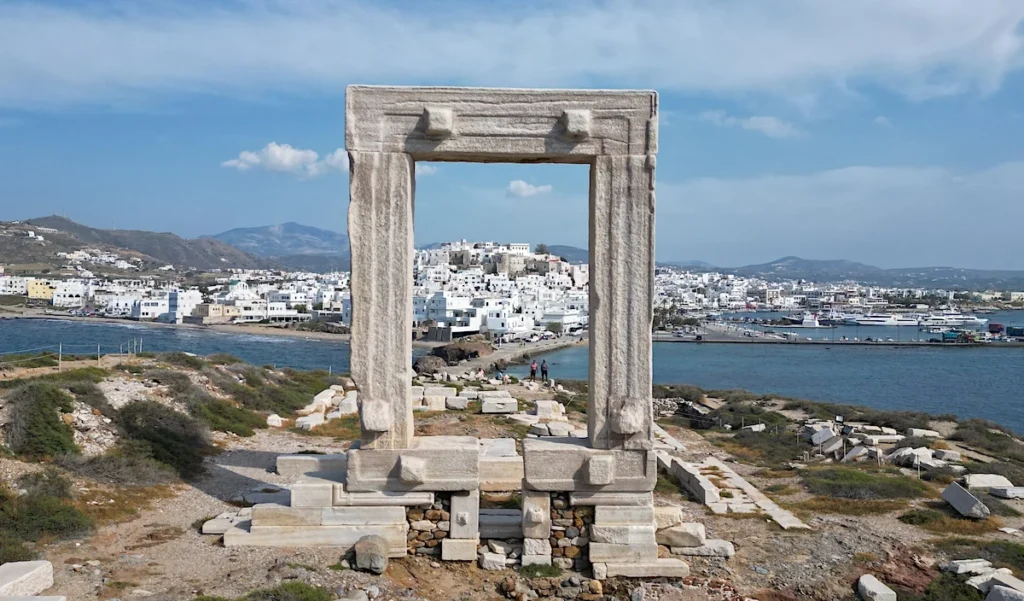
Getting there: Ferry from Piraeus (Athens port, 5.5 hours on conventional ferry, 3.5 hours on high-speed), or via Paros (45 minutes). Multiple daily connections in season.
TrotRadar Naxos daily budget: €60–100 — 20–40% below equivalent Mykonos or Santorini costs for the same standard of experience. For our complete Greece beyond the islands perspective, read TrotRadar’s Greece mainland travel guide.
Pantelleria, Italy: Volcanic Hot Springs, Dammusi & Travel Guide
Pantelleria is one of the most unusual islands in the Mediterranean — 83 square kilometres of volcanic rock sitting halfway between Sicily and Tunisia, closer to Africa than to Italy, and looking the part: black lava coastline, domed stone dammusi houses built to withstand the relentless winds, terraced caper fields producing the finest capers in Italy, and a landscape of volcanic hot springs and crater lakes that belongs to no standard Mediterranean template.
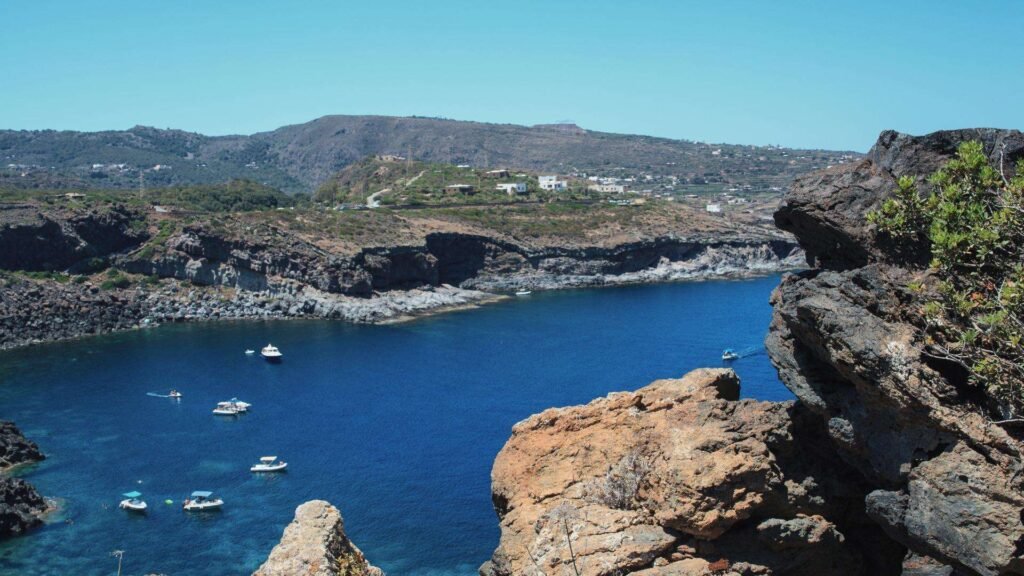
The island lacks sandy beaches almost entirely — swimming is done from volcanic rock shelves into extraordinary clear water — which is a self-selecting filter that keeps the crowd profile specific: Italians who know it, design-conscious European travelers, and the occasional celebrity who discovered it decades ago. Pantelleria has been a discreet luxury destination for the Italian establishment for years; it also has genuinely affordable guesthouses and dammusi rentals for independent travelers who research it properly.
The Specchio di Venere (Mirror of Venus) — a volcanic crater lake at the island’s centre, with naturally warm water and white volcanic mud used as a skin treatment — is the defining free activity. The Cala Gadir hot spring on the eastern coast, where geothermal vents warm a natural sea pool between volcanic rocks, is the other.
Pantelleria wine: The island produces Passito di Pantelleria — a sweet dessert wine made from sun-dried Zibibbo grapes — of extraordinary quality. The best producers (Donnafugata and Florio are the most internationally known) offer tastings at the estate.
Getting there: Direct flights from Rome, Milan, and Palermo (45–90 minutes); ferry from Trapani, Sicily (5.5 hours) or hydrofoil (2.5 hours, summer only).
TrotRadar Pantelleria daily budget: €70–120
Gozo, Malta: Things to Do, Diving & How to Visit
Gozo is Malta’s smaller island — reachable by a 25-minute ferry from Ċirkewwa on the northwest tip of Malta — and has been quietly providing an alternative to Malta’s more developed tourism circuit for decades. Smaller, quieter, more rural in character, and more atmospherically beautiful in the specific way that smaller Mediterranean islands often are.
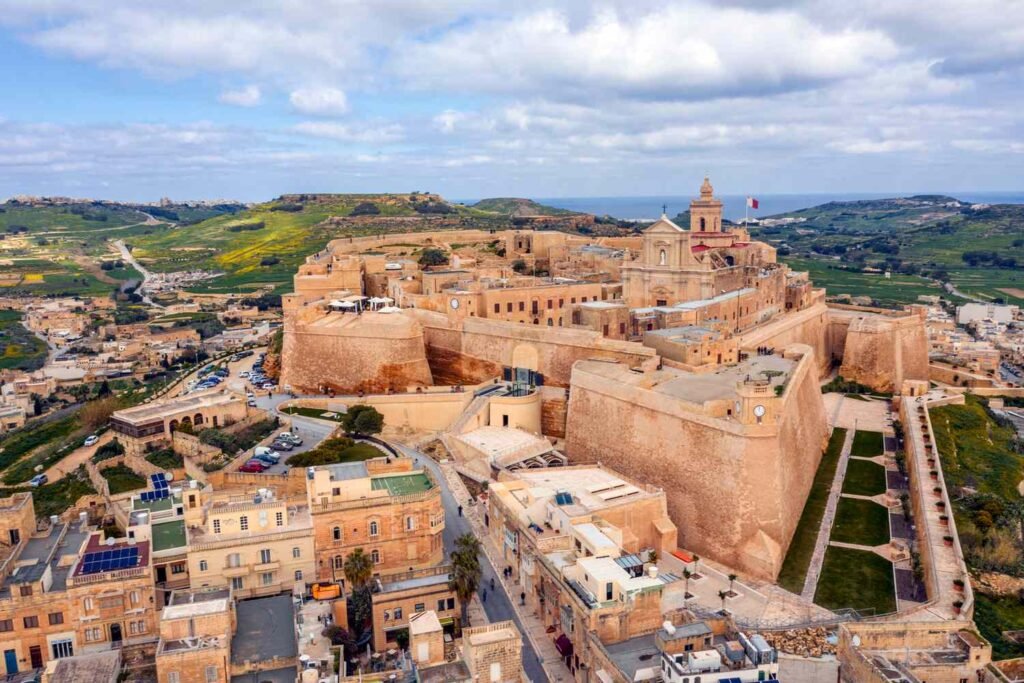
The island is predominantly limestone — the same golden stone as Valletta, used here for the village churches, farmhouses, and the walled fields that give the agricultural interior a remarkably intact traditional character. Victoria (Rabat), the capital, sits at the island’s centre, its citadel (Il-Kastell) providing panoramic views across the whole island from a fortification built in stages from the Neolithic to the Knights of St John period.
Gozo is one of the best diving destinations in the Mediterranean — the Blue Hole and the Inland Sea at Dwejra are among the most distinctive dive sites in European waters (the sea arch that formed the famous Azure Window, which collapsed in 2017, created a new underwater landscape that has become a significant dive site in its own right).
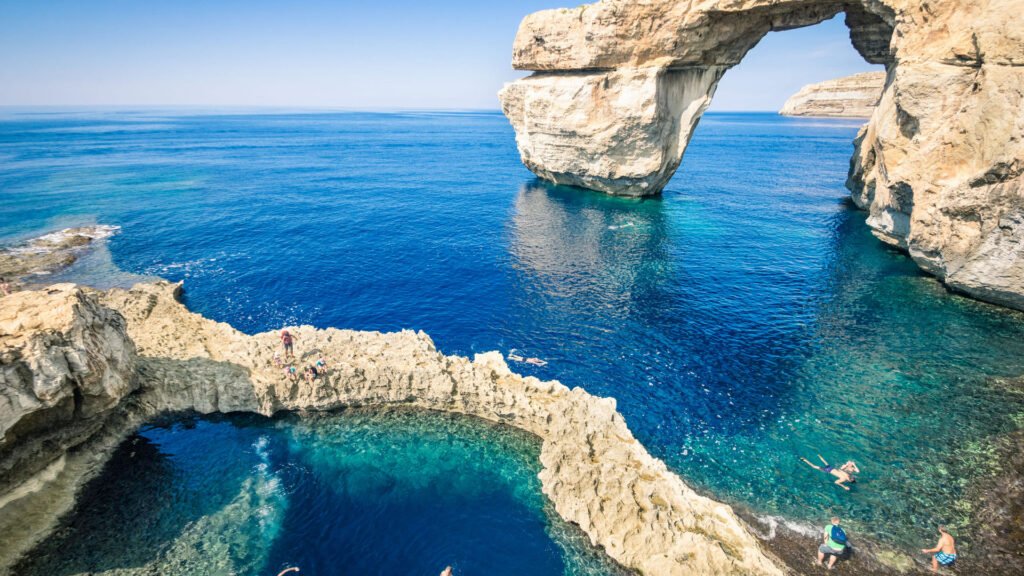
Getting there: Fly to Malta (well-connected from most European cities), take the Gozo Channel ferry from Ċirkewwa (25 minutes, approximately €5 return for a foot passenger). For the broader Malta context — including Valletta, one of the finest Baroque capital cities in Europe — read TrotRadar’s architecture destinations guide, which covers Malta’s extraordinary urban heritage.
TrotRadar Gozo daily budget: €55–90
Samos, Greece: Hiking, Beaches, History & Travel Guide
Samos — the Aegean island closest to Turkey’s coast, separated from the Anatolian mainland by a strait of barely 1.6 km — is one of the Aegean’s most naturally varied islands: pine-forested mountains, excellent beaches on the southern coast, the Heraion (a UNESCO World Heritage archaeological site — the massive ancient Temple of Hera), and the perfectly preserved 6th-century BCE tunnel of Eupalinos — one of the engineering masterpieces of the ancient world, a 1,036-metre water tunnel bored simultaneously from both ends, meeting in the middle with an error of less than a metre.
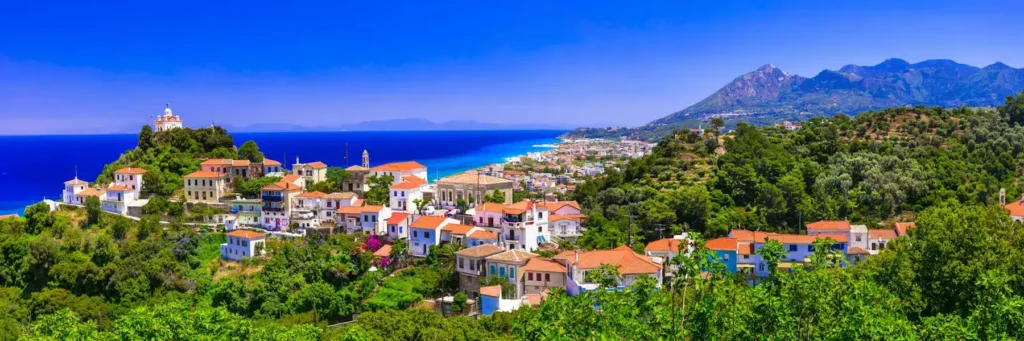
The island produces an excellent local wine (Muscat of Samos, a naturally sweet white of genuine quality) and has the particular benefit of the Turkey proximity: a day trip to Kuşadası and the ruins of Ephesus is achievable on a short ferry crossing (approximately 1 hour), giving Samos travelers access to what TrotRadar considers one of the finest classical heritage experiences in the eastern Mediterranean — covered in detail in our Turkey beyond Istanbul guide.
Getting there: Direct flights from several European cities; ferry from Athens (Piraeus). Ferry from Kuşadası, Turkey is available in summer.
TrotRadar Samos daily budget: €55–85
TrotRadar’s Island Selection Framework
Choosing between Mediterranean islands requires matching priorities to island character:
- Best for architecture and history: Gozo (Baroque) or Naxos (Venetian + ancient Greek)
- Best for diving: Gozo (Blue Hole, Inland Sea) or Vis (Adriatic clarity)
- Most unusual landscape: Pantelleria (volcanic black rock, caper fields, dammusi houses)
- Best beaches: Naxos (20 km of western coast sand without Mykonos prices)
- Best food and wine: Vis (fresh Adriatic fish, Vugava wine) or Samos (Muscat, fresh local produce)
- Lowest budget: Naxos or Gozo — both significantly below the equivalent famous island cost
For the complete budget Mediterranean travel picture, read TrotRadar’s cheapest countries in Europe guide — which covers the mainland context around these island destinations.
The TrotRadar Verdict
The underrated Mediterranean islands are not a compromise for travelers who couldn’t afford Santorini or Mykonos. They are, in most measurable respects, the better version of the same sea — the same water, the same light, the same warmth, the same taverna dinner with a carafe of house wine — experienced without the queues, the prices, and the specific exhaustion of destinations that have been loved slightly beyond their optimal capacity.
Pick one. Go in June or September rather than August. Stay longer than three nights. TrotRadar is confident it will be the right call.
Find Your Mediterranean Island Deal
TrotRadar features ferry-and-stay packages to Vis, Naxos, Gozo, and Pantelleria — including direct flight deals and island-hopping combinations that connect multiple destinations in a single trip. Browse TrotRadar’s Mediterranean island offers →