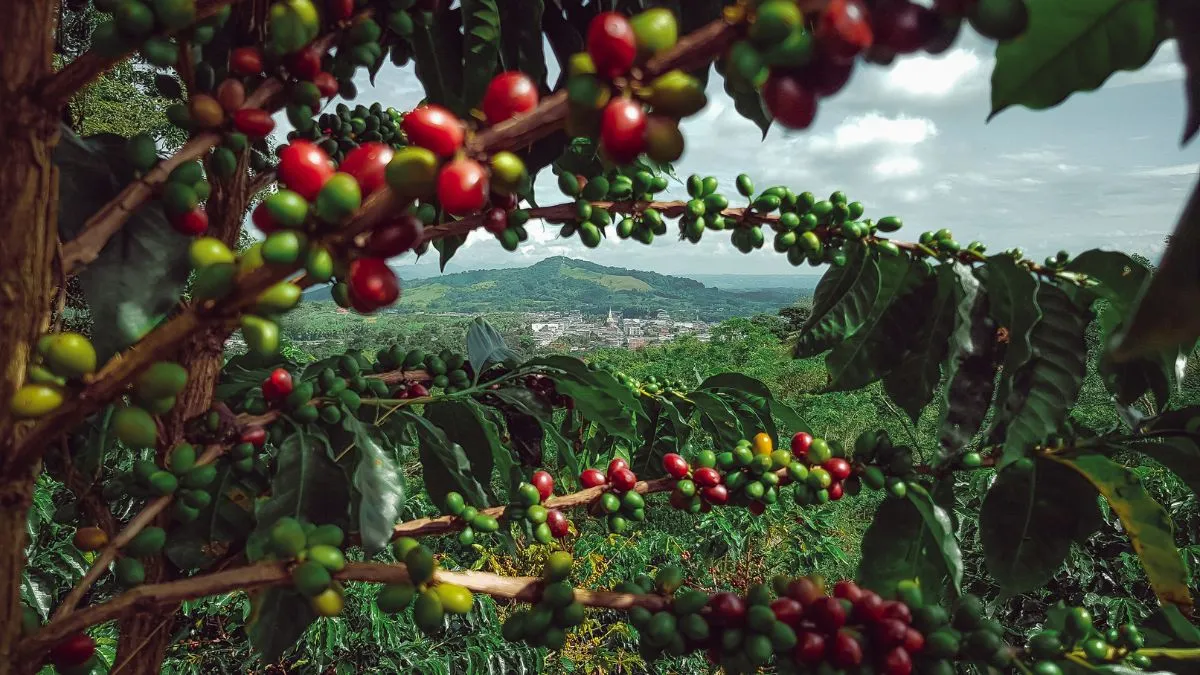
Colombia produces some of the finest coffee in the world — and the region that produces the finest of that coffee is a 50,000 square kilometre sweep of cloud-forested mountain slopes in the central Andes, designated a UNESCO World Heritage Cultural Landscape in 2011. The Eje Cafetero (Coffee Axis) — centred on the departments of Caldas, Quindío, and Risaralda — is where most of Colombia’s arabica is grown, where the distinctive finca cafetera (coffee farm) architecture developed as a regional vernacular, and where the rolling hills, bamboo groves, and wax palms of the Andes combine into a landscape that travelers consistently describe as among the most beautiful in South America.This Colombia coffee region guide helps you navigate it all.
At TrotRadar, the Colombia coffee region travel guide conversation is one we’ve been having for years — because the Eje Cafetero is simultaneously the country’s most visually distinctive region, one of its most genuinely immersive cultural experiences, and one of its most practical: well-connected, affordable, and structured around the kind of slow, farm-to-cup engagement that rewards the traveler who stays three days rather than passing through on a day trip from Medellín.
TrotRadar Tip: The Colombia coffee region is most rewarding when you stay at a working finca (farm) rather than a hotel in town. Farm stays typically include daily coffee tours, farm-cooked meals, and the particular atmosphere of waking up in a coffee plantation at altitude. Prices run $40–80 USD/night all-inclusive — exceptional value for the experience delivered. Browse TrotRadar’s Colombia coffee region farm stay deals — we feature verified finca accommodations with authentic tour programs.
What Is the Eje Cafetero? Colombia’s Coffee Region Explained
The Eje Cafetero occupies the western and central Andean cordilleras at altitudes between 1,200 and 2,000 metres — the precise elevation range that produces the “mild arabica” profile Colombia is known for. The terrain is steep, the rainfall consistent, the cloud cover frequent enough to moderate the direct equatorial sun, and the volcanic soils rich enough to produce cherry-red coffee fruit of exceptional sugar content.
The coffee is shade-grown under guamo and banana trees across most traditional farms — a cultivation approach that creates the characteristic layered canopy aesthetic of the coffee landscape and supports the extraordinary biodiversity (Colombia has more bird species than any other country on earth; the Eje Cafetero is a significant birding destination).
The three main gateway cities — Manizales (Caldas), Armenia (Quindío), and Pereira (Risaralda) — are connected by the region’s main transport network. Of the three, TrotRadar recommends Armenia as the most convenient base for reaching Salento — the small town that functions as the coffee region’s tourist hub and the most charming of the small towns in the region.
Salento, Colombia: Things to Do, Coffee Tours & Travel Tips
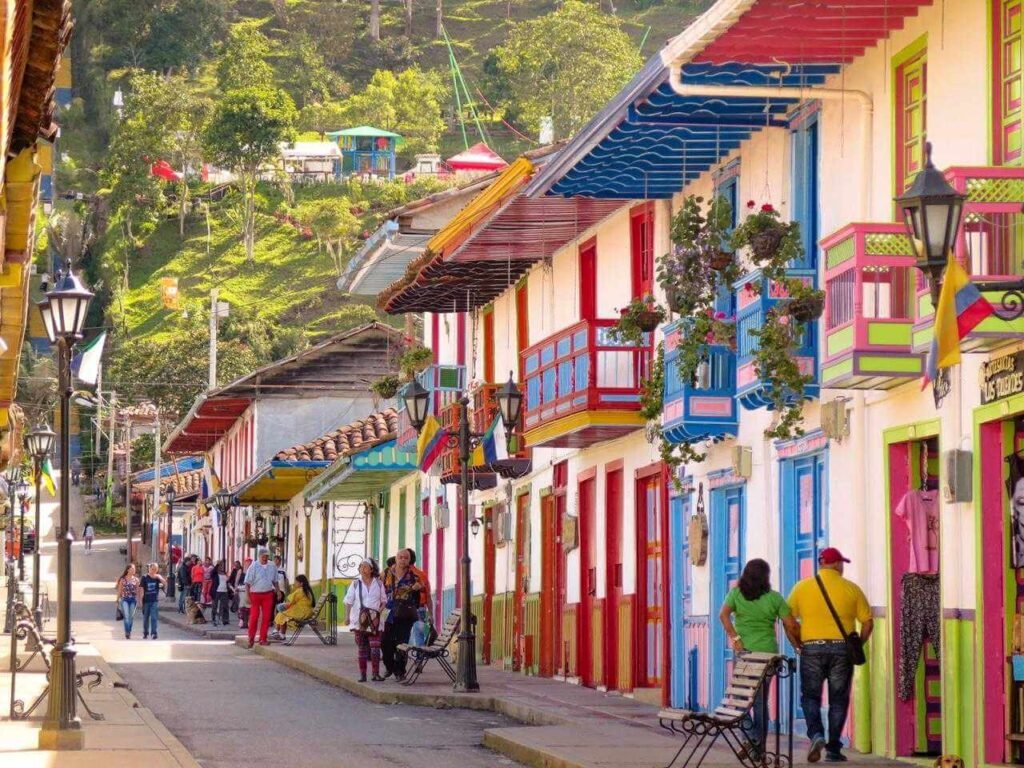
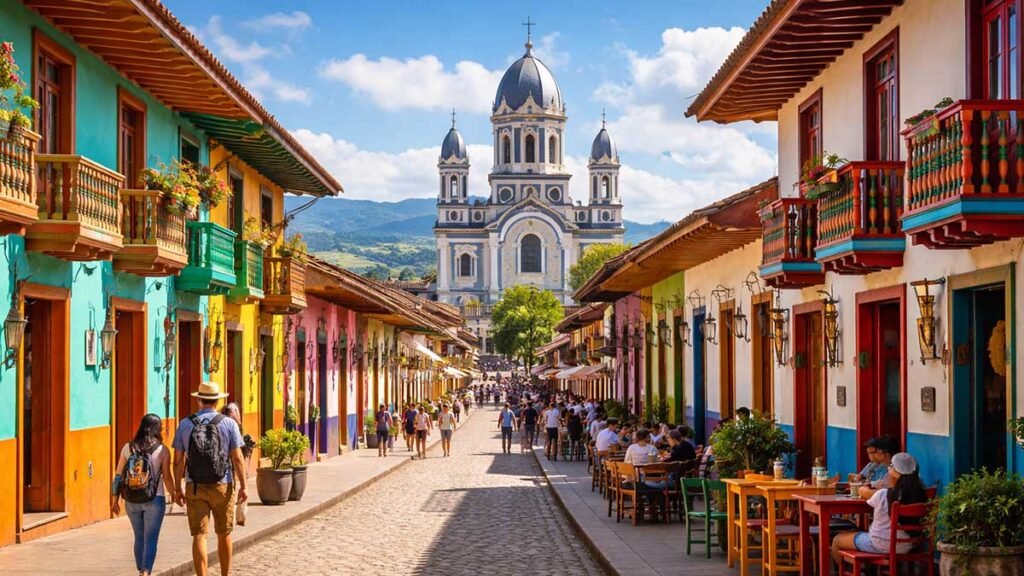
Salento is a small colonial town of approximately 8,000 people that has developed into the primary tourist node of the Eje Cafetero — and has absorbed that role without losing the quality that made it worth visiting in the first place. The Calle Real (Real Street) — the main pedestrian thoroughfare — is lined with balconied colonial buildings painted in vivid combinations of yellow, red, green, and blue, with craft shops, coffee bars, and restaurants spilling onto the street in a way that feels genuinely lively rather than staged.
The TrotRadar recommended daily structure in Salento:
- Morning: Coffee tour at a nearby farm before the heat builds — most farms offer 2-hour tours departing at 8 or 9 AM for approximately $10–15 USD including tasting
- Midday: Trout lunch in the town — the local trucha (rainbow trout) from the mountain streams is the regional speciality and costs COP 18,000–25,000 (€4–6) at any of the restaurants on the main street
- Afternoon: Jeep to the Valle de Cocora (see below) for the late afternoon light on the wax palms
- Evening: Tinto (black coffee) and bandeja paisa (the Colombian mixed plate — beans, rice, ground beef, chicharrón, avocado, plantain, arepa, egg) at a local restaurant
Getting to Salento: Bus from Armenia (1.5 hours, COP 6,000 — approximately €1.50). Armenia is connected by bus to Medellín (4.5 hours) and Bogotá (7 hours), and by air from both. TrotRadar covers the full Colombia circuit — including Medellín — in our underrated Latin America cities guide, which covers Medellín’s remarkable transformation and how the coffee region fits as a day or overnight trip from there.
Valle de Cocora: How to Visit Colombia’s Wax Palm Valley
Twelve kilometres from Salento, the Valle de Cocora is the Eje Cafetero’s most visually extraordinary landscape — a green valley of cloud forest and pasture from which the wax palms (Ceroxylon quindiuense) rise to 60 metres, the tallest palm species in the world and the national tree of Colombia. The image — slender white trunks rising improbably from green hillsides, often with low cloud moving between them — is the defining photograph of the coffee region and one that loses nothing in reality.
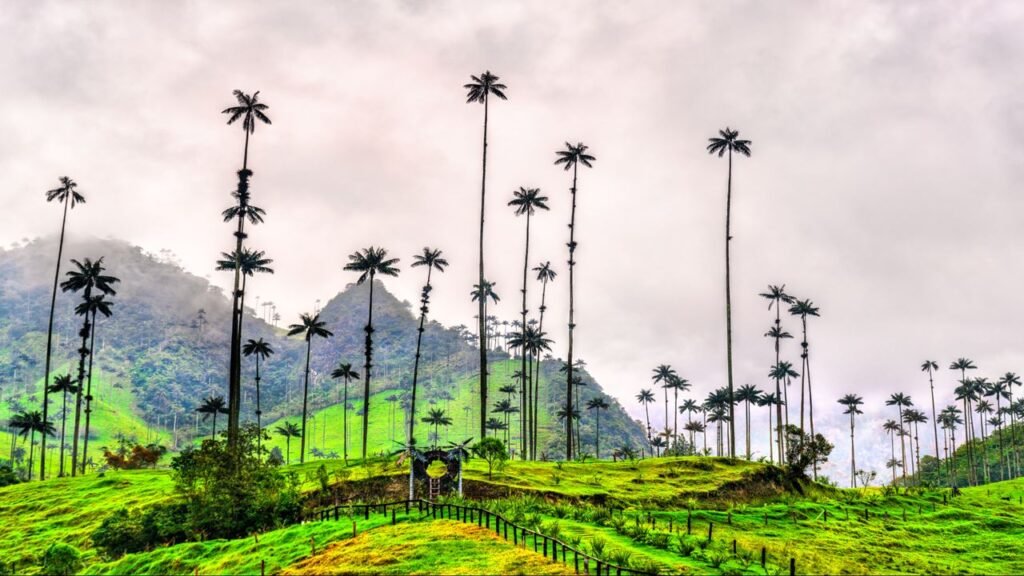
The Cocora Valley circuit hike runs 10–14 km depending on route variation, taking 4–6 hours through the palm valley, into cloud forest (excellent bird watching — hummingbirds and possible Andean condor sightings), and back via the valley floor. Entrance is free; the jeep from Salento costs COP 5,000 (approximately €1.20) each way.
TrotRadar timing recommendation: the afternoon light in the valley is better than the morning light for the palm photographs — the mist rolls in from the east in the afternoon, creating the atmospheric conditions that characterise the best Valle de Cocora images. Take the jeep out in the early afternoon and hike back or return by jeep before dark.
Bird watching in the Valle de Cocora: The cloud forest section of the circuit has been documented with 200+ species including multiple hummingbird species, the Andean condor (occasionally visible soaring above the ridgeline), and various tanagers and antpittas. Colombia’s extraordinary bird diversity — the highest of any country globally — makes the Eje Cafetero one of the finest accessible birding destinations in South America.
Best Coffee Farm Tours in the Colombia Coffee Region
The coffee farm tour is the activity that brings most visitors to the Eje Cafetero, and the quality varies considerably between operators. TrotRadar’s framework for choosing well:
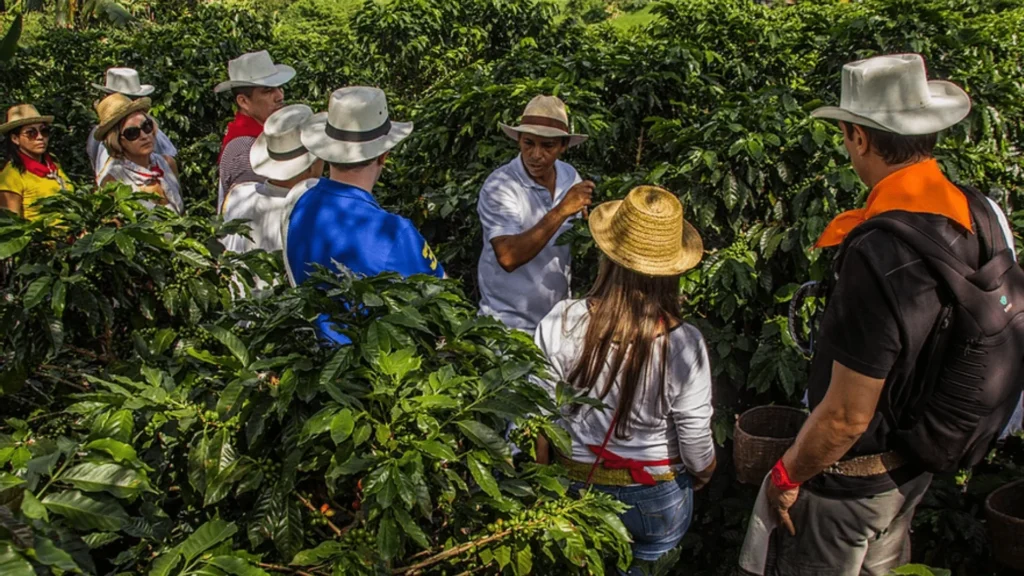
Look for tours that cover the full process: The finest coffee farm tours take you through the complete chain — from picking ripe cherries on the slopes, through the wet processing mill (pulping, fermentation, washing), to the drying beds, the cupping room, and the final roasting. A tour that ends at the cupping table with three different roast profiles to taste is significantly more educational than one that shows the plants and serves a cup of finished coffee.
Choose working farms over demonstration farms: Several operations near Salento have been established specifically for tourism and have the aesthetic of a working farm without the actual agricultural activity. A genuine working finca will have full-time employees (especially at harvest, October–February), equipment showing use, and a farm manager who grows coffee for sale rather than tourism primarily.
TrotRadar-recommended farm types:
- Finca El Ocaso (near Salento) — frequently cited in traveler reviews as the most comprehensive and authentic tour in the immediate area
- Finca Argelia (Quindío) — family-run, speciality coffee focus, small group tours
- Ask your accommodation for their specific recommendation — guesthouses with local connections often refer to farms they know personally rather than the highest-commission option
Best Towns to Visit in the Colombia Coffee Region
Manizales — the most urban of the three gateway cities — has a surprisingly strong cultural scene anchored by its large university population. The Chipre neighbourhood viewpoint gives you a panoramic view over the city and the surrounding volcano country, including the snow-capped Nevado del Ruiz (5,321 m) on clear mornings. The Manizales Coffee Festival in January is one of the most significant coffee trade events in the world and coincides with considerable public celebration in the city.
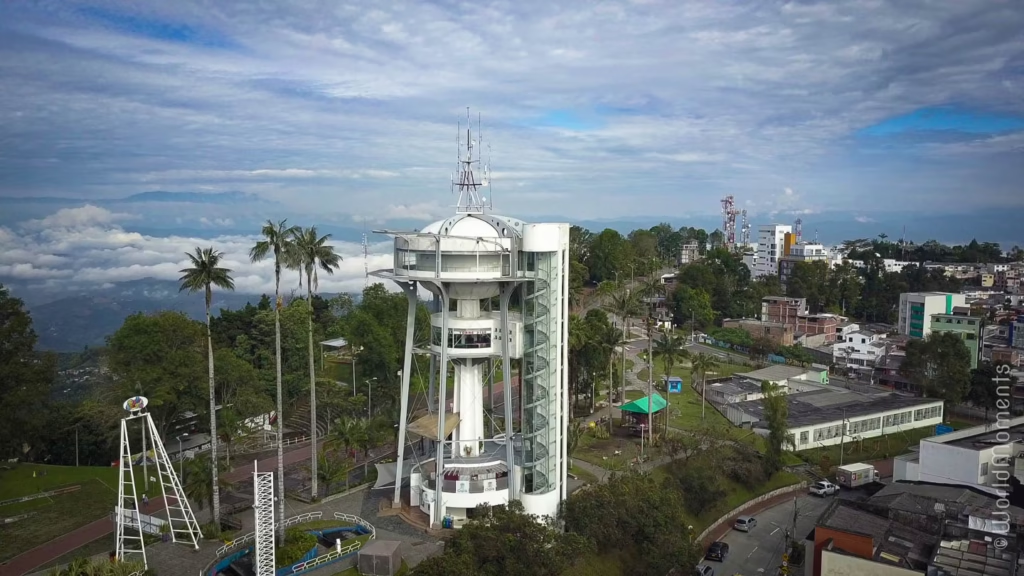
Filandia — a smaller colonial town similar in character to Salento but with fewer visitors — is worth a half-day from Armenia. Its handwoven palm-leaf basketware (chiva baskets) is the town’s traditional craft and a genuinely distinctive souvenir from a region where the shopping is mostly coffee-adjacent products.
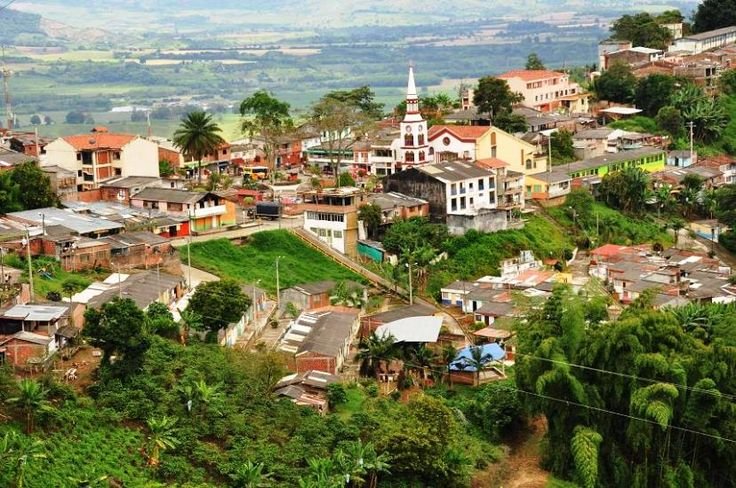
Buenavista — in the hills above Quimbaya — is the coffee region town that genuinely hasn’t been discovered yet by international tourism. A handful of guesthouses serve the domestic tourism market; the view over the coffee landscape from the ridge above the town is the finest panoramic perspective on the Eje Cafetero available from any easily accessible vantage point.
Colombian Coffee Culture: What the Region Taught the World
Understanding Colombian coffee culture requires separating two distinct realities. The premium washed arabica that Colombia exports to specialty roasters in Europe and North America — fruity, bright, complex — is not what most Colombians drink. The domestic coffee tradition runs on tinto: a small black coffee of medium roast, brewed strong, drunk sweet, available for COP 1,000 (approximately €0.25) at any tienda (corner store) in the country.
The specialty coffee revolution has reached Colombia’s own consumption in the past decade — a new generation of Colombian baristas and catadores (cuppers) has developed a domestic specialty market, concentrated in Bogotá, Medellín, and now the coffee region itself. Cafés like Café Jesús Martín in Salento serve their own farm-sourced single-origin coffees prepared by methods (V60, Chemex, aeropress) that would be at home in any specialty café in Melbourne or Copenhagen — for approximately €2.50 per cup.
For the broader Colombia travel context and how the coffee region connects to the rest of the country, read TrotRadar’s South America first-timer guide — which covers the full Colombia itinerary alongside the continent’s other major destinations.
Colombia Coffee Region Travel Tips: Budget, Safety & Best Time to Visit
Best time to visit: The coffee region is green and accessible year-round, but the main harvest — and the most visually active farms — runs October through February. The dry seasons (December–March and July–August) offer the clearest skies for mountain views but the wettest months (April–May and September–October) produce the most lush, vivid landscape.
Safety: The Eje Cafetero is considered one of Colombia’s safest tourist regions. Exercise standard urban precautions in the larger cities; the rural coffee landscape is broadly very safe.
TrotRadar Colombia coffee region daily budget:
- Hostel or guesthouse in Salento: COP 40,000–80,000 (€10–20) for a dorm; €20–40 for a private room
- Finca farm stay: $40–80 USD/night all-inclusive
- Full daily budget (Salento independent): €30–50
- Full daily budget (farm stay): €45–80
The TrotRadar Verdict on the Colombia Coffee Region Guide
The Colombia coffee region travel guide makes a case that writes itself: one of the world’s great agricultural landscapes, a specific and distinctive regional architecture and food culture, the finest coffee on earth drunk where it was grown, and a small town in the mountains that manages the difficult balancing act of being genuinely pleasant to spend time in while also being the most photographically rewarding destination in the Colombian Andes.
Spend at least three nights. Stay at a finca if you can. Drink the tinto at the tienda and the single-origin V60 at the specialty café. Walk the Valle de Cocora in the afternoon mist. The coffee region doesn’t need selling — it needs time.
Find Your Colombia Coffee Region Deal
TrotRadar features finca farm stays, Salento guesthouse packages, guided coffee tour experiences, and Medellín-to-coffee-region transport deals. Colombia’s most beautiful region is waiting. Browse TrotRadar’s Colombia coffee region offers →