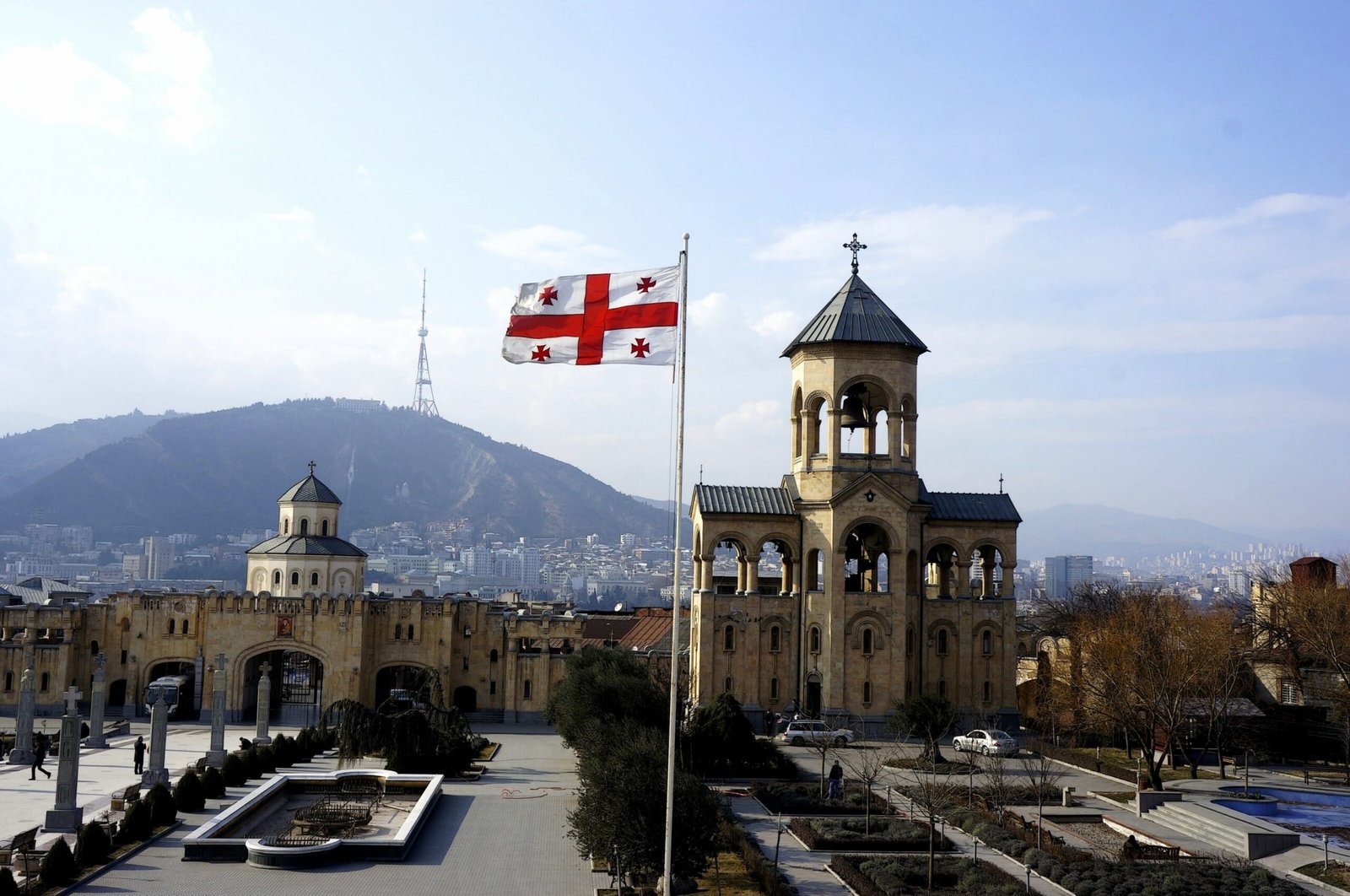
There’s a particular kind of confusion that happens when you tell people you’re traveling to Georgia. “Oh, Atlanta?” No — not Atlanta. Georgia the country, tucked between the Greater Caucasus mountains to the north, the Black Sea to the west, Armenia and Azerbaijan to the south, and Turkey at its southwestern edge. It’s a place that sits at the precise intersection of Europe and Asia and belongs fully to neither — and that ambiguity is exactly what makes traveling in Georgia the country so rewarding.
At TrotRadar, Georgia has been on our recommended list since before most Western travelers had added it to their radar. A capital city with one of the most atmospheric old towns on the continent, mountains that rival anything in the Alps, a wine culture stretching back 8,000 years, and food so distinctive and genuinely delicious that it tends to overshadow everything else in travelers’ memories — Georgia overdelivers at almost every turn.
TrotRadar Tip: Georgia offers visa-free or visa-on-arrival access for most nationalities for up to 365 days — one of the most generous tourist policies in the world. Combined with daily costs of €25–45, it’s one of the best-value destinations we cover. Check our Georgia travel offers page for current flight deals from European cities.
Tbilisi: More Than Just a Starting Point for Traveling in Georgia
Most trips to Georgia begin in Tbilisi, and most travelers who planned on one or two nights end up staying four or five. The city earns that kind of extension — and TrotRadar has heard this from virtually every traveler we’ve spoken to who has been here.
The historic core, Tinganes, is a maze of carved wooden balconies, crumbling brick churches, and sulfurous bathhouses clustered on the banks of the Mtkvari River. The Abanotubani district, known as the sulfur bath quarter, is where Tbilisi’s Persian-era underground thermal springs still feed a cluster of domed bathhouses. A private bath session — an hour in your own room with a sulfur pool and an optional vigorous scrub from an attendant — costs around €10–20 depending on the bathhouse and time of day. TrotRadar considers this a non-negotiable experience.
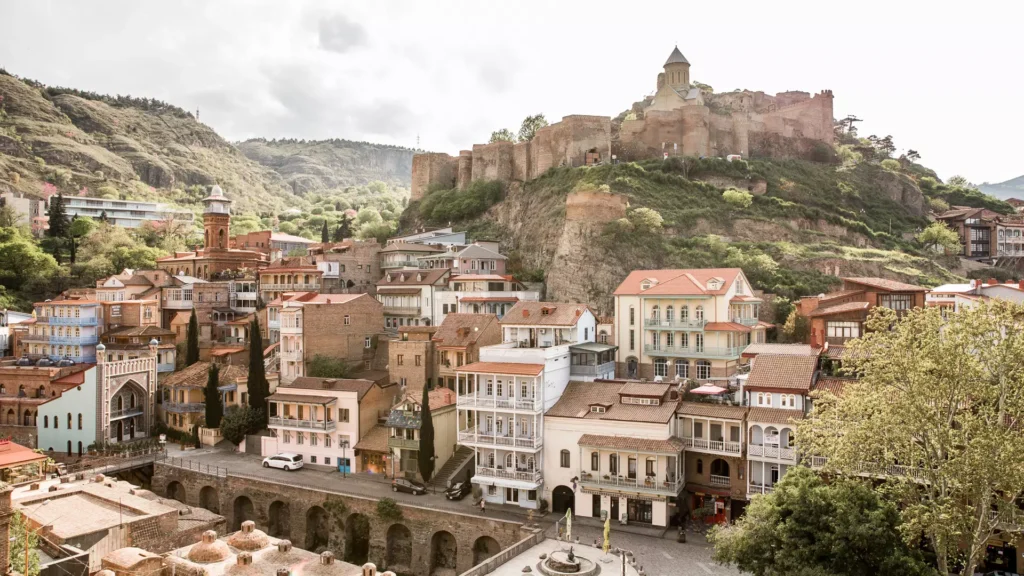
Above the old town, the Narikala Fortress rises from the ridge in partial ruin, connected to a free gondola lift that gives you some of the best views over the city. Walk down through the Botanic Garden on the other side for a quiet escape from the main tourist flow.
Beyond the old town, the Fabrika complex — a converted Soviet sewing factory turned creative hub — is an excellent evening destination with outdoor space, craft beer, and street food. The Marjanishvili and Vera neighborhoods have a grittier, more local energy: good wine bars, independent restaurants, and far fewer tour groups.
TrotRadar’s Tbilisi practical notes:
- Stay in or just outside the Old Town for atmosphere; Airbnbs and guesthouses typically run €20–45/night for a private room
- Tbilisi’s metro is cheap and covers the major areas; taxis via the Bolt app are inexpensive (most trips under €3)
- Nightlife is genuinely world-class — Tbilisi’s electronic music scene has earned an international reputation
For travelers wanting to understand how Tbilisi fits into a wider Caucasus and Eastern Europe circuit, TrotRadar’s guide to Eastern Europe’s seven best hidden gem cities provides useful context and comparison.
Kazbegi: The Mountain Town That Will Stop You Cold
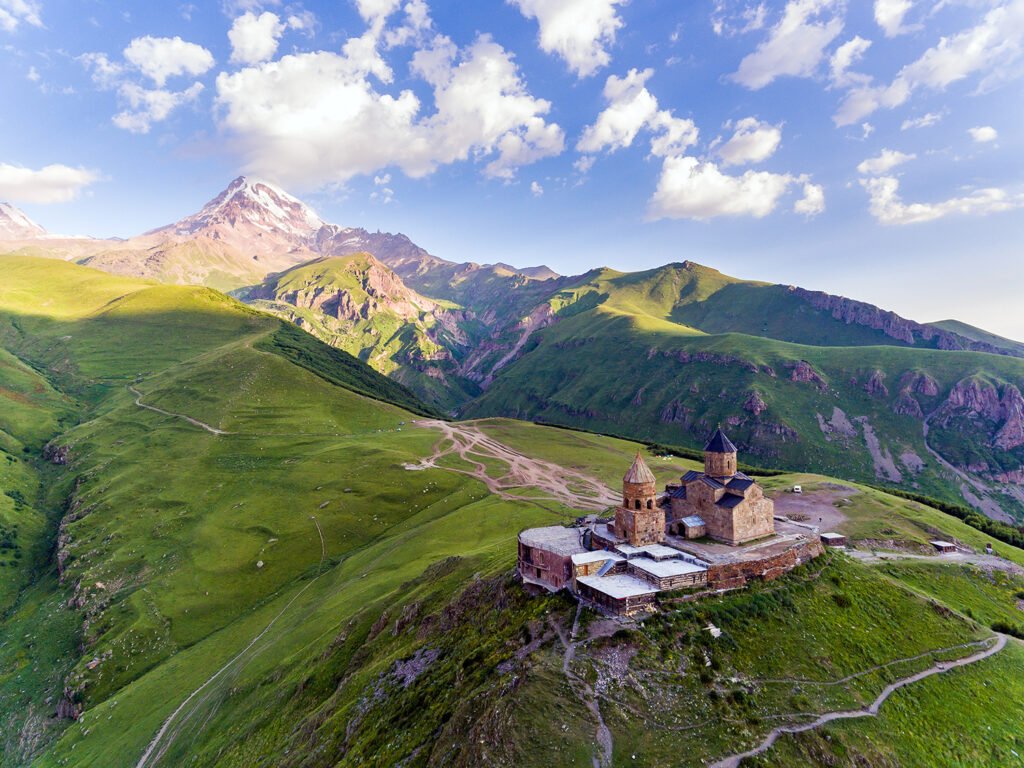
Around 150 km north of Tbilisi, the town of Kazbegi (Stepantsminda) sits at roughly 1,750 meters in the Greater Caucasus Mountains, and the scenery that surrounds it is the kind that makes you stop mid-sentence. The defining image — and it’s an image that doesn’t exaggerate — is the Gergeti Trinity Church, a 14th-century Georgian Orthodox church perched on a 2,170-meter ridge with Mount Kazbek (5,047 m) rising behind it.
The church is reachable on foot in 1.5–2 hours from the town center via a well-marked trail, or by 4WD if conditions are difficult. Either way, arrive early morning to beat the day-trippers who come up on marshrutkas (shared minibuses) from Tbilisi. The crowds thin dramatically by mid-afternoon, and if you’re staying overnight in Kazbegi — which TrotRadar absolutely recommends — you’ll have the approach and the views largely to yourself by evening.
Beyond Gergeti, the Kazbegi area opens up into serious alpine hiking territory. The Chkheri waterfall trail, the hike to Arsha village, and the route toward the Gveleti gorge are all doable in a day and reward walkers with the kind of big, quiet mountain wilderness that’s increasingly hard to find in Europe.
TrotRadar’s Kazbegi getting-there guide: Marshrutka from Tbilisi’s Didube station departs daily, takes approximately 3 hours, and costs around €4–5 each way. Private taxis run around €50–70 for the return trip. The road climbs through the stunning Georgian Military Highway, past the Jvari Pass and the Gudauri ski resort.
Staying overnight: Guesthouses in Kazbegi run €15–30/night including breakfast; several family-run options serve outstanding home-cooked Georgian food in the evenings.
The Georgian Wine Country: Kakheti and the Qvevri Tradition
Georgia is one of the oldest wine-producing countries in the world — archaeological evidence of wine production here dates back approximately 8,000 years. The Kakheti region, east of Tbilisi in a broad valley between two mountain ranges, is the heartland of that tradition.
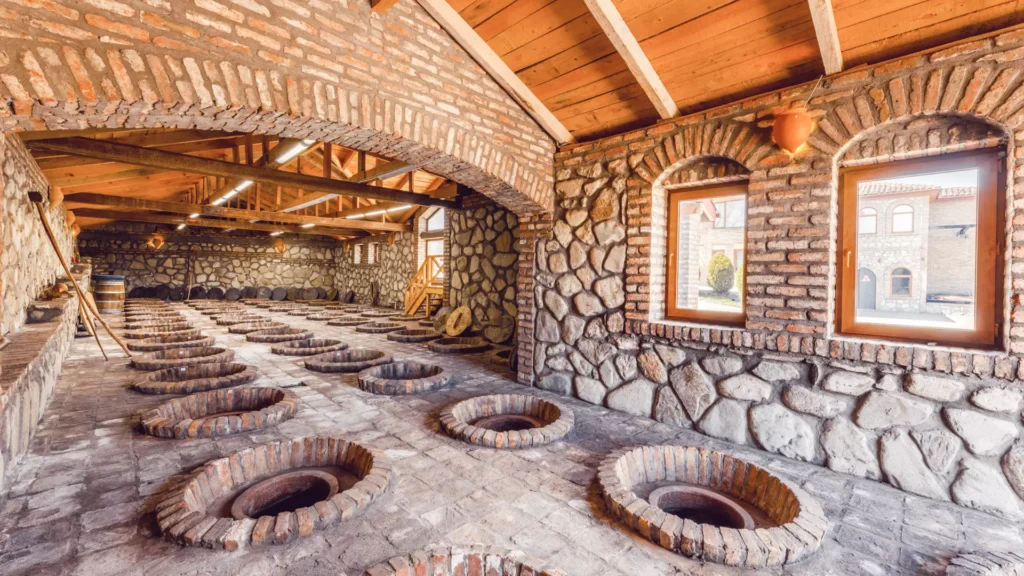
The distinctive feature of Georgian wine is the qvevri method — fermenting wine (including white wine) with the grape skins in large clay vessels buried underground. The result is amber-colored, tannic white wines with a flavor profile unlike anything produced in conventional European viticulture. Love them or find them challenging, they’re unlike anything you’ve had before.
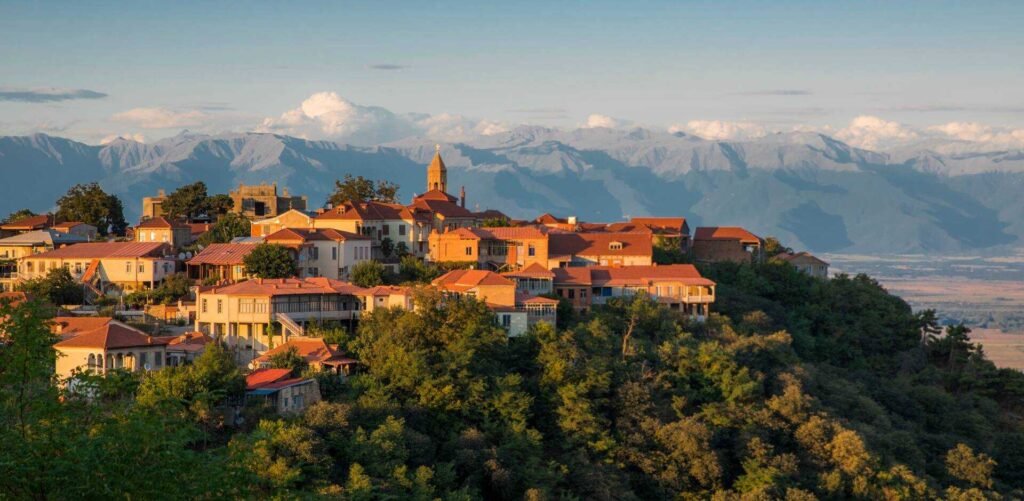
The town of Sighnaghi is the most picturesque base in Kakheti — a small hilltop town with restored pastel facades, panoramic views over the Alazani Valley, and an unusual number of wine bars and family cellars for its size. The surrounding villages — Tsinandali, Telavi, Napareuli — have established wineries open for tours and tastings, typically for very modest fees or none at all.
TrotRadar recommends this region to any traveler interested in authentic wine culture. For broader context on alternative wine regions worth discovering, see our guide to the Alentejo in Portugal — another world-class wine region that rewards slow exploration.
Svaneti: Georgia’s Remote Highlands
If Kazbegi is Georgia’s accessible mountain experience, Svaneti is its remote one — and the reward scales accordingly. This isolated highland region in northwestern Georgia is famous for its medieval defensive towers: families throughout history built them taller than their neighbors’ as both status symbols and genuine refuges from raids. Today, hundreds of them still stand in varying states of preservation, rising from village rooftops against a backdrop of glacier-capped peaks.
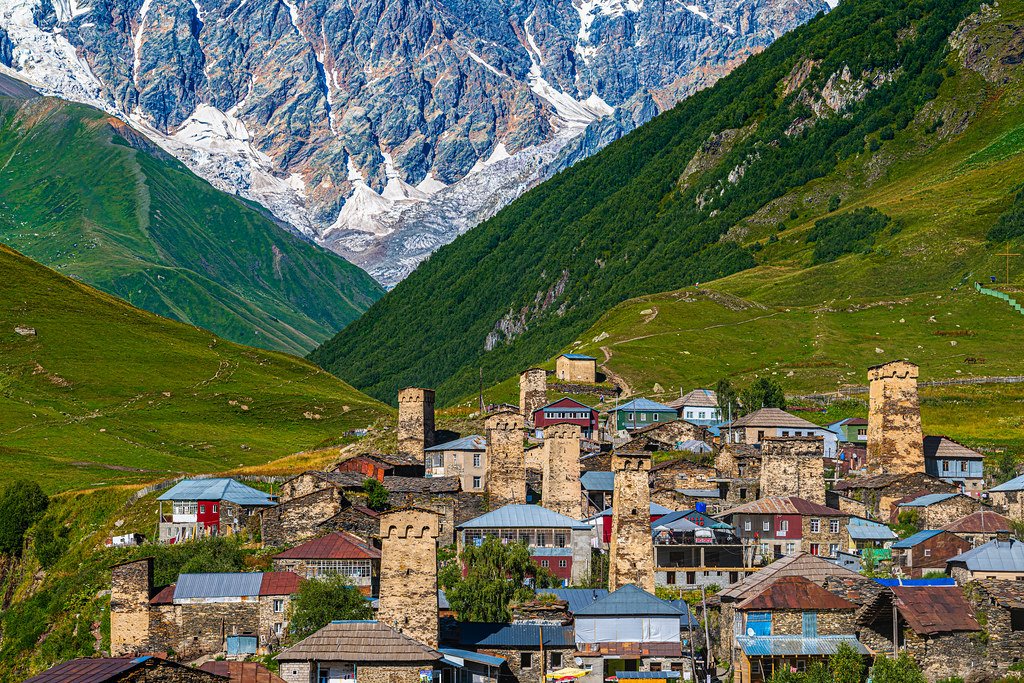
Mestia is the main town and gateway to Upper Svaneti. It’s connected to the rest of Georgia by a daily flight from Tbilisi (around €40–60 one way) or by a long, spectacular minibus journey through the Enguri canyon. From Mestia, the hiking options are extraordinary — including the multi-day Mestia to Ushguli trek, widely considered one of the finest mountain walks in the greater Caucasus.
Ushguli itself — a cluster of four villages at around 2,200 meters, continuously inhabited since the Middle Ages and recognized as a UNESCO World Heritage Site — is among the most otherworldly places you will visit anywhere in the Caucasus. Guided day trips from Mestia typically run €25–40 per person.
TrotRadar’s best time to visit Svaneti: Late June through September for hiking; January through March for snowshoeing and skiing.
Georgian Food: The Real Reason Everyone Comes Back
Experienced travelers who’ve visited Georgia often say the same thing: the food is the part they didn’t expect to be the best part. At TrotRadar, we think Georgian cuisine is one of the most underrated food traditions on earth.
Khinkali are soup dumplings, typically filled with spiced pork and beef or mushrooms for vegetarians. The correct technique: hold them by the dough knot, take a small bite, drink the broth from inside, then eat the dumpling. The knot is traditionally left on the plate as a count of how many you’ve eaten — and you will eat more than you expect.
Khachapuri is Georgia’s iconic cheese bread, with regional variations across the country. The Adjarian version — a boat-shaped bread filled with molten suluguni cheese, topped with a raw egg and butter that you stir in at the table — is, in TrotRadar’s collective opinion, one of the best things you can eat anywhere.

TrotRadar food cost benchmarks for Georgia:
- Khinkali per dumpling: €0.30–0.60
- Full meal at a local restaurant: €5–10 including wine
- Khachapuri Adjaruli: €4–7
- Bottle of Georgian natural wine at a wine bar: €8–15
Practical Georgia Travel Notes from TrotRadar
Visas: Citizens of the EU, US, UK, Canada, Australia, and many other countries can enter Georgia visa-free for up to 365 days. Check current policy for your nationality before travel.
Currency: Georgian Lari (GEL). As of recent reports, 1 EUR is approximately 2.7–2.9 GEL. Cash is preferred in rural areas and smaller restaurants; Tbilisi and major towns have good ATM coverage.
Getting around: Marshrutkas are the primary intercity transport and are cheap but can be cramped. Trains connect Tbilisi to Batumi. Private car rental becomes worthwhile if you’re exploring Kakheti or planning to reach Svaneti independently.
Language: Georgian uses its own unique script, but English is increasingly spoken in Tbilisi and tourist areas.
Safety: Georgia is a broadly safe country for tourists. The breakaway regions of South Ossetia and Abkhazia are not accessible from the Georgian side.
TrotRadar Georgia daily budget:
- Budget traveler: €25–35/day
- Comfortable mid-range: €40–65/day
- One of the best-value destinations we cover at this quality level
Georgia is also one of TrotRadar’s top picks for solo travelers — its extraordinary hospitality culture, visa generosity, and low costs make it perfect for independent exploration. It also consistently ranks in our digital nomad destinations guide for its combination of reliable internet, affordable living, and cultural richness.
The TrotRadar Verdict on Georgia
Traveling in Georgia the country in 2026 means arriving at a destination that has matured significantly as a tourist destination — better infrastructure, more accommodation choice, improved signage and trails — while retaining something harder to quantify: a culture of hospitality so embedded it borders on a spiritual commitment, a food and wine tradition unlike anything in the surrounding region, and a physical landscape that moves between medieval hilltop churches and glacier-carved highlands within a few hours of road.
It is, frankly, one of the most complete travel destinations in the world right now, and it remains undervalued in the English-speaking travel market. The TrotRadar team says: go before that changes.
Find Your Georgia Travel Deal
The TrotRadar team has curated current deals on flights to Tbilisi, guesthouse stays in the old town, and Kazbegi mountain tours. Don’t miss out on one of Europe’s most underrated destinations, Browse our Georgia travel offers →