Florence absorbs so much of the Tuscany conversation that the region around it — which constitutes the actual Tuscany of popular imagination, the cypress avenues and hilltop towers and rolling vineyard landscapes — is visited primarily from day trips that don’t stay long enough to understand what they’re looking at. At TrotRadar, the Tuscany travel guide beyond Florence is built on a specific observation: the finest experiences in Tuscany require a car, a slower schedule, and the willingness to sleep in the landscape rather than commuting to it from a city hotel.
Florence is genuinely extraordinary — the Uffizi, the Duomo, the Oltrarno workshops — and TrotRadar covers it thoroughly in our broader Italy content. This guide starts at the edge of the city and moves south and east into the Tuscany that most Florence visitors return from having glimpsed rather than experienced.
TrotRadar Tip: The Tuscany beyond Florence experience requires a rental car — not because public transport is absent but because the finest moments of the region happen between destinations: pulling over on a road through the Val d’Orcia when the late afternoon light turns the wheat fields gold, finding the unmarked trattoria in a village that appears on no map. Pick up the car at Florence airport on arrival and drive south immediately. Browse TrotRadar’s Tuscany rental car and agriturismo deals — we feature self-drive itineraries and farmhouse stay combinations.
Siena: Tuscany’s Essential Gothic City
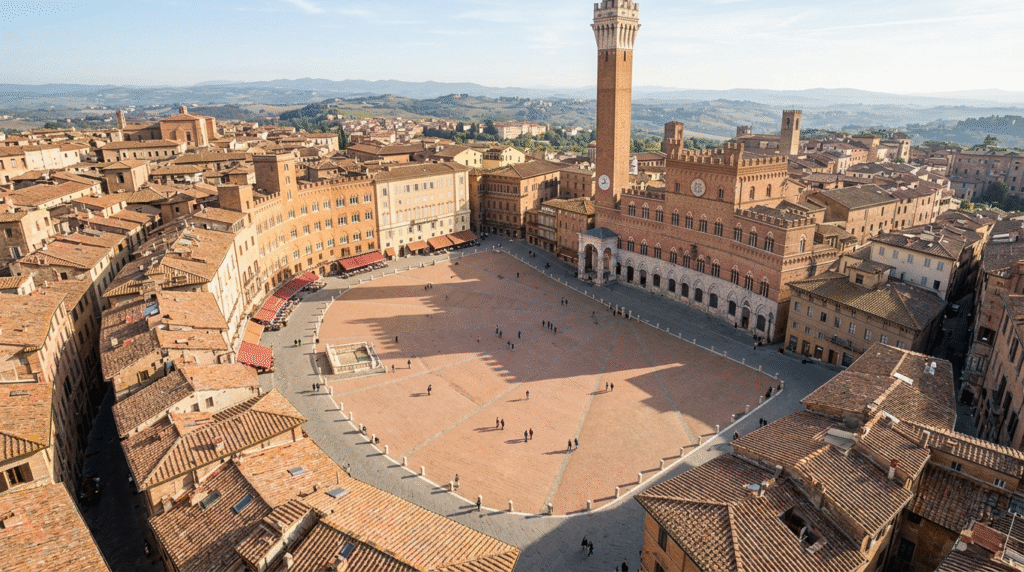
Siena — 75 km south of Florence, its medieval city center the finest intact Gothic urban environment in Italy — is the city that makes travelers question why they spent four nights in Florence and one in Siena rather than the reverse. The Piazza del Campo — the fan-shaped brick square that functions as the center of Sienese civic life, sloped so that its entire surface is visible from any point within it — is TrotRadar’s strongest single recommendation in Tuscany outside the Uffizi Gallery: simply one of the most beautiful public spaces in Italy, used daily by residents as a living room, gathering point, and the twice-annual arena for the Palio di Siena (the bareback horse race around the Campo, July 2 and August 16, that constitutes the most extraordinary civic ritual in Italian public life).
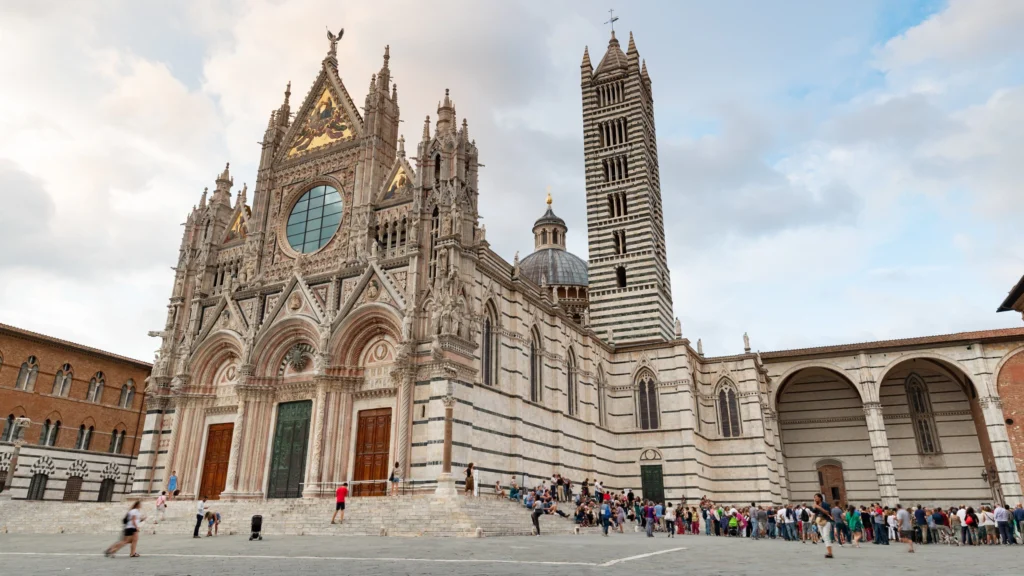
The Siena Cathedral (Duomo) — striped marble Gothic architecture of extraordinary ambition, its floor entirely covered in inlaid marble panels depicting biblical scenes — is the single finest cathedral interior in Tuscany outside Florence’s Baptistery. The Piccolomini Library within the cathedral (entry included in the combined ticket) has frescoes by Pinturicchio of such vividness that they look restored last decade rather than painted in 1508. Combined ticket: approximately €13–20 depending on which elements included.
TrotRadar’s Siena instruction: arrive in the late afternoon, sit in the Campo with the Sienese at aperitivo hour, eat dinner in the city, and stay the night — the morning before tourists arrive from Florence day trips is a different city.
TrotRadar Siena daily budget: €70–110
The Val d’Orcia: The Landscape That Defines Tuscany
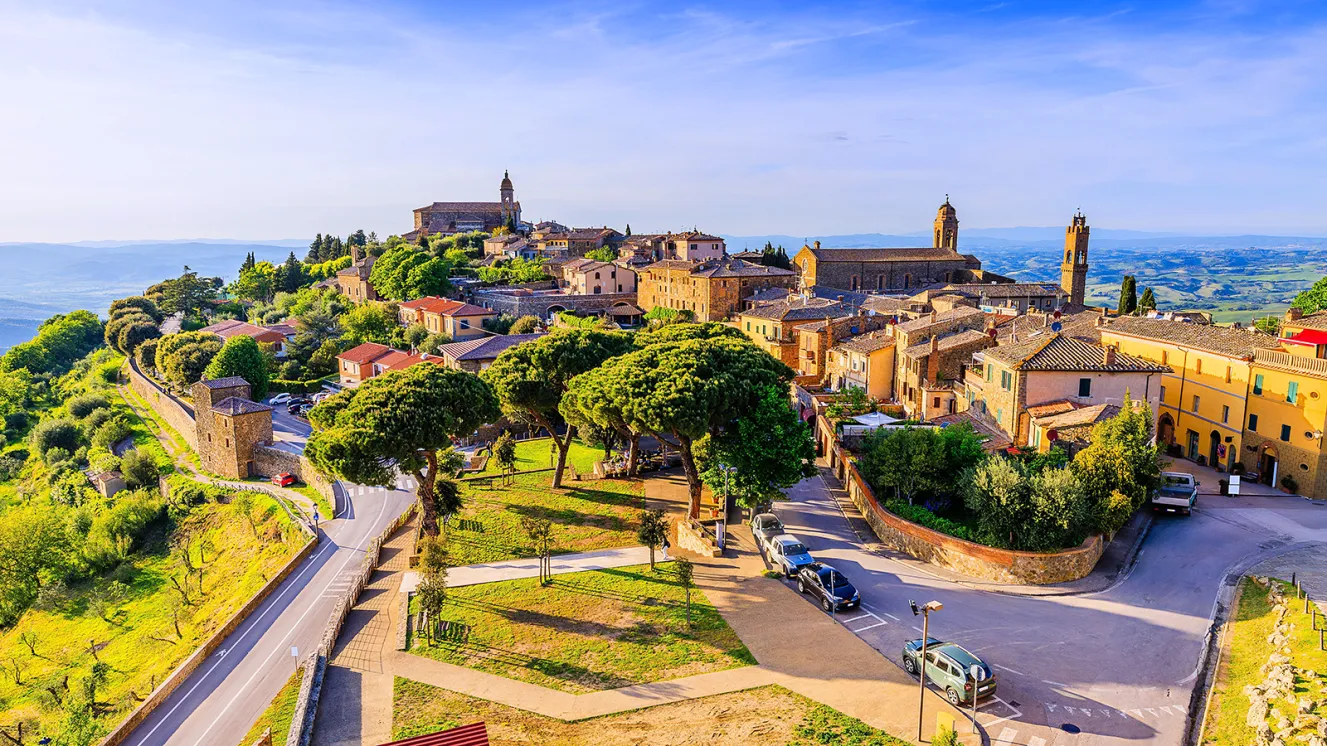
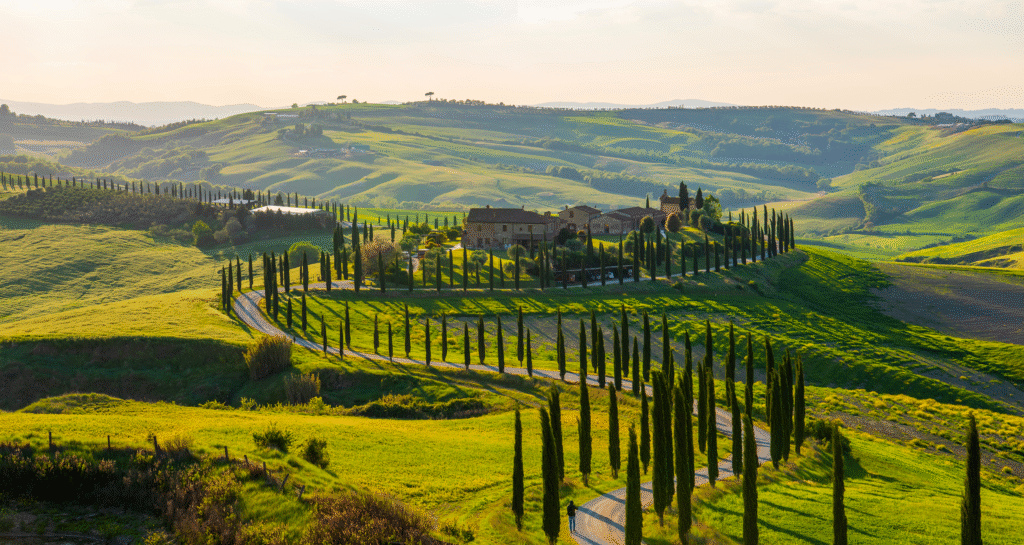
The Val d’Orcia — the UNESCO World Heritage valley south of Siena, centered on the towns of Pienza, Montalcino, and San Quirico d’Orcia — is the landscape that constitutes the Tuscany of collective imagination: rolling hills with isolated cypress-lined farm tracks, stone farmhouses on ridges, fields of golden wheat or green vines depending on the season, and the specific quality of Tuscan light at late afternoon that painters have been attempting to capture for six centuries.
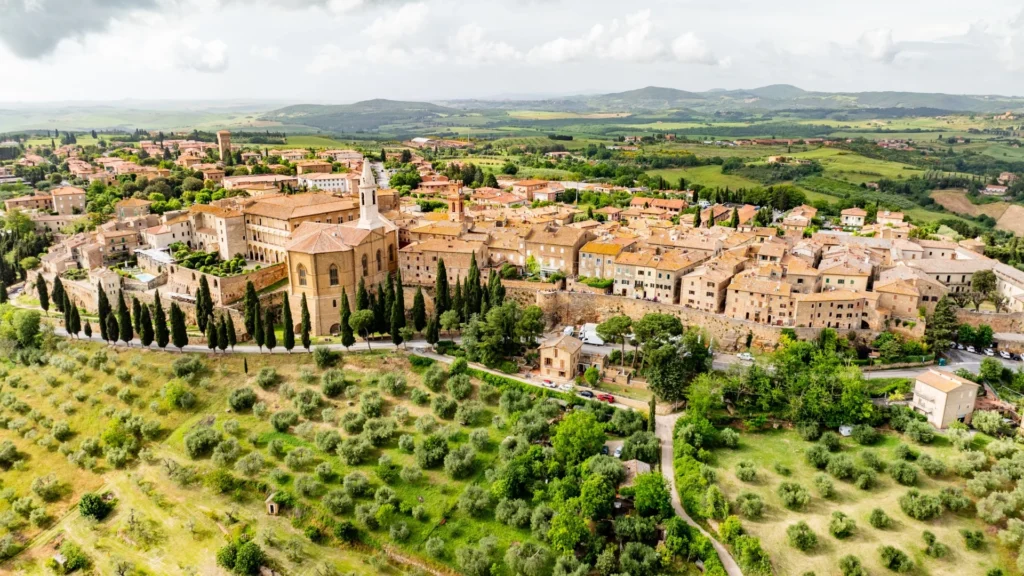
Pienza — the “ideal city” built by Pope Pius II in 1459, a Renaissance planned urban environment on a hilltop above the Val d’Orcia — is the finest and most intact small hill town in Tuscany: one main street, a cathedral, a civic palace, and a population that has been producing Pecorino di Pienza (the valley’s famous sheep’s milk cheese, aged in caves along the main street) since the Middle Ages. Buy the cheese directly from the producers on Via del Corso; eat it on the panoramic terrace above the valley with a glass of local Rosso di Montalcino. This is the Val d’Orcia at its most specifically itself.
The drive through the Val d’Orcia between dawn and mid-morning — when the light is low and directional, the mist has often not yet lifted from the valley floor, and the tourist coaches have not yet left Siena — is TrotRadar’s most consistently recommended single experience in Tuscany. No ticket required. No guided tour necessary. Just a car, a road, and enough time to stop when something is extraordinary — which is frequently.
Montalcino and Brunello: The Wine Worth Planning Around
Montalcino — a hilltop town of 5,000 people, 40 km south of Siena — is surrounded by the vineyards that produce Brunello di Montalcino: Italy’s most internationally renowned and most cellar-worthy red, a 100% Sangiovese Grosso wine aged for a minimum of five years before release, capable of development over decades.
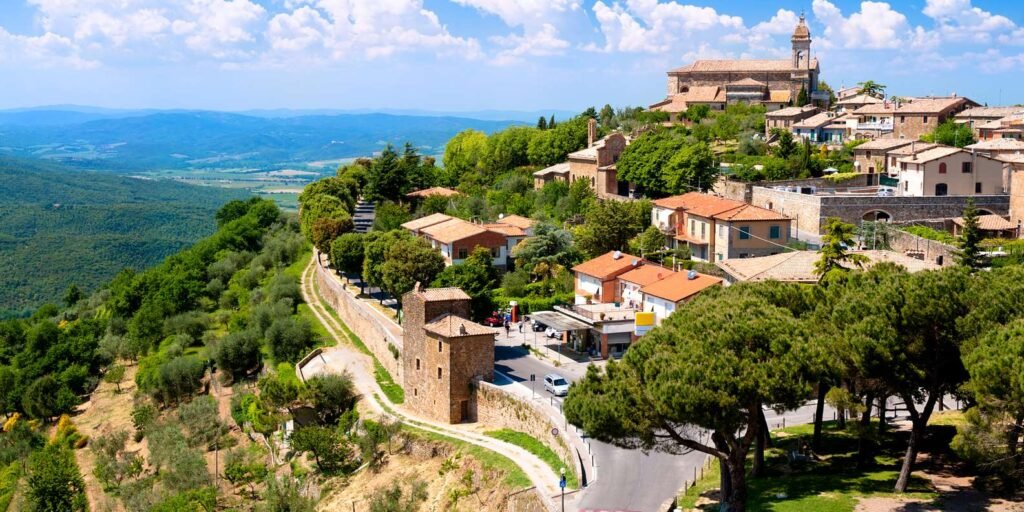
The wine estate visit in Montalcino is one of TrotRadar’s strongest Tuscany recommendations — specifically because the producers here are more accessible than their Barolo equivalents in Piedmont and the wine quality is as high or higher. Estates including Banfi, Biondi-Santi (the family that invented Brunello as a wine category in the 1870s), Casanova di Neri, and Ciacci Piccolomini d’Aragona offer cellar visits and tastings at approximately €20–50 per person including multiple vintages. Book ahead; many require advance reservation.
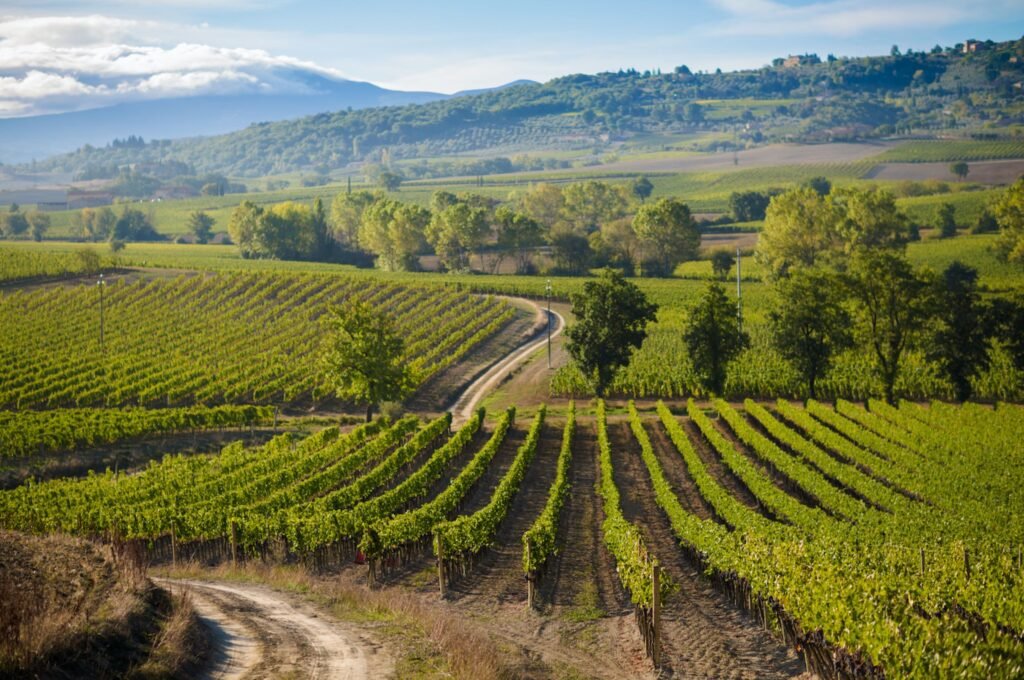
The more accessible Rosso di Montalcino — made from younger vines or declassified Brunello barrels, released after one year rather than five — is available at wine bars throughout the town from approximately €5–8 per glass and provides excellent access to the Montalcino terroir at a fraction of the Brunello price. TrotRadar considers a Rosso tasting at the Enoteca La Fortezza (inside the medieval fortress at the town’s high point, with panoramic Val d’Orcia views) the ideal introduction to Montalcino wine culture.
The Agriturismo: How to Sleep Inside the Tuscany Landscape
The agriturismo — a working farm or vineyard that provides accommodation, often including meals prepared from their own produce — is the accommodation category that TrotRadar most consistently recommends for Tuscany travel. Not because hotels are bad, but because the agriturismo provides the specific experience that is the point of Tuscany: waking up in the landscape, eating from the land, understanding the connection between the terrain and the food and wine it produces.
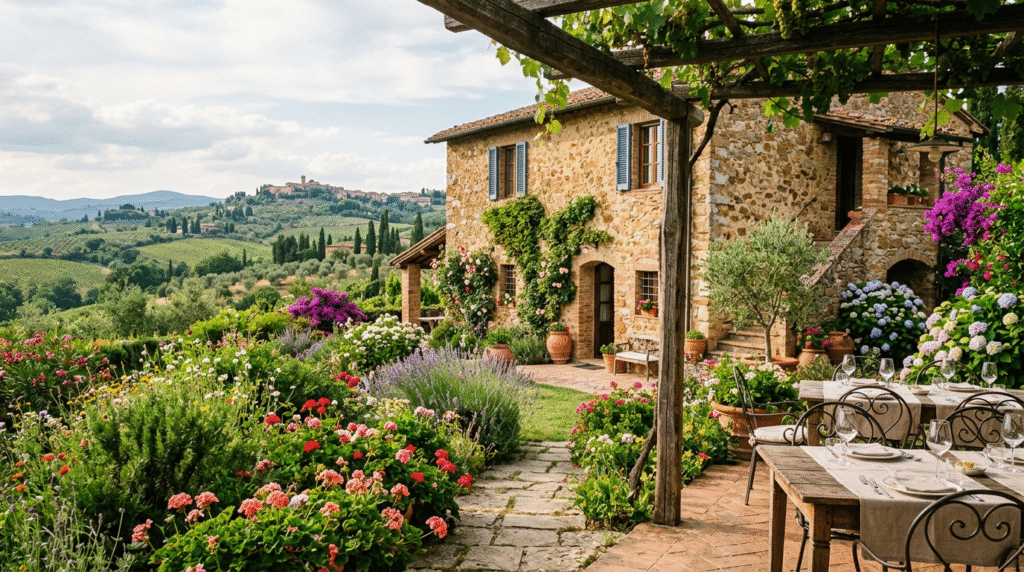
Quality varies considerably — from a converted stone farmhouse with pools, professional kitchen and sommelier service ($200–400/night) to a family home with two spare rooms and breakfast from yesterday’s eggs and today’s bread ($80–120/night). TrotRadar’s recommendation: read the reviews specifically for dinner quality (the agriturismo dinner — typically a fixed-menu farm meal served to all guests simultaneously — is the experience worth prioritising) and for the honesty of the farm credentials (some “agriturismo” are simply rural hotels with a vegetable garden).
For comparison with the Portuguese equivalent, read TrotRadar’s Alentejo Portugal travel guide — which covers the quinta stay tradition that mirrors the agriturismo in character and value.
San Gimignano, Volterra, and the Hill Towns Circuit
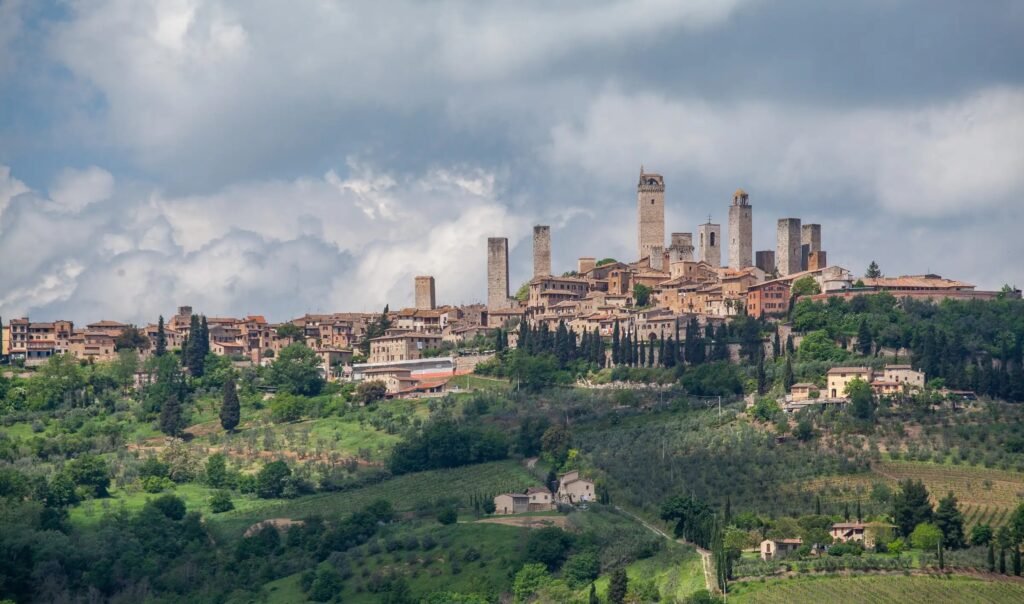
San Gimignano — the “Medieval Manhattan,” its 14 surviving towers visible from miles away across the Elsa Valley — is Tuscany’s most visited hill town and, at its best in the evening after the day coaches leave, genuinely extraordinary. The tower competition that produced the skyline was a status war between competing noble families — the more towers, the more powerful the family — and the 14 survivors from an original 72 make the town look more like medieval urban ambition compressed into a hilltop than anything else in Italy. TrotRadar’s instruction: arrive after 5 PM, eat the vernaccia di San Gimignano (the local white wine, the first DOC wine recognized in Italy in 1966), and stay the night.
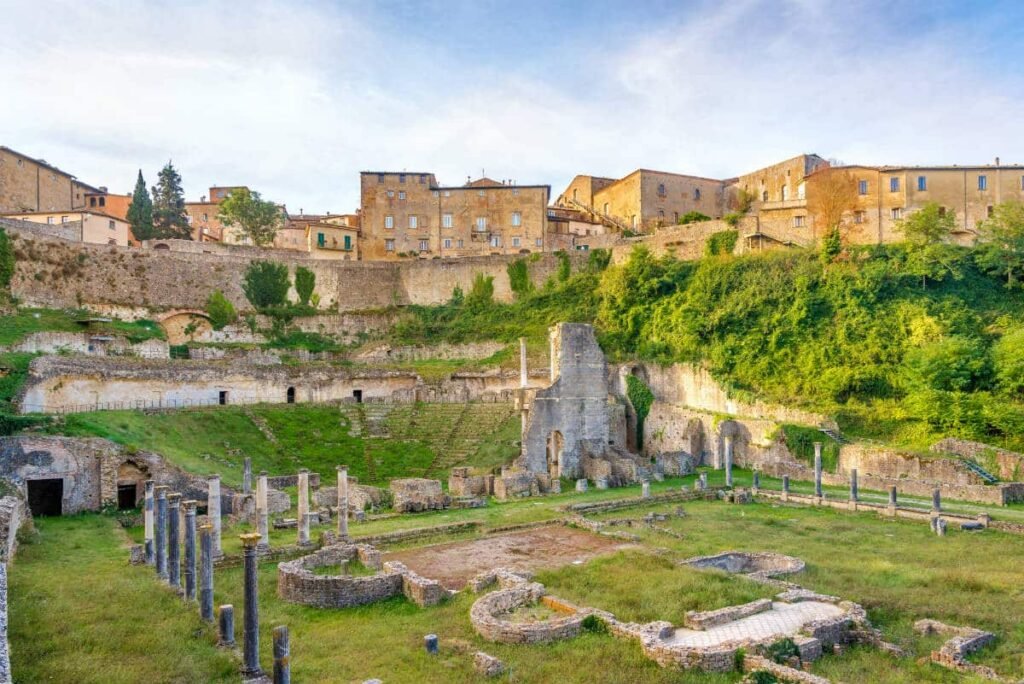
Volterra — a more austere, less-visited hill town further west, its Etruscan foundations visible beneath the Roman theater and medieval walls — is TrotRadar’s recommendation for the traveler wanting the hill town character without San Gimignano’s visitor density. The Museo Etrusco Guarnacci contains one of the finest Etruscan collections in Italy, including the extraordinary “shadow of the evening” bronze figure (a 6th-century BCE elongated human form that Giacometti reportedly cited as inspiration). Entry: approximately €10.
Practical Tuscany Travel Notes from TrotRadar
When to go: May–June and September–October — the harvest season bookends that bracket the peak summer heat and crowds. May brings poppies in the wheat fields; October brings the grape and olive harvests and the best agriturismo dinners as the estates celebrate the vintage. July–August: beautiful but crowded and hot (35–38°C); the hill towns bake; the agriturismo terraces come into their own at dusk.
The Tuscany self-drive circuit: Florence (pick up car) → Siena (2 nights) → Montalcino (1–2 nights agriturismo) → Pienza and Val d’Orcia (1 night) → San Gimignano (1 night) → Volterra optional → Florence (return car). Total: 7–8 days, approximately 280 km of driving.
For the comparison with the other great Italian travel circuit, read TrotRadar’s architecture destinations guide — which covers Rome and Palermo’s architectural heritage in the Italian context. And our vegan and vegetarian travel guide covers Italy’s plant-based accessibility in detail.
TrotRadar Tuscany overall daily budget:
- Budget (agriturismo + local trattoria): €80–120/day
- Mid-range (quality agriturismo with dinner): €130–200/day
- Wine estate visits: budget €30–60 per visit as fixed costs
The TrotRadar Verdict on Tuscany Beyond Florence
The Tuscany beyond Florence travel guide conclusion is the same argument TrotRadar makes about every region that has been reduced to its most famous city: the landscape around Florence is the Tuscany that Florence’s painters were painting. The Val d’Orcia at dawn before the coaches arrive is the lived version of the image. The Brunello in the Montalcino enoteca with the vineyard visible through the window is the wine in its complete context. Get the car. Drive south. Stay in the agriturismo. Eat the Pecorino with the view. TrotRadar promises Tuscany earns every kilometre of it.
Find Your Tuscany Travel Deal
TrotRadar features Tuscany self-drive itineraries, Val d’Orcia agriturismo stays, Montalcino wine estate visit packages, and Siena boutique hotel combinations. The real Tuscany is a car rental away from Florence. Browse TrotRadar’s Tuscany travel offers →