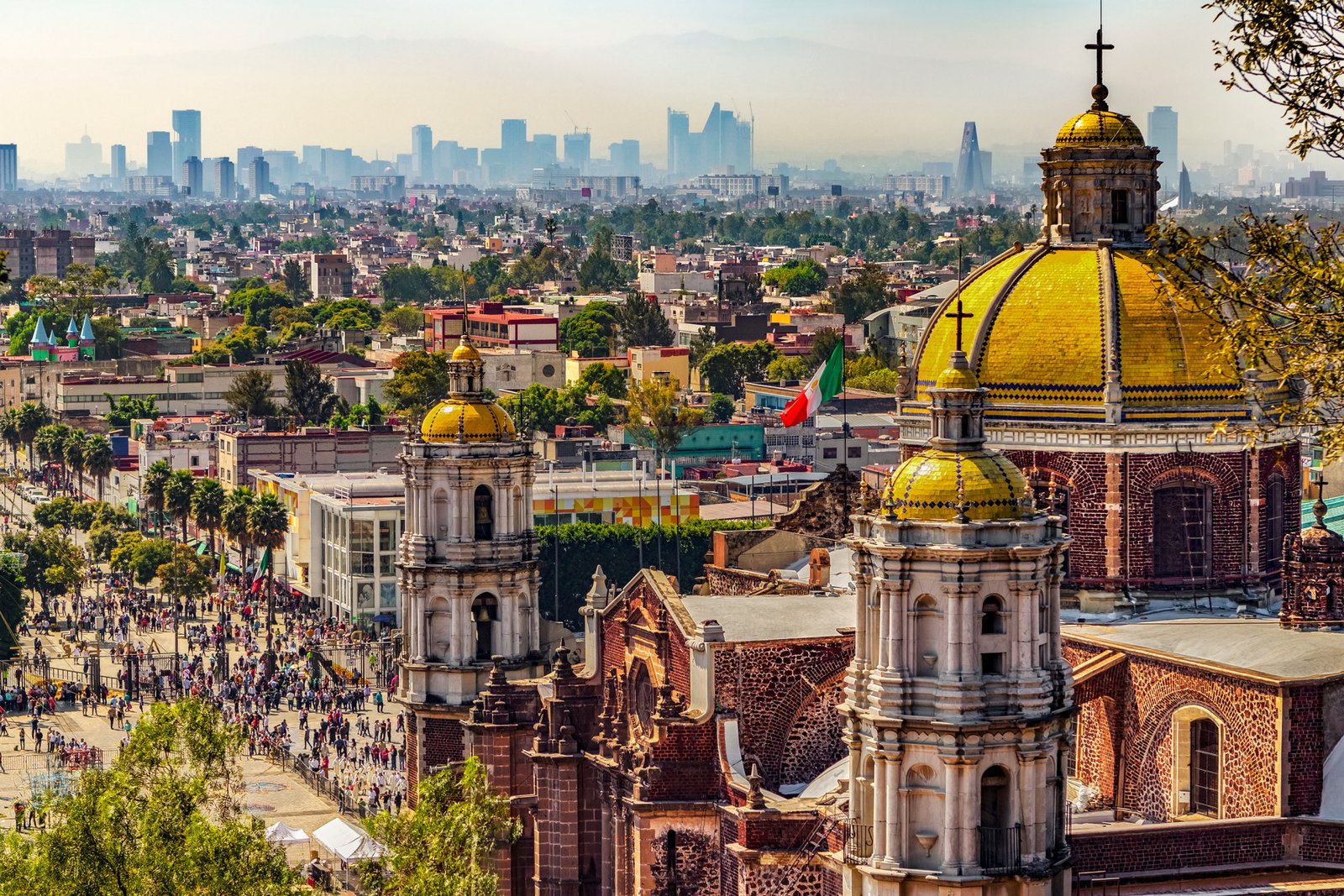
Mexico City is the city that most travelers to Latin America skip in favour of beach destinations and colonial towns — and that most travelers who do go describe, without exception, as one of the finest cities they’ve visited anywhere. A metropolis of 22 million people built on the ruins of the Aztec capital Tenochtitlan, at 2,240 metres above sea level in a volcanic basin ringed by snow-capped peaks, producing more Michelin-starred restaurants per capita than New York, a museum culture of extraordinary depth and accessibility, and a neighbourhood system where each district functions as a complete village within the city. At TrotRadar, this Mexico City travel guide approaches the capital as what it is — one of the great cities of the Americas — with the specific district-by-district framework that makes navigating a city of this scale genuinely manageable.
TrotRadar Tip: Mexico City’s neighbourhoods are so distinct that choosing the right base determines the trip. For first-time visitors: Condesa or Roma Norte — walkable, safe, excellent restaurants, the best café culture in the city, and centrally located for all other districts. Avoid basing in the Centro Histórico unless you specifically want the historical immersion — it’s further from the districts where most of the finest eating happens. Browse TrotRadar’s Mexico City hotel and apartment deals — we feature Condesa and Roma properties at competitive rates. Bookmark this Mexico City travel guide for reference throughout your planning and trip.
Mexico City Travel Guide: Condesa and Roma
Condesa and the adjacent Roma Norte — separated by Insurgentes Avenue, functionally continuous as a single neighbourhood — constitute Mexico City’s most liveable and most culinarily concentrated district: Art Deco apartment buildings above tree-lined boulevards, independent restaurants of extraordinary quality at every price point, mezcalerías where the craft mezcal movement has produced Mexico City into a global reference point for agave spirits, and the specific energy of a neighbourhood that takes food and culture seriously without taking itself seriously. It is the ideal base for any Mexico City travel guide exploration.
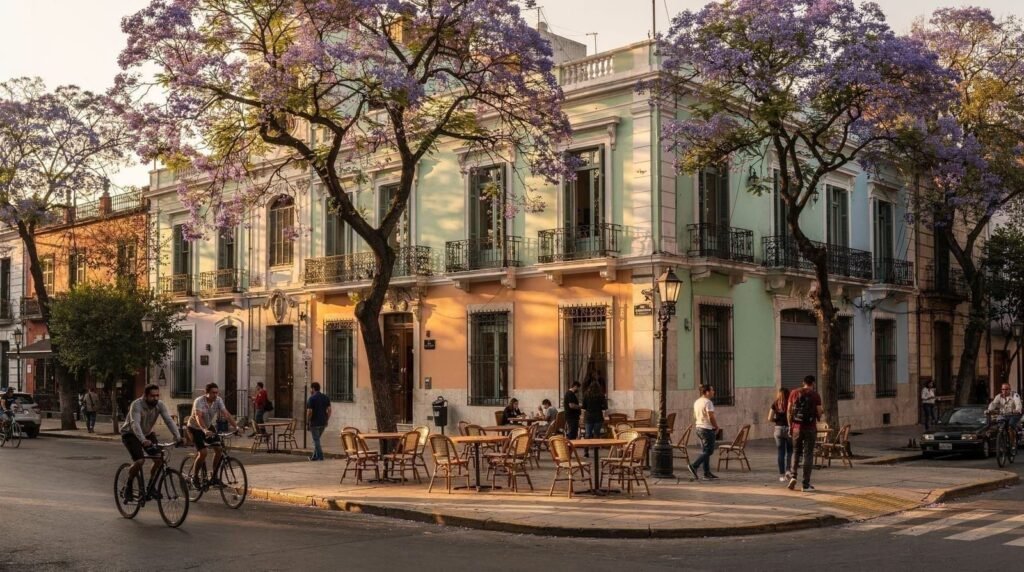
TrotRadar’s Condesa/Roma eating framework:
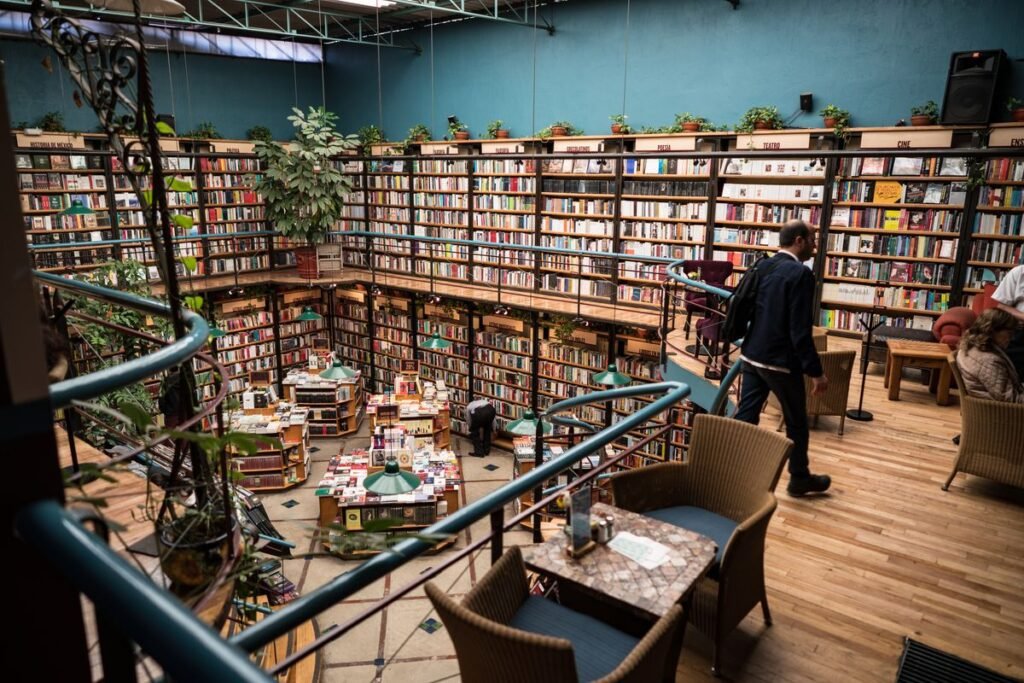
Morning: Café Toscano or Cafebrería El Péndulo (a café-bookshop hybrid that is the finest morning coffee experience in Mexico City) for breakfast. Cost: MXN 100–180 (€5–9).
Lunch: The comida corrida (set lunch menu — soup, main course, dessert, agua fresca) at any local non-tourist-facing restaurant in the neighbourhood backstreets. Cost: MXN 80–150 (€4–7.50). The comida corrida is the finest value meal in Mexico City and the one that most travelers don’t know to order.
Evening: Mezcal at In Situ Mezcalería (Roma Norte — the most respected specialist mezcal bar in the city, its menu of artisanal producers from specific Oaxacan villages constituting an education in what the spirit actually contains at its highest level). Cost: MXN 150–300 (€7.50–15) per pour of premium mezcal.
The Tacos: Mexico City’s Greatest Achievement
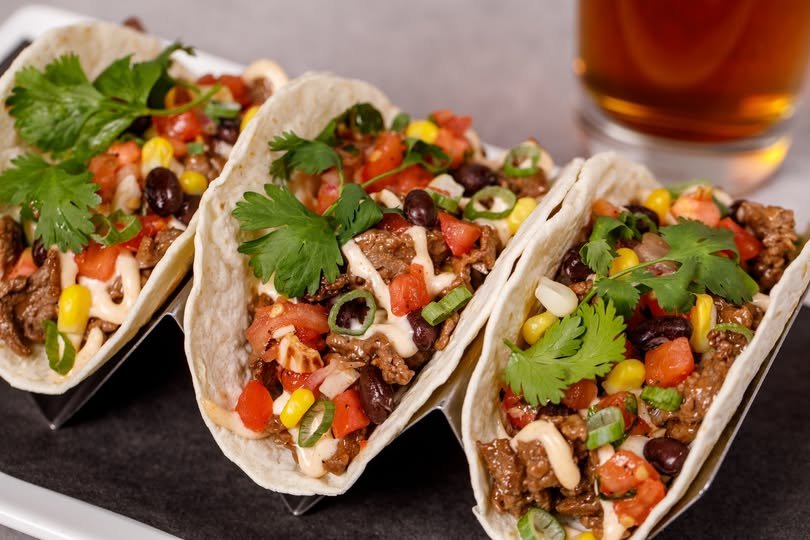
Mexico City’s taco culture is the most cited reason travelers return — which TrotRadar finds entirely logical given that a taco al pastor from the right taquería (marinated pork carved from a vertical spit onto a corn tortilla with pineapple, cilantro, onion, and salsa verde) costs MXN 15–20 (€0.75–1) and is genuinely among the finest things to eat in Latin America at any price.
TrotRadar’s Mexico City taco geography:
- Tacos al pastor: El Huequito (the original, since 1959 — on Ayuntamiento near the Centro) and Los Cocuyos (near the Zócalo, open until 3 AM). Cost: MXN 15–20 per taco (€0.75–1)
- Tacos de canasta (basket tacos): Steam-cooked tacos carried in insulated baskets on bicycles through the morning city — the specific breakfast taco tradition of Mexico City, found at any morning market or street corner before 11 AM. Cost: MXN 8–12 (€0.40–0.60)
- Tacos de barbacoa: Slow-cooked lamb traditionally buried overnight in a pit — available only on weekends from specialist street vendors. Mercado de Medellín on Sunday morning is TrotRadar’s recommendation. Cost: MXN 20–30 (€1–1.50)
For the complete Mexican food culture context, read TrotRadar’s best budget food countries guide — which covers Mexico as a tier-one food travel destination.
Teotihuacán: The Pyramids Two Hours from the City
Teotihuacán — 50 km northeast of Mexico City, accessible by bus from the Terminal Norte (approximately MXN 60/€3 return, 1 hour) — is one of the great archaeological sites of the Americas: a ceremonial city covering 83 square kilometres, built between 100 BCE and 650 CE, whose builders and language remain unknown despite being among the most thoroughly excavated sites in the hemisphere.
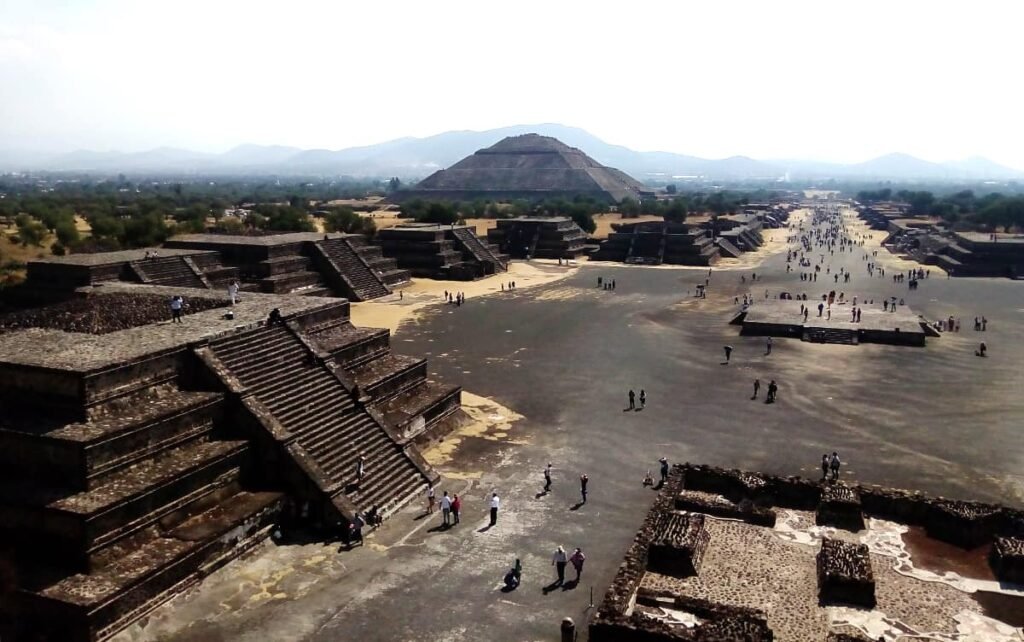
The Pyramid of the Sun — the third largest pyramid in the world by volume, 65 metres high, its 248 steep steps climbed in approximately 20–30 minutes — provides a panoramic view over the entire complex from a summit that was the religious center of a city of 125,000 people at its peak.
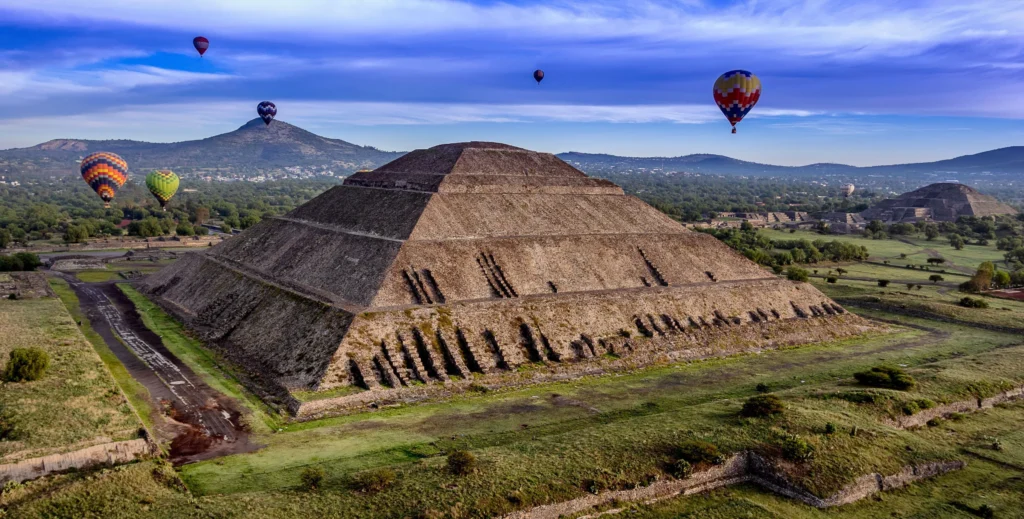
TrotRadar’s Teotihuacán strategy: Take the first bus (departing Terminal Norte around 5:30–6 AM) and arrive at opening time. The site is empty for the first 90 minutes; by 10 AM the volume of tour groups makes movement on the main avenue difficult. The experience at 7 AM — alone on the Pyramid of the Moon summit, the Avenue of the Dead extending south in the morning light — has no equivalent in the standard Mexico City itinerary.
Entry: MXN 90 (approximately €4.50) for foreigners.
Coyoacán: The Village Inside the City
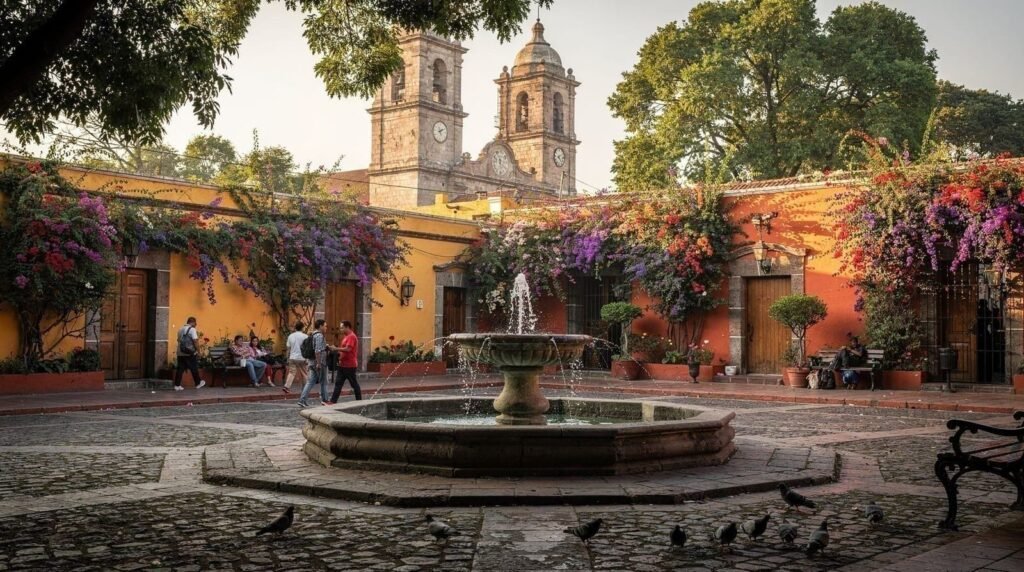
Coyoacán — a former village absorbed into Mexico City’s expansion that has maintained its specific village character, cobblestone streets, and weekend market culture — is the day in Mexico City that most consistently produces the response “I wasn’t expecting that” from travelers who factored in only the Centro and Condesa.
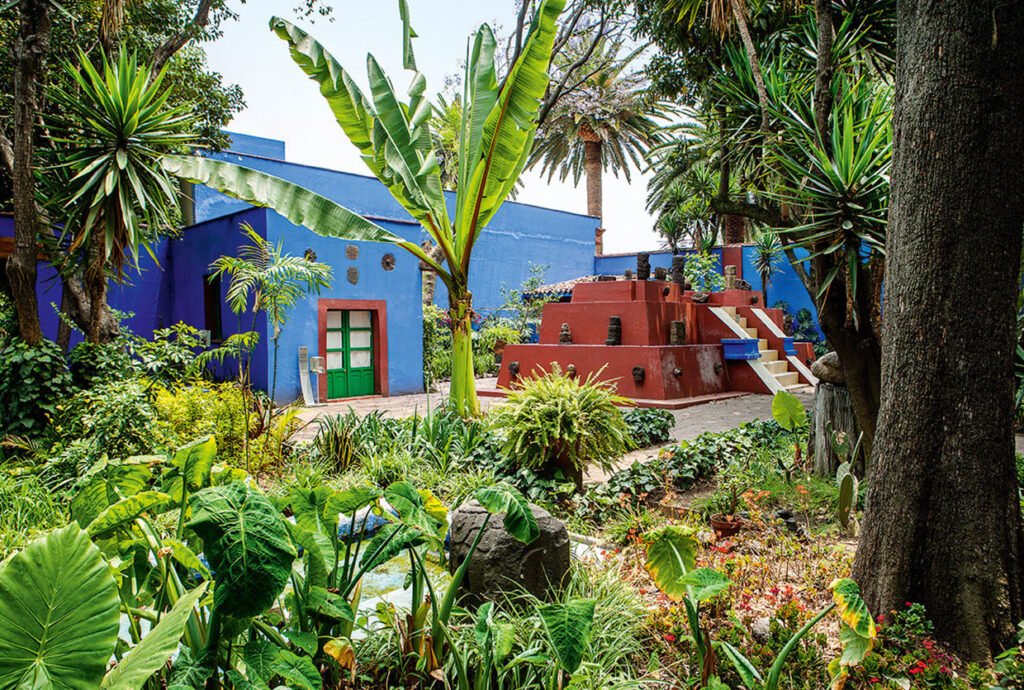
The Museo Frida Kahlo (Casa Azul) — the blue house where Kahlo was born in 1907 and where she died in 1954, preserved as both her home and studio — is one of the finest artist’s house museums in the Americas. The specific intimacy of her personal objects, her wardrobe, her Tehuana dresses, her wheelchair and the mirror she had fitted in her bed canopy during her long illnesses — all available at close range — produces a biographical experience that the gallery shows of her paintings don’t replicate. Entry: MXN 250–300 (€12.50–15); advance booking essential as it sells out daily. Adjacent: the Museo León Trotsky (the house where Trotsky lived in exile and was assassinated in 1940 — the ice-pick and the preserved office create a specific historical frisson).
The Mercado de Coyoacán for lunch: the tostada stalls in the market interior serve the finest tostadas de ceviche and tostadas de tinga in Mexico City at approximately MXN 35–60 (€1.75–3) each.
The Centro Histórico: History at Walking Speed
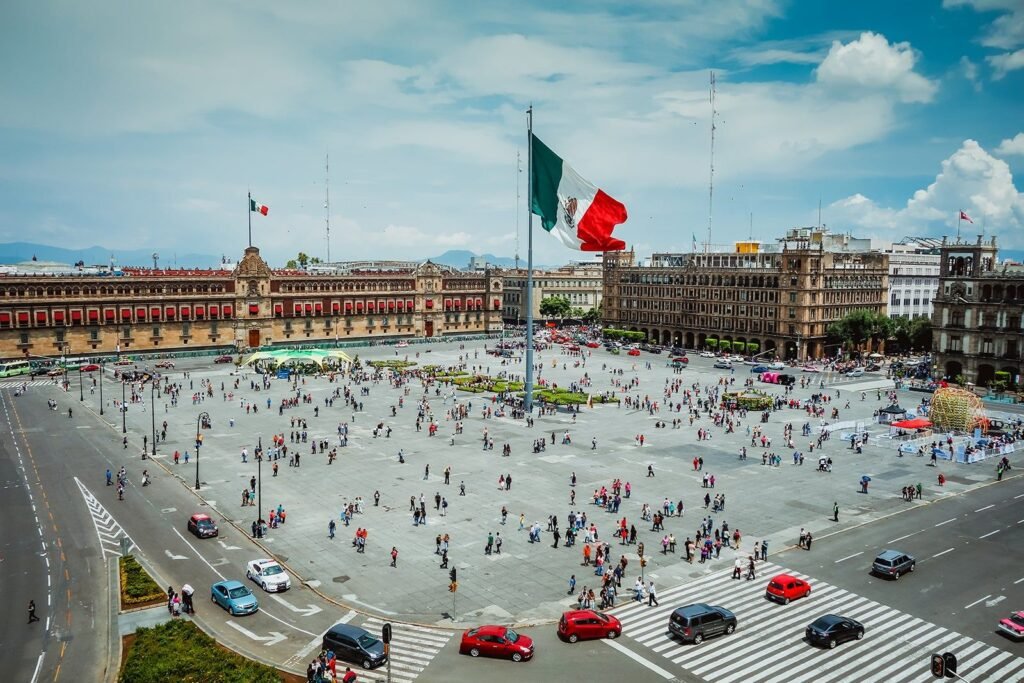
The Zócalo — Mexico City’s main square, the largest in Latin America, built on the ceremonial center of the Aztec capital Tenochtitlan — is surrounded by the Metropolitan Cathedral (the largest cathedral in the Americas, its foundation sinking visibly into the ancient lake bed on which the city was built) and the National Palace (Diego Rivera’s murals of Mexican history covering 1,200 square metres of staircase walls — free to enter, free to photograph, and genuinely extraordinary).
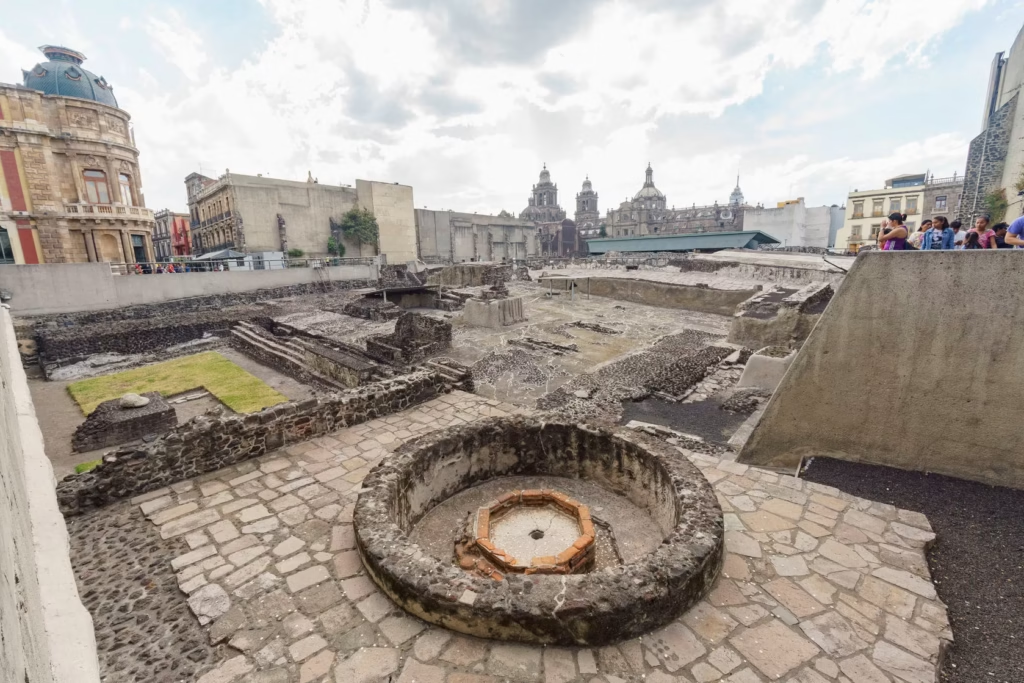
The excavated ruins of the Templo Mayor — the Aztec great temple, discovered during electric cable laying in 1978, now an outdoor archaeological site in the city center — provide the specific experience of standing at the intersection of two civilizations: the Aztec foundations visible at excavation depth while the colonial Spanish cathedral rises behind you. Entry: MXN 90 (€4.50).
Practical Mexico City Travel Guide: Notes from TrotRadar
Safety: Mexico City’s safety picture requires neighbourhood-specific assessment. Condesa, Roma, Polanco, Coyoacán, and Centro Histórico are all broadly safe for tourists with standard urban precautions. Use Uber rather than hailing street taxis; don’t display expensive electronics on public streets; research current neighborhood-specific advice before any unfamiliar area. Overall: far safer than the international media representation.
Getting around: The Mexico City Metro (STC) covers the entire city at MXN 5 (€0.25) per journey — the world’s cheapest major metro system and genuinely efficient during non-rush hours. Uber is affordable (MXN 50–120/€2.50–6 for most Condesa–Centro journeys) and safe. Avoid the metro at rush hour (8–9 AM, 6–8 PM) if carrying luggage or navigating unfamiliar lines.
TrotRadar Mexico City daily budget:
- Budget (hostel + street food + metro): MXN 600–900 (€30–45)
- Mid-range (guesthouse + mix of restaurants): MXN 1,200–2,000 (€60–100)
- Mexico City is one of the finest value mid-range destinations in Latin America
For how Mexico City connects to the broader Mexico circuit — Oaxaca’s food culture, Mérida, and the Yucatán — read TrotRadar’s budget food countries guide. And our nightlife and culture cities guide covers Mexico City’s evening mezcal and music culture in full context.
The TrotRadar Mexico City Travel Guide Verdict
Mexico City is the Latin American city that most rewrites the traveler who arrives with half-formed assumptions about safety and culture. The food is world-class at every price tier. The archaeology is extraordinary and undervisited. The neighbourhood diversity — from the Art Deco boulevards of Condesa to the colonial grandeur of the Centro to the village streets of Coyoacán — produces the specific pleasure of a city that is simultaneously ancient, modern, and entirely itself. Give it five days minimum. Eat the tacos every morning. Go to Teotihuacán before dawn. TrotRadar promises the city earns every one. Use this Mexico City travel guide to plan a visit that earns exactly this kind of time.
Find Your Mexico City Travel Deal
TrotRadar features Condesa and Roma hotel packages, Teotihuacán day tour bookings, Coyoacán walking tour combinations, and Mexico City apartment rentals for longer stays. Latin America’s greatest city is ready. Browse TrotRadar’s Mexico City travel offers →