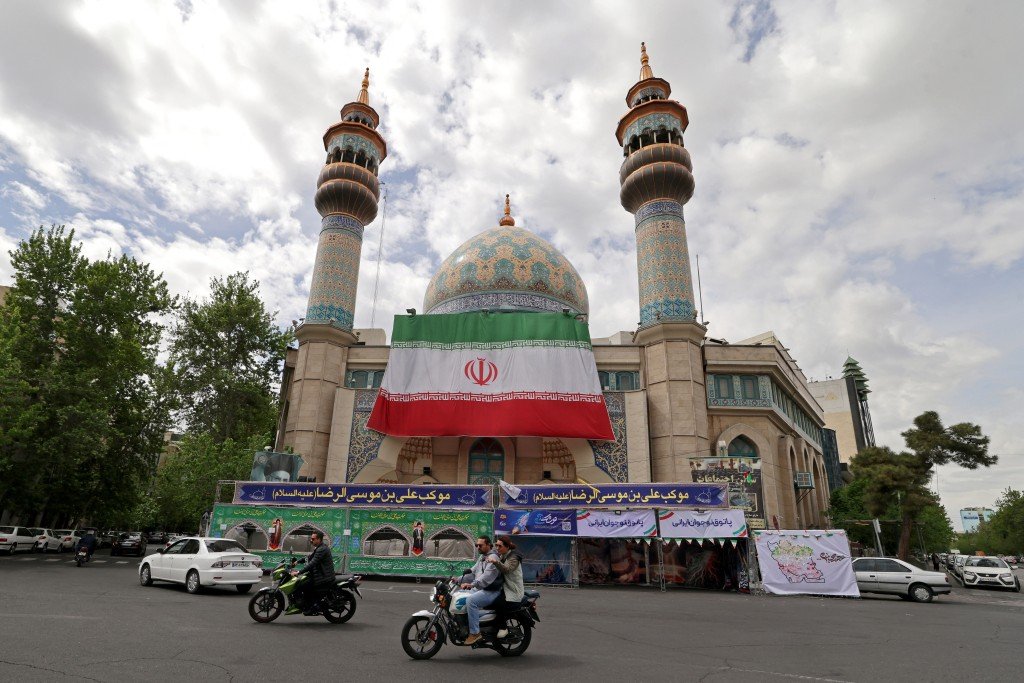
Iran is the destination that most consistently produces the same response in travelers who visit it: “It was the best trip I’ve ever taken, and it was nothing like what I expected.” The gap between Western media representation of Iran and the experience of traveling through it — the hospitality, the architectural grandeur, the food, the safety for visitors — is wider than for almost any other destination TrotRadar covers. At the same time, the logistics of visiting Iran in 2026 require specific preparation and honest acknowledgment of the political and practical complexities that affect certain nationality groups. This Iran travel guide edition provides both the case for going and the honest framework for going correctly.
TrotRadar Tip: US, UK, and Canadian passport holders cannot obtain an Iranian visa independently and must use a licensed Iranian tour agency for a guided itinerary — which paradoxically often produces a more curated and comfortable experience than independent travel. Most other Western nationalities can obtain a visa on arrival at major Iranian airports (currently $75–100 USD). Verify your nationality’s current access at the Iranian Foreign Ministry website and through your own country’s foreign affairs department before booking anything. Browse TrotRadar’s Iran travel packages — we feature licensed operator tours and independent itinerary support.This Iran travel guide covers the key destinations and logistics for nationalities who can access Iran independently.
Isfahan: The Destination That Justifies the Journey
TrotRadar places Isfahan at the absolute top of any Iran itinerary and among the top architecture destinations on earth — a position argued in our architecture destinations guide and worth restating here with specific context.
The Naqsh-e Jahan Square — 512 metres long, 163 metres wide, flanked on all four sides by the Imam Mosque, the Sheikh Lotfollah Mosque, the Ali Qapu Palace, and the Grand Bazaar — is both the finest ensemble of Islamic architecture on earth and a functioning public space where Isfahan families picnic, play, and gather every evening in a tradition unchanged from the Safavid period when Shah Abbas the Great commissioned the square in the early 17th century.
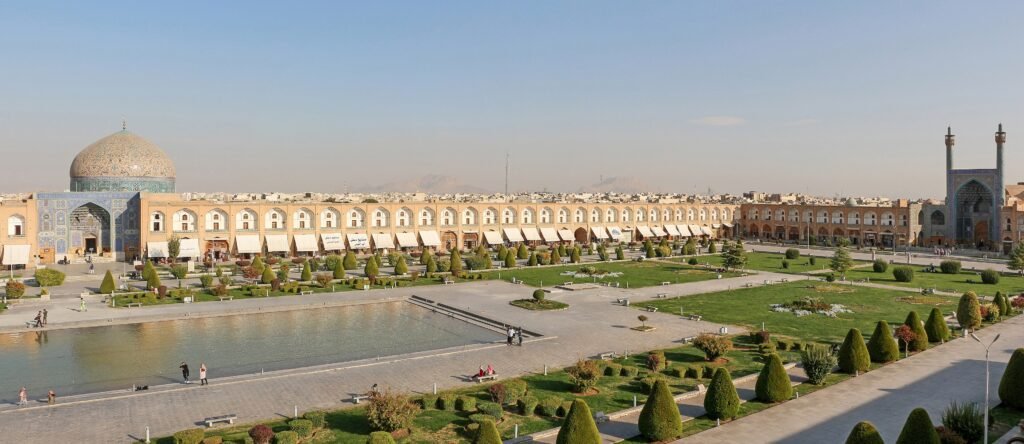
The Imam Mosque — its entrance portal deliberately offset from the square’s axis to face Mecca, a 45-degree rotation expressed in the geometry of the iwan above the portal entrance — has an interior dome of such extraordinary muqarnas complexity that genuinely informed architectural observers have spent careers studying its geometry. Visitors without that background still experience it as the finest interior in Iran.
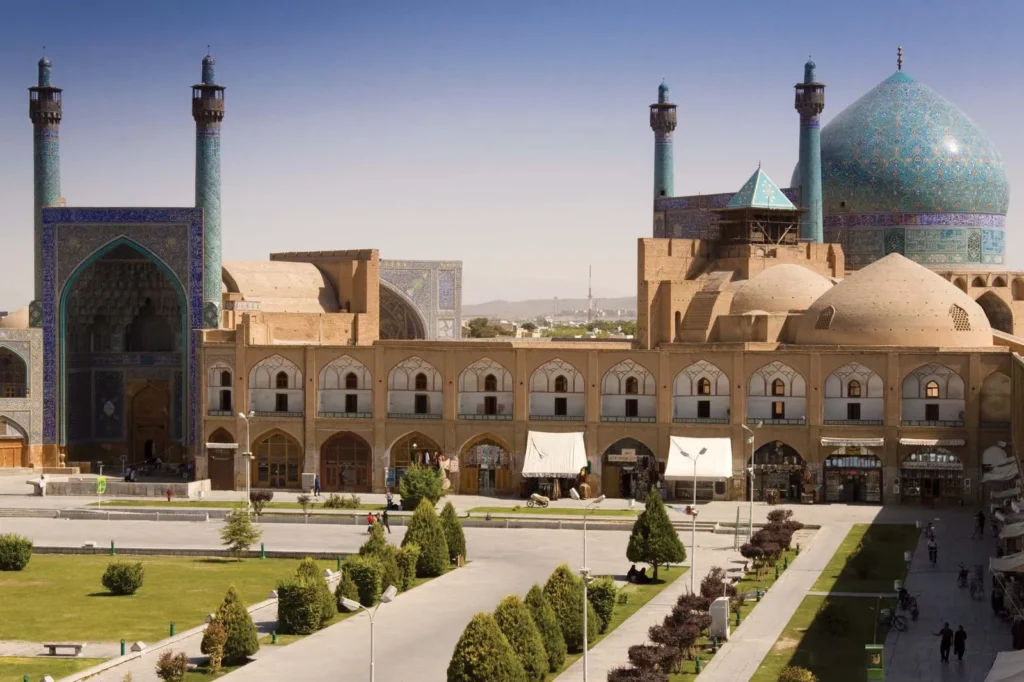
The Sheikh Lotfollah Mosque — smaller, built as a private mosque for the royal harem, accessible through a bent corridor that prevents direct sightlines from the square — has a dome that changes color from cream to pink to amber over the course of a sunny day as the light angle shifts. TrotRadar recommends visiting at midday for the specific color transformation.
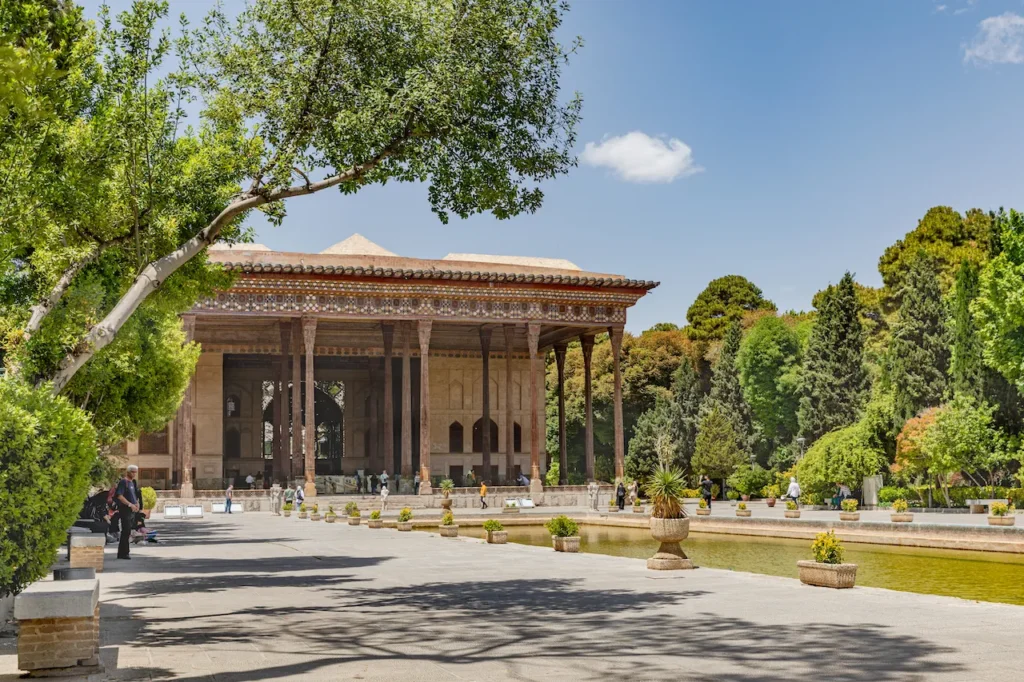
Beyond the square: the Chehel Sotoun Palace (the 40-column pavilion — actually 20 columns, the other 20 reflected in the pool), the Vank Cathedral (the Armenian church in the Jolfa quarter, its interior combining Armenian frescoes with Persian tilework in a genuinely extraordinary hybrid), and the Si-o-Seh Pol bridge (the 33-arch 17th-century bridge over the Zayandeh River, its lower arches containing tea houses and gathering spaces) constitute a city that rewards three full days at minimum.
TrotRadar Isfahan daily budget: $30–55 USD — Iran is extremely affordable for travelers arriving with foreign currency, due to the exchange rate dynamics of the Iranian Rial.
Shiraz: The City of Poets and Gardens
Shiraz — 900 km south of Tehran, the historical capital of the Fars province, the city associated with the poets Hafez and Sa’di — is the most culturally layered city in Iran after Isfahan. Its attractions span three millennia: the Achaemenid ruins of Persepolis nearby, the Safavid architecture of its mosques and gardens, and the specific Iranian tradition of poetry and garden culture that makes Shiraz unique in the country.
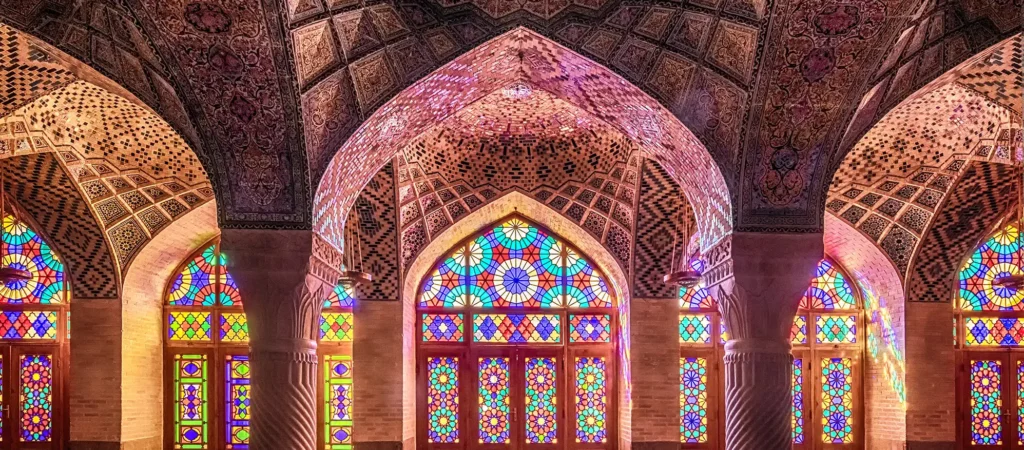
The Nasir al-Mulk Mosque (Pink Mosque) — its facade of pink tiles and its interior of colored glass windows that cast a kaleidoscope onto the Persian carpets in the 9–11 AM morning light window — is the most photogenic single interior in Iran and one that justifies the early morning alarm clock to arrive before the light shifts.
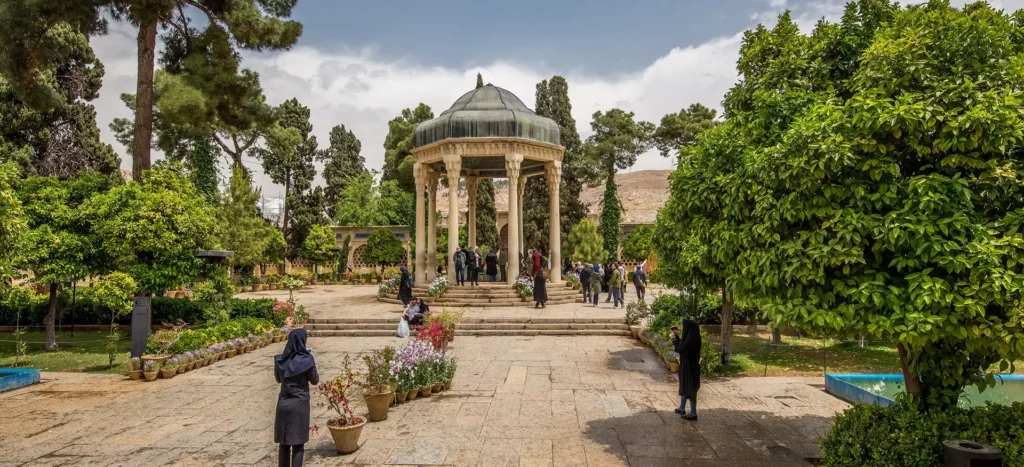
The tomb of Hafez (Hafeziyeh) — the memorial garden of the 14th-century poet whose work is memorized by most Iranians and consulted for divination (hafez-fali, the practice of opening his collected poems at random for guidance) — is one of those heritage sites that is genuinely meaningful rather than merely historical. Visiting in the evening, when Iranian families come to sit in the garden and read their Hafez, is among the finest cultural observations available in Iran.
The Eram Garden (a UNESCO-listed Persian garden of extraordinary formal beauty) and the Vakil Bazaar (the finest bazaar in southern Iran, its brick barrel-vaulted corridors and specific craft specializations unchanged in layout from the 18th century) complete TrotRadar’s Shiraz circuit.
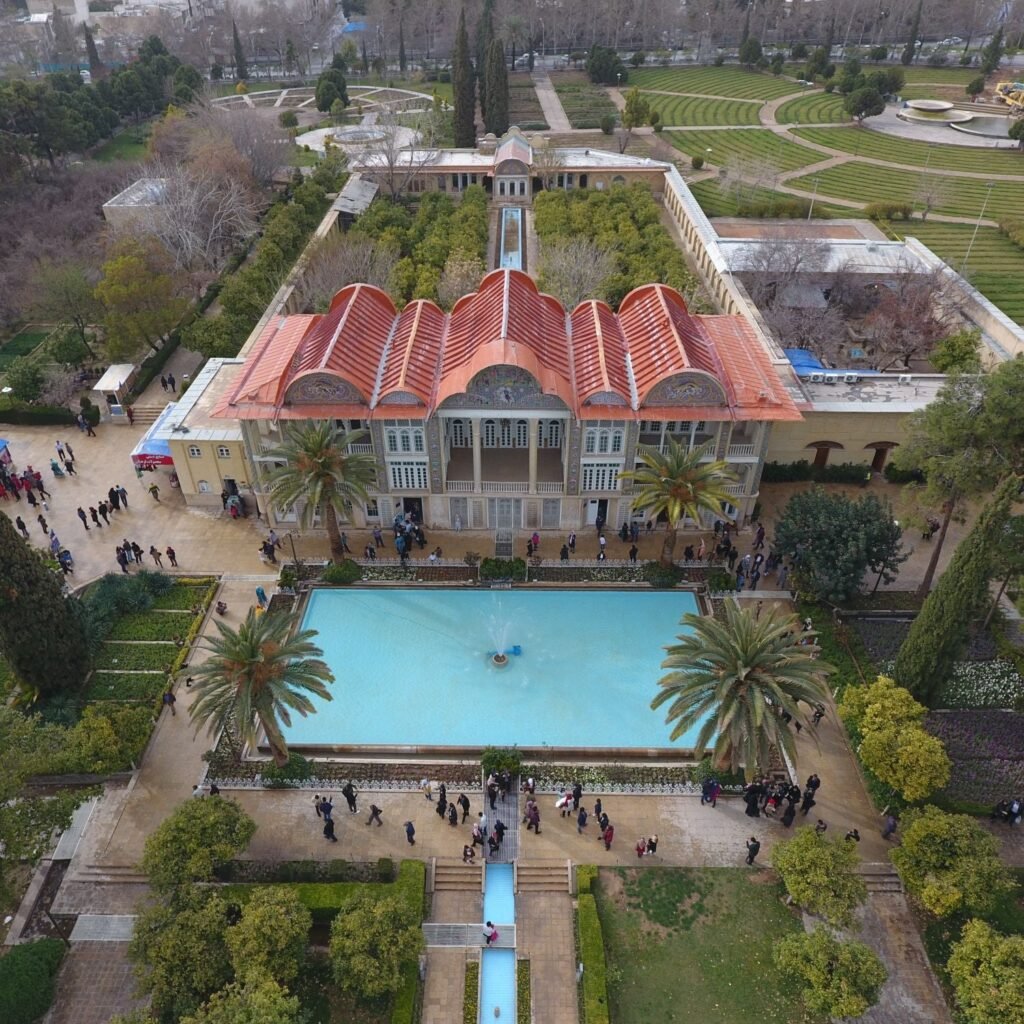
TrotRadar Shiraz daily budget: $28–50 USD
Persepolis: The Achaemenid Capital of the World
Persepolis — 60 km from Shiraz, accessible by taxi or organized tour — is the ceremonial capital of the Achaemenid Persian Empire, founded by Darius the Great around 515 BCE and burned by Alexander the Great in 330 BCE in what many historians consider history’s most significant deliberate act of cultural vandalism. What remains — the platform terrace, the Gate of All Nations, the Apadana throne hall columns, the extraordinary carved stone reliefs depicting subject peoples bringing tribute from across the Achaemenid empire (from Nubia to India, each delegation in their specific national dress) — constitutes one of the finest archaeological sites on earth.
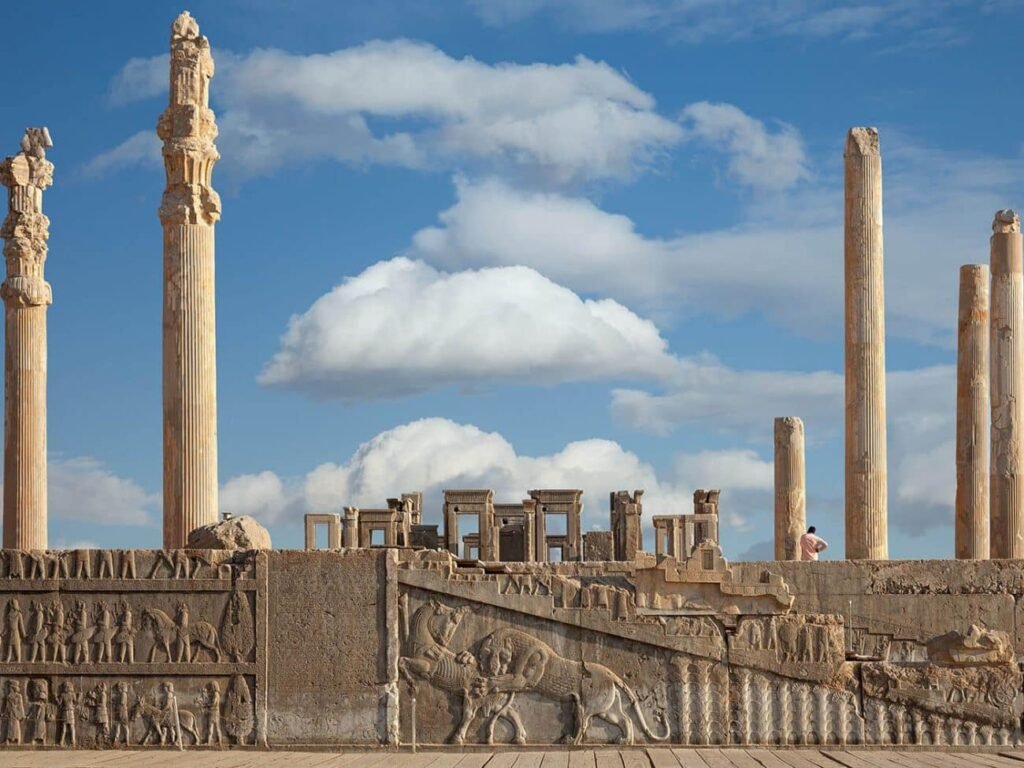
TrotRadar’s Persepolis instruction: go at dawn before the tour groups arrive from Shiraz, and read about the Achaemenid empire before you arrive. The carvings are specific enough that knowing who is depicted in each delegation transforms the experience from impressive stonework to a document of an empire at its height that no other site makes available.
Entry: approximately IRR 500,000–800,000 (approximately $5–8 USD at current exchange rates — verify current pricing).
Yazd: The Desert City That Time Preserved
Yazd — in Iran’s central desert, between Isfahan and Shiraz, its old city a UNESCO-listed mud-brick labyrinth of extraordinary continuity — is the Iranian city that most clearly exhibits the built wisdom of desert architecture: the badgirs (wind towers), rising above rooftops to catch and channel prevailing winds into the buildings below; the qanats (underground water channels, also UNESCO-listed, bringing mountain water under the desert to the city); and the specific organization of the mud-brick old city around private courtyards that provide shade and social space in a hostile climate.
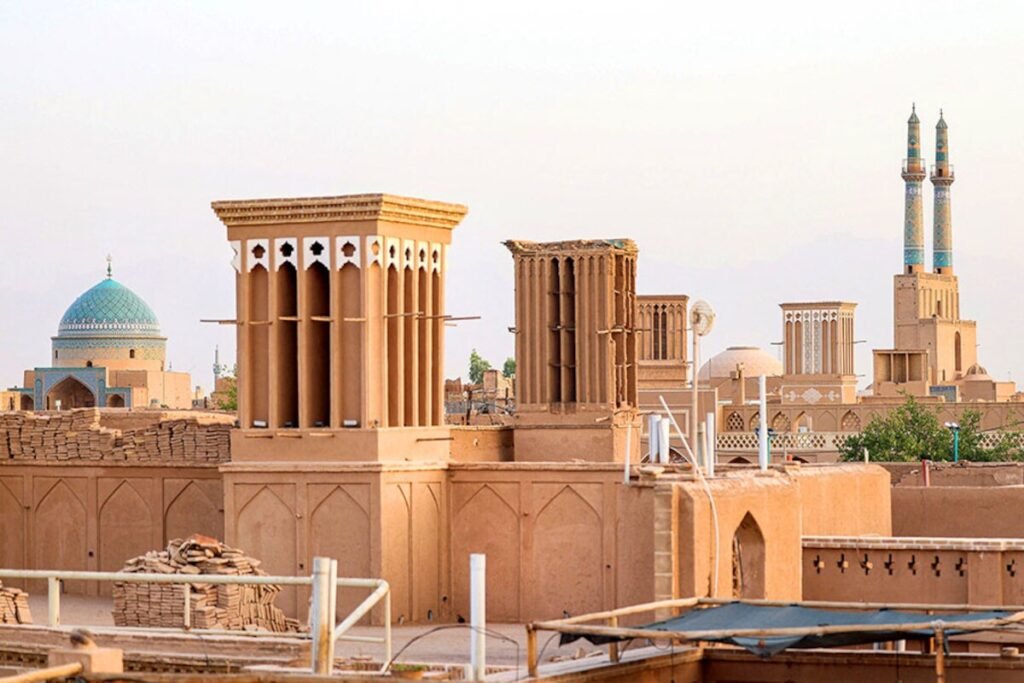
Yazd is also the center of Zoroastrian Iran — the faith of ancient Persia, predating Islam by more than a millennium, whose practitioners still number in the thousands in Yazd. The Towers of Silence (the hilltop platforms where Zoroastrian dead were exposed to vultures in a sky burial tradition, now abandoned but the towers preserved and viewable by foot) and the Atash Behram (the sacred fire temple where a flame has burned continuously since the 4th century CE) are the two essential Zoroastrian sites that make Yazd unique in Iran.
TrotRadar Yazd daily budget: $25–45 USD
Iran Travel Guide: Essential Realities for 2026
TrotRadar’s honest Iran travel context for 2026:
Safety for tourists: Iran has a strong tradition of hospitality toward foreign visitors and the tourist infrastructure — particularly in Isfahan, Shiraz, and Yazd — is well-developed. Violent crime against tourists is extremely rare. Political tensions affect the environment in ways that vary; TrotRadar recommends checking your government’s current travel advisory before booking and staying aware of developments during any trip.
Dress code: Female travelers are required by Iranian law to wear hijab (headscarf) and modest dress in public. This applies regardless of nationality or religion. The enforcement and social context around this requirement has been in flux — research current conditions carefully before travel.
Payment: International credit and debit cards do not function in Iran due to international sanctions. Bring sufficient USD, EUR, or GBP cash for the entire trip; exchange at registered exchange offices (sarrafis) in major cities for Iranian Rial at the market rate.
Internet: Many international services (Google, WhatsApp, Instagram, various news sites) are blocked by Iranian internet filtering. A VPN purchased and installed before arrival is essential — VPNs cannot be downloaded from within Iran.
For the broader Silk Road context — how Iran connects to Uzbekistan and the Central Asia circuit — read TrotRadar’s Uzbekistan Silk Road guide. And for the architecture comparison with other Islamic heritage destinations, our architecture destinations guide places Isfahan in its global context.
TrotRadar Iran overall daily budget: $25–50 USD — one of the most affordable quality heritage destinations in the world for travelers who can access it.
TrotRadar’s Iran Travel Guide Verdict
Iran requires more research and more preparation than most destinations in this series — the visa complexity, the payment situation, the dress code, and the political context all demand specific attention before booking. What Iran returns on that preparation is equally specific: Isfahan’s architectural achievement is genuine and unmatched; Persepolis makes the Achaemenid empire tangible in a way no museum achieves; the hospitality of Iranian people toward foreign visitors is, by the overwhelming testimony of travelers who have experienced it, among the most genuinely warm in the world. TrotRadar’s position: if your nationality allows access, and the current travel context permits, go. The photographs you’ve seen of Isfahan do not prepare you for the building.Use this Iran travel guide as your starting framework, but verify all current visa and safety advisories before committing to dates.
Find Your Iran Travel Package
TrotRadar features licensed Iran tour packages covering Isfahan, Shiraz, Persepolis, and Yazd, with visa assistance for eligible nationalities and guided options for US, UK, and Canadian passport holders. Browse TrotRadar’s Iran travel offers →