Ethiopia contains more UNESCO World Heritage Sites than any other country in sub-Saharan Africa, a continuous written history stretching back three millennia, the oldest fossilized human remains yet discovered, and a food tradition so distinctive it has no close equivalent anywhere in the world. It is also the only African country that was never colonised — a fact that permeates its culture, its architecture, and the particular pride with which Ethiopians discuss their history.
At TrotRadar, this Ethiopia Lalibela travel guide sits at the top of our Africa recommendations for travelers whose primary interest is cultural and historical depth rather than wildlife. The country’s headline destination — the rock-hewn churches of Lalibela — is extraordinary enough to justify an intercontinental flight on its own. Everything around it makes the case for staying longer.
TrotRadar Tip: Ethiopian Airlines is one of Africa’s finest carriers and operates an extraordinary hub-and-spoke network through Addis Ababa connecting virtually every major African city. Flying Ethiopian often provides the most affordable routing to East and Southern Africa destinations. Browse TrotRadar’s Ethiopia flight deals and heritage tour packages — we feature itineraries covering Lalibela, Axum, and the Simien Mountains.
Lalibela: The Eighth Wonder That Earns the Description
Calling something the “eighth wonder of the world” is a description that TrotRadar approaches with significant scepticism — it’s applied to a depressing number of heritage sites globally, diluting the phrase to meaninglessness. In Lalibela’s case, we’ll use it anyway.
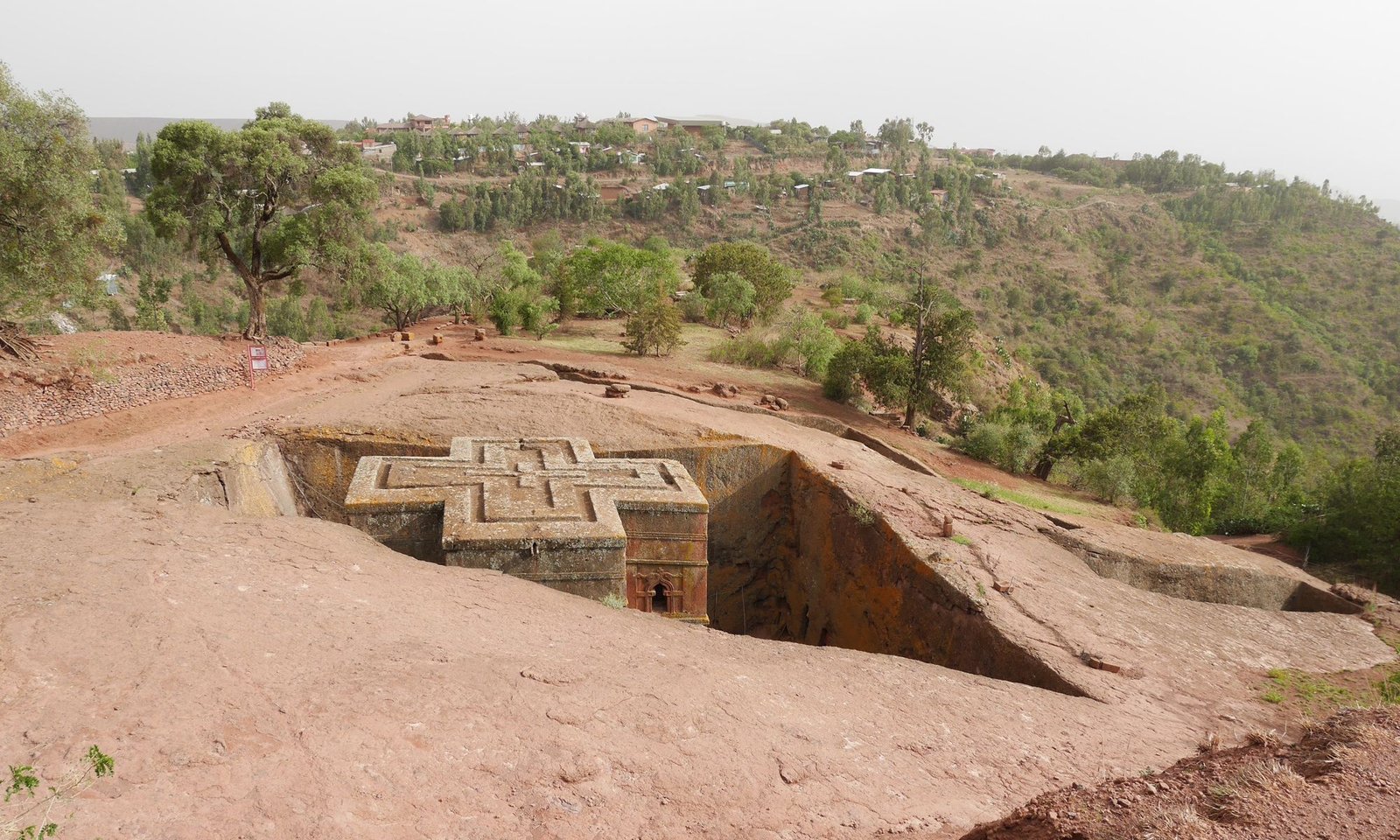
The eleven rock-hewn churches of Lalibela — carved directly downward into the red volcanic rock of the Ethiopian highlands during the reign of King Lalibela in the 12th and 13th centuries — are among the most extraordinary feats of construction in human history. Each church is a monolith: carved entirely from the surrounding rock, not built upward but excavated downward, so that the exterior of each building is the rock face itself. The largest, Bete Medhane Alem, measures 33.5 metres long by 23.5 metres wide by 11.5 metres tall — all carved from a single mass of stone.
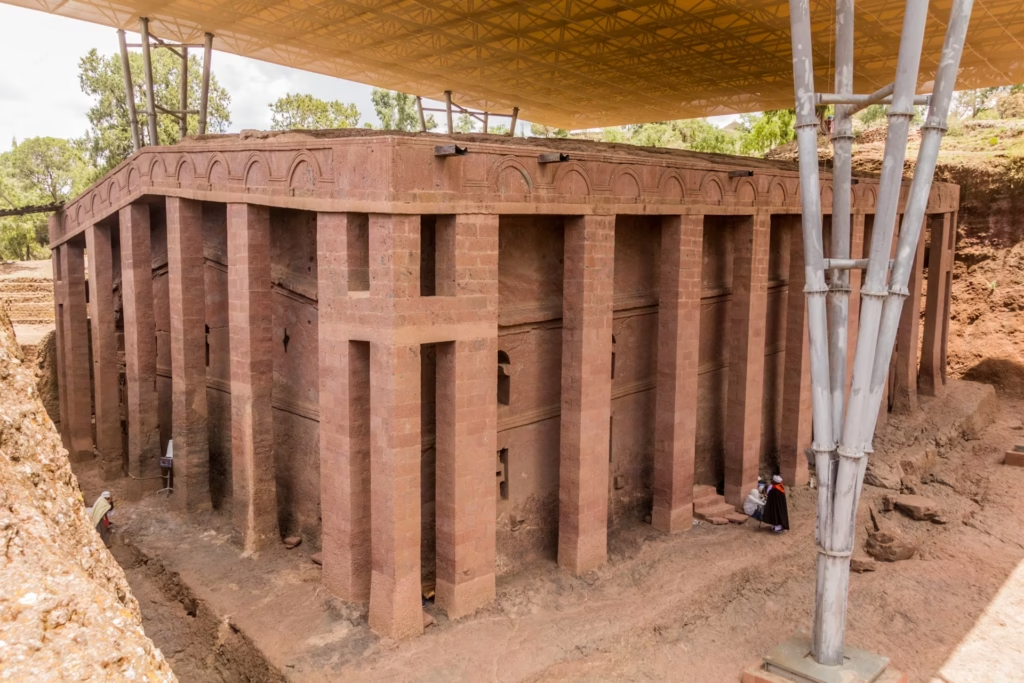
What makes Lalibela genuinely extraordinary rather than merely historically impressive is that the churches are active religious sites. Ethiopian Orthodox Christian priests conduct services in them. Pilgrims come from across Ethiopia for major festivals. The smell of incense and the sound of liturgical chanting are as much part of the experience as the architecture. Visiting Lalibela is not walking through a museum — it is entering a living religious community that has been continuous for nearly nine centuries.
TrotRadar’s Lalibela practical framework:
- A multi-church ticket covers all eleven sites and costs approximately $50 USD — valid for multiple days, which you will want. TrotRadar recommends a minimum of two full days
- Hire a local guide at the entrance — not optional, and not just for orientation. The theological and historical depth behind each church’s symbolism requires explanation to become visible
- The most atmospheric visit is during early morning prayer (approximately 6–8 AM) when the courtyards are filled with white-robed worshippers
- During major festivals — particularly Timkat (Ethiopian Epiphany, January 19–20) and Genna (Ethiopian Christmas, January 7) — Lalibela fills with pilgrims and becomes one of the most extraordinary spectacles available in African travel
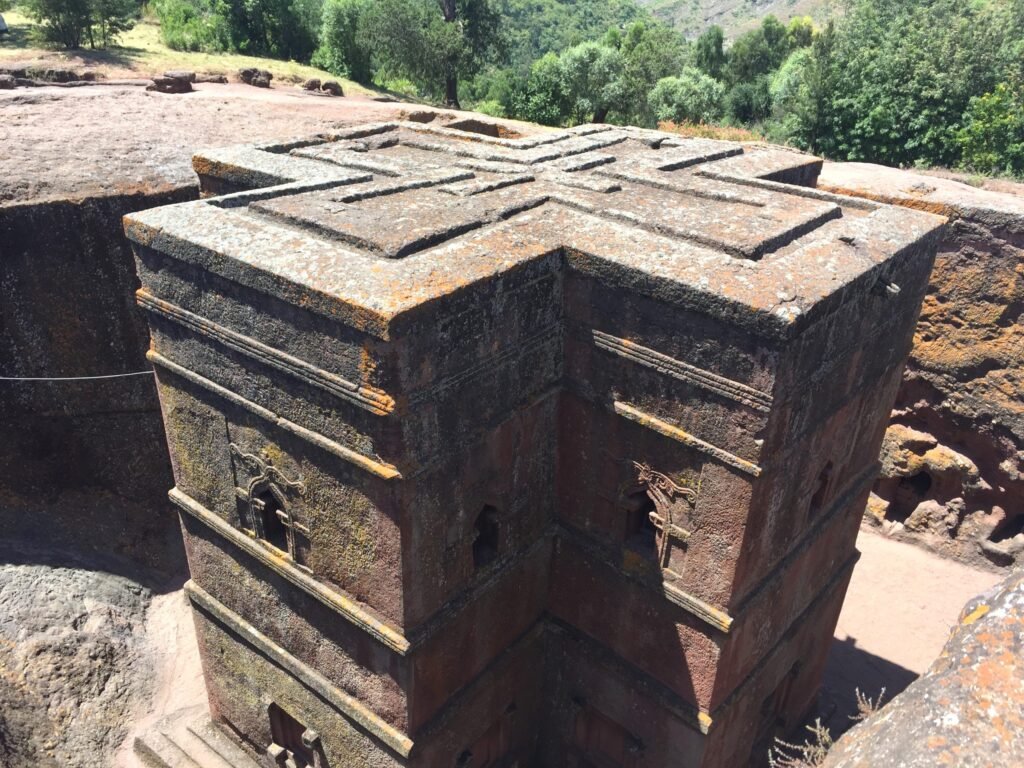
Bete Giyorgis — the Church of Saint George, the most famous of the eleven — stands alone in its own courtyard, cruciform in plan, its roof decorated with a grid of cross-in-cross designs in relief. It was apparently the last church built and is considered the finest. The approach involves descending a narrow trench cut into the rock, arriving at a sunken courtyard, and looking up at a church that is simultaneously below the ground and taller than a three-storey building. No amount of preparation for this moment quite works.
Getting to Lalibela: Not Complicated, But Specific
Lalibela sits at approximately 2,500 metres in the highlands of Amhara region, connected to the outside world by a small airport receiving daily flights from Addis Ababa (approximately 1.5 hours, $80–150 USD return depending on advance booking). Ethiopian Airlines operates the route; book at least 2–3 weeks ahead in high season (October–January).All flights and logistics in this Ethiopia Lalibela travel guide assume an Addis Ababa hub.
The overland route from Addis via Bahir Dar takes approximately two days of driving on roads that are improving but still variable — possible for the adventurous and time-rich, not recommended for anyone with a fixed departure schedule.
Accommodation in Lalibela ranges from basic guesthouses at €15–25/night to the excellent mid-range Ben Abeba (a spider-leg architectural landmark overlooking the valley) and several well-reviewed lodges at €60–120/night. Book ahead for festival periods — availability disappears completely.
Addis Ababa: Africa’s Most Underestimated Capital
Most travelers treat Addis Ababa as a transit stop — a night before flying to Lalibela. TrotRadar recommends reconsidering this. At 2,355 metres, with a population of 5+ million and a history as Africa’s diplomatic capital (the African Union is headquartered here), Addis has more going on than its transit reputation suggests.
The National Museum of Ethiopia houses “Lucy” — the 3.2-million-year-old Australopithecus afarensis skeleton discovered in 1974 and still among the most significant paleoanthropological finds ever made. Seeing Lucy (or her cast — the original is maintained separately) in person is one of those calibrating experiences that resets your sense of human time.
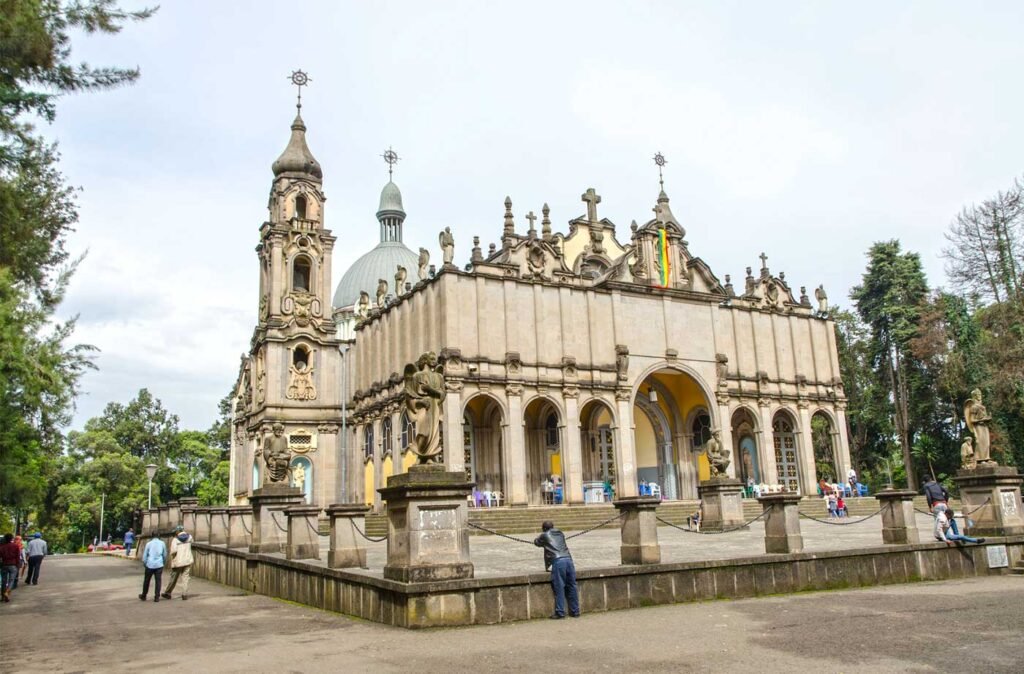
The Holy Trinity Cathedral contains the tomb of Emperor Haile Selassie and is the most historically significant church in Addis — its stained glass, murals, and crypt warrant at least two hours. The adjacent Ethnological Museum in the former Imperial Palace is one of the finest ethnographic collections in Africa.
The Merkato — the largest open-air market in Africa — covers several square kilometres of the city’s western districts and sells everything from spices and coffee to second-hand tyres and traditional white cotton shawls (shemma). Navigating it requires either a guide or a high tolerance for productive confusion. TrotRadar considers both perfectly acceptable approaches.
Ethiopian coffee ceremony: Coffee was discovered in Ethiopia, and the country’s relationship with the bean is not merely commercial but ceremonial. The traditional coffee ceremony — green beans roasted over charcoal, ground by hand, brewed in a clay jebena pot, and served in three rounds — is offered in homes, cafés, and dedicated ceremony houses throughout Addis. Participating in one is both a cultural and a genuinely excellent coffee experience.

Axum: The Ancient Kingdom That Claimed the Ark
Axum — the ancient capital of the Aksumite Empire, one of the great powers of the ancient world from approximately 100–940 CE — sits in northern Ethiopia’s Tigray region and contains a concentration of historical significance that rivals anything in the Mediterranean world.
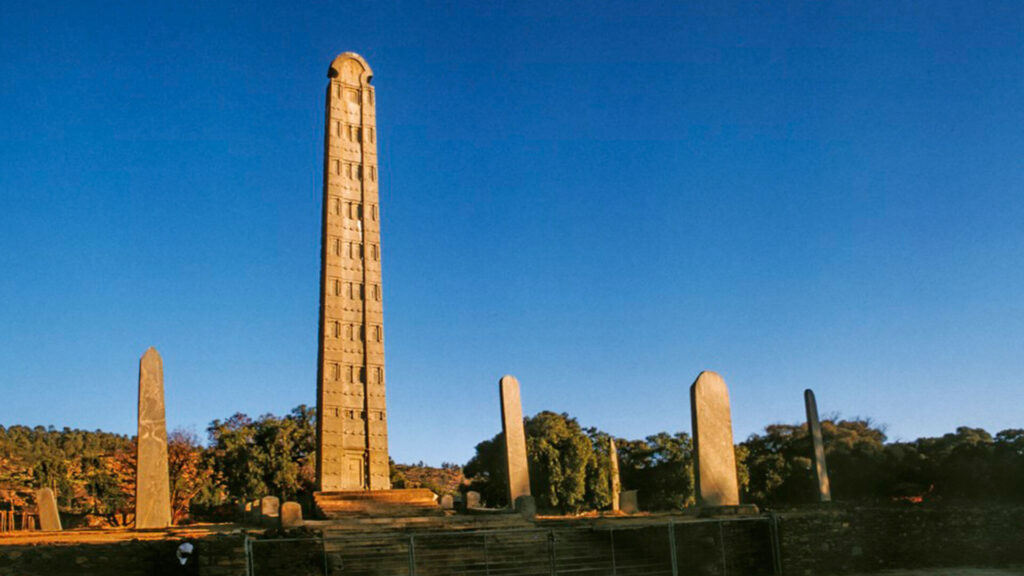
The stelae field holds enormous granite obelisks carved by the Aksumites — some over 20 metres tall, weighing hundreds of tonnes, carved to represent multi-storey buildings with false doors and windows in relief. The engineering required to quarry, transport, and erect these monuments with the technology of 2,000 years ago is genuinely unexplained.
Axum also claims to house the Ark of the Covenant — the biblical chest containing the stone tablets of the Ten Commandments — in the Chapel of the Tablet adjacent to the Church of Our Lady Mary of Zion. The Ark is not viewable (only one guardian monk is permitted to see it), but the claim is taken entirely seriously by the Ethiopian Orthodox Church and forms the theological core of Ethiopian Christianity. Whether or not you engage with the claim theologically, the religious atmosphere of Axum is as powerful as anything in Lalibela.
The Simien Mountains: Trekking Africa’s Roof
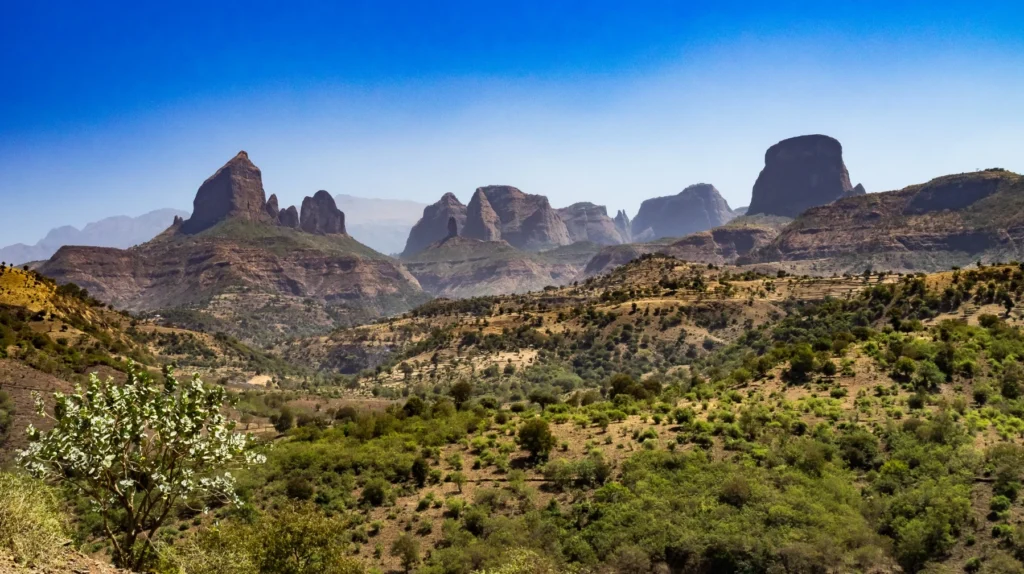
The Simien Mountains National Park — a UNESCO World Heritage Site 100 km north of Gondar — contains the Ethiopian Highlands’ most dramatic terrain: a volcanic plateau eroded into escarpments, pinnacles, and deep gorges, with the highest peak in Ethiopia (Ras Dashen, 4,550 m) accessible via multi-day trek.
The park is home to several species found nowhere else on earth: the Gelada baboon (a grass-eating primate with a distinctive red chest patch), the Ethiopian wolf (the rarest canid in the world, with a global population of approximately 500 individuals), and the Walia ibex (an alpine ibex subspecies endemic to the Simiens). Wildlife encounters here — particularly with the Gelada, which habituate well to human presence and can be approached to within a few metres — are among the most accessible and extraordinary wildlife experiences in Africa.
Trekking in the Simiens requires a licensed guide and park scout (mandatory for all visitors). Itineraries range from 3-day circuits to 10-day Ras Dashen summit expeditions. Scout and guide fees run approximately $20–30 USD/day combined.
For a comparative East Africa wildlife perspective, read TrotRadar’s Zambia and Victoria Falls guide — which covers southern Africa’s wildlife options — and our budget safari Africa guide for the full East Africa wildlife circuit context.
Ethiopian Food: The Cuisine That Rewards Plant-Based Travelers
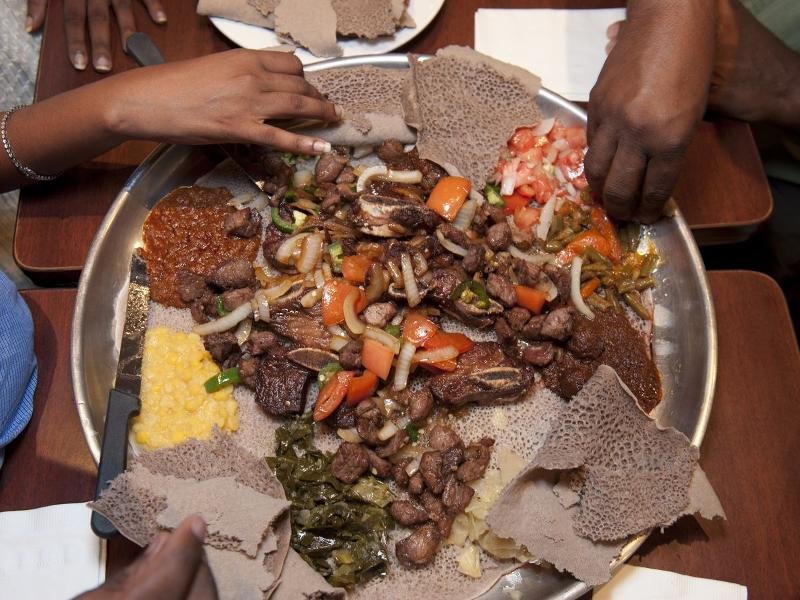
Ethiopian cuisine is built around injera — a large, spongy sourdough flatbread made from teff flour (a grain endemic to Ethiopia) that serves simultaneously as plate, utensil, and staple. Food is placed on the injera and eaten with pieces torn from it; no cutlery is involved.
The dishes placed on that injera are extraordinary in variety and flavour: doro wat (chicken stewed with berbere spice paste and boiled egg), tibs (sautéed meat with vegetables), shiro (ground chickpea stew, silky and aromatic), misir wat (spiced red lentils), and gomen (collard greens cooked with garlic and ginger).
Ethiopian Orthodox Christianity mandates fasting — no animal products — on approximately 250 days per year, which has produced one of the world’s great plant-based cuisines as a natural consequence of religious practice. On fasting days, the ye’tsom beyaynetu (fasting platter) of multiple plant-based stews is the standard restaurant offer — and is, in TrotRadar’s collective view, one of the finest vegan meals available anywhere on the planet for under €3. For our full guide to plant-based travel, see TrotRadar’s vegan and vegetarian travel guide.
Practical Ethiopia Lalibela Travel Guide: Visas, Budget & Planning
Visas: Most nationalities require a visa — available as an e-visa online through the Ethiopian e-Visa portal before departure. Standard tourist visa costs approximately $52 USD for a 30-day single entry. Processing typically takes 3–5 business days.
Currency: Ethiopian Birr (ETB). Foreign currency exchange is handled at banks and licensed exchange bureaux; informal exchange is illegal. ATMs are available in Addis and major cities but unreliable in smaller towns — carry sufficient cash for regional travel.
Health: Yellow fever vaccination is required if arriving from endemic countries and strongly recommended generally. Malaria prophylaxis is recommended for areas below 2,500 metres (Lalibela and Addis, both above this, are generally considered lower risk). Comprehensive travel insurance with medical evacuation coverage is essential.
Best time to visit: October through January is the optimal window — dry season, mild temperatures, and the major Orthodox Christian festivals of Genna (Christmas) and Timkat (Epiphany) both fall in this period. June through September brings the main rainy season (kiremt), which makes road travel in rural areas difficult.
TrotRadar Ethiopia daily budget:
- Budget traveler (local guesthouses + local restaurants): €25–40/day in most cities
- Mid-range (hotel + mix of restaurants + guides): €50–80/day
- Lalibela entry ticket ($50 USD) should be treated as a separate fixed cost rather than absorbed into the daily budget
The TrotRadar Verdict on Ethiopia
Ethiopia is the Africa destination that most consistently exceeds expectations in TrotRadar’s experience — not because expectations are low, but because the country contains more, in more categories, than any reasonable first-time assessment anticipates. Lalibela alone justifies the journey. Addis, Axum, Gondar, and the Simiens collectively make the case for three weeks rather than one.
Go during Timkat if your schedule allows. Hire guides who come from the communities you’re visiting. Eat the fasting platter. Drink the coffee. Ethiopia will do the rest.Bookmark this Ethiopia Lalibela travel guide before you go.
Find Your Ethiopia Heritage Tour Deal
TrotRadar features Ethiopian Airlines flight deals, Lalibela accommodation packages, and guided heritage circuit tours covering Addis Ababa, Lalibela, Axum, and Gondar. Africa’s most historically rich country is closer than you think. Browse TrotRadar’s Ethiopia travel offers →