Bhutan has a tourism policy unlike any other country on earth: a mandatory daily fee designed not to discourage visitors but to ensure that every visitor who arrives contributes directly to conservation, healthcare, education, and the preservation of the cultural and natural environment that makes Bhutan worth visiting. The result is a country that attracts fewer tourists than any comparable Himalayan destination — and that those tourists consistently describe as the most extraordinary they have visited. At TrotRadar, we approach this Bhutan travel guide with the context the destination requires: the fee structure is real, the quality it produces is real, and the experience of a Himalayan kingdom that has deliberately managed its relationship with tourism rather than simply accommodating it is genuinely unlike anything else in the region.
TrotRadar Tip: Bhutan’s Sustainable Development Fee (SDF) of $100 USD per person per night (as of 2026 — verify current rate at tourism.gov.bt before booking) is mandatory for all foreign tourists except Indian, Bangladeshi, and Maldivian nationals. This fee is separate from accommodation, meals, and guide costs. Budget for it as a fixed daily cost before calculating any other Bhutan expense. Browse TrotRadar’s Bhutan travel packages — we feature SDF-inclusive packages with licensed operators that handle all mandatory requirements.
Understanding the Sustainable Development Fee
The Sustainable Development Fee (SDF) is the element of Bhutan travel that most potential visitors encounter first and that most misunderstand. It is not a tourist tax on top of existing costs — it is the primary mechanism through which Bhutan’s tourism policy simultaneously funds public services and manages visitor volume.
The current structure (verify at tourism.gov.bt for the latest rate as policy has evolved): $100 USD per person per night for most international nationalities, applied from the date of arrival. This is in addition to accommodation, food, guide fees, and transport — which are separately costed and vary by standard.
TrotRadar’s honest SDF calculation for a 7-night Bhutan trip:
- SDF: $700 USD per person (fixed, non-negotiable)
- Licensed guide (mandatory): approximately $50–80/day — $350–560 for 7 days
- Accommodation (mid-range): $50–100/night — $350–700 for 7 nights
- Meals (typically included in guided packages): $0–30/day additional
- Total per person for 7 nights: approximately $1,400–2,000 USD
This is significantly more expensive than Nepal, India, or other Himalayan destinations — and significantly less than the Maldives or the Galápagos for an experience of comparable exclusivity and natural and cultural quality. TrotRadar’s position: the SDF is a genuinely well-designed policy that produces a genuinely better destination experience, and the total cost of a Bhutan trip is justified by what it contains.
Paro: The Valley at the Heart of Bhutan
Paro — the valley containing Bhutan’s only international airport and the country’s most significant concentration of heritage sites — is where virtually every Bhutan trip begins and ends, and where most visitors spend two to three of their nights.
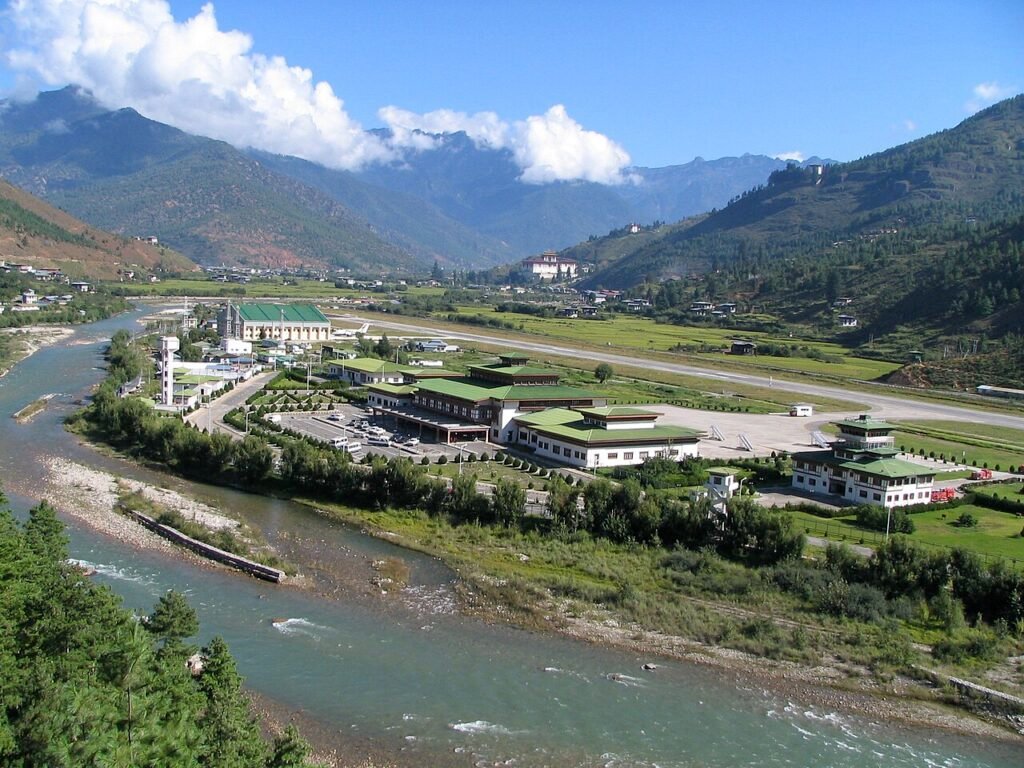
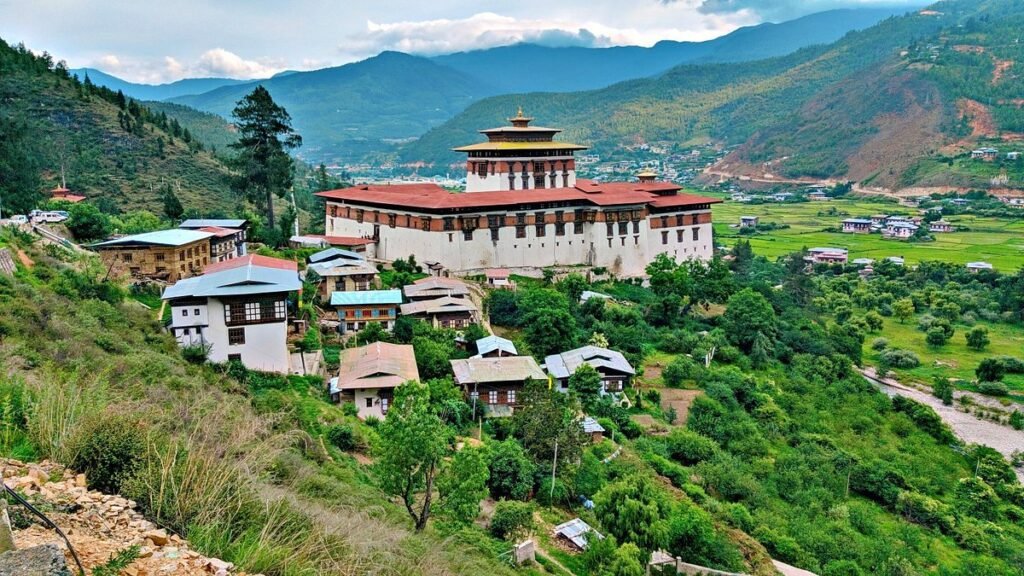
The Rinpung Dzong — the fortress-monastery guarding the lower Paro Valley, its whitewashed walls and red ochre roof reflected in the Paro Chhu river below — is the Bhutan image most travellers have seen before arrival. In person, approached via the traditional covered bridge and a stone-paved path through apple orchards, it exceeds the photograph in the specific way that the finest buildings in the finest settings always do.
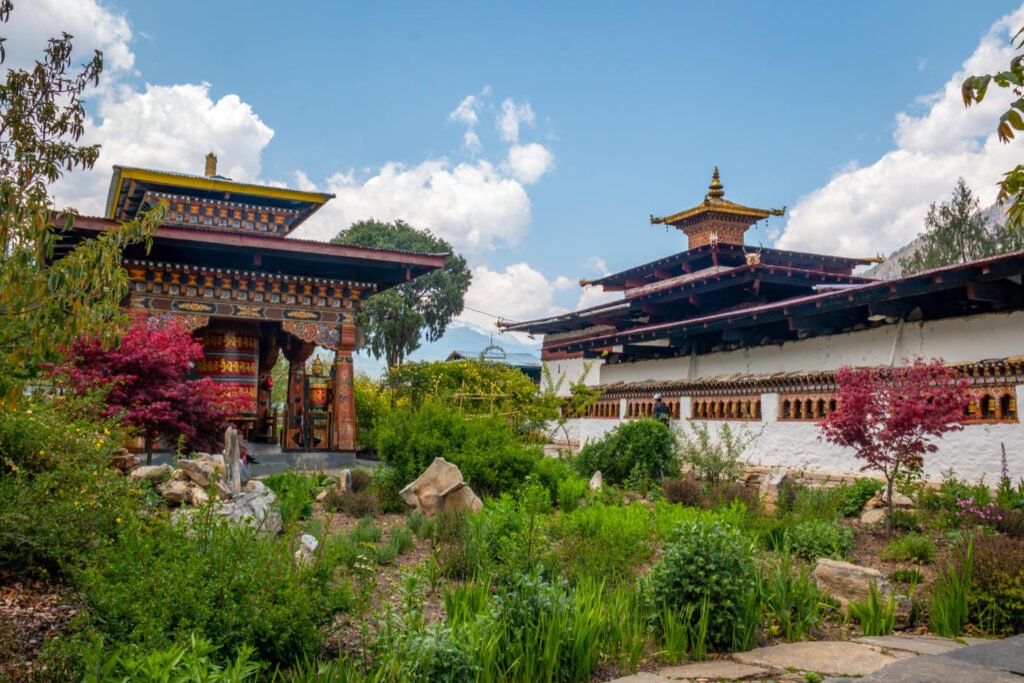
The Kyichu Lhakhang — one of Bhutan’s oldest temples, built in the 7th century CE by the Tibetan Emperor Songtsen Gampo, its courtyard containing an orange tree that flowers and fruits simultaneously throughout the year (a botanical mystery that the monks attribute to sacred power) — is a functioning religious site rather than a monument, and the experience of arriving during a morning prayer ceremony is among the most genuinely moving encounters available in Bhutan.
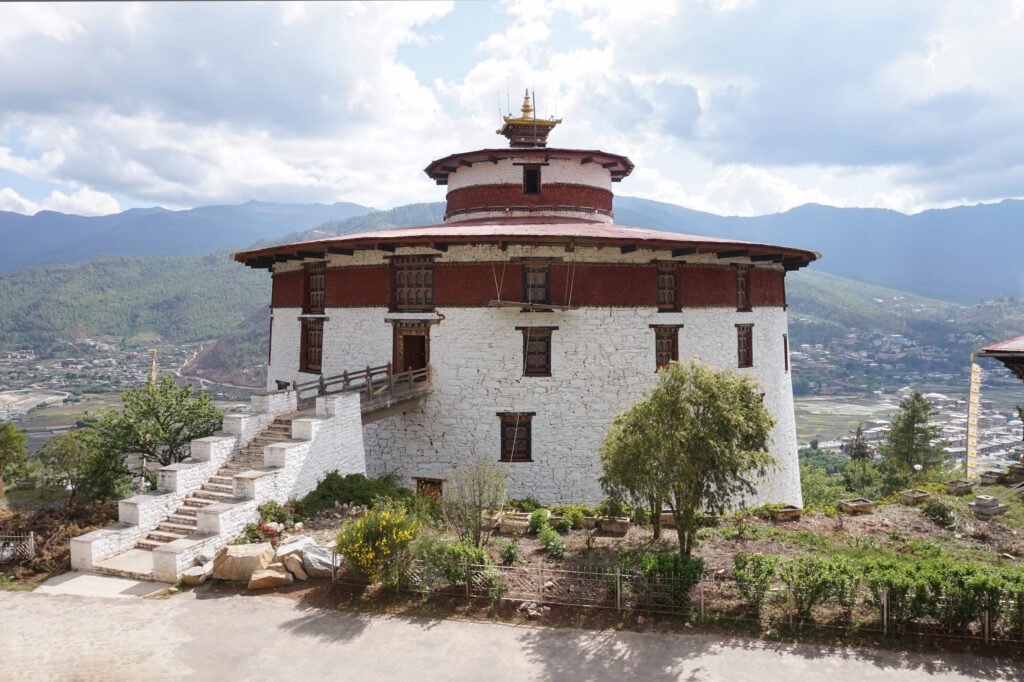
The National Museum of Bhutan (housed in the Ta Dzong circular watchtower above Rinpung Dzong) provides the cultural framework for everything else — the textile tradition, the religious iconography, the architectural history of the dzong system. TrotRadar considers a morning here before visiting Taktsang to be significant preparation for the experience.
Tiger’s Nest Hike (Paro Taktsang): Route, Timing and What to Expect.
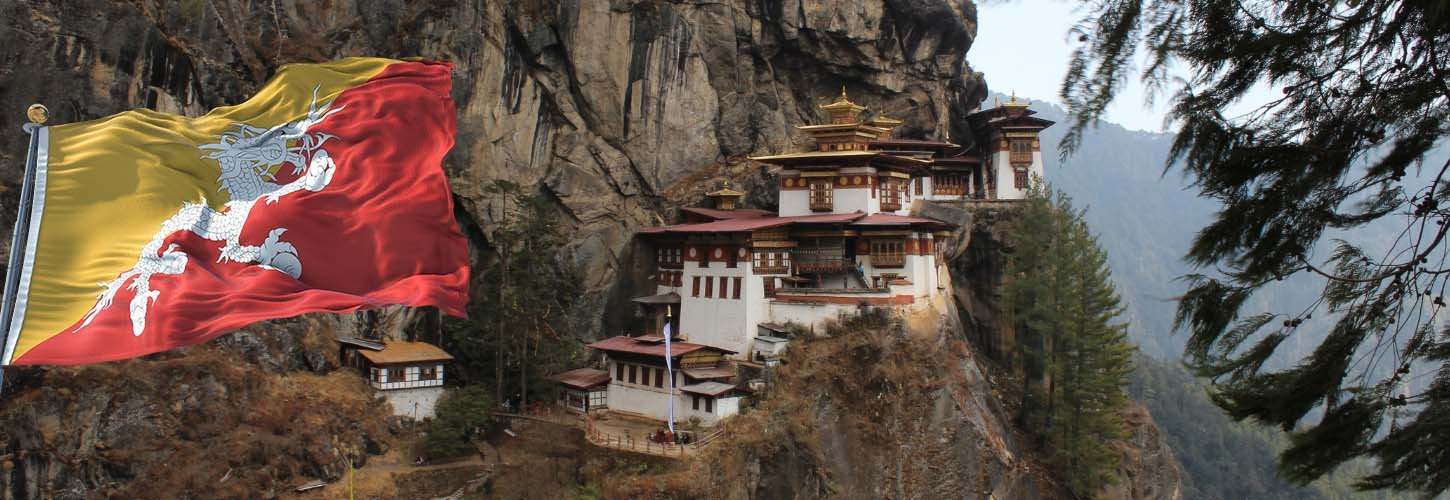
The Paro Taktsang (Tiger’s Nest) monastery — built into the face of a sheer cliff at 3,120 metres above sea level, 900 metres above the Paro Valley floor — is the image that most visitors associate with Bhutan before arrival, and the experience that most describe as the definitive moment of their trip.
The hike climbs 900 vertical metres from the trail head to the monastery entrance over approximately 5 km (one way), passing through blue pine forest, rhododendron groves (spectacular in bloom, March–April), and the halfway cafeteria that provides a rest point with the first full view across to the monastery buildings. Total hiking time: 4–5 hours return at a comfortable pace.
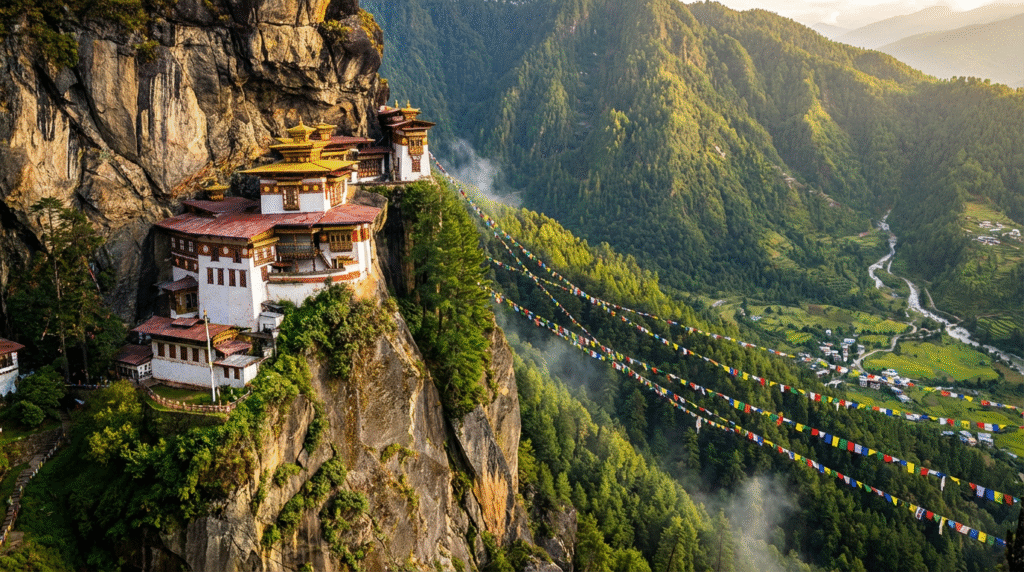
TrotRadar’s Taktsang timing advice: Depart the trailhead by 7 AM — the morning light illuminates the cliff face directly, the air is cool, and the monastery opens at 8 AM. Arriving before the midday heat and the majority of day-group tour traffic produces a fundamentally different experience. Carry water and a light layer — the temperature at the monastery level is typically 5–10°C cooler than the valley floor.
The monastery interior — four main temples built around the caves where Guru Rinpoche meditated in the 8th century, with murals, butter lamps, and the specific atmosphere of a place of continuous religious practice over thirteen centuries — rewards unhurried examination. Entry fee: approximately BTN 1,000 (approximately $12 USD), separate from the SDF.
Thimphu: The Capital Without a Traffic Light
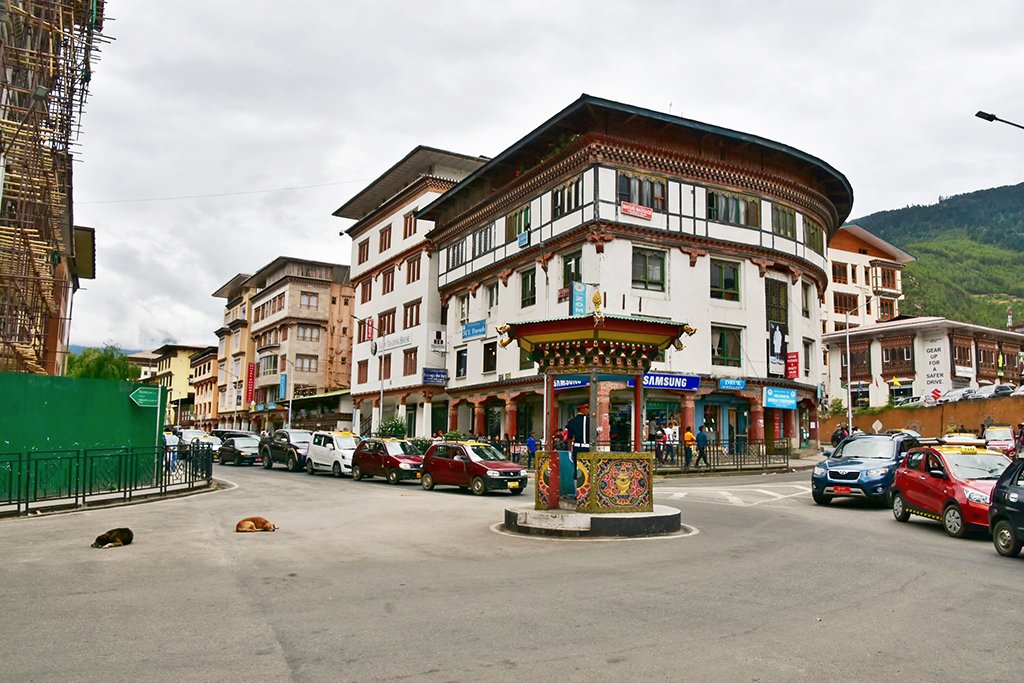
Thimphu — the world’s only national capital without a single traffic light (traffic policemen stand in purpose-built booths directing traffic manually, traffic lights having been briefly introduced and subsequently removed following public preference) — is a city of approximately 115,000 people that provides the best access to Bhutanese contemporary culture and policy alongside the heritage sites.
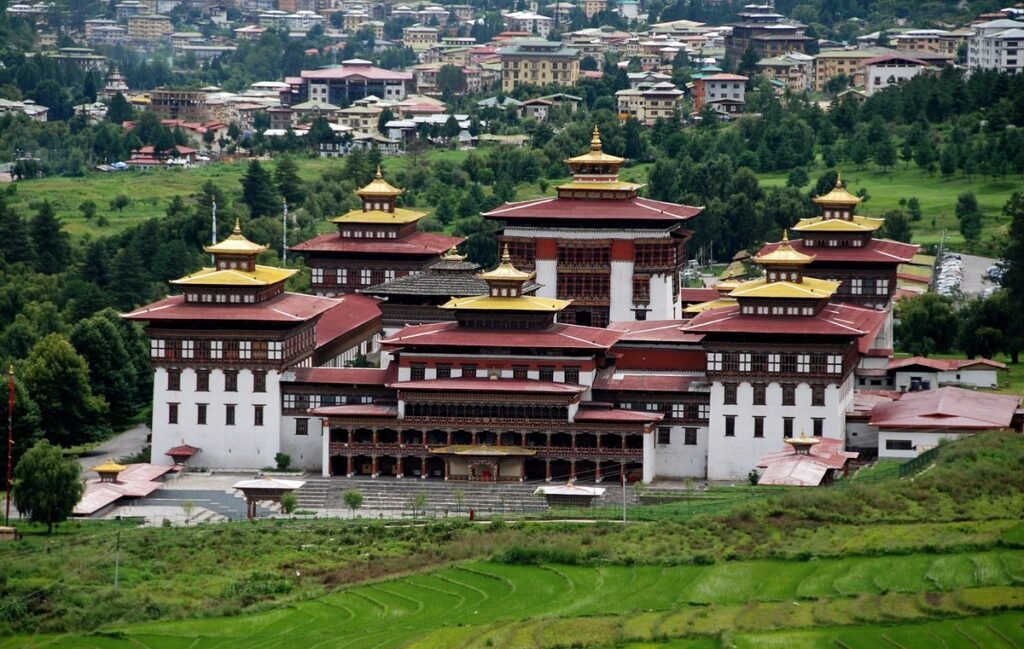
The Tashichho Dzong — the seat of Bhutan’s government and the main monastery of the country’s chief abbot, its white and ochre walls in immaculate condition above the Wang Chhu river — is visitble in the afternoons when the administrative offices are closed. The National Memorial Chorten (built in memory of the third king, Jigme Dorji Wangchuck) is the most active religious site in Thimphu — the morning circumambulation of locals spinning prayer wheels and chanting is one of TrotRadar’s most recommended Bhutan observations for understanding daily Buddhist practice.
The Weekend Market (Friday–Sunday, on the banks of the Wang Chhu) is where Thimphu residents buy fresh vegetables, red rice, chili (the cornerstone of Bhutanese cooking), local cheese, and dried yak meat — one of the finest food markets in the Himalayas and a place where the specifically Bhutanese character of daily commerce is visible.
Punakha: The Dzong That Defines Bhutanese Architecture
Punakha — 77 km east of Thimphu via the 3,100-metre Dochula Pass (where 108 memorial chortens built by the Queen Mother stand on a ridge with Himalayan views extending to peaks above 7,000 metres on clear days) — is the former winter capital of Bhutan and the site of the Punakha Dzong, which TrotRadar considers the finest single building in Bhutan.
Built in 1638 by Zhabdrung Ngawang Namgyal (the monk who unified Bhutan as a nation), at the confluence of the Mo Chhu (Mother River) and Pho Chhu (Father River), surrounded by water on three sides, its white walls rising from the river banks to a series of towers and the golden roof of the central utse — Punakha Dzong is the architectural statement that explains why Bhutan’s building tradition has no equivalent in the Himalayas.
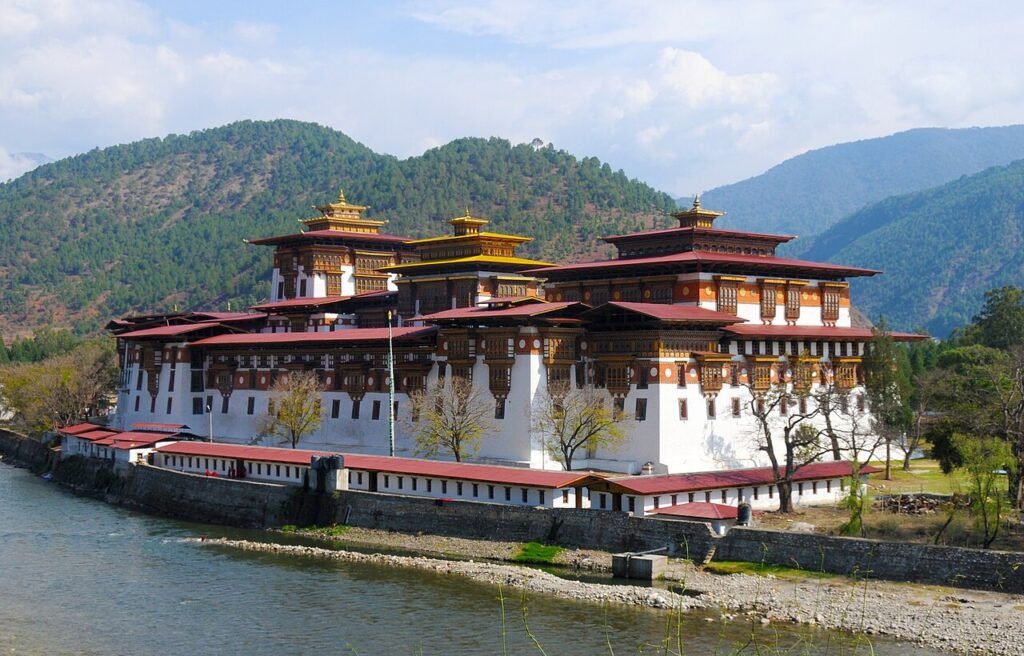
The interior — accessible with a guide, respectful dress required — contains the preserved body of the First Zhabdrung (Bhutan’s unifying religious-political figure) in the innermost sanctum, and a series of courtyards whose proportions and decoration establish the specific aesthetic register of Bhutanese monastic architecture.
Bhutanese Food: Ema Datshi and the Chili Tradition
Bhutanese food is anchored in one preparation: ema datshi — chili and cheese stew. Not a side dish, not a condiment, but the central daily protein of Bhutanese cooking, eaten at most meals, in a country where chili is treated as a vegetable rather than a spice. The heat level is significant and genuine — TrotRadar recommends asking your guide or host about the heat before your first ema datshi rather than discovering the Bhutanese relationship with capsaicin without warning.
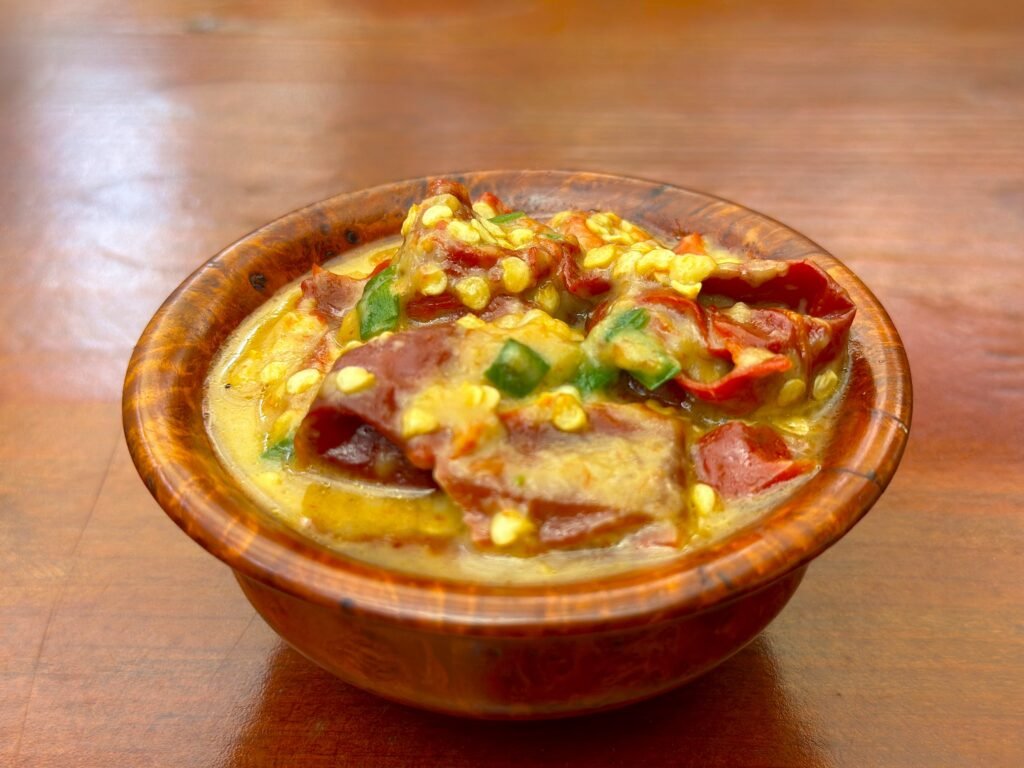
Beyond ema datshi: red rice (a nutty, chewy rice unique to Bhutan’s high-altitude cultivation, one of the genuinely distinctive food products available in the Himalayas), jasha maru (spiced minced chicken), phaksha paa (pork with dried chili), and the butter tea (suja) — salted, buttered Tibetan tea that is an acquired taste for most Western visitors and an acquired appreciation for many who persist through the first cup.
Bhutan Travel Requirements: Visa, Flights and Best Time to Visit.
Visa and entry: A Bhutan visa is obtained through a licensed Bhutanese tour operator (not independently) — the operator submits the application and the visa is issued as a clearance letter before arrival. Allow at least two weeks for visa arrangements, and confirm the current timeline with your licensed operator.
Getting there: Druk Air and Bhutan Airlines operate flights to Paro International Airport — the only international airport, considered one of the most challenging approaches in commercial aviation (manual, visual approach only, surrounded by Himalayan peaks on all sides, operated by a small number of licensed Paro-qualified pilots). Connections from Bangkok, Singapore, Delhi, Kathmandu, Dhaka, and Kolkata.
Best time to visit: March–May (rhododendrons, clear air, moderate temperatures — TrotRadar’s preference for Taktsang hike conditions) and September–November (post-monsoon clarity, excellent mountain views, autumn colors). June–August: monsoon — trails muddy, mountain views limited. Winter (December–February): cold but clear and crowd-free, snow on Dochula Pass creating extraordinary conditions.
For how Bhutan fits into a broader Himalayan circuit, read TrotRadar’s Nepal trekking guide — Bhutan and Nepal share the Himalayan Buddhist culture in forms that differ enough to reward both visits. And our first time in Asia guide provides the regional context for planning a South Asia circuit that includes both.
Is Bhutan Worth the Cost? TrotRadar’s Verdict.
Bhutan costs what it costs — and TrotRadar’s assessment is that the country has designed its tourism policy correctly. The SDF produces a destination where the natural and cultural environment is maintained rather than consumed, where the guide relationship is meaningful rather than transactional, and where the experience of a Himalayan Buddhist kingdom that made a deliberate choice about what kind of engagement it wanted with the world is something that no other destination on earth currently provides.
Calculate the cost honestly. Save for it specifically. Plan the Taktsang hike for the first full morning. Eat the ema datshi. TrotRadar is confident Bhutan justifies everything it asks of you.
Find Your Bhutan Travel Package
TrotRadar features SDF-inclusive Bhutan packages with licensed operators, Tiger’s Nest trekking itineraries, festival-season trip combinations, and Punakha valley accommodation. The last Himalayan kingdom is waiting. Browse TrotRadar’s Bhutan travel offers →