Istanbul is one of the great cities of the world — TrotRadar makes that case in our dedicated city coverage and stands behind it entirely. But Turkey is a country of 783,000 square kilometres containing one of the densest concentrations of classical heritage anywhere on earth, a natural landscape of extraordinary variety, a food culture that has no European equivalent in depth or range, and a coastline of the Mediterranean and Aegean that rewards dedicated exploration. At TrotRadar, the Turkey travel guide beyond Istanbul is for travelers who’ve either already experienced Istanbul and want to understand what comes next, or who are building a first Turkey trip around a complete picture of the country rather than a single city.
TrotRadar Tip: Turkey’s domestic flight network is extraordinarily well-developed and affordable — Turkish Airlines and Pegasus Airlines connect Istanbul to Cappadocia (Kayseri or Nevşehir), Izmir, Antalya, and Trabzon for frequently under $40–70 USD each way with advance booking. The correct Turkey circuit involves flying rather than driving between the major regional hubs and self-driving or busing within each region. Browse TrotRadar’s Turkey travel packages — we feature domestic flight combinations and regional accommodation packages.
Cappadocia: The Landscape That Defies Description
Cappadocia — the volcanic plateau in central Anatolia where millennia of erosion have sculpted the tuff rock into “fairy chimney” formations, underground cities of extraordinary depth, and a landscape so consistently described as lunar that the adjective has become redundant — is the Turkey destination that most consistently exceeds the photographic record. The photographs of balloon-strewn sunrises over the Rose Valley are accurate, and the reality is more extraordinary than they convey.
The hot air balloon flight — approximately 1 hour at sunrise, drifting over the fairy chimney valleys at low altitude, the Göreme landscape below in the specific pre-dawn light — is expensive ($150–200 USD) and weather-dependent (approximately 30–40% of flights are cancelled on the day for wind conditions), and is worth booking with the understanding that it may require a backup day. TrotRadar considers it the finest single paid activity in Turkey and one of the finest in the world.
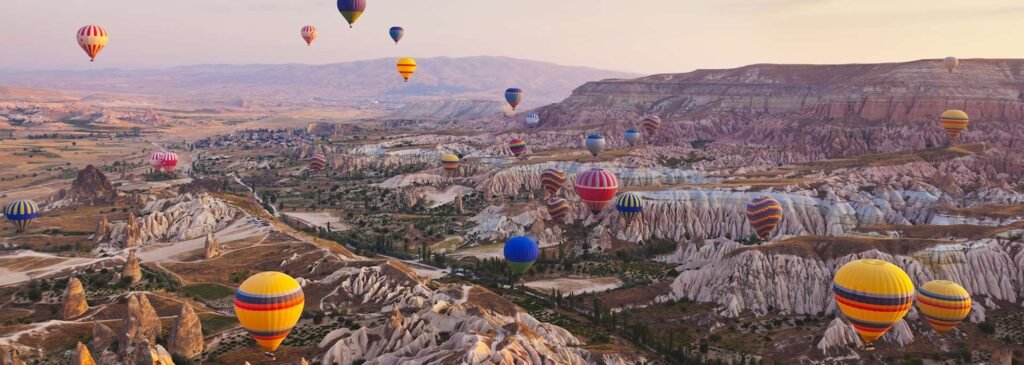
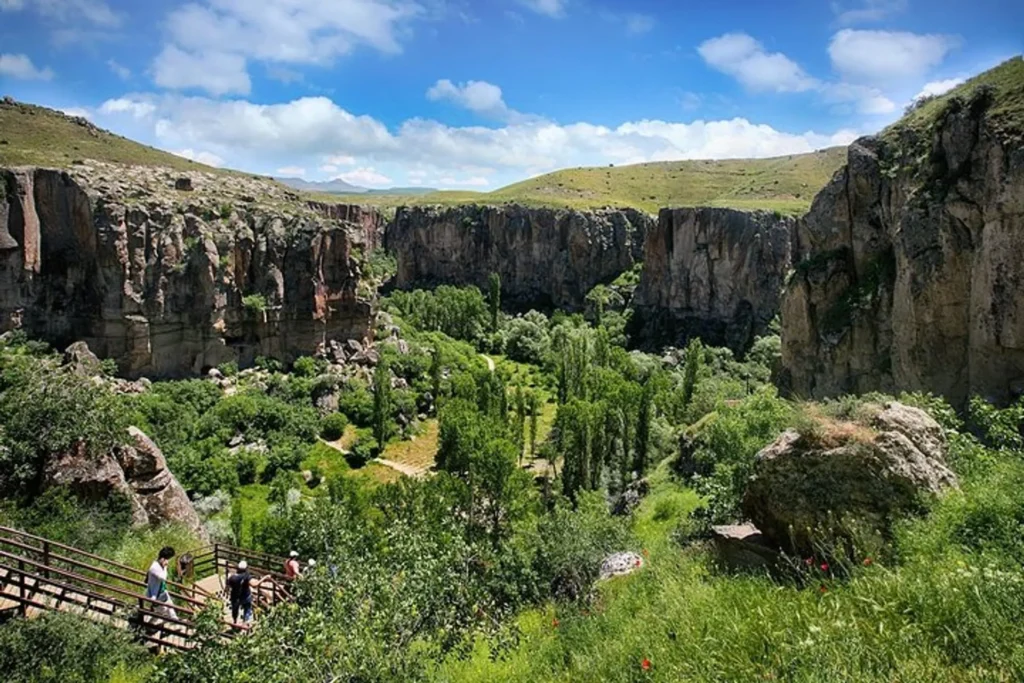
The walking circuits through the valleys — Rose Valley, Pigeon Valley, Ihlara Valley (a 14 km canyon with Byzantine churches carved into the cliff walls) — are free and equally extraordinary in their ground-level intimacy with the geology. The early morning walk through Pigeon Valley with the balloons overhead and the fairy chimneys in low-angle light is TrotRadar’s most recommended single free morning in Turkey.
The underground cities — Derinkuyu (the largest, 85 metres deep, capable of housing 20,000 people, with stables, churches, winemaking facilities, and ventilation shafts) and Kaymaklı (more accessible for visitors with mobility considerations) — are among the most extraordinary engineering achievements of any ancient civilization, and are inexplicably undervisited relative to the balloon flights that draw most Cappadocia tourists. Entry: approximately ₺300 (€9) each.
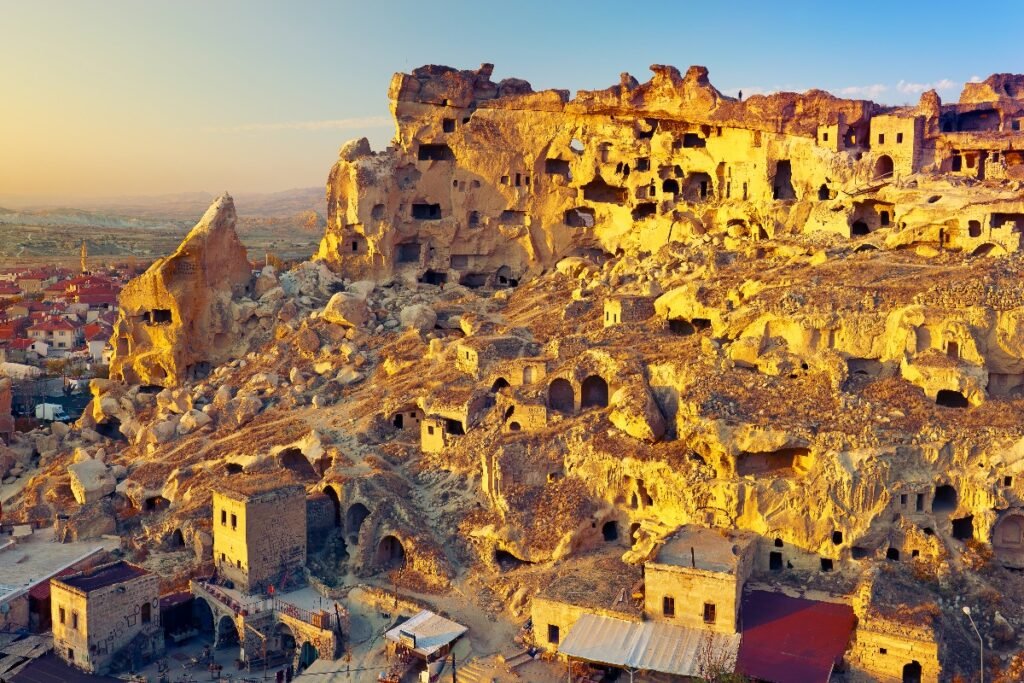
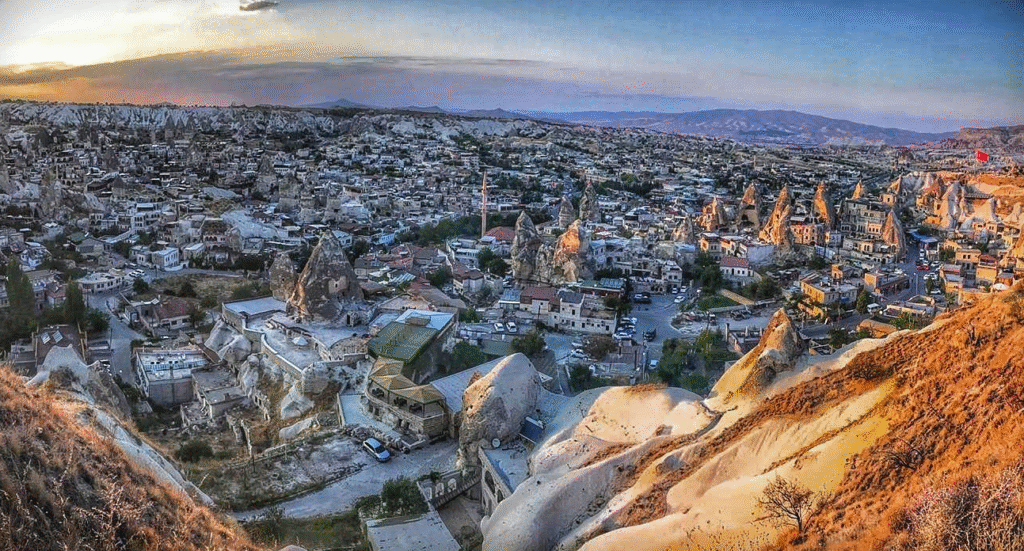
Göreme is the central village with the best accommodation infrastructure — cave hotels ranging from budget ($40–80/night) to extraordinary ($200–400/night for suites carved into the volcanic rock). TrotRadar considers the cave hotel experience sufficiently distinctive to justify a mid-range upgrade; staying in a carved stone room with a terrace overlooking the valley at sunrise is the Cappadocia context that the experience requires.
TrotRadar Cappadocia daily budget: ₺800–2,000 (€25–60 — verify current exchange rate)
Ephesus: The Most Complete Ancient City in the World
Ephesus — on the western Aegean coast near the modern city of Selçuk, accessible from İzmir by bus or train (1 hour) or from Kusadası by taxi (20 minutes) — is the most extensively excavated and most completely preserved ancient Greco-Roman city accessible to visitors anywhere in the world. More complete than Pompeii in several respects, less dramatic in its circumstances of preservation but more revealing of how the city actually functioned in daily life.
The Library of Celsus — the two-storey Roman library façade built in 117 CE to house 12,000 scrolls, its niches containing allegorical figures representing Wisdom, Knowledge, Intelligence, and Virtue — is the defining image of Ephesus and one that consistently exceeds its photographic representation in the specific quality of the marble carving visible at close range.
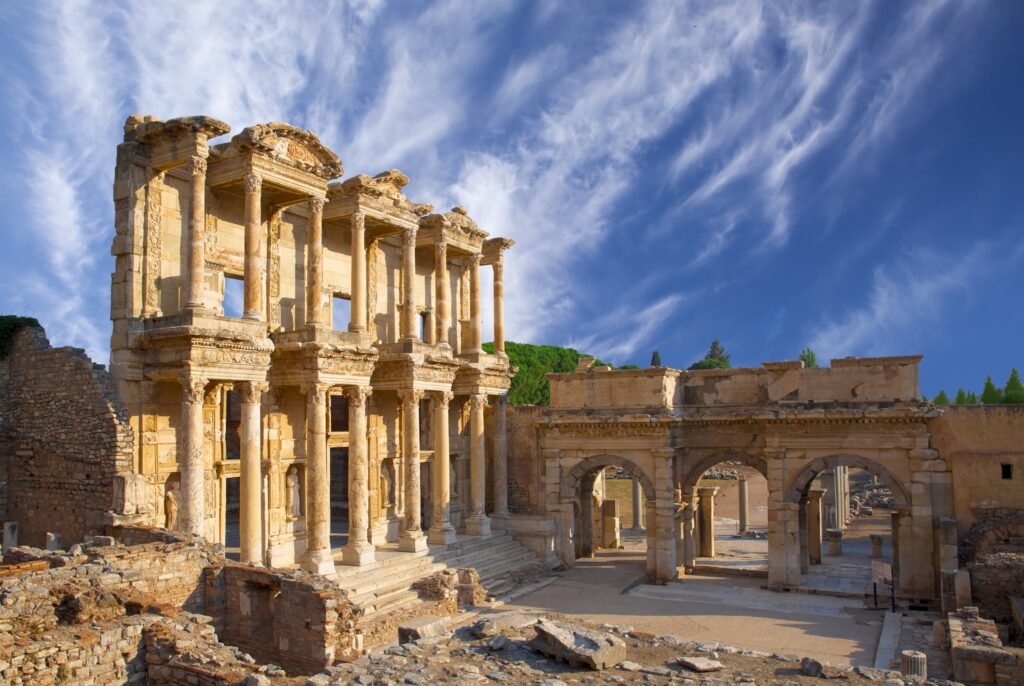
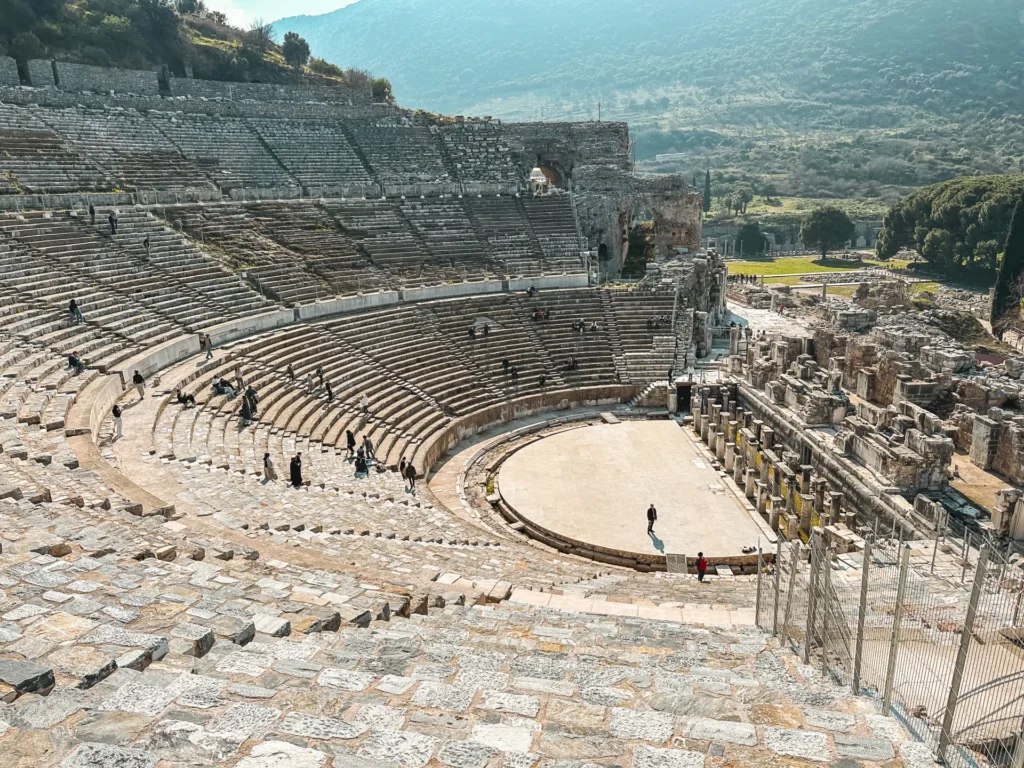
Beyond the Library: the Great Theatre (seating 25,000 spectators, still acoustically extraordinary — clap once in the center of the orchestra and the sound returns from the upper tiers), the Terrace Houses (a separately ticketed excavation of wealthy Roman domestic interiors with preserved frescoes and mosaic floors, approximately €20 extra and absolutely worth it), and the Marble Road that connected the theatre to the library form the core of a 3-hour minimum visit.
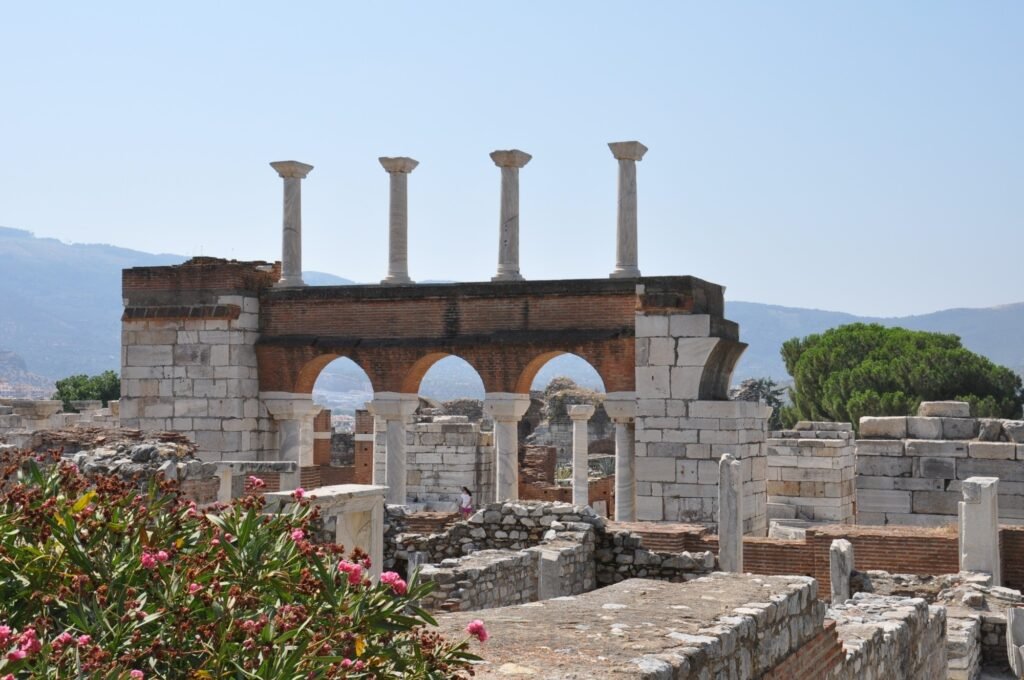
The adjacent Selçuk town — where the Basilica of St John (where John the Apostle is believed buried) and the single remaining column of the Temple of Artemis (one of the Seven Wonders of the Ancient World — now 1 column and a stork nest) complete the area’s extraordinary heritage density — is the correct base for Ephesus: smaller, cheaper, and more characterful than Kuşadası.
For the Greece-Turkey combination that pairs Ephesus with Samos island (45 minutes by seasonal ferry), read TrotRadar’s underrated Mediterranean islands guide.
TrotRadar Selçuk/Ephesus daily budget: ₺600–1,500 (€18–45)
Pamukkale: The Cotton Castle That Delivers on Its Photographs
Pamukkale — “cotton castle” in Turkish — is the white terraced hillside formed by calcium carbonate deposited by thermal springs over millennia, creating a cascade of natural pools down a 160-metre cliff face. It is simultaneously one of the most photographed natural sites in Turkey and one that genuinely exceeds its photographic representation — the specific quality of walking barefoot on warm white travertine with mineral-blue water pooling around your feet is tactile and specific in a way that photographs don’t communicate.
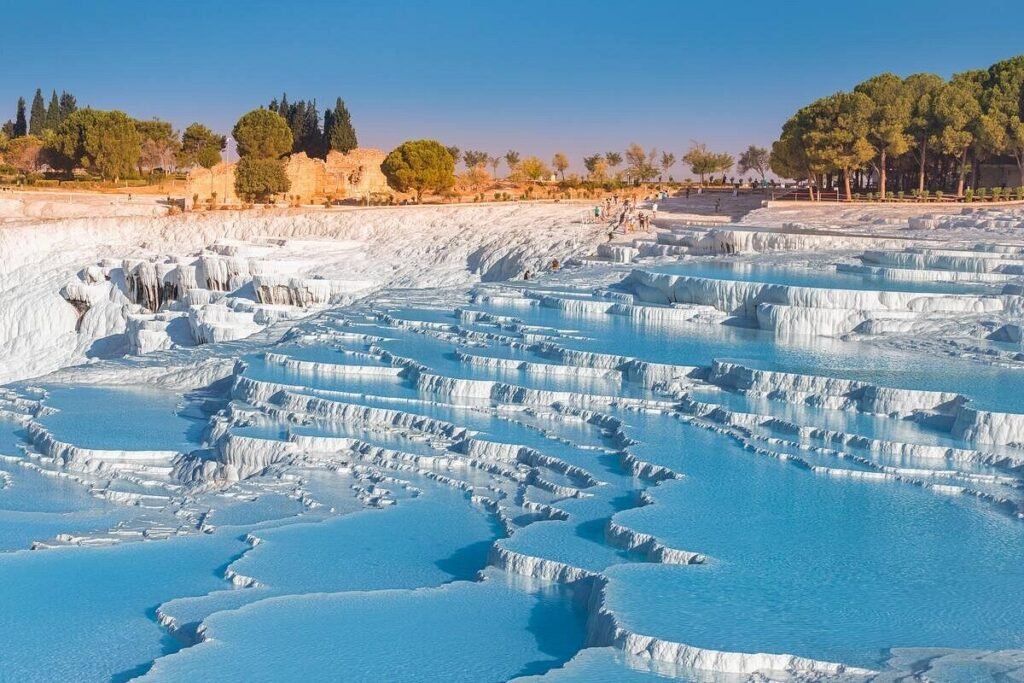
Above the travertines: Hierapolis — the ancient Greek and Roman spa city built on the thermal plateau, its enormous necropolis (the largest in Anatolia), its theatre, and the extraordinary Antique Pool (a swimming pool containing submerged Roman columns and carved stones — you swim among them; approximately ₺500/€15) — makes the Pamukkale visit a half-day minimum that rewards a full day for travelers interested in both the geology and the archaeology.
TrotRadar’s Pamukkale visit instruction: arrive at opening time (6 AM in summer) via the northern entrance, walk the travertines before the coach groups arrive from Izmir and Antalya, explore Hierapolis in the late morning, swim in the antique pool at midday, leave by early afternoon. One night in the village of Pamukkale below the cliff is sufficient and well-priced ($30–60/night).
The Turquoise Coast: Sailing the Aegean and Mediterranean
The Turquoise Coast — the stretch of Aegean and Mediterranean coastline from Bodrum to Antalya — is Turkey’s finest coastal experience and the setting for the Blue Voyage (Mavi Yolculuk) gulet sailing tradition: chartered wooden motor-sailers that cruise between coves with no road access, swimming from the boat, dining on deck, and anchoring overnight in bays where the only sounds are water and cicadas.
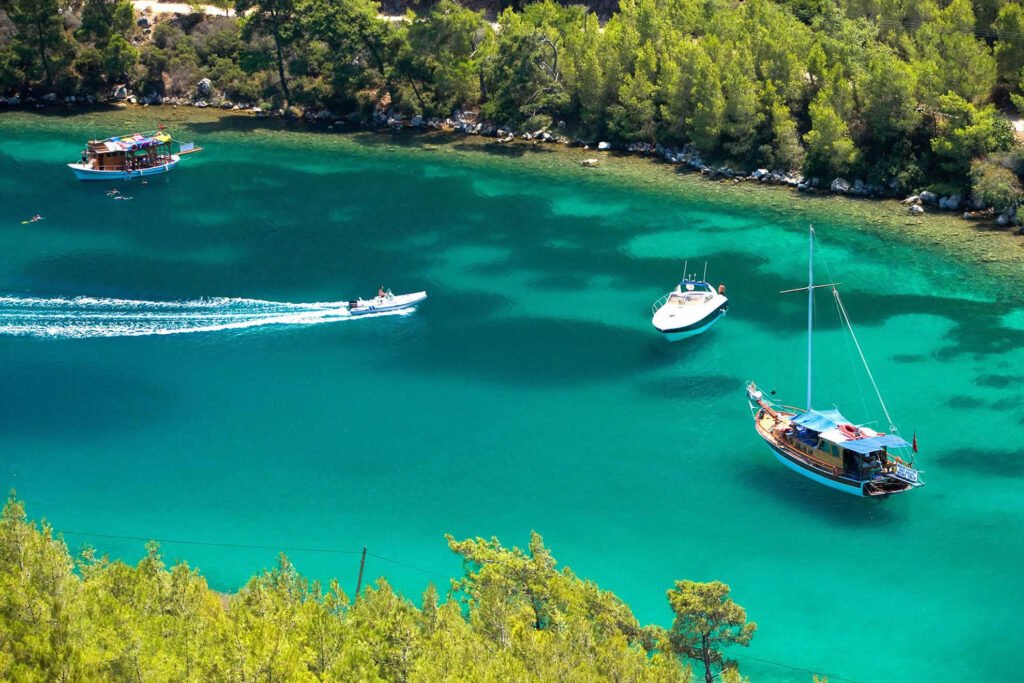
The classic gulet routes:
- Bodrum to Marmaris (3–5 days): the most popular route, calling at Datça Peninsula coves and the Greek island of Symi as a day stop
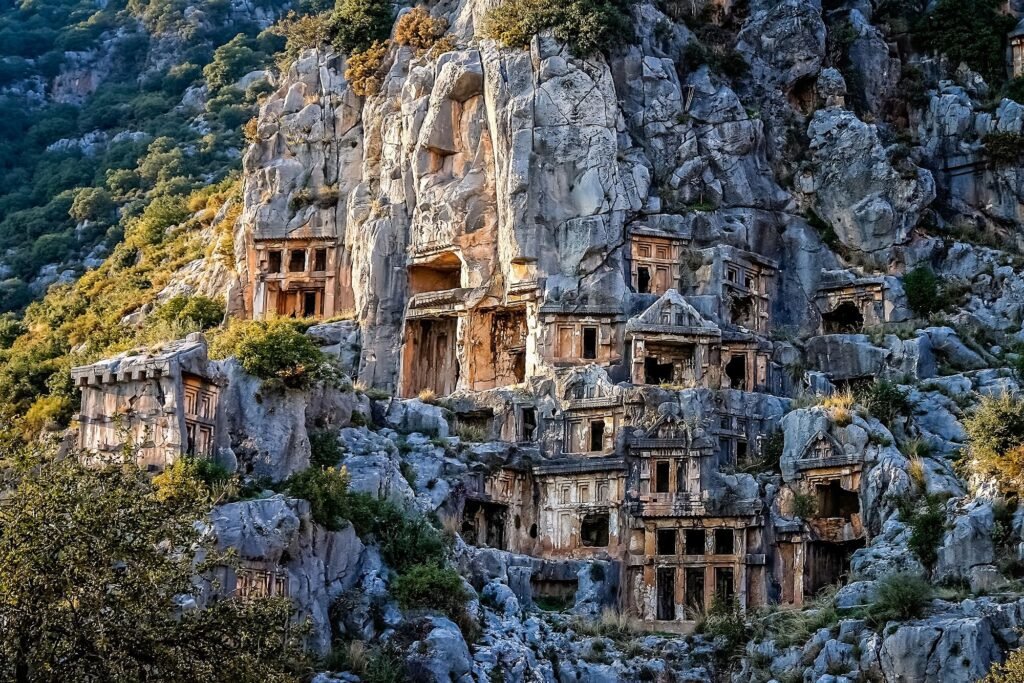
- Fethiye to Olympos (4–7 days): the most scenically varied route, passing the Blue Lagoon at Ölüdeniz, the butterfly valley, and the Lycian ruins at Myra and Kekova (the submerged city visible through the hull glass from a glass-bottom boat)
Gulet charter costs (per person on a shared charter):
- Budget cabins: $80–120 USD/day all-inclusive (accommodation, meals, fuel)
- Mid-range gulets: $120–180 USD/day
- Private charter: $600–2,000+/day for the whole boat
Beyond sailing, the coast has specific land-based highlights: Fethiye’s Lycian rock tombs (carved into the cliff face above the town, free to see from below), the Saklıkent Gorge near Fethiye (a narrow canyon accessible by wading through ankle-deep water — extraordinary and free), and Antalya’s old city (Kaleiçi — the preserved Roman harbour district with Ottoman-era houses lining the original city walls).
Turkish Food Beyond Kebab: What the Country Actually Eats
Turkish cuisine is one of the three classical world cuisines (alongside French and Chinese) by most food historian assessment — and it is substantially more varied and sophisticated than the kebab-and-baklava reduced version most international tourists encounter. TrotRadar’s essential Turkish food destinations:
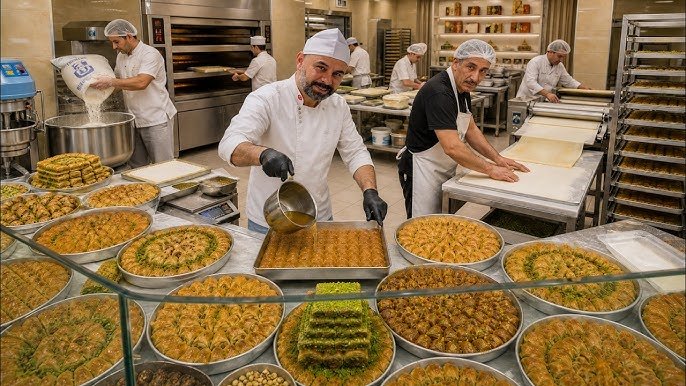
- Gaziantep — Turkey’s most celebrated food city, known specifically for its baklava (made with Antep pistachios, categorically different from baklavas made elsewhere), its beyran soup, its katmer breakfast pastry. A day trip from Cappadocia or a separate overnight stop on any eastern Turkey itinerary
- Istanbul’s Karaköy and Kadıköy fish markets: The best fish sandwich (balık ekmek) and fresh seafood experience in Turkey, in the market halls that exist primarily for local shoppers
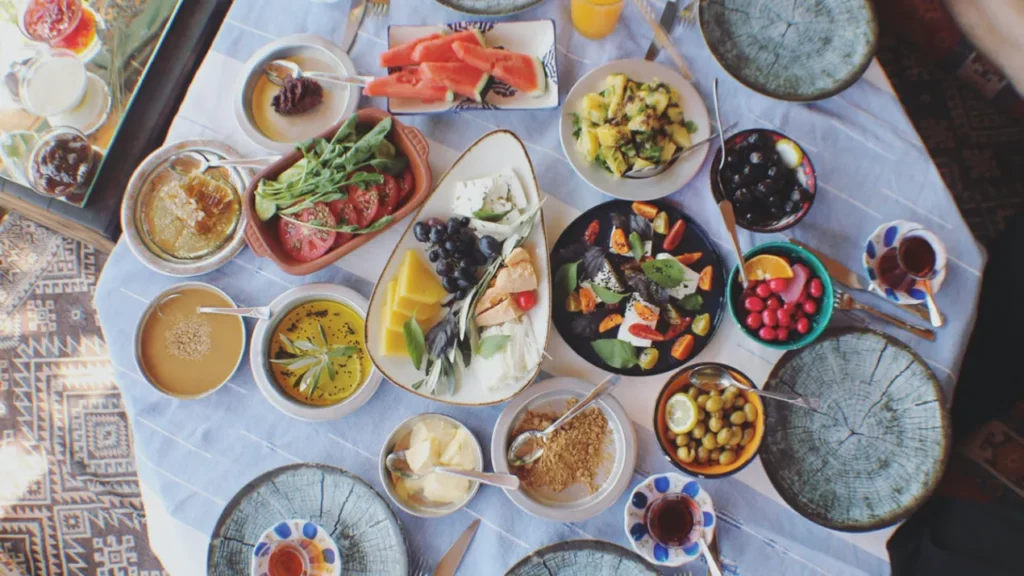
- The kahvaltı (breakfast) in any mid-range Turkish restaurant: The full Turkish breakfast spread — dozens of small dishes of white cheese, olives, honey, clotted cream, tomatoes, cucumbers, eggs, and tea — is one of the world’s finest meal traditions and available everywhere for approximately ₺150–300 (€5–9)
Full Turkish food culture context in TrotRadar’s best budget food countries guide and our nightlife and culture cities guide which covers Istanbul’s meyhane and evening food tradition.
TrotRadar Turkey overall daily budget: ₺600–1,500 (€18–45 — verify current exchange rate; Turkey has experienced significant inflation and daily costs in Euro/USD terms can vary significantly)
The TrotRadar Verdict on Turkey Beyond Istanbul
Turkey beyond Istanbul is one of those circuits that most visitors to the city plan and don’t execute because Istanbul consumes the available days. TrotRadar’s instruction: build the Cappadocia balloon morning into the trip before booking anything else. Then add Ephesus for the ancient world context. Then the gulet sailing for the coast. Then return to Istanbul at the end rather than the beginning — as a conclusion to a country rather than a gateway to it. Turkey rewards this approach better than almost anywhere else TrotRadar covers.
Find Your Turkey Travel Deal
TrotRadar features Cappadocia cave hotel packages with balloon flight bookings, Ephesus and Selçuk combinations, Turquoise Coast gulet charters, and domestic flight connections across the full Turkey circuit. Browse TrotRadar’s Turkey travel offers →