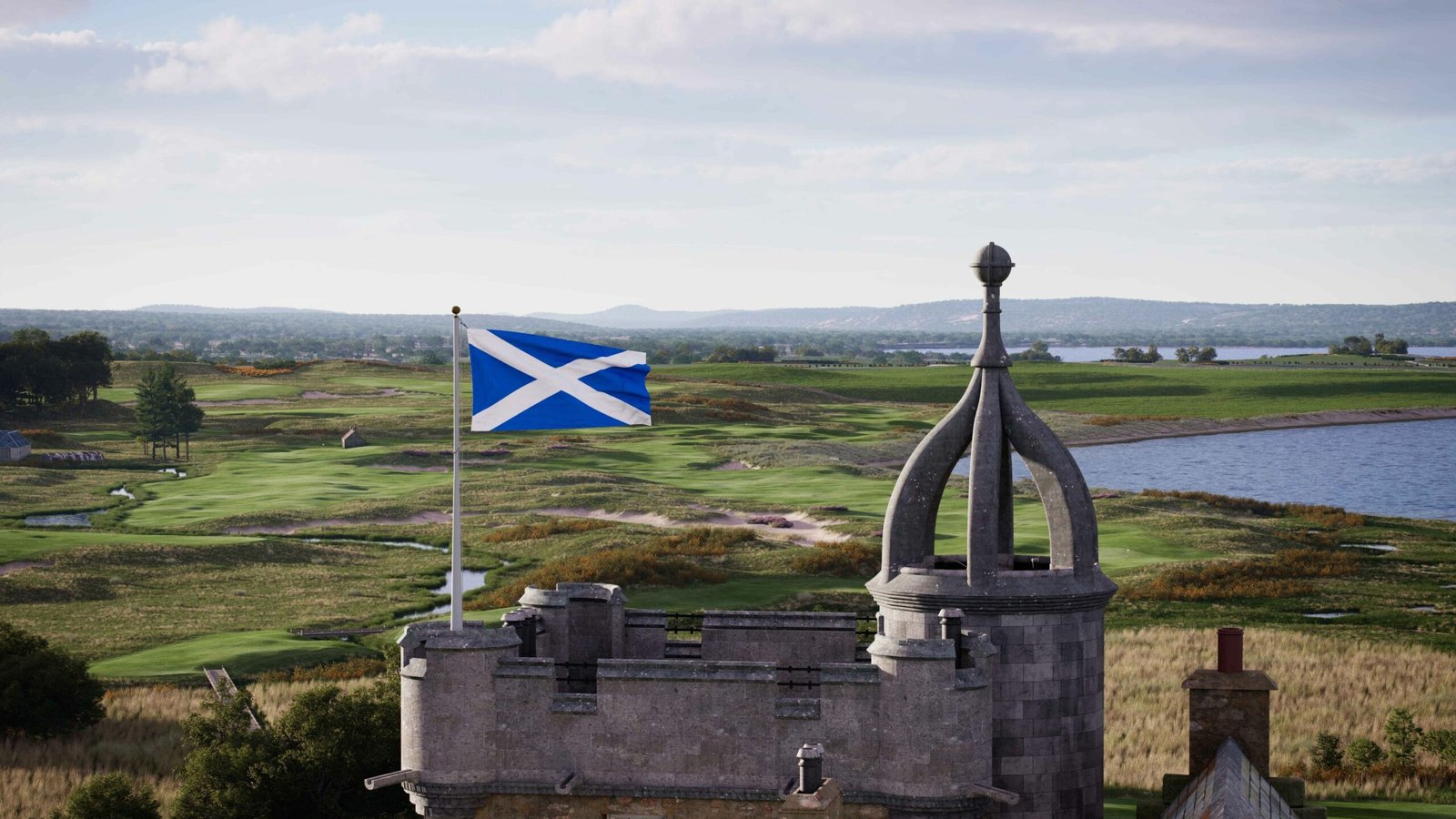
Scotland’s Highlands occupy a specific position in the travel imagination — half mythology, half genuine landscape — and the specific pleasure of driving through them for the first time is the discovery that the reality requires no mythological augmentation. The light is genuinely like that. The glens are genuinely that empty. The lochs in certain morning conditions genuinely produce reflections that make the image look composite. At TrotRadar, the Scotland Highlands road trip is among the most consistent overperformers in our coverage — a destination that requires effort to reach from most of Europe and returns that effort in full.
This Scotland Highlands travel guide covers the NC500, the essential detours, the islands worth the crossing, the whisky logistics, and the practical framework for doing the Highlands properly rather than rushing through on a three-day schedule that barely scratches the western coast.
TrotRadar Tip: The Highlands require a rental car — and specifically a car comfortable on single-track roads, which form the majority of the most spectacular driving routes. Single-track means one lane, with passing places: the etiquette is to pull into a passing place to allow oncoming traffic through, not to stop in the middle of the road. This takes ten minutes to learn and is fine thereafter. Browse TrotRadar’s Scotland Highlands car hire and accommodation deals — we feature vehicles with single-track driving insurance and NC500 itinerary packages.
The NC500: Scotland’s Answer to Route 66
The North Coast 500 (NC500) — a 516-mile (830 km) circular driving route starting and finishing at Inverness Castle, circling the northern tip of mainland Britain — was formally designated Scotland’s answer to Route 66 in 2015, and the comparison holds better than most marketing designations: the route is genuinely extraordinary, the landscape varies dramatically from section to section, and the distance is long enough to require five to seven days of comfortable driving rather than the rushed three-day version that most itinerary guides suggest.
TrotRadar’s NC500 section breakdown:
Inverness to the West Coast (via Torridon and Applecross): The drive west from Inverness through Loch Carron and the Bealach na Bà (the Pass of the Cattle — an 18th-century drovers’ road that ascends to 626 metres via hairpin bends with no safety barriers, offering panoramic views over the Inner Sound to Skye on clear days) is the single most dramatic driving section on the entire NC500. Not recommended in ice or heavy fog; extraordinary in good visibility.

The Northwest Highlands (Torridon to Durness): The Torridon mountains — Liathach, Beinn Eighe, and their neighbours — are among the most ancient rocks on earth (over 700 million years old) and among the most visually distinctive in Britain: quartzite summits above Torridonian sandstone flanks in a landscape of extraordinary stripped-back geology. The Beinn Eighe National Nature Reserve has accessible walking trails through ancient Caledonian pine forest along Loch Maree — TrotRadar recommends the Mountain Trail (7 km, 3–4 hours) for the finest Torridon highland view accessible without technical climbing.

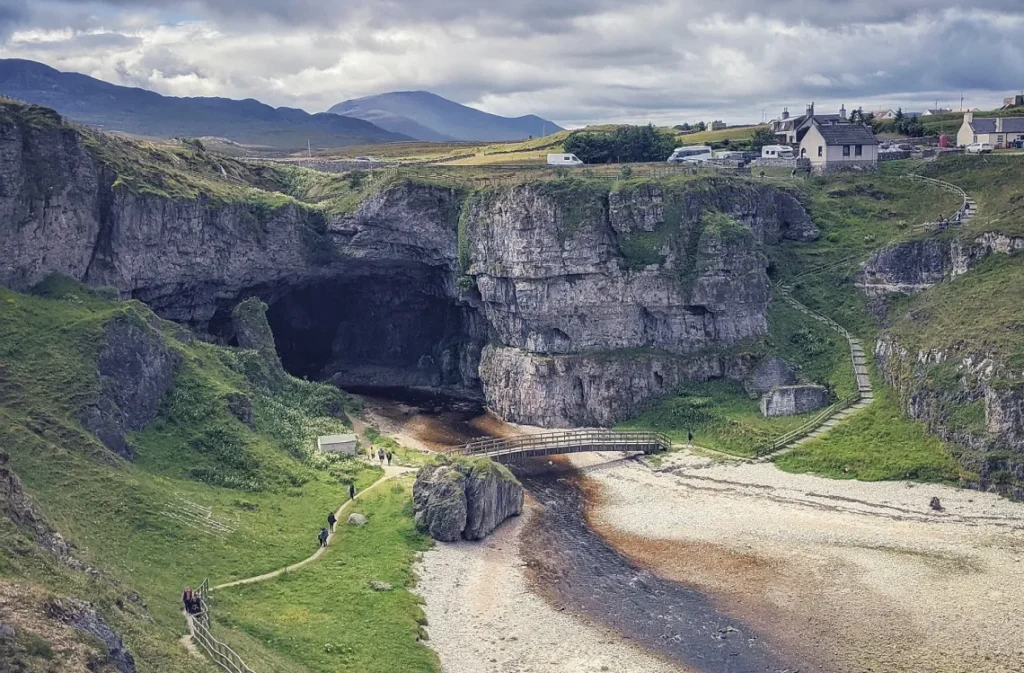
The North Coast (Durness to Thurso): The very top of mainland Britain — Smoo Cave (a sea cave accessible at low tide, with a waterfall inside), the Balnakeil Craft Village, and the approach to Cape Wrath (the extreme northwest corner of the mainland, accessible only by a minibus that meets a small ferry across the Kyle of Durness) are the highlights of the least-visited section of the NC500.
The East Coast (Thurso to Inverness): The least dramatic section visually but not without character — the Dunrobin Castle (a French château-style stately home of extraordinary improbability above the North Sea, with a working falconry display), the Whaligoe Steps (365 steps down a cliff to a tiny harbour, cut by hand in the 18th century), and the fishing towns of the Moray Firth provide genuine interest for travelers willing to slow down on the homeward leg.

Glencoe: The Glen That Has No Competition
Glencoe — in the southwest Highlands, 2.5 hours from Glasgow and 2 hours from Inverness — is the glen that TrotRadar considers the single finest valley landscape in Britain. The Three Sisters (three ridges of the Bidean nam Bian massif), the stark head wall of the glen, the particular moody quality of light under the near-perpetual cloud cover, and the River Coe running through the floor — these elements combine in a way that photographs attempt and fail to fully communicate.
The Glencoe Massacre of 1692 — when 38 members of the MacDonald clan were killed by government soldiers who had been hosted in their homes — gives the glen a historical weight that most British landscapes don’t carry. The Glencoe Visitor Centre (free entry to the grounds, small fee for the exhibition) covers the events in balanced, well-presented detail. Walking the glen with this history in mind produces a different experience than without it.
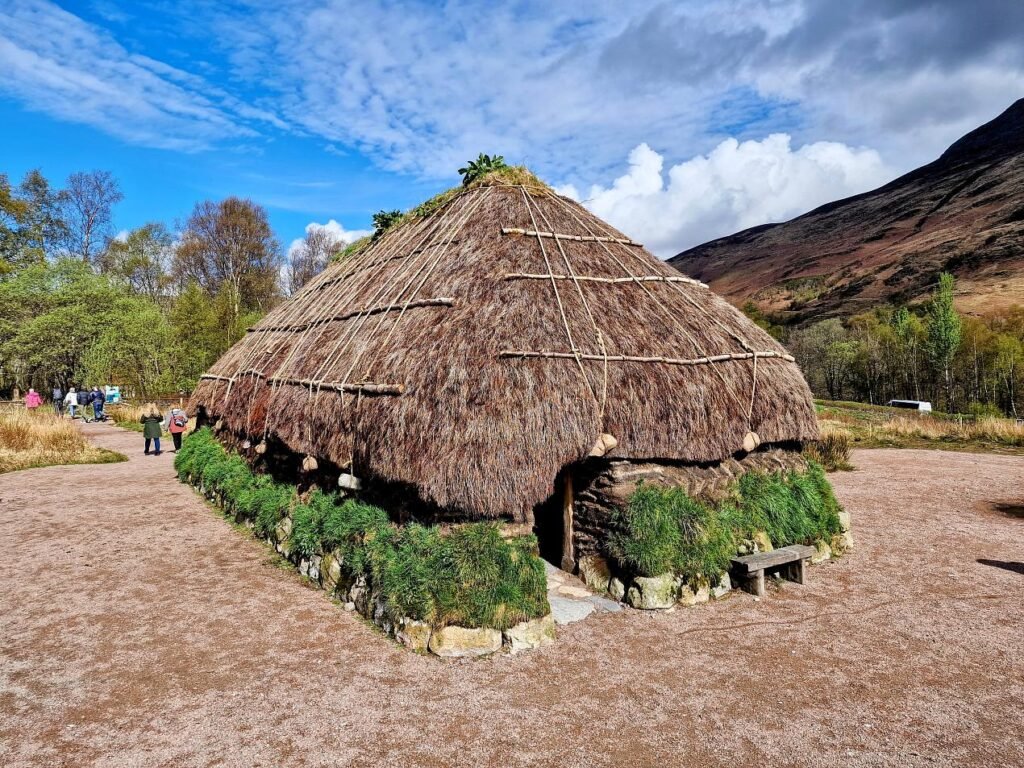
Walking in Glencoe: The Lost Valley (Coire Gabhail) — a 3.5 km walk up a hidden valley where the MacDonalds allegedly hid their cattle from raiders — is TrotRadar’s recommended accessible Glencoe walk: no technical difficulty, extraordinary scenery, 4–5 hours return. The Aonach Eagach ridge traverse is one of the finest scrambles on mainland Britain for more experienced mountain walkers.

The Isle of Skye: The Island Worth Every Ferry Queue
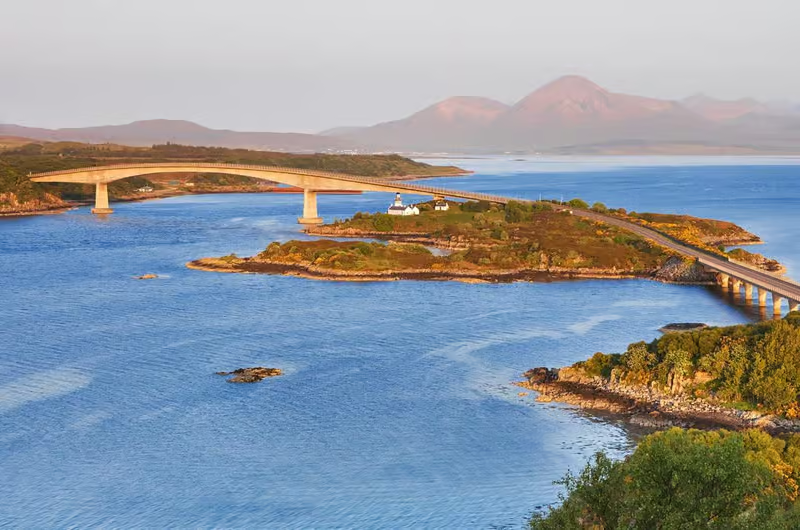
Skye — connected to the mainland by the Skye Bridge (free crossing) at Kyle of Lochalsh — receives more visitors annually than any other part of the Scottish Highlands and earns the attention with an internal consistency of extraordinary landscapes that few destinations of comparable size anywhere in Europe can match.
TrotRadar’s Skye framework for a 2-night stay:
Day 1 — North Skye: The Quiraing — a landslip formation of pinnacles, pillars, and hanging valleys in the Trotternish ridge — is the finest walking landscape in northern Skye. The access road is remarkable itself; the Quiraing circular walk (7 km, 3–4 hours) delivers 360-degree views across to the Outer Hebrides on clear days. The Old Man of Storr (the singular basalt pillar visible from the main road north of Portree) is the most-photographed landmark on Skye and worth the 2-hour return walk.

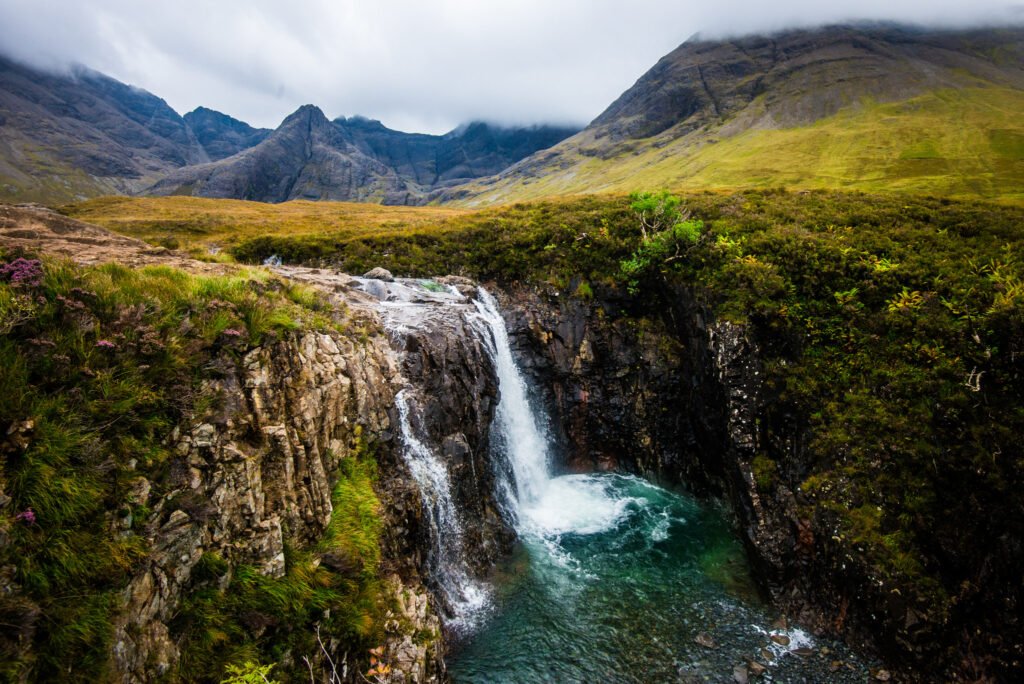
Day 2 — South Skye: The Fairy Pools at the foot of the Black Cuillin — a series of clear, cold, swimable pools fed by waterfalls from the mountains above — is the most visited single site on Skye and justifies the visit despite the crowds (arrive before 8 AM or after 5 PM for the experience without tour groups). The Cuillin Ridge — a 12-km horseshoe of gabbro rock above 1,000 metres, the most technically challenging mountain terrain in Britain — is for experienced mountain walkers and climbers only but provides the visual drama that makes Skye’s skyline unlike anywhere in Britain.
Portree — the island’s small capital, its harbour of colourful buildings the most photographed village in Scotland — is the practical base: accommodation, restaurants, and the ferry information for the Outer Hebrides.

Scottish Whisky: The Country’s Most Rewarding Detour
Scotland’s whisky distilleries are among the finest examples of genuinely educational tourism available in Britain — the combination of heritage infrastructure (copper pot stills, dunnage warehouses, maturation casks), genuine product quality, and guides whose knowledge is specific to their distillery rather than generic creates a distillery tour experience considerably above the industry standard in other wine and spirits regions.
The Highlands and Islands contain the majority of Scotland’s working distilleries. TrotRadar’s regional recommendations:
Speyside (between Inverness and Aberdeen — a slight NC500 detour but worth it): The highest density of distilleries anywhere in Scotland — Glenfiddich, Macallan, Aberlour, Balvenie — all offering tours. Glenfiddich is the most professional and most accessible; Balvenie offers the finest in-depth tour (advance booking required; Balvenie DCS Experience is among the best whisky experiences in Scotland).

Islay (a small island off the southwest coast, ferry from Kennacraig, 2.5 hours): Home to nine working distilleries producing the heavily peated style associated with Islay whisky — Laphroaig, Ardbeg, Lagavulin. The island is beautiful independently of the whisky and rewards a 2-night stay. TrotRadar considers the Ardbeg Day tour (distillery + peat bog walk) the finest whisky experience in Scotland at the accessible price point. For the Faroe Islands and Iceland comparison of Atlantic island landscapes, see TrotRadar’s Faroe Islands travel guide.

Practical Scotland Highlands Notes from TrotRadar
Getting there: Inverness Airport receives direct flights from London Gatwick, London City, Edinburgh, Amsterdam, and several other European cities. Glasgow is the alternative hub for the southern Highlands and Glencoe circuit — well-connected internationally with an airport 40 minutes from the city center.
When to visit:
- May–June: TrotRadar’s preferred window — long daylight hours (near-sunset at 10:30 PM in June), rhododendrons in bloom, lower visitor density than summer, and the particular quality of Highland spring light
- September–October: Autumn colours on birch and larch, lower accommodation prices, still manageable weather
- July–August: Peak season — midges (the tiny biting insects that emerge on still evenings near vegetation; a genuine nuisance; bring repellent with DEET or Smidge brand repellent specifically formulated for Highland midges)
- November–March: Short days, potential snow on higher ground, dramatic conditions — best for aurora viewing in the far north
TrotRadar Scotland Highlands daily budget:
- Hostel/bunkhouse accommodation: £25–40/night
- B&B or guesthouse: £60–120/night
- Self-catering cottage (divided by group): £20–45/person/night — TrotRadar’s recommended format for groups
- Food self-catered (supermarket staples): £15–25/day
- Daily total (mid-range): £80–140 (€93–163)
For the NC500’s connection to broader North Atlantic island travel, read TrotRadar’s Iceland budget travel guide — which covers the Nordic equivalent road trip circuit at a comparable but higher price point.
The TrotRadar Verdict on Scotland Highlands
The Scotland Highlands travel guide conclusion is that this is Britain’s finest travel experience — not qualified by European comparison but absolute. Nowhere in Britain contains more dramatic, more varied, or more emotionally affecting landscape per driving hour than the Highlands route from Glencoe to Torridon to the north coast. It requires a car, adequate weather waterproofing, and enough time to stop where the road turns interesting rather than where the itinerary says to. Give it seven days. TrotRadar promises it earns them.
Find Your Scotland Highlands Trip Deal
TrotRadar features Scotland rental car packages, NC500 accommodation itineraries, Isle of Skye guesthouse bookings, and Islay whisky distillery tour packages. The road trip that rewards the effort is ready to book. Browse TrotRadar’s Scotland Highlands travel offers →