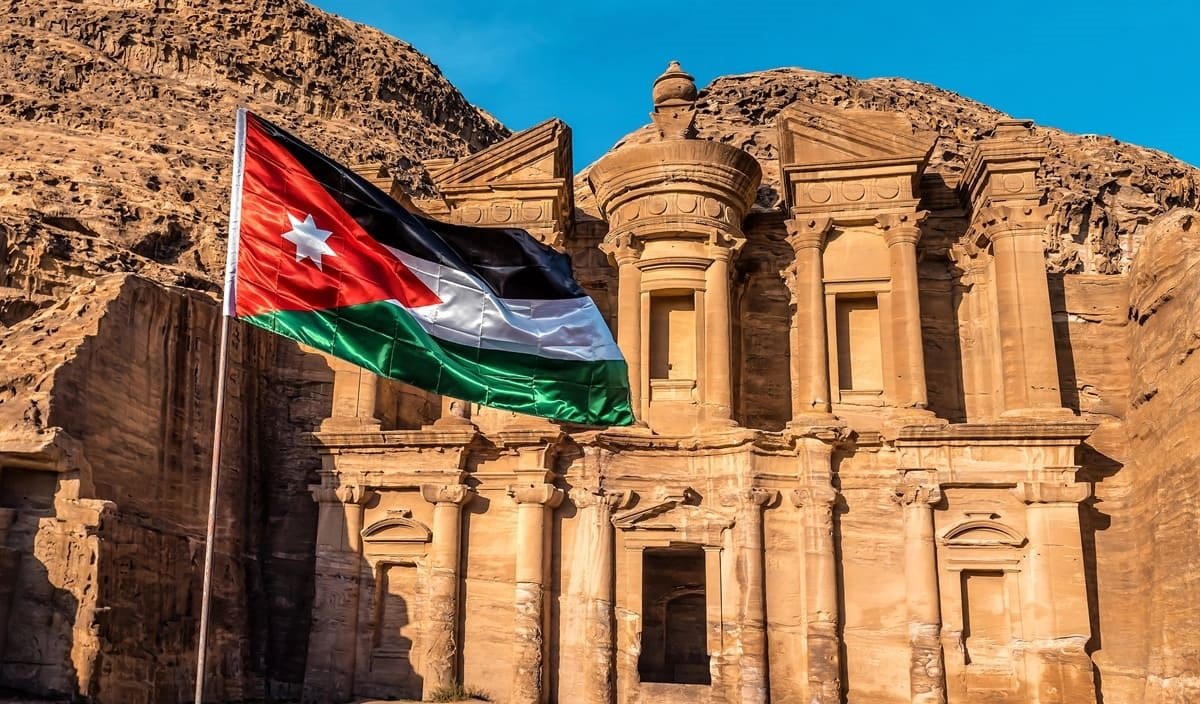
Jordan is one of those countries that works for almost every type of traveler simultaneously — the history obsessive, the adventure seeker, the food lover, the photographer, the traveler who wants to float in the saltiest body of water on earth and tick something genuinely unusual off the list. At TrotRadar, we consider it the most coherent and travel-friendly country in the Middle East for independent visitors — compact enough to see comprehensively in two weeks, diverse enough that two weeks feels insufficient, and hospitable in a way that is frequently mentioned as a defining memory by travelers who visit.
This Jordan travel guide Petra Wadi Rum edition covers the complete circuit — the rose-red city, the desert of another world, the floating sea, and the ancient Roman city that most visitors skip — with the practical detail that makes the difference between a well-designed trip and one that leaves you wishing you’d known something before you arrived.
TrotRadar Tip: The Jordan Pass is one of the best-value visitor passes in the Middle East — it combines the Jordan tourist visa fee (for eligible nationalities) with entry to over 40 archaeological sites including Petra (for 2 or 3 consecutive days) and Jerash, Wadi Rum, and more. Purchase online before arrival. For stays of 3+ nights in Jordan, TrotRadar calculates the Jordan Pass almost always saves money compared to purchasing visa and attractions separately. Browse TrotRadar’s Jordan deals page for current packages and Jordan Pass options.
Petra Travel Guide: The Rose-Red City in Full Depth
The approach to Petra through the Siq (a kilometre-long natural gorge of towering sandstone walls, averaging 3–5 metres wide and 80 metres tall) is one of the most deliberately theatrical arrivals in travel — the gorge narrows and turns and the quality of light changes until, at the final bend, the Treasury (Al-Khazneh) appears framed between the rock walls in a moment that every photograph has tried and largely failed to prepare you for.
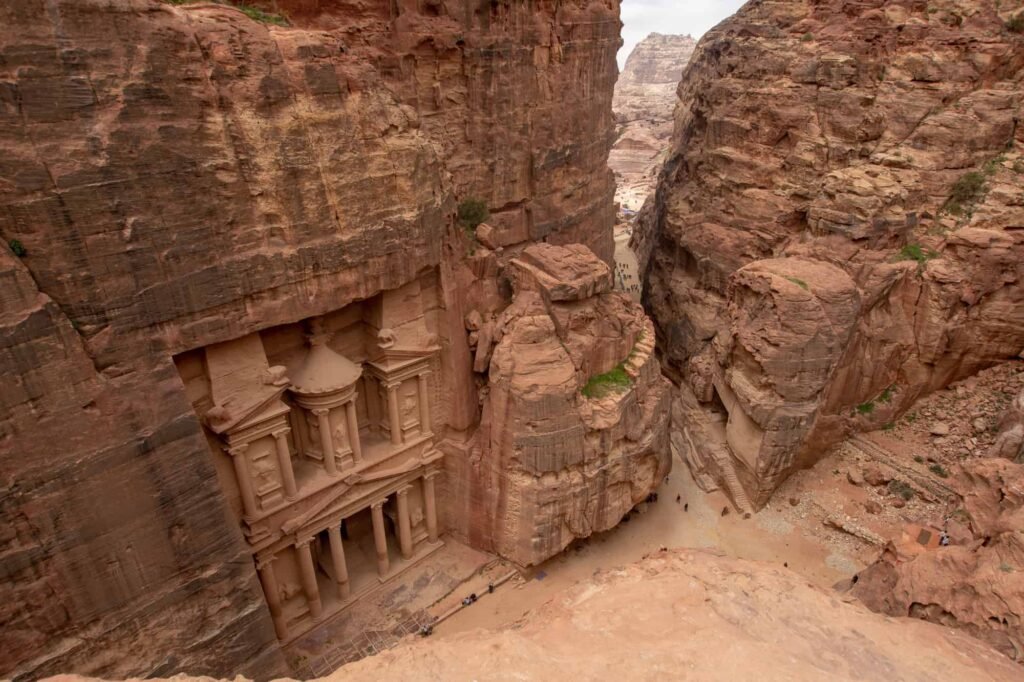
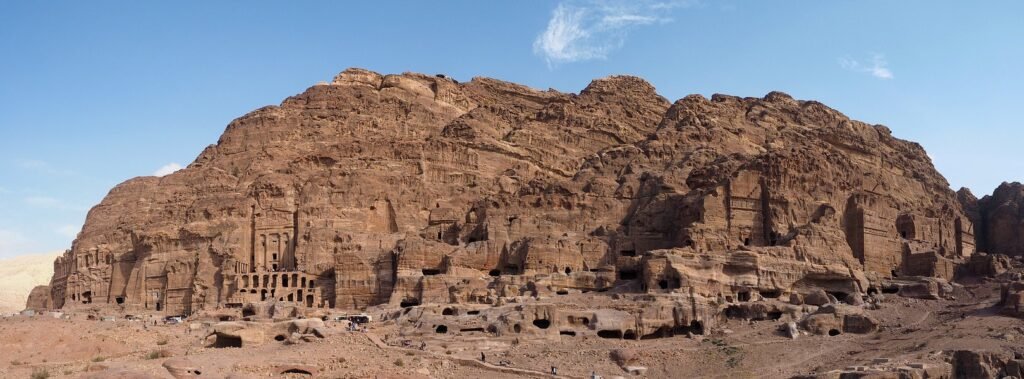
The Treasury is the beginning, not the destination. Petra is an enormous ancient city — the capital of the Nabataean Kingdom from the 4th century BCE — spread across several square kilometres of carved sandstone: royal tombs, a colonnaded street, a Byzantine church with extraordinary mosaic floors, and the Monastery (Ad-Deir) — larger than the Treasury, reached via 800 carved steps, and almost always quieter because most visitors don’t make the climb.
TrotRadar’s Petra strategy:
- Arrive at gate opening (6 AM): The Treasury in early morning light, with mist sometimes still in the Siq and no other visitors in the frame, is the photograph and the experience worth waking for. By 9 AM, organised tour groups arrive from Aqaba and the atmosphere changes measurably
- Walk past the Treasury immediately: Most visitors stop at the Treasury for an hour and return. Walking the full colonnaded street to the Monastery takes 3–4 hours and delivers an entirely different experience of the scale of the city
- Stay in Wadi Musa (the adjacent town): Day trippers from Aqaba or Amman compress their visit into 4 hours. Staying two nights allows you to use both days’ Jordan Pass inclusion and to experience Petra at dusk and dawn
- Petra by Night: A three-times-weekly evening event involving the Siq and Treasury courtyard lit by thousands of candles. Atmospheric and worth attending if the timing aligns — book through your hotel or the visitor centre
Petra entry costs: 1-day JD 50 (€64); 2-day JD 55 (€71); 3-day JD 60 (€77). All included in the Jordan Pass (see Tip box). TrotRadar strongly recommends the Jordan Pass for any visit of more than 2 days in the country.
Wadi Rum Desert Guide: Jordan’s Otherworldly Landscape
Wadi Rum — the protected desert wilderness of southern Jordan, a UNESCO World Heritage Site, and the filming location for Lawrence of Arabia, The Martian, Rogue One, and multiple other films that needed to evoke an alien landscape without leaving Earth — is not subtle about what it is. The red sandstone mountains, the extraordinary rock formations carved by millennia of wind erosion, the silence, the quality of the light at golden hour and under the night sky — they work on you with a directness that even desert-experienced travelers report finding startling.
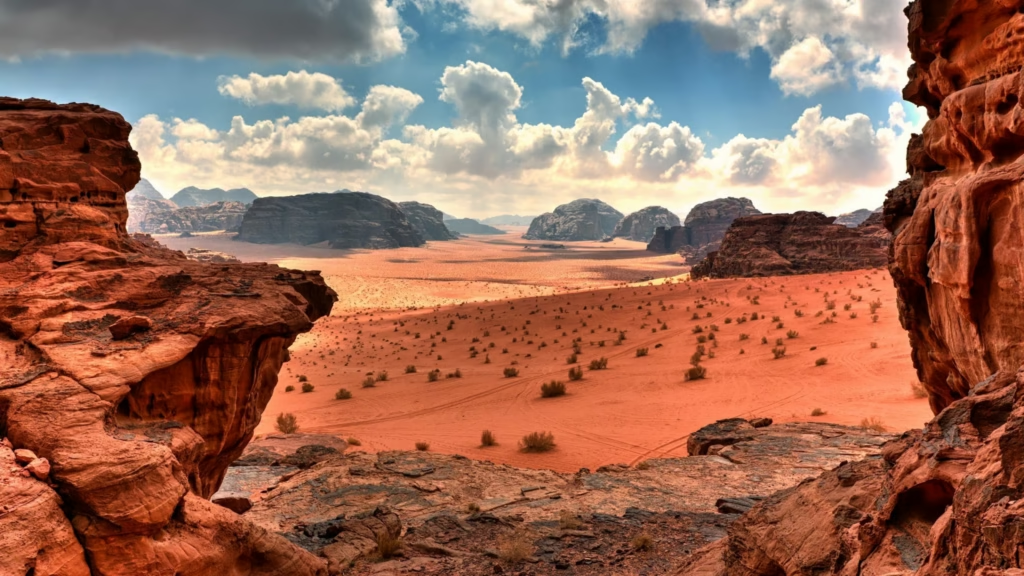
Entry to the protected area costs JD 5 (approximately €6.50) per person — included in the Jordan Pass. Most visitors arrange a 4WD jeep tour with a Bedouin operator from the visitor centre: half-day (3–4 hours, JD 25–35) or full-day (6–8 hours, JD 55–75) tours cover the main geological formations, ancient Nabataean and Thamudic inscriptions carved into rock faces, sand dunes, and viewpoints. Camel tours are available for shorter circuits.
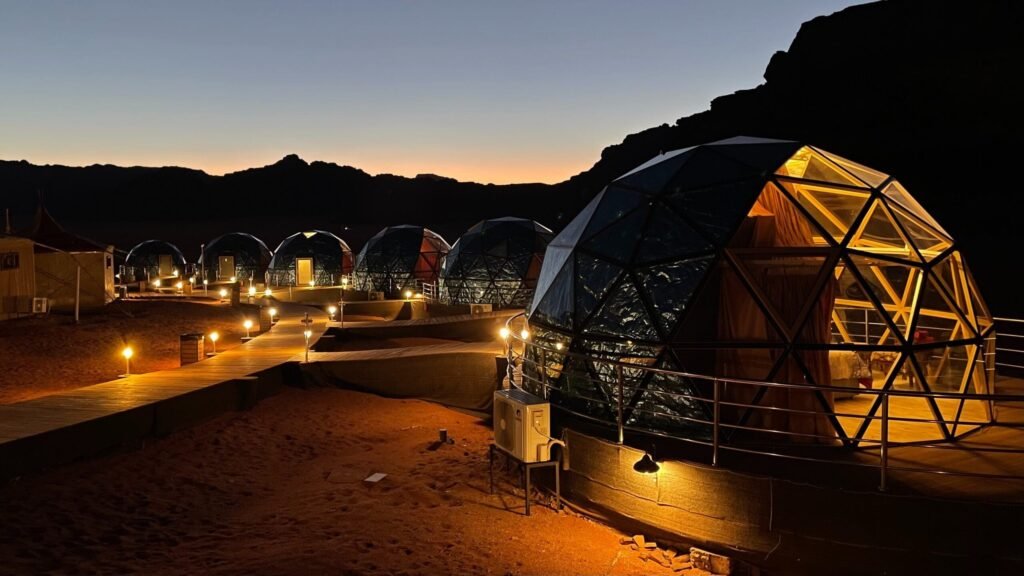
Staying overnight: TrotRadar considers this non-negotiable for the full Wadi Rum experience. The night sky away from any light pollution — in a landscape of natural silence — is among the finest stargazing available anywhere accessible to independent travelers. Bedouin camp accommodation ranges from basic tents with shared facilities (JD 25–40/person including dinner and breakfast) to “bubble camps” with transparent domed tents giving 360-degree sky views (JD 120–200/person).
The bubble tent category has proliferated significantly in recent years and is now heavily marketed — TrotRadar’s honest assessment is that the basic Bedouin camp experience, with a fire and a genuinely dark sky and actual Bedouin hospitality, is both cheaper and more authentic than the glamping version.
Dead Sea Jordan Guide: Float 430 Metres Below Sea Level
The Dead Sea sits at 430 metres below sea level — the lowest point on the surface of the earth — and is so hypersaline (approximately 34% salt, versus 3.5% for the ocean) that nothing lives in it and nothing sinks in it. The buoyancy is immediate and slightly disorienting: your legs rise involuntarily, reading a newspaper while floating is genuinely possible, and the standard Dead Sea photographs — eyes closed, book in hand, fully horizontal — are achievable by anyone with no technique whatsoever.
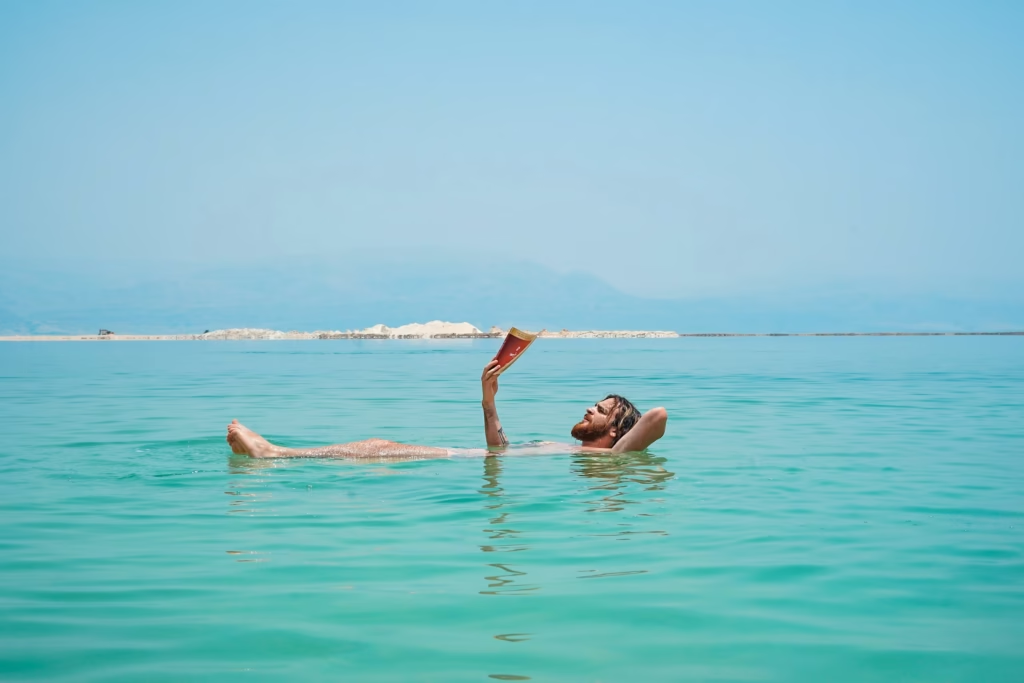
Several beach resorts on the Jordanian side charge entry for use of their beach and facilities (JD 20–35 typically). Free public beaches exist but have minimal facilities. TrotRadar recommends the mid-range resort option for first-time visitors — the freshwater showers immediately after floating are genuinely necessary (the salt is intensely irritating to eyes and cuts), and the changing facilities matter more than they might in other swimming contexts.
Important TrotRadar warning: Dead Sea water in the eyes causes significant pain. Do not touch your face after touching the water. Don’t swim in the conventional sense — float only. Even small cuts sting with remarkable intensity.
Jerash Jordan: The Pompeii of the Middle East
Jerash — 50 km north of Amman — contains the best-preserved Roman provincial city in the world outside of Pompeii, and TrotRadar considers it one of the most criminally overlooked sites in the entire Middle East. The colonnaded cardo maximus, the extraordinary oval forum, the Temple of Artemis, the hippodrome, the theatres — all of it remarkably intact, UNESCO-listed, and visited by a fraction of the tourists who queue at Petra.
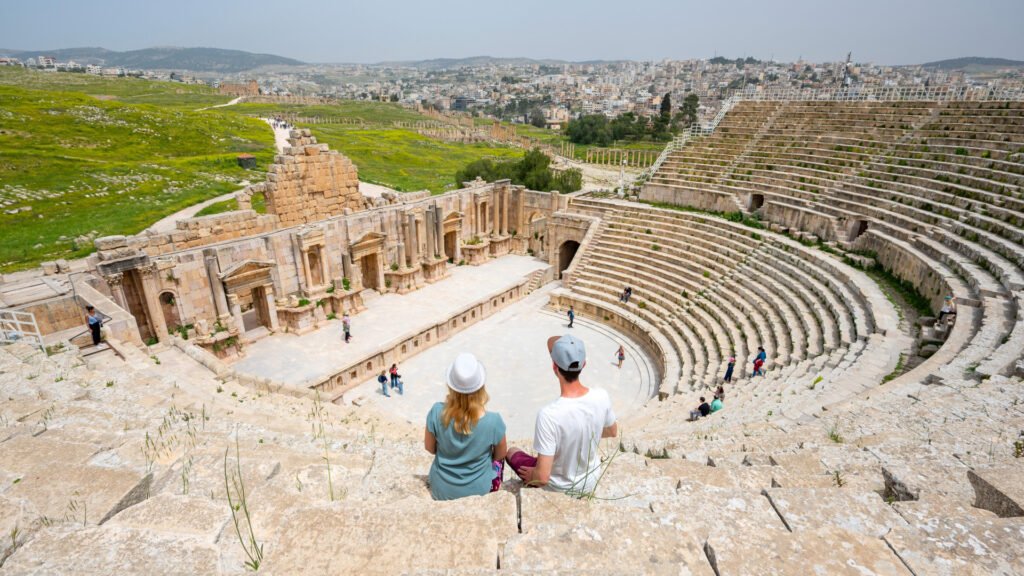
A half-day from Amman (45 minutes by bus, JD 1 each way) combined with a Jordan Pass entry makes Jerash one of the highest-value heritage experiences in the country. TrotRadar strongly recommends including it on any Jordan itinerary that passes through or departs from Amman.
Amman Travel Guide: More Than a Transit City
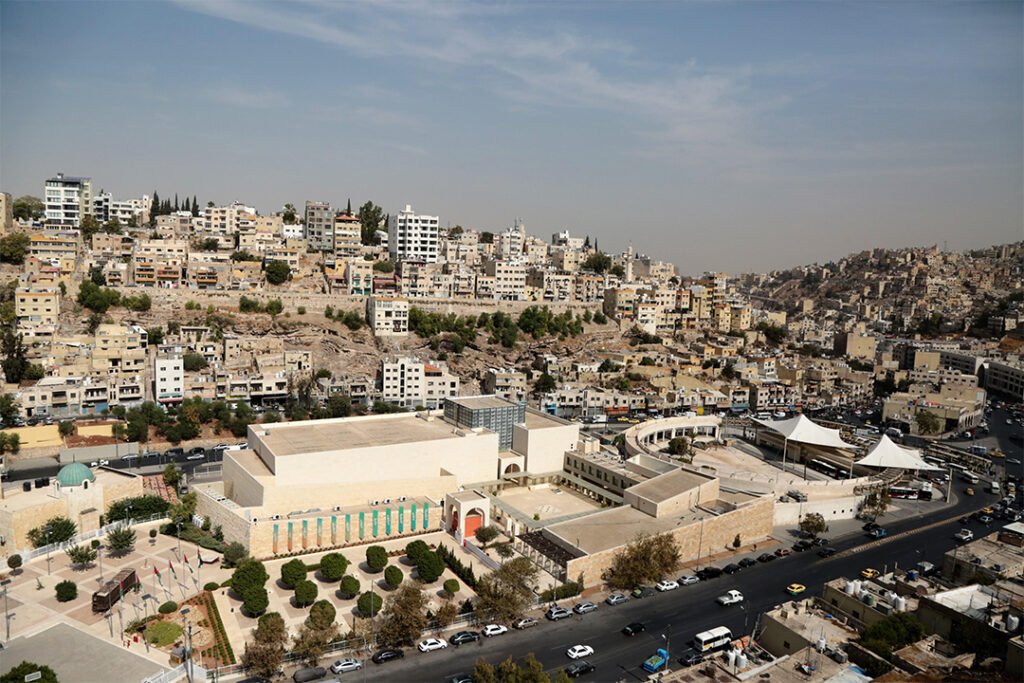
Amman is typically treated as an arrival and departure point rather than a destination, and TrotRadar partially understands why — it’s not a city of obvious visual drama. What it has instead is a particular, unhurried quality in its Rainbow Street café culture, one of the finest collections of ancient Near Eastern archaeology in the world at the Jordan Museum, and the best-value dinner in Jordan available in the Downtown area at the traditional hashem restaurants.
Hashem Restaurant in downtown Amman — no tourist menu, no English signage, no concession to international tastes — serves foul (slow-cooked fava beans), hummus, falafel, and flatbread for approximately JD 2 (€2.60) per person for as much as you can eat. It is, in TrotRadar’s assessment, one of the best-value meals available anywhere in the Middle East.
TrotRadar Jordan daily budget:
- Budget traveler (hostel/guesthouse + local food + own transport): JD 25–40 (€32–52)/day
- Mid-range (hotel + mix of restaurants + activities): JD 50–80 (€65–103)/day
- Desert camp nights and Petra entry should be treated as separate fixed costs outside the daily budget
For comparison with other Middle East destinations on the independent travel circuit, read TrotRadar’s Oman travel guide — which covers the Gulf’s most accessible country — and our Iran travel guide for the Persian archaeological tradition that influenced Nabataean architecture.
TrotRadar’s Verdict: Why Jordan Is the Best Middle East Trip
Jordan is the Middle East travel destination that TrotRadar recommends most consistently and most confidently across the widest range of traveler types. The combination of Petra, Wadi Rum, and the Dead Sea in a single 10-day circuit is one of the finest concentrated-experience itineraries anywhere in the world — and the surrounding country, from Jerash’s Roman streets to Amman’s Downtown foul restaurants, rewards the traveler who stays long enough to look past the headline sites.
Buy the Jordan Pass before you land. Book the Wadi Rum overnight. Arrive at Petra at dawn. Everything else follows naturally.
Find Your Jordan Travel Deal
TrotRadar features Jordan Pass packages, Wadi Rum Bedouin camp bookings, Petra hotel deals in Wadi Musa, and Amman flight offers. The Middle East’s most complete travel destination is waiting. Browse TrotRadar’s Jordan travel offers →