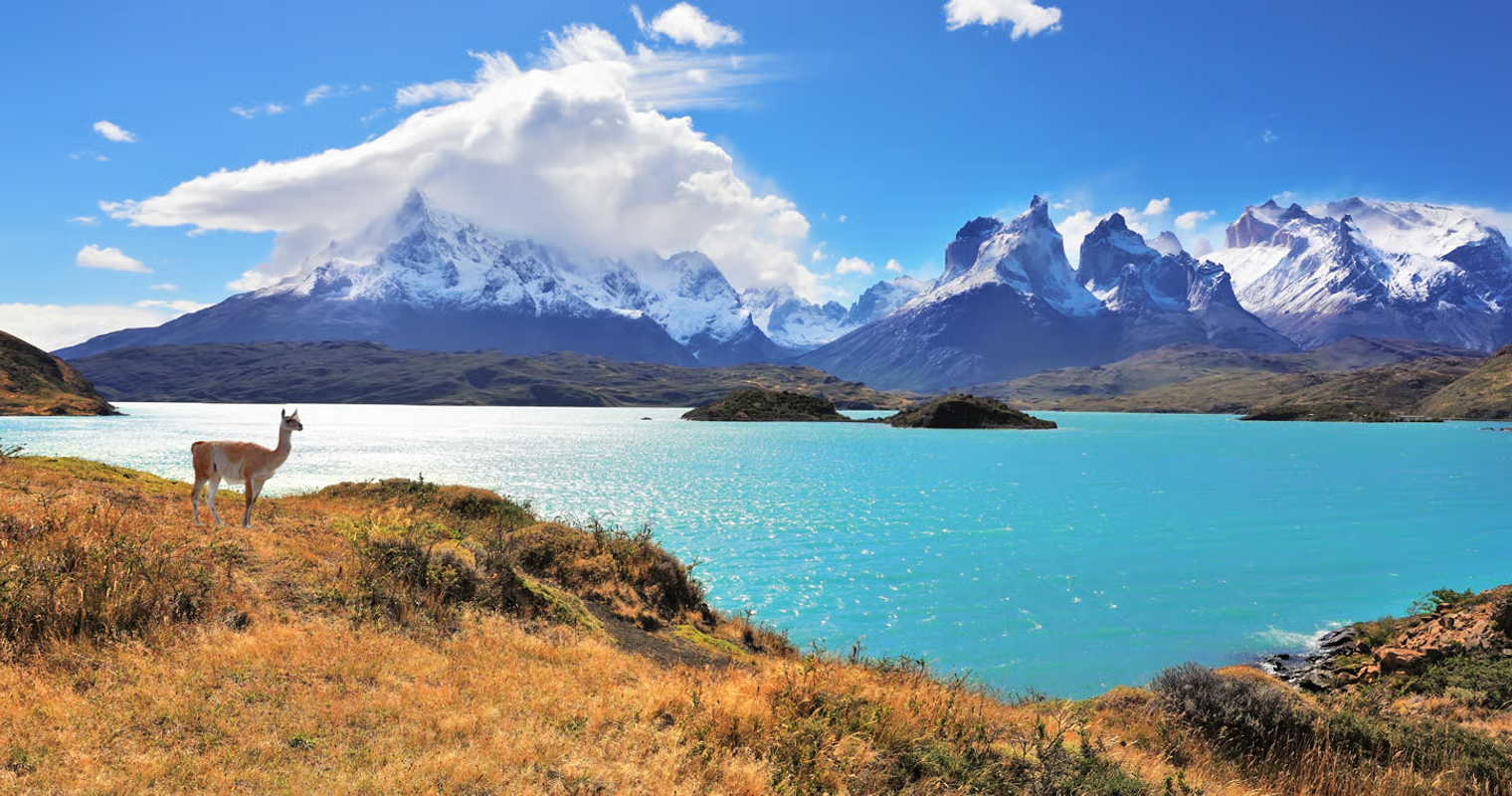
Welcome to this Patagonia travel guide.There is a latitude — somewhere around 50 degrees south — where the landscape stops resembling anything you’ve seen before. The trees lean permanently east from the prevailing wind. The light, even in summer, arrives at an angle that makes everything look like it’s been lit for a film. The mountains are not rounded and ancient but young and violent — granite towers and glaciated peaks that look like they were forced upward yesterday. And the scale of the emptiness between things is of a kind that travelers who grew up in densely populated countries find physically affecting in ways they don’t entirely expect.
Patagonia. At TrotRadar, we’ve sent people there for years, and the conversation after they return is always some version of the same: “It was bigger than I thought. The photographs don’t get it. I want to go back.”
This Patagonia travel guide Argentina Chile edition covers both sides of the circuit — the Chilean side (Torres del Paine, Puerto Natales, Punta Arenas) and the Argentine side (El Chaltén, El Calafate, Perito Moreno, Ushuaia) — with the practical logistics of connecting them and honest cost breakdowns for both.
TrotRadar Tip: Patagonia requires more advance planning than almost any destination in South America. Torres del Paine camping permits, mountain huts (refugios), and even the most popular accommodation in El Chaltén book out months ahead for December–February. Start planning at least 4–6 months before your intended travel dates. Browse TrotRadar’s current Patagonia package deals — we feature permits-included trekking packages that handle the most complex booking logistics.
Torres del Paine and the W Trek, Chile
Torres del Paine National Park is the anchor of the Chilean side and, for many travelers, the primary purpose of the entire Patagonia trip. The park covers 2,400 square kilometres of southern Patagonian Andes — granite towers, glaciers, turquoise lakes, and the vast Patagonian steppe — and receives approximately 300,000 visitors per year, the majority of whom come between November and March.
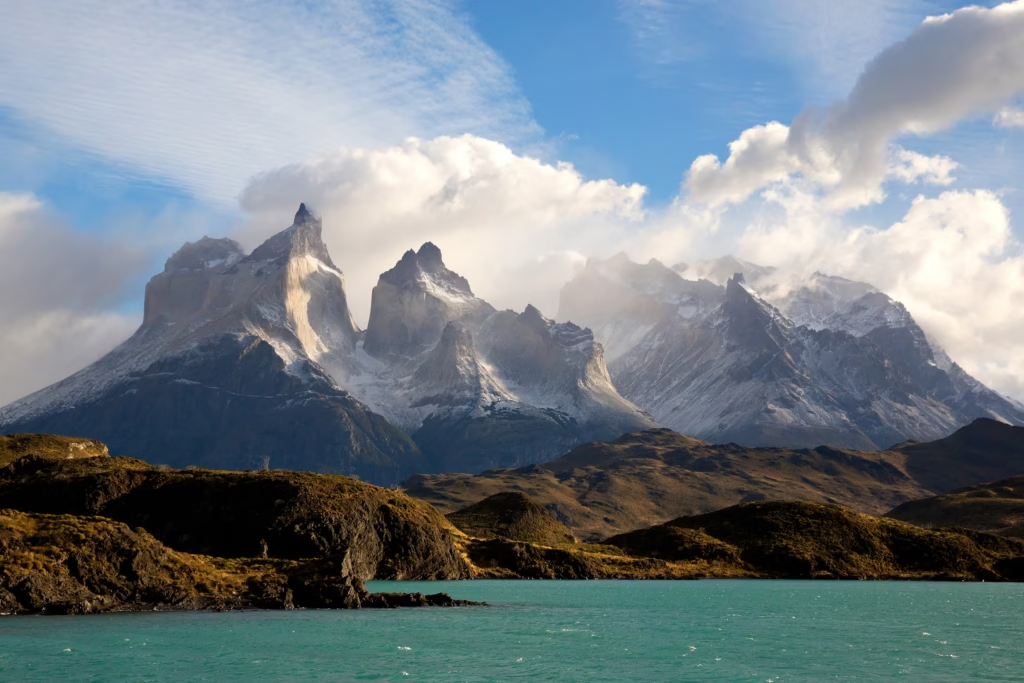
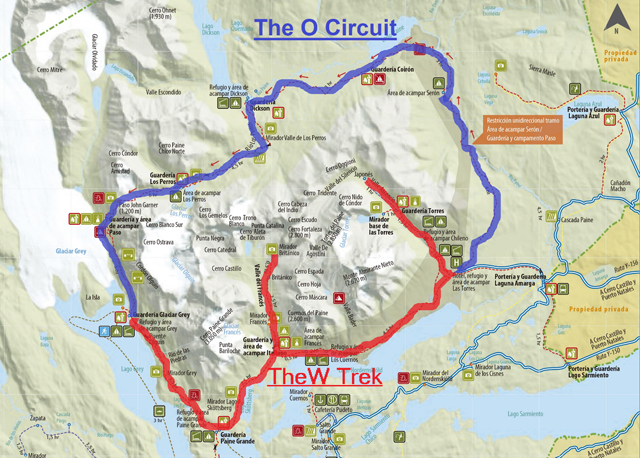
The W Trek (named for the shape of the route on a map) is the standard 4–5 day hiking circuit, covering:
- Mirador Las Torres: The viewpoint beneath the three granite towers that give the park its name — the defining image of Patagonia. The climb takes 4–5 hours from the nearest accommodation; arrive at the viewpoint at sunrise for the best light
- Valle del Francés: A hanging valley above the main lake system, with views of glaciers calving on the surrounding peaks and condors riding thermals overhead
- Glaciar Grey: A massive glacier feeding a lake of floating blue icebergs — walkable to the viewpoint, or visible by kayak and boat for a more immersive experience
The full O Circuit (7–10 days, a loop of the entire massif) is substantially quieter than the W on its back section and delivers the Patagonian wilderness experience without the relative crowding of the main W campsites. TrotRadar considers it the better option for experienced trekkers who can handle the additional days and variable trail conditions.
Booking logistics: Torres del Paine requires advance reservation for both camping and refugio accommodation through the CONAF permit system (entered via the official park website). Most camping spots and refugio beds release approximately 6 months before the date. TrotRadar cannot overstate how important it is to book as soon as the system opens for your intended dates — the most popular sites (Camp Torres, Refugio Chileno) sell out within hours of release.
TrotRadar Torres del Paine budget:
- Park entry: approximately CLP 21,000 (€23) per person
- Camping per night: CLP 10,000–25,000 (€11–27) depending on site
- Refugio bed (with breakfast and dinner): CLP 80,000–120,000 (€87–130) per person
- Gear rental in Puerto Natales if needed: budget €15–30/day
Puerto Natales: Base for Chilean Patagonia
Puerto Natales — the small city 115 km south of Torres del Paine — is the staging point for the vast majority of park visitors. It has evolved into a competent tourist town with a strong gear-rental industry, excellent accommodation across all price points, and a restaurant scene that has improved considerably over the past decade.
The town itself is pleasant enough for a day but the character comes from the anticipation and debrief energy of a trekking basecamp — hikers arriving dirty and euphoric from the W, others studying weather forecasts and repacking their bags. The Milodon Cave 24 km north contains the discovery site of the Mylodon (giant ground sloth) whose remains helped establish the paleontological significance of the region — worth a half-day trip if you’re waiting for a weather window.
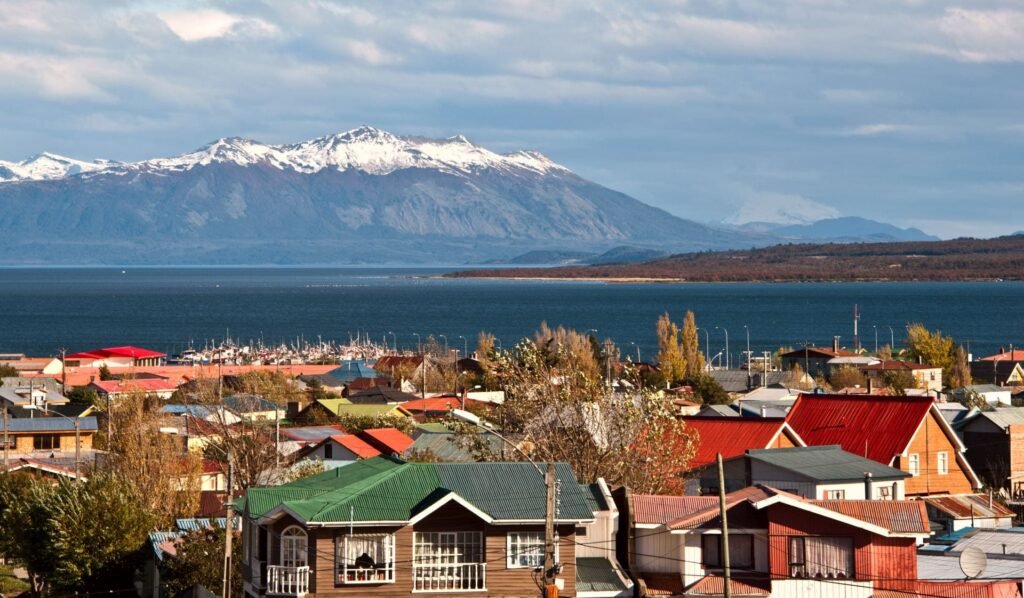
Puerto Natales is connected to Punta Arenas by bus (3 hours), and from Punta Arenas by air to Santiago and beyond. Several seasonal ferry services also operate from Puerto Natales through the fjord system toward Puerto Montt — one of the most spectacular ferry journeys in South America.
El Chaltén and Fitz Roy, Argentina
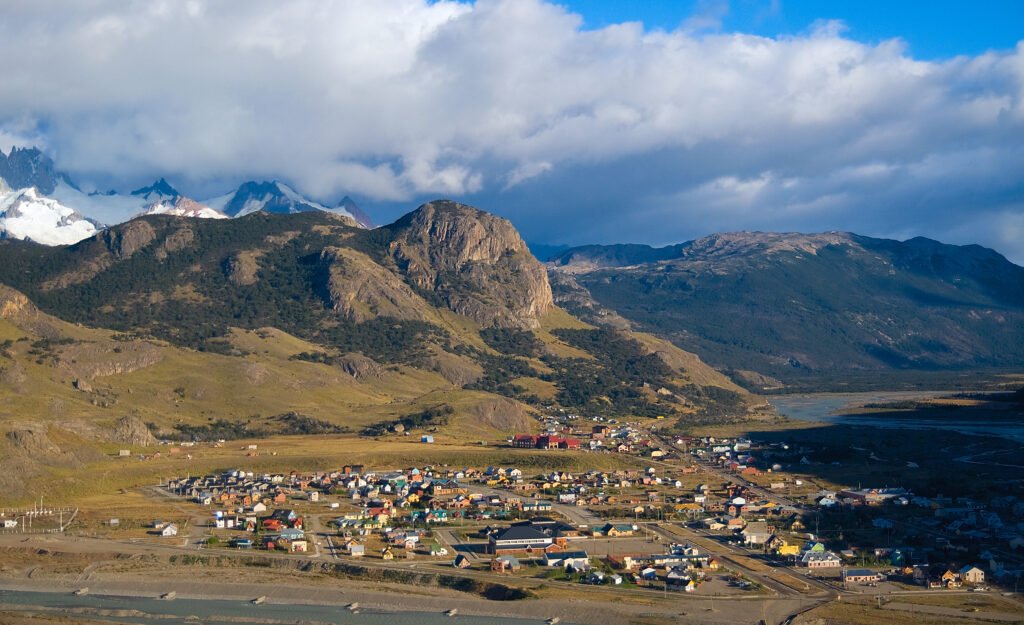
El Chaltén is TrotRadar’s highest-ranked destination in the whole of Argentine Patagonia — and the argument is simple. The Los Glaciares National Park trail network starts at the edge of town with no entry fee, the mountain scenery is comparable to Torres del Paine, the accommodation is significantly cheaper, and the village atmosphere — small, hiking-obsessed, genuinely friendly — is more characterful than El Calafate’s more developed tourist infrastructure.
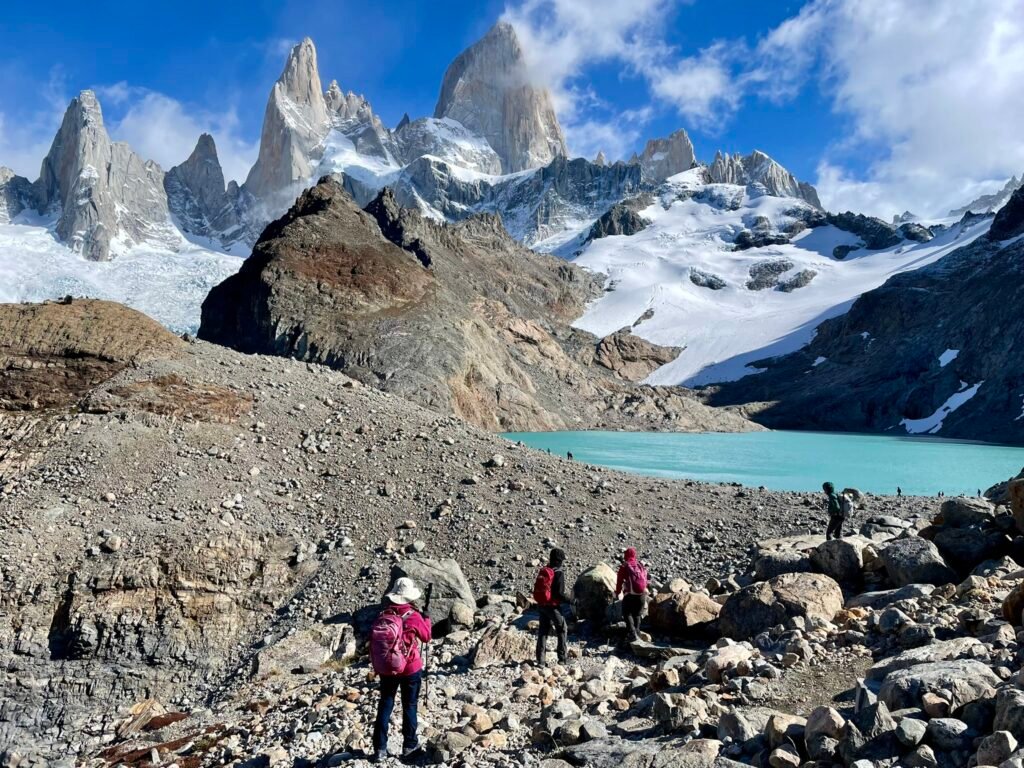
The Laguna de los Tres trail (21 km round trip, 8–10 hours, 1,200 m elevation gain) delivers you to a glacial lake directly beneath Fitz Roy’s north face — a view that consistently reduces experienced mountain travelers to silence. It is, in TrotRadar’s assessment, the finest free mountain day walk in the southern hemisphere. Come prepared for weather changes — conditions can shift from clear to horizontal wind and rain in 20 minutes, and the summit view is not guaranteed.
The Laguna Torre trail (18 km, 6–8 hours) takes you to the base of Cerro Torre — the needle of granite that has been the subject of the most contested ascent claims in mountaineering history. Even for non-climbers, the route through lenga beech forest to a glacial lake beneath the tower is one of the finest half-day walks on the Argentine side.
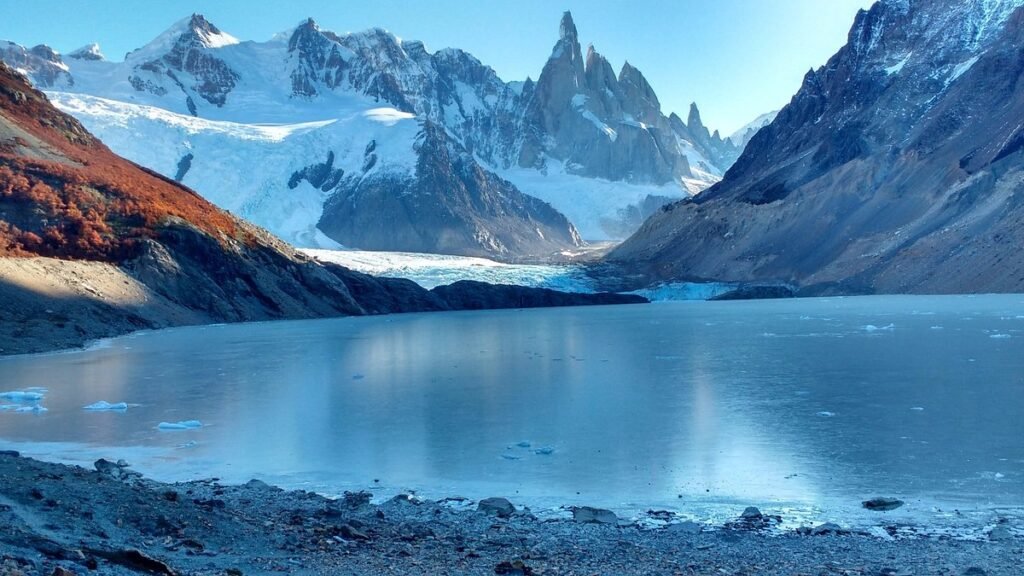
TrotRadar’s dedicated Patagonia Argentina in-depth guide covers El Chaltén, Perito Moreno, the estancia experience, and Ushuaia in much greater detail — use that as your Argentine Patagonia companion.
Perito Moreno Glacier from El Calafate
80 km west of El Calafate, the Perito Moreno Glacier is one of the few places on the Patagonia travel circuit where the word “unmissable” is fully accurate. The 60-metre ice wall faces a network of elevated walkways that put visitors at eye level with an active, advancing glacier — rare in a world of retreating ice — that calves house-sized chunks of blue ice into the lake below with a sound like cannon fire and the spray of a small wave.
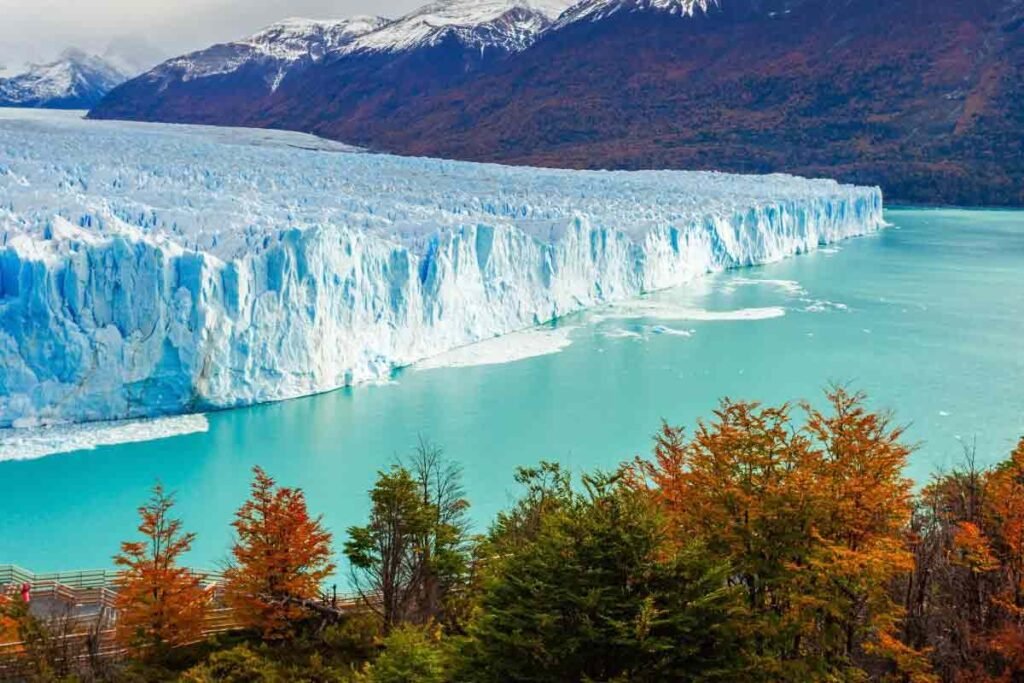
The walkway circuit takes 1.5–2 hours and can be combined with an ice trekking experience (Mini Trekking, 2 hours on crampons, approximately €80 USD; Big Ice, 5 hours on the glacier interior, approximately €150 USD) that puts you on the glacier itself — walking across blue ice between moulins and seracs with the full glacier field visible in every direction.
The glacier is accessed via El Calafate (80 km east), which has good accommodation infrastructure and a domestic airport connected to Buenos Aires. El Calafate itself has limited interest beyond serving as the glacier base.
Crossing Between Argentina and Chile
The Argentina-Chile Patagonia circuit typically involves at least one cross-border transit. The main options:
El Calafate → Torres del Paine (via bus through Cerro Castillo border crossing): Daily bus services in season, approximately 5–6 hours total including border formalities. Most straightforward option.
Domestic flights: Flying El Calafate → Punta Arenas via Buenos Aires is possible but involves backtracking. Ushuaia → Punta Arenas has occasional direct connections by small aircraft — check availability at booking time.
Important TrotRadar note on fruit and meat: Argentine Patagonia and Chilean Patagonia have strict agricultural quarantine regulations between them. No fresh fruit, vegetables, or meat products can cross the border in either direction. Border inspections are thorough — consume or discard anything in this category before crossing.
Patagonia Budget: 14-Day Cost Breakdown
Patagonia is not a budget destination — and TrotRadar will not pretend otherwise. The remoteness of the region means everything costs more than equivalent experiences elsewhere in South America. But the investment is specific and justifiable.
TrotRadar 14-day Patagonia budget estimate:
- International flights to Buenos Aires or Santiago: from €600–900 return from Europe
- Domestic flights to El Calafate/Punta Arenas: €150–250 return
- Torres del Paine W Trek (camping, 5 nights): approximately €200–350 all-in
- El Chaltén accommodation and food (4 nights): €45–80/day
- Perito Moreno entry and trekking: €100–180
- El Calafate accommodation (2 nights): €65–100/night
- Ground transport: €100–150 total
- Total realistic 14-day estimate: €1,800–2,500 per person including international flights
For broader South America planning context, TrotRadar’s South America first-timer guide covers how Patagonia fits into a longer continent-wide itinerary.
Is Patagonia Worth Visiting?
The Patagonia travel guide Argentina Chile conversation always ends the same way at TrotRadar: if the budget is there and the legs are willing, go. The landscape is not exaggerated in any account we’ve read or heard. The hiking is as good as its reputation. The cold and the wind are real — dress accordingly and they become part of the experience rather than an obstacle to it.
Plan early, book the permits, pack layers, and go. Patagonia will do the rest.
Find Your Patagonia Trip Deal
TrotRadar features Patagonia trekking packages with Torres del Paine permits included, El Chaltén guesthouse stays, and Buenos Aires–Patagonia flight combinations. Start planning your end-of-the-world adventure now. Browse TrotRadar’s Patagonia travel offers →