Train travel across Europe has never been more relevant — and it has rarely been more confusing to actually book. The continent’s rail network is extraordinary: a web of high-speed, regional, and sleeper services connecting cities from Lisbon to Istanbul, from Stockholm to Athens, with a density and frequency that no other continent approaches. Budget train travel in Europe in 2026 is entirely achievable — but it requires understanding a few non-obvious things about how European rail pricing actually works, when passes make sense, and where the genuinely cheap routes are.
At TrotRadar, we’ve tested this extensively across dozens of European trips. This guide is practical and specific — by the end of it you’ll know whether a rail pass is right for your trip, how to find the lowest-cost advance tickets, which night train routes save you accommodation costs, and which scenic routes are worth every cent you’ll pay for them.
TrotRadar Tip: For travelers combining train travel with a multi-country Balkans or Eastern Europe circuit, the budget transport decisions get more complex. Read TrotRadar’s Balkans road trip guide for how rail and bus interact across that region. And browse our Europe transport deals page for current Interrail pass discounts and night train packages.
How European Rail Pricing Actually Works
The single most important thing to understand about budget train travel in Europe is that prices are dynamic and yield-managed — exactly like airline prices. The cheapest tickets on any given route are released roughly 90 days before departure and sell quickly on popular routes. The price you pay for a Paris–Barcelona train the day before you travel will be three to five times the price available two months earlier.
This means the primary budget lever in European rail travel is booking in advance — not finding a special deal or a discount card, but simply planning early enough to access the lowest fare tiers.
TrotRadar advance booking windows by country/operator:
- France (SNCF/Ouigo): Up to 90 days in advance; cheapest fares often at exactly the 90-day mark
- UK (National Rail): 12 weeks ahead; advance tickets often 50–70% cheaper than walk-up
- Germany (Deutsche Bahn): Up to 6 months ahead on some routes; “Sparpreis” advance fares offer significant savings
- Spain (Renfe): 60–62 days ahead on AVE high-speed routes
- Italy (Trenitalia/Italo): Up to 120 days ahead; “Super Economy” fares are the target
The implication for trip planning is clear: deciding your route early and booking individual segments the moment they open is the highest-yield budget strategy in European rail.
Rail Pass vs. Point-to-Point: The TrotRadar Honest Comparison
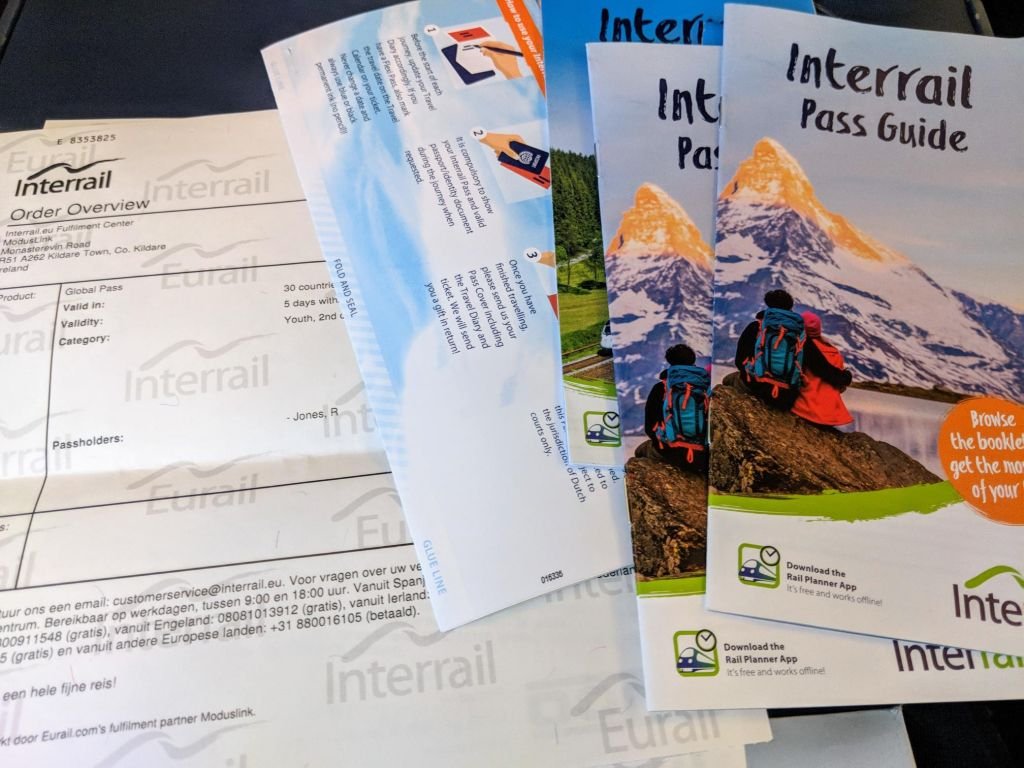
The Interrail Pass (for European residents) and Eurail Pass (for non-European travelers) are the most marketed products in European rail travel and frequently the most misunderstood.
When a rail pass makes financial sense:
- You’re traveling spontaneously with an open itinerary and can’t book far in advance
- You’re covering many countries in a short time (5+ countries in 3 weeks, for example)
- You’re traveling on routes where advance discount fares have sold out
- Your main routes include expensive segments (Switzerland, Scandinavia) where point-to-point full fares are very high
When point-to-point tickets are better:
- You have a fixed itinerary and can book 6–8 weeks or more in advance
- You’re spending meaningful time in each country rather than transit-hopping
- Your main routes are between major city pairs in France, Spain, Italy, or Germany where advance booking yields very cheap fares
The critical TrotRadar caveat on rail passes: Many high-speed services (TGV in France, Thalys/Eurostar international trains, Frecciarossa in Italy, AVE in Spain) require a reservation fee even with a pass — typically €10–35 per journey. On a 15-day pass with 10 journeys on reservation-required trains, this adds €100–350 to the effective cost — a figure that changes the math significantly.
The booking platforms: Book direct with national rail operators where possible (SNCF Connect for France, Deutsche Bahn app for Germany, Trenitalia for Italy) for the lowest fees. Trainline is a useful aggregator for multi-country trips; it charges a small booking fee but saves time when routing across multiple operators. For the cheapest countries to use as bases for rail-connected trips, see TrotRadar’s cheapest countries in Europe guide.
The Night Train Renaissance: Save a Hotel Night, Gain an Experience
European night train services are experiencing a genuine revival after decades of decline — and for budget travelers, they represent one of the most efficient tools available. The TrotRadar team is enthusiastic advocates of this specific approach.
The logic is simple: a night train between cities 8–12 hours apart eliminates both a transportation cost and an accommodation cost simultaneously. A sleeper compartment on an overnight service to Vienna or Prague replaces a flight plus a hotel night with a single ticket that often costs less than either one individually — and delivers you to the city center rather than an airport 40 minutes outside it.
The key routes TrotRadar recommends in 2026:
Nightjet (Austrian Federal Railways): The most extensive night train operator in Europe, with routes spanning Vienna–Paris, Vienna–Brussels, Zurich–Hamburg, Munich–Rome, and expanding. Couchette beds from approximately €39–80 per person; private sleeper compartments from €100–180. Book at least 4–6 weeks ahead for best availability.
SNCF Night Trains (France): Re-launched Paris–Nice and Paris–Hendaye/Tarbes services run regularly; more routes are being restored as French rail policy shifts toward overnight travel on longer routes.
European Sleeper: Brussels–Prague and Brussels–Vienna services from this newer operator represent the bleeding edge of the night train revival — book early, as these fill significantly in advance.
What to expect in different classes:
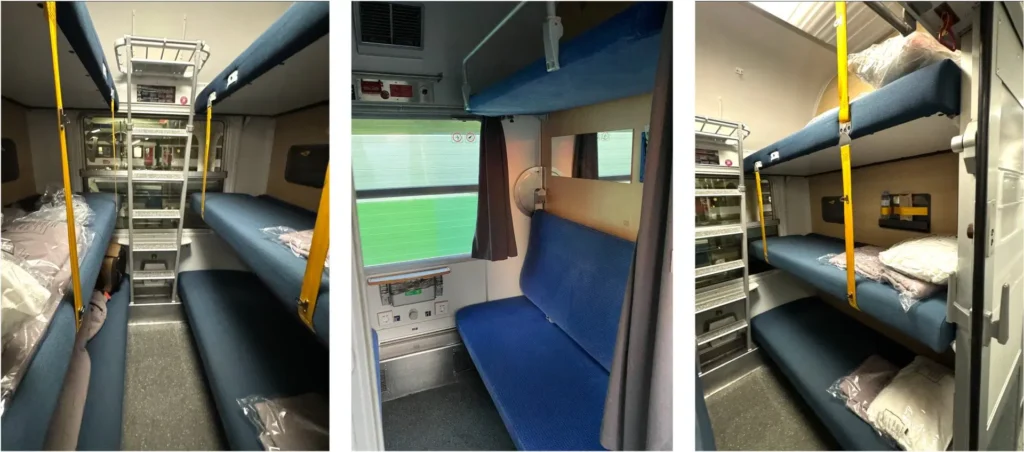
- Couchette (6-bunk compartment): The budget option — you share with strangers, have a flat bunk with a pillow and blanket, and generally sleep adequately if you’re not a light sleeper
- Couchette (4-bunk compartment): More space, better for privacy, slightly more expensive
- Private sleeper compartment: Two-to-four berths in a lockable compartment with breakfast included on most Nightjet routes — the best value upgrade in European travel for a couple or small group
The Cheapest Specific Routes in Europe Right Now
TrotRadar’s current recommendations for the best-value European train segments:
- Paris → Lyon (France): Ouigo high-speed trains from €10–25 if booked in advance. A 2-hour journey at bus prices.
- Madrid → Barcelona (Spain): Renfe AVE at “Básico” fare from €14–25 advance (vs. €70+ at walk-up). Only 2.5 hours on the high-speed service.
- Berlin → Warsaw (Germany/Poland): Deutsche Bahn advance fares from €19–29 for the 5.5-hour service — one of the best value international train segments in Europe.
- Vienna → Budapest (Austria/Hungary): Direct service, approximately 2h45m. Advance tickets from €19–29. Significantly better than the equivalent flight once you factor in airport travel time.
- Brussels → Amsterdam (Belgium/Netherlands): Thalys/Eurostar trains frequently run advance fares from €19–35 — a journey that arrives city-center to city-center in under 2 hours.
The Scenic Routes Worth Paying Full Price For
Not every European train journey should be optimized for cost. A handful of routes are themselves the destination — and on these, TrotRadar says pay the full fare without apology:
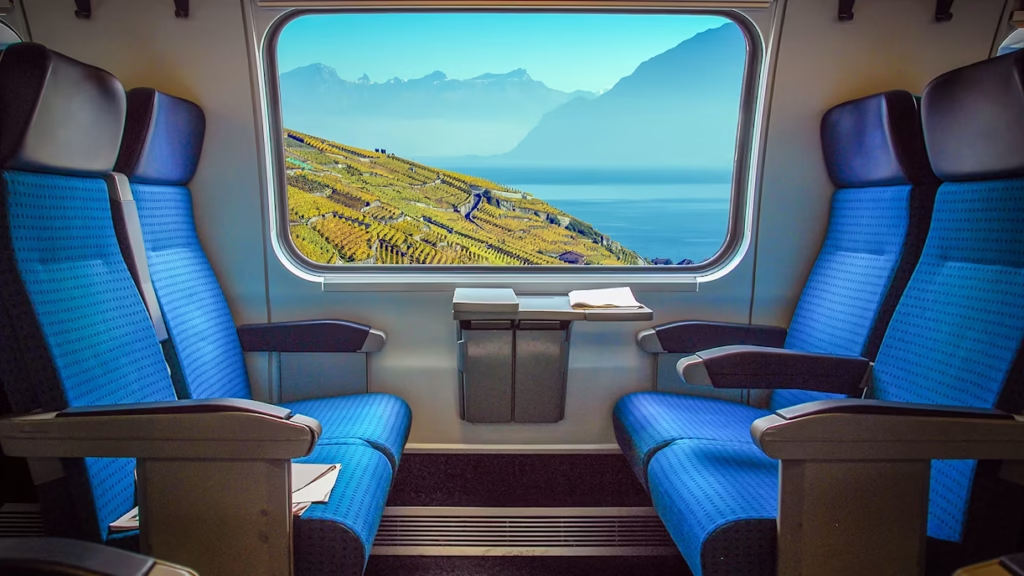
Bernina Express (Switzerland/Italy): Chur to Tirano via the Bernina Pass, crossing the Alps at 2,253 meters through viaducts and spiral tunnels that represent a UNESCO World Heritage-listed engineering marvel. Full price approximately €60–100 depending on class and season. Reservation required; book ahead.
Flåm Railway (Norway): A 20 km descent from the Hardangervidda plateau to the Aurlandsfjord — one of the steepest standard-gauge railways in the world, crossing landscapes that shift from snowfield to waterfall to fjord in 55 minutes. Around €35–45 one way.
Glacier Express (Switzerland): St. Moritz to Zermatt across 291 bridges, through 91 tunnels, over the Oberalp Pass — 8 hours of concentrated Swiss Alpine scenery. Around €150–200 including the mandatory reservation. Expensive; worth it for the right traveler on the right trip.
TrotRadar’s Booking Strategy Summary
Before every multi-segment European trip, run through this sequence that the TrotRadar team uses for our own travel:
- Fix your route at least 6–8 weeks before travel; 12 weeks for summer or holiday period
- Identify reservation-required segments (high-speed trains, Eurostar, Thalys, Nightjet) and book these first — they sell out fastest
- Check national operators first before aggregators (lower fees, sometimes exclusive fares)
- Calculate the rail pass math using the specific fares on your actual route — not a generic comparison. Include reservation fees in the calculation
- Book night trains as early as they open — couchette beds in reasonable quantity exist 3–6 months ahead; at 2 weeks they’re often gone
The TrotRadar Bottom Line on Budget Train Travel in Europe
Budget train travel in Europe is one of the great logistical pleasures available to a traveler who plans ahead. The continent’s rail network is extensive, generally reliable, city-center to city-center, and — booked correctly — often cheaper and faster than the equivalent flight once you factor in airport time.
Book early. Understand the pass mathematics honestly. Take a night train at least once. And if the Bernina Express itinerary lines up, pay the full fare without apology — that’s the TrotRadar approach to travel, and we’ve never regretted it.
Find Your Europe Rail Pass or Train Ticket Deal
TrotRadar compares Interrail and Eurail pass prices, Nightjet sleeper packages, and point-to-point advance tickets across Europe’s major rail routes. Travel smarter, pay less. Browse TrotRadar’s Europe rail travel offers →