There’s a photograph that circulates endlessly on travel feeds — a small, grass-roofed village perched on cliffs above a black-sand beach, with the Atlantic hammering in from all sides and a rainbow inexplicably completing the scene. That village is Gásadalur on the Faroe Islands, and yes, it looks exactly like that in real life. The difference between the photograph and the reality — something the TrotRadar team discovered on our first visit — is that the photograph leaves out the wind trying to take your jacket, the rain arriving sideways without warning, and the complete silence beyond it all that makes the whole experience feel slightly unreal.
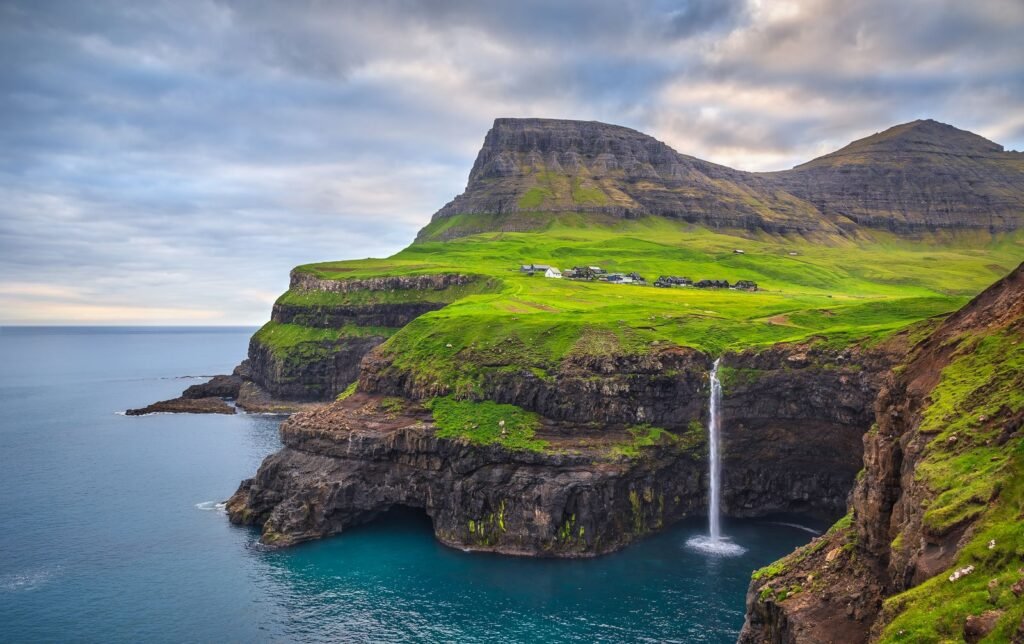
This Faroe Islands travel guide will not oversell the archipelago. It doesn’t need to. Eighteen islands between Norway and Iceland, administered by Denmark but culturally distinct from anything else in Scandinavia — the Faroe Islands are among the most visually striking places on the planet, genuinely manageable to visit independently, and still far less crowded than their reputation might suggest.
TrotRadar Tip: A rental car is the single most important logistical decision for your Faroe Islands trip. Without one, you’ll see a fraction of what’s accessible. Book well in advance for summer travel — availability in peak months is genuinely limited. Check TrotRadar’s current Faroe Islands car hire and flight deals.
Faroe Islands Travel Guide: Essential Basics
The Faroe Islands sit in the North Atlantic at roughly the same latitude as Bergen in Norway — about 320 km north of Scotland and 650 km west of the Norwegian coast. The archipelago consists of 18 islands, 17 of which are inhabited, covering a total area of around 1,400 square kilometers. The total population is approximately 55,000 people.
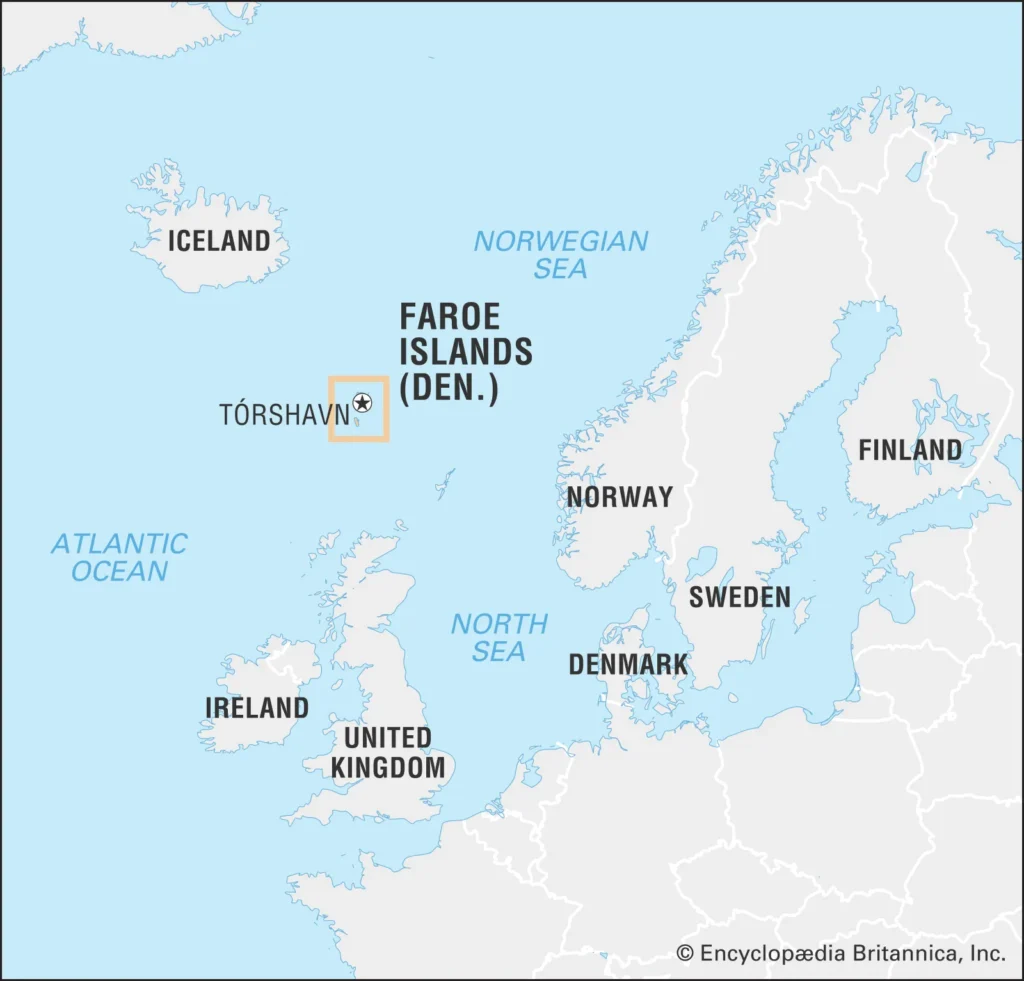
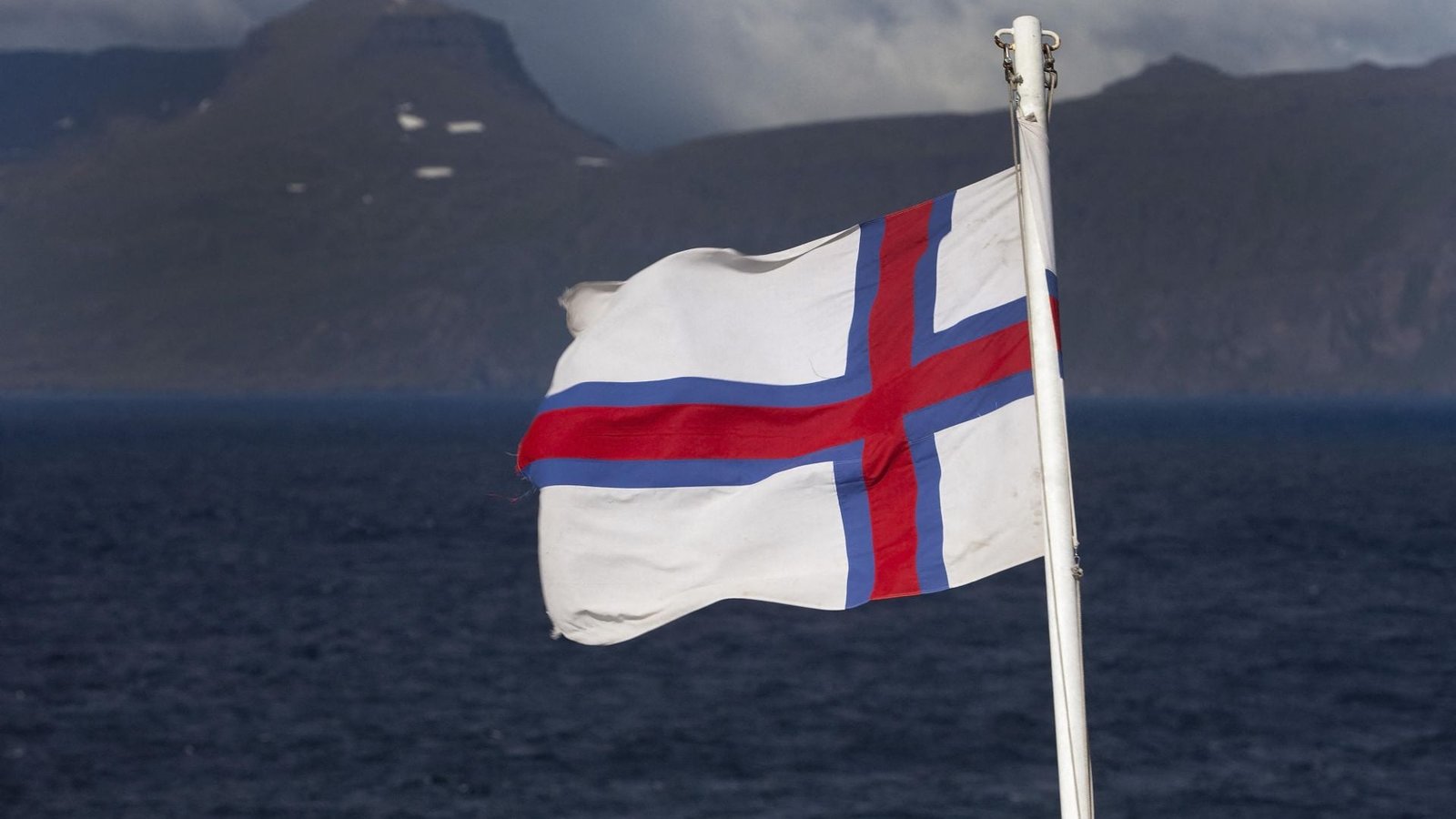
The islands are an autonomous territory within the Kingdom of Denmark — they have their own government, their own language (Faroese, a North Germanic language descended from Old Norse), their own flag, and their own cultural identity distinct from Denmark. They are not part of the European Union.
TrotRadar climate reality check: The Faroe Islands have a subpolar oceanic climate. Temperatures are remarkably mild year-round (rarely below 0°C in winter, rarely above 15°C in summer) but weather is highly changeable. It is entirely normal to experience sunshine, fog, rain, and wind in a single afternoon. The phrase locals use — “if you don’t like the weather, wait five minutes” — is not a cliché here but a meteorological reality. Pack accordingly.
Getting There and Getting Around the Faroe Islands
Flights: Atlantic Airways operates direct flights from Copenhagen, Edinburgh, London Heathrow, and several other European cities to Vágar Airport (FAE). Flight times from London are around 2.5 hours; from Copenhagen, about 1.5 hours. TrotRadar recommends booking several months ahead in peak summer (June–August).
Getting around: This is where the Faroe Islands genuinely surprise first-time visitors. A remarkable system of subsea tunnels — including the world’s first roundabout inside an undersea tunnel (the Eysturoyartunnilin, opened 2020) — connects most of the main islands without ferries. You can drive from Vágar airport to Tórshavn, across to Eysturoy, and up to the northern islands without a single ferry crossing.
For islands not connected by tunnel or causeway, car ferries are operated by Strandfaraskip Landsins and are generally reliable and affordable (around €5–15 per car crossing). Buses exist but are infrequent outside the main towns.
For comparison with similar North Atlantic island driving experiences, see TrotRadar’s guide to Iceland budget road trips — many of the same logistical principles apply.
Tórshavn: The World’s Smallest Capital With the Most Character
With a population of around 22,000, Tórshavn is the smallest national capital in Europe — and possibly the world. The historic core, Tinganes, is a small peninsula of turf-roofed, red and black timber buildings jutting into the harbor. These aren’t reconstructions or museum pieces — they’re the actual seat of Faroese government, some of the oldest continuously occupied buildings in Northern Europe.
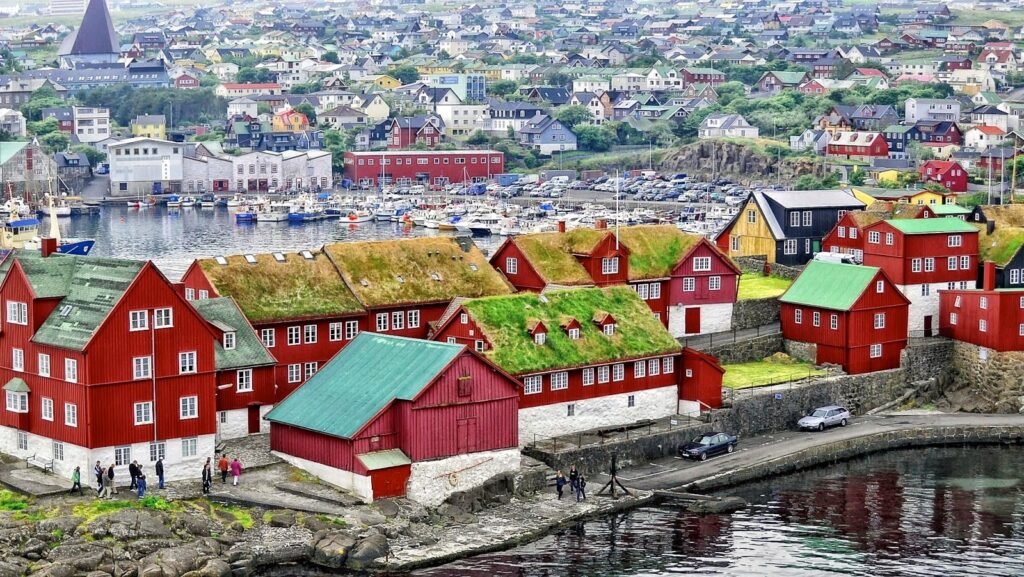
Walking through Tinganes on a quiet morning, with fishing boats in the harbor and grass growing from every rooftop, is the kind of low-key experience that tends to lodge permanently in memory. At TrotRadar, it ranks among our favorite 15 minutes in any European city.
Where to eat in Tórshavn:
- Ræst (fermented lamb and fish) is an acquired taste but worth trying at a traditional restaurant
- Fresh fish — particularly cod, haddock, and salmon — is exceptional quality and relatively affordable in local restaurants
- The Listasavn Føroya (Faroese Art Museum) has a café and houses the best collection of Faroese visual art
Vágar Island: The Photographs and the Reality
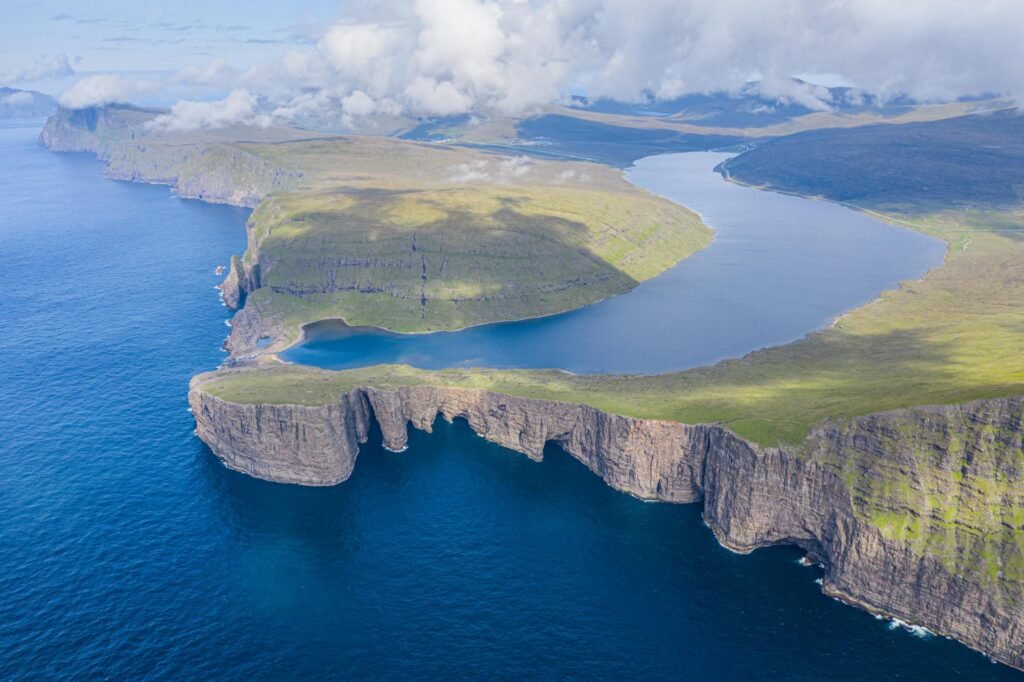
Almost every iconic Faroe Islands image originates on Vágar — the island where the airport sits. Its two most famous features are worth understanding before you arrive.
Lake Sørvágsvatn (Leitisvatn) is the optical illusion lake — due to the particular angle of the cliffside on which it sits, photographs taken from the right position make the lake appear to float far above the ocean. Guided tours run approximately €25–35 per person and are absolutely worth booking in advance for summer visits. Independent access to the viewpoint was restricted several years ago to manage trail erosion caused by visitor numbers.
Gásadalur — the grass-roofed village above the black sand beach — is accessible by car since a tunnel opened in 2004. The Múlafossur waterfall drops from the village cliff directly toward the ocean in a single dramatic column — one of those places where the travel photograph undersells the experience of actually being there.
The Best Hikes in the Faroe Islands Travel Guide
The Faroe Islands are fundamentally a hiking destination, and TrotRadar considers the trail network — while not always well-marked by Alpine standards — one of Europe’s finest for dramatic coastal and highland scenery.
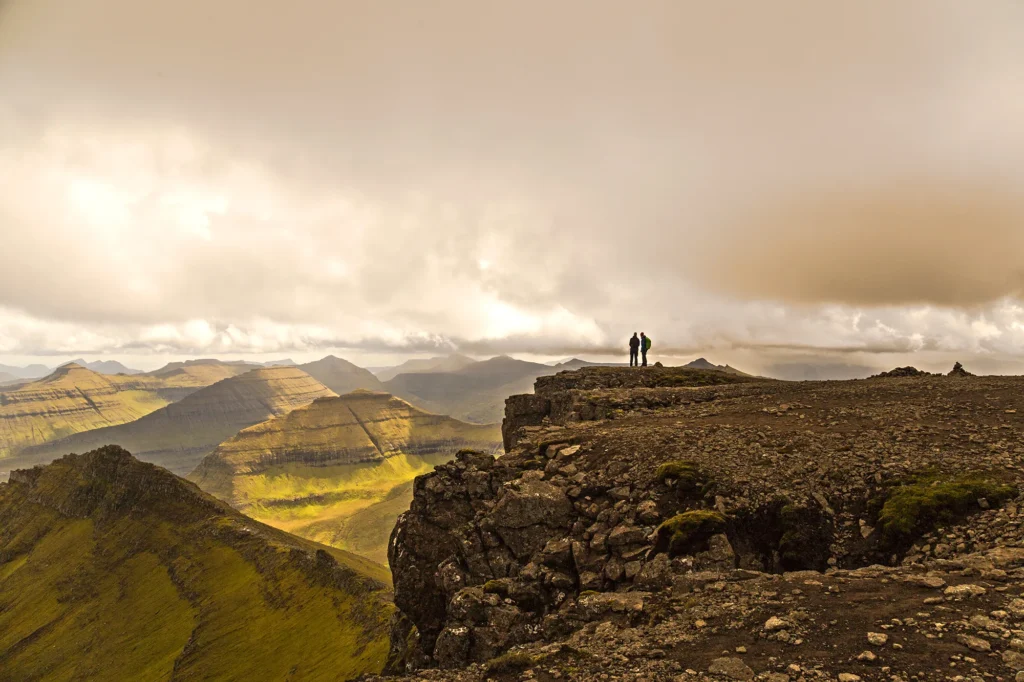
Slættaratindur (880 m) on Eysturoy is the highest point in the archipelago. The ascent takes around 2–3 hours from the nearest road and is not technical, but requires reasonable fitness and appropriate footwear. On clear days, the 360-degree views encompass most of the islands.
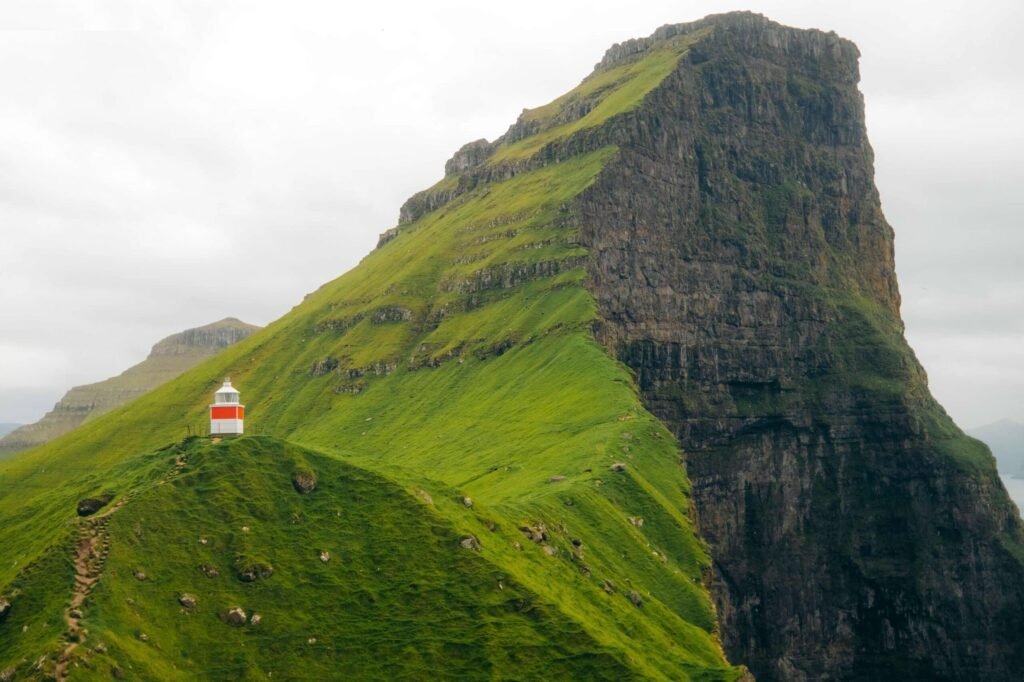
Kallur Lighthouse on Kalsoy Island requires a ferry to reach the island, then a 1.5-hour trail walk each way — but delivers perhaps the finest coastal view in the entire archipelago. The narrow island drops away to sea on both sides as you walk the ridge, and the lighthouse at the tip sits above a vertical cliff face with nothing but ocean between you and the Arctic.
TrotRadar trail safety notes:
- Always tell someone your intended route and estimated return
- Mountain rescue exists (112 is the emergency number) but response times in remote areas can be long
- Weather changes rapidly at altitude — carry waterproofs, an extra layer, and water regardless of the forecast
- Respect fences and farmland; sheep farming is the livelihood of many families on the outer islands
For comparison with other spectacular North Atlantic hiking experiences, TrotRadar’s Scotland Highlands travel guide covers similar dramatic landscape hiking at a similar price tier.
The Faroe Islands on a Real Budget
The Faroe Islands are not a cheap destination — and TrotRadar won’t pretend otherwise. But they’re also not as expensive as Iceland. Here’s an honest breakdown:
Accommodation: Guesthouses and small hotels typically run €80–150/night for a double room in peak season. The Faroese village stays program connects travelers with local families offering rooms — this is both more affordable and a genuinely better cultural experience.
Food: Eating at mid-range restaurants in Tórshavn costs €20–35 per person for a main course and drink. Supermarkets (Miklagarður is the main chain) are well-stocked — self-catering from a rental cottage or camping with a stove brings daily food costs to €15–20.
TrotRadar realistic daily budget:
- Budget (camping/self-catering/own car): €70–100/day
- Mid-range (guesthouse/mix of eating out): €130–180/day
- Comfortable (hotel/restaurants): €200+/day
The key cost lever is accommodation. Find a rental cottage with a kitchen for 3–4 nights and self-cater most meals, and the Faroe Islands become considerably more manageable.
Best Time to Visit the Faroe Islands: Season by Season
Summer (June–August) is peak season — long days (near-24-hour daylight in June), best hiking conditions, puffin season, and all facilities open. Also most expensive and busiest.
Shoulder seasons (May and September) offer fewer visitors, lower prices, and dramatic cloud and light conditions that many photographers argue make for better images than the clear summer skies.
Winter (November–February) is for serious travelers only — very short days, storms, and limited activity options, but also extraordinary aurora sightings and a quietness that the islands wear better than almost any other destination. For a complete aurora destination guide, see TrotRadar’s Iceland guide, which covers Northern Lights viewing in detail.
5-Day Faroe Islands Itinerary
Day 1: Vágar Airport, Sørvágsvatn and Gásadalur: Arrive at Vágar Airport, visit Lake Sørvágsvatn, then drive through the tunnel to Gásadalur for Múlafossur waterfall.
Day 2: Tórshavn and Tinganes: Explore Tinganes, the harbor, local cafés, and the National Gallery. Use this as a relaxed base day after arrival.
Day 3: Eysturoy and Slættaratindur: Drive through the Eysturoy tunnel, hike Slættaratindur if weather allows, and explore coastal villages.
Day 4: Kalsoy and Kallur Lighthouse: Take the ferry to Kalsoy and hike to Kallur Lighthouse. Check ferry schedules and weather before committing.
Day 5: Northern Islands or flexible weather day: Use this day for Streymoy’s northern valleys, additional hikes, or revisiting a location missed because of weather.
The TrotRadar Verdict on the Faroe Islands
This Faroe Islands travel guide can give you the logistics, the highlights, and the cost framework — but it can’t fully prepare you for the particular emotional register of the place. There is something about standing on a grass cliff above the North Atlantic, with fog moving through a valley below and complete silence except for wind and ocean, that sits outside the normal vocabulary of travel.
Rent the car. Pack the waterproofs. Go in May or September if budget matters. And give yourself at least five days — four days is not enough to absorb an archipelago that takes a full day just to start making sense of. TrotRadar promises it’s worth it.
See Current Faroe Islands Travel Deals
TrotRadar regularly features flight deals to Vágar Airport, village stay packages, and guided hiking tours of the Faroe Islands. Don’t let the logistics put you off — we’ve made it easy.