When I first visited Italy fifteen years ago, I did what every first-time traveler does: I rushed through Rome’s Colosseum, navigated Venice’s crowded canals, and snapped the obligatory photo holding up the Leaning Tower of Pisa. Those experiences were magical, don’t get me wrong. But it wasn’t until my third trip to Italy, when I accidentally took a wrong turn in Umbria and stumbled upon a village where I was the only tourist in sight, that I truly fell in love with the country.
That serendipitous detour changed how I travel in Italy forever. Since then, I’ve made it my mission to seek out the lesser-known places in Italy, the towns and villages that don’t make it onto every traveler’s itinerary but absolutely should. These hidden gems offer something the popular destinations often can’t: authentic Italian experiences, genuine connections with locals, and the space to actually breathe in the beauty around you without fighting through crowds.These hidden gems in Italy prove that the most memorable travel experiences happen far from the tourist trail.
If you’re planning a trip to Italy and want to experience the country’s magic without the tourist masses, let me take you on a journey through seven extraordinary places that have captured my heart. These aren’t just dots on a map—they’re places where time moves differently, where every cobblestone has a story, and where you’ll create memories that last far longer than any selfie stick photo ever could.
1. Civita di Bagnoregio: The Town That Time Forgot
A Village Suspended Between Earth and Sky
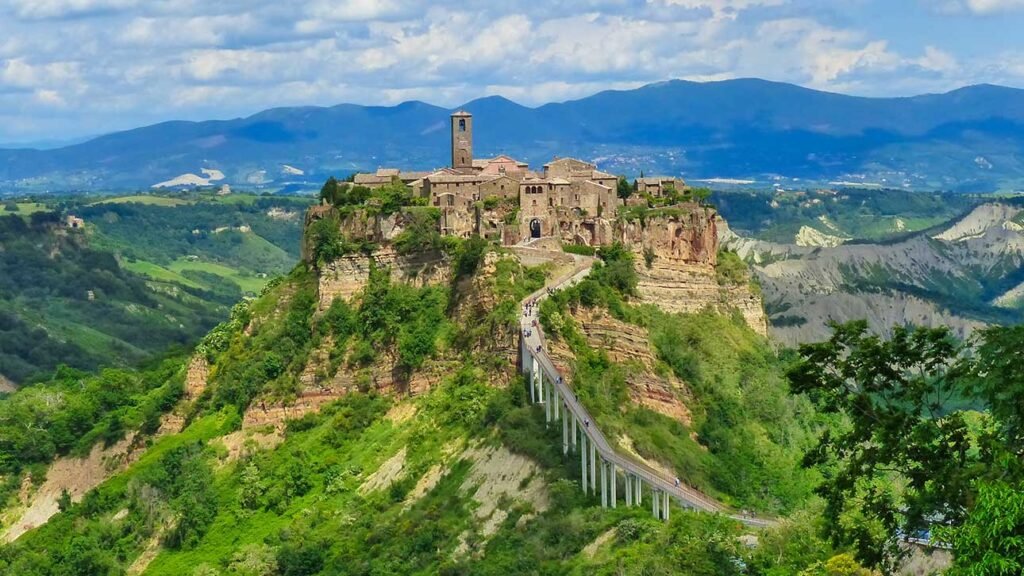
Perched atop a crumbling volcanic plateau in the Lazio region, Civita di Bagnoregio looks like something out of a fantasy novel. This tiny medieval village, often called “il paese che muore” (the dying town), sits isolated on an eroding hilltop, connected to the modern world by a single, slender footbridge that seems to float through the clouds on misty mornings.
Founded by the Etruscans over 2,500 years ago, Civita has been slowly eroding for centuries due to the fragile clay and volcanic tuff foundation beneath it. What makes this place truly special isn’t just its dramatic setting, but the determination of the handful of permanent residents—fewer than a dozen—who refuse to abandon their ancestral home despite nature’s slow reclamation.
Walking Into a Living Museum
When I first crossed that footbridge on a quiet Tuesday morning in October, I felt like I was stepping through a portal into the past. The only sounds were my footsteps echoing on ancient stone, the distant chime of church bells, and the rustle of ivy cascading down weathered walls. No cars, no modern distractions—just pure, unadulterated medieval ambiance.
The entire village takes maybe thirty minutes to explore on foot, but I spent four hours there, completely entranced. I wandered through narrow alleyways barely wide enough for two people to pass, discovered tiny piazzas where cats dozed in patches of sunlight, and stopped at a family-run trattoria where the owner’s grandmother still makes pasta by hand every morning.
The most magical moment came when an elderly resident invited me into her home for espresso. Her great-great-grandparents had lived in the same house, she told me in broken English, her hands animated as she pointed to old photographs on the wall. She spoke about Civita not as a dying town, but as a beloved elder who deserves dignity and visitors who truly see her beauty.
Practical Tips for Your Visit
Best time to visit: Spring (April-May) or fall (September-October) when crowds are minimal and weather is ideal. Avoid summer weekends when day-trippers from Rome arrive.
How to get there: Civita is about 75 miles north of Rome. The easiest approach is to rent a car and drive to the modern town of Bagnoregio, where you’ll park and walk across the pedestrian bridge (note: there’s a small entrance fee to cross, around €5, which helps fund preservation efforts).
Insider tip: Stay overnight if possible. Most visitors come for a few hours, but the village transforms after 6 PM when the day-trippers leave. I stayed at Civita B&B, and watching sunset from my window, with the village to myself, remains one of my most cherished travel memories.
2. Procida: The Colorful Island That Tourism Forgot
Italy’s Most Authentic Island Escape
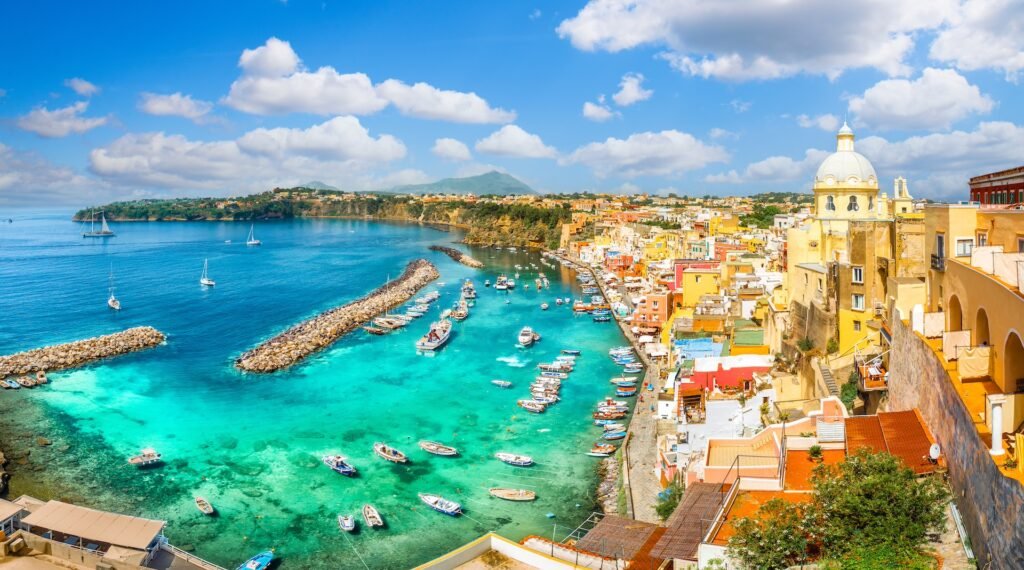
While Capri attracts celebrities and Ischia draws wellness seekers, tiny Procida remains blissfully under-the-radar. This fishing island in the Bay of Naples is only four square kilometers, but it packs more authentic Italian charm per square meter than anywhere else I’ve visited in the country.
Procida’s history as a fishing community stretches back centuries, and unlike its more famous neighbors, it hasn’t transformed itself for tourism. The pastel-colored houses that cascade down to the Marina di Corricella weren’t painted for Instagram they were painted in bright hues so fishermen could identify their homes from the sea. This is a working island where locals still haul in their catch each morning and grandmothers still hang laundry across narrow streets.
Living La Dolce Vita, Island Style
I first visited Procida almost by accident. I’d planned to take the ferry to Ischia but overslept and missed my connection. The ticket agent suggested Procida instead, shrugging as if it didn’t matter much. It was the best travel mistake I’ve ever made.
From the moment I stepped off the ferry at Marina Grande, I was enchanted. The island welcomed me with a cacophony of cheerful colors (lemon yellow, coral pink, terracotta orange) all set against the impossible blue of the Mediterranean. I spent my first hour just wandering aimlessly, getting lost in the tangle of steep stairways and vaulted passageways that connect different levels of the village.
I ended up at a tiny beach called Chiaia, where I was one of maybe a dozen people. No beach clubs, no rows of umbrellas, just locals swimming and children playing in the shallows. I bought fresh sfogliatella from a bakery run by a woman who’d been baking the same pastries for forty years, and I ate it sitting on weathered stone steps overlooking the harbor, watching fishing boats rock gently in the turquoise water.
The highlight came at dinner. I asked a local where to eat, and he directed me to his cousin’s restaurant, a place with no name or sign, just a doorway I would’ve walked past without guidance. The cousin served me the most incredible seafood pasta I’ve ever tasted spaghetti alle vongole made with clams pulled from the water that morning. When I complimented the food, he simply said, “This is how we eat. Every day.”
Practical Tips for Your Visit
Best time to visit: May-June or September-early October. Summer (July-August) brings more visitors but the island never feels overcrowded. Avoid winter as many restaurants close.
How to get there: Ferries run frequently from Naples (Molo Beverello or Calata Porta di Massa) and take 35-40 minutes. Hydrofoils are faster (25 minutes) but more expensive. You can also catch ferries from Pozzuoli.
Insider tip: Rent a scooter or electric bike to explore the whole island, including the peaceful Terra Murata district and the stunning Pozzo Vecchio beach. Cars are unnecessary and parking is challenging. For accommodation, skip hotels and rent an apartment—many locals offer their homes through local agencies, and you’ll get a much more authentic experience.
3. Matera: The Ancient City Carved in Stone
A Biblical Landscape Brought Back to Life
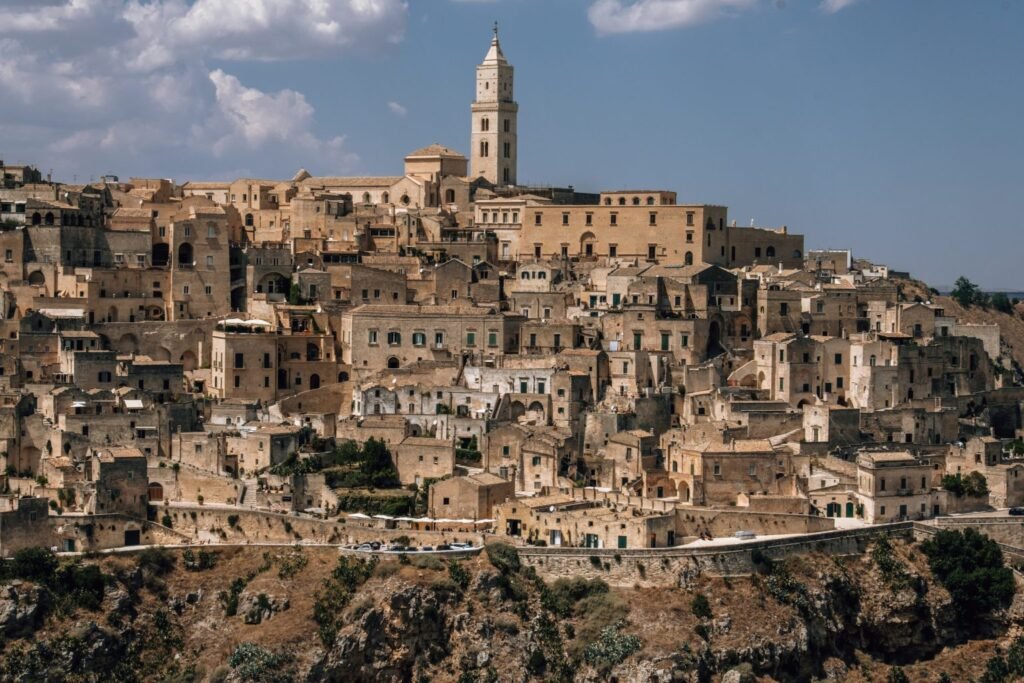
Matera in Basilicata might be Italy’s most dramatic redemption story. Once considered a national embarrassment (in the 1950s, it was called “the shame of Italy” due to extreme poverty) Matera has transformed into a UNESCO World Heritage site and European Capital of Culture. Yet despite this recognition, it remains surprisingly overlooked by international travelers.
The Sassi di Matera—ancient cave dwellings carved directly into limestone cliffs—have been inhabited for over 9,000 years, making this one of the world’s oldest continuously inhabited settlements. These aren’t rustic ruins; they’re a complex urban ecosystem of caves, churches, houses, and passageways stacked atop one another in a gravity-defying maze.
Sleeping in a Cave (and Loving It)
I’ll be honest: before visiting Matera, I was skeptical. Cave dwellings sounded uncomfortable, maybe even gimmicky. How wrong I was. Staying in a renovated cave hotel in the Sasso Barisano district became one of my most memorable accommodation experiences anywhere in the world.
My room was carved entirely from tuff stone, with natural alcoves serving as shelves and a bed platform. Yet it was far from primitive the owners had skillfully integrated modern amenities while preserving the cave’s organic character. The walls maintained a constant cool temperature even during the August heat, and the silence was absolute, a rare luxury in our noisy world.
Exploring Matera felt like wandering through a living movie set. In fact, it has been one Mel Gibson filmed parts of “The Passion of the Christ” here because Matera so convincingly evokes biblical Jerusalem. I’d wake before sunrise and walk the empty streets when golden light began illuminating the ancient stone, creating a landscape that seemed to glow from within.
One morning, I got delightfully lost in the maze-like streets and ended up at the church of Madonna de Idris, perched at the highest point of the Sasso Caveoso. An elderly man was sweeping the steps and, seeing my confusion, beckoned me to follow. He led me through a hidden passageway into rock-hewn churches covered in fading Byzantine frescoes. No tickets, no ropes, no guards just this generous stranger sharing his city’s treasures.
Practical Tips for Your Visit
Best time to visit: Spring (April-May) or fall (September-October) offer perfect weather and manageable crowds. Summer can be intensely hot, while winter is quiet but some cave hotels close.
How to get there: Matera is in Basilicata, southern Italy. The nearest major airport is Bari (65 km away). You can take a train from Bari to Matera, though service is limited. Renting a car offers more flexibility. If coming from Naples or Rome, expect a 4-5 hour drive.
Insider tip: Book a guided tour of the rupestrian churches many are locked and you’ll miss the extraordinary frescoes without a guide. Stay at least two nights; the city reveals itself slowly. For an unforgettable experience, dine at Oi Marì, a restaurant set in a former medieval cistern 15 meters underground.
4. Alberobello: The Fairytale Town of Trulli
Where Folklore Meets Architecture
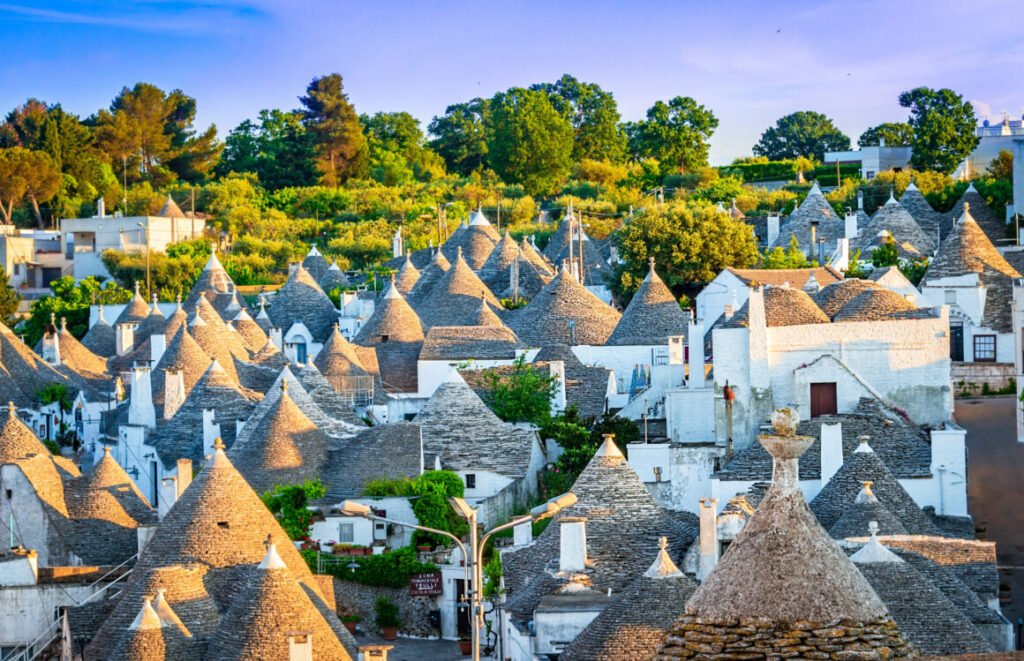
In the heart of Puglia sits Alberobello, a town so peculiar it looks like it was designed by someone who’d read too many fairy tales. Over 1,500 trulli whitewashed stone huts with conical roofs cluster together in this UNESCO World Heritage site, creating one of Italy’s most distinctive and photogenic landscapes.
These curious buildings date back to the 14th century and were originally created as a form of tax evasion. Local peasants built homes with dry stone walls (no mortar) topped with limestone slabs, creating structures that could be quickly dismantled if tax collectors approached. Today, these temporary tax dodges have become permanent symbols of Puglian heritage.
Living Among the Trulli
I stayed in a converted trullo in the Rione Monti district, and I felt like I’d stepped into a storybook. The interior was surprisingly spacious, with whitewashed walls that stayed cool despite the summer heat. The conical ceiling rose above me, each stone carefully placed in a spiral pattern that had held for centuries without a single drop of mortar.
What struck me most about Alberobello wasn’t just the architecture it was how these buildings remain part of living, working neighborhoods. Yes, many trulli have become shops, restaurants, and accommodations for tourists, but locals still live in them, hang their laundry outside them, and go about their daily lives surrounded by these ancient stone cones.
One evening, I wandered into the less-touristy Aia Piccola district, where about 400 trulli remain largely residential. I struck up a conversation with a woman watering flowers outside her trullo. She’d lived in the same house for seventy-three years, she told me, born in the bedroom where her own children and grandchildren were later born. She invited me to peek inside, and I was amazed by how she’d modernized the interior while maintaining its character a flat-screen TV sat beneath the ancient conical ceiling, a perfect marriage of old and new.
Practical Tips for Your Visit
Best time to visit: Late spring (May-June) or early fall (September-October). Summer brings crowds and heat, though evenings are lovely. The Festival of the Patron Saints in late June fills the town with lights and celebrations.
How to get there: Alberobello is in central Puglia. The nearest airports are Bari (55 km) and Brindisi (70 km). Trains run from Bari to Alberobello, though the journey requires a change. Renting a car is ideal for exploring the wider Itria Valley region.
Insider tip: Visit the Trullo Sovrano, the only two-story trullo, for insights into traditional life. For the best photos, arrive at sunrise when the town is empty and light is magical. Don’t limit yourself to Alberobello nearby towns like Locorotondo and Martina Franca are equally charming with far fewer tourists.
5. Castelluccio di Norcia: Where Mountains Touch the Sky
A High-Altitude Haven in the Heart of Italy
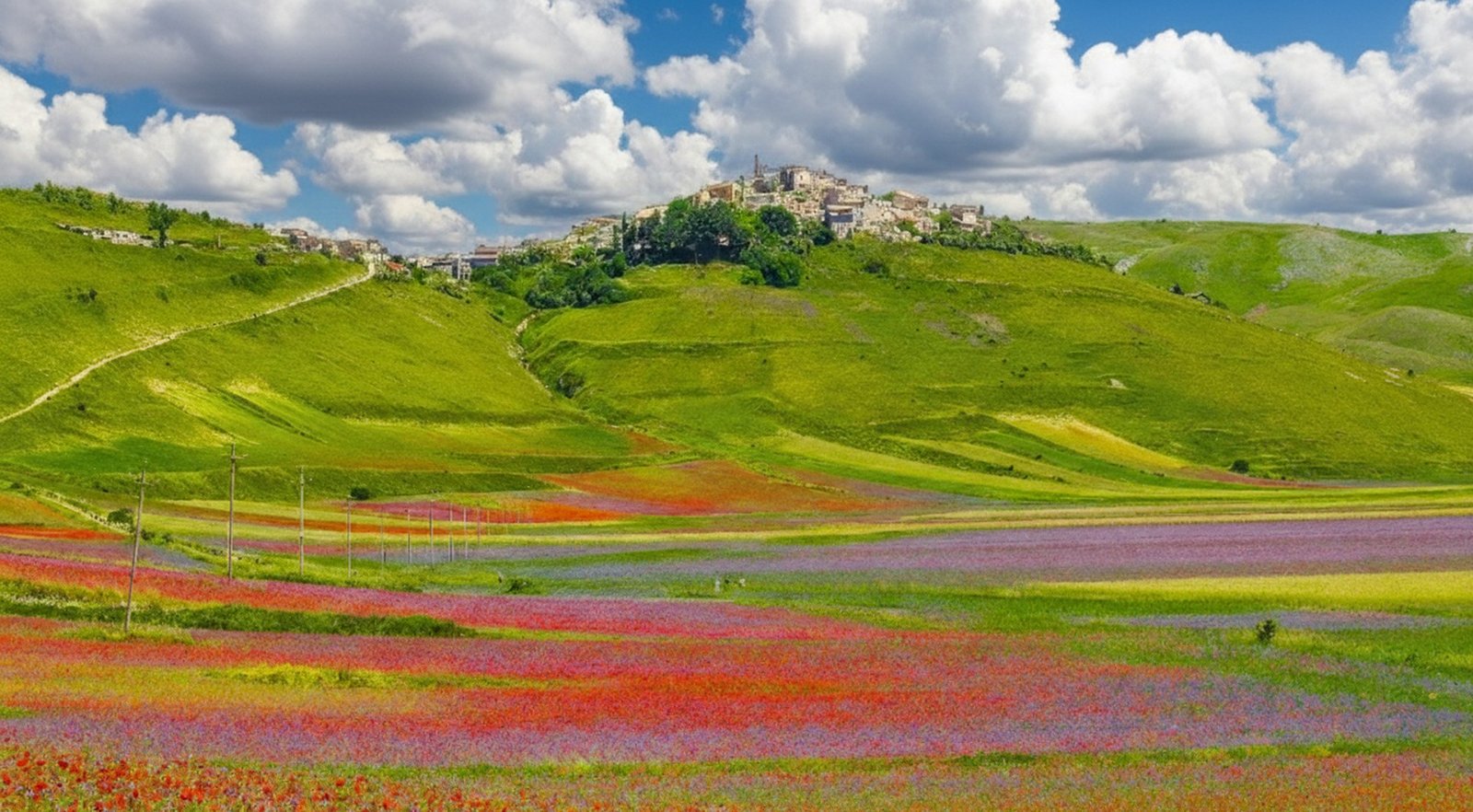
At 1,452 meters above sea level, Castelluccio di Norcia stands as one of Italy’s highest and most isolated inhabited villages. Perched on a hilltop in the Sibillini Mountains of Umbria, this tiny hamlet overlooks the Piano Grande, a vast karst plateau that transforms into one of Europe’s most spectacular wildflower displays each summer.
Castelluccio’s history is one of resilience. For centuries, shepherds and farmers eked out an existence in this harsh, beautiful landscape. In 2016, devastating earthquakes damaged much of the village, but the community’s spirit remained unbroken. Today, Castelluccio is rebuilding, and visiting supports this courageous community’s recovery.
Nature’s Canvas
I first visited Castelluccio in late June, perfectly timed for the fiorita the flowering. As my car climbed the winding mountain roads and the Piano Grande came into view, I actually gasped. The entire valley was painted in waves of color: crimson poppies, yellow rapeseed, blue cornflowers, white narcissus, and purple violets creating a patchwork that seemed too vivid to be real.
I parked and simply walked into the fields, surrounded by color in every direction. The air smelled sweet and fresh, so different from the heavy heat of Rome I’d left that morning. For hours, I wandered the meadows, the only sounds being wind through grass and the distant bells of grazing sheep. I saw perhaps twenty other people across that enormous plateau, a luxury unthinkable in Tuscany or the Amalfi Coast.
The village itself has a haunting beauty. Though many buildings remain damaged from the earthquakes, life continues. I ate lunch at a small restaurant where the owner served lentils from fields just outside the door, Castelluccio is famous throughout Italy for its lentils, tiny and flavorful, protected by IGP status. The pasta e lenticchie I ate, simple and perfect, tasted of this land and its people’s determination to endure.
Practical Tips for Your Visit
Best time to visit: Late June to mid-July for the fiorita (flowering), though exact timing varies with weather. Spring and early fall are beautiful for hiking. Winter brings snow and many facilities close, but it’s stunning if you’re prepared.
How to get there: Castelluccio is remote—that’s part of its appeal. The nearest cities are Norcia (30 km) and Perugia (100 km). You need a car to reach it. The drive from Norcia involves winding mountain roads but offers spectacular views. Be cautious in winter as roads can be icy.
Insider tip: Support the rebuilding effort by eating at local restaurants and buying local products, especially the renowned lentils. If you’re a hiker, the Sibillini National Park offers exceptional trails. For photography enthusiasts, sunrise and sunset transform the Piano Grande into pure magic—consider staying overnight in one of the few operating guesthouses.
6. Tropea: Calabria’s Clifftop Jewel
Where the Tyrrhenian Sea Meets Medieval Magic
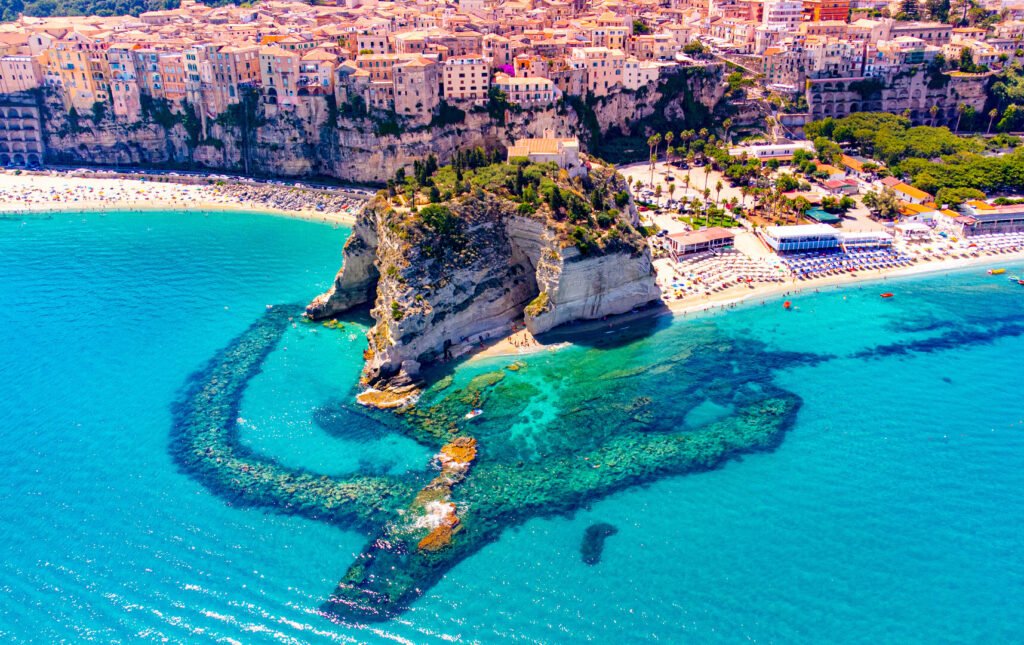
Calabria(the toe of Italy’s boot) remains one of the country’s least-visited regions, which is precisely why Tropea feels like such a discovery. This medieval town perches dramatically on a clifftop overlooking the Tyrrhenian Sea, its ancient buildings seeming to grow directly from the rock. Below, white sand beaches and crystal-clear turquoise water create a scene more typically associated with the Greek Islands.
Tropea’s history stretches back to ancient Greek and Roman times, when it served as an important port. The town’s most iconic sight is the Sanctuary of Santa Maria dell’Isola, a medieval church and former monastery positioned on an enormous rock outcropping that rises from the sea, connected to the town by a narrow strip of land.
Discovering Calabria’s Hidden Coast
I arrived in Tropea with low expectations, my guidebook devoted only a single paragraph to the entire region of Calabria. But from my first glimpse of the town’s white buildings glowing against the deep blue sea, I knew I’d found something special.
The historic center is a delightful warren of narrow streets lined with palazzi built from the local honey-colored stone. I wandered without purpose, discovering artisan shops, family-run gelaterias, and squares where elderly men played cards in the shade. The pace of life felt refreshingly slow; no one seemed in a hurry.
But Tropea’s real glory is its coastline. I spent an afternoon at the main beach directly below the town, accessible via a steep stairway cut into the cliff. The water was unbelievably clear, I could see fish swimming around my feet in chest-deep water. Looking up at the town from the beach, with medieval buildings stacked atop sheer cliffs and the sanctuary perched on its rock like something from a dream, I couldn’t understand why this place isn’t mobbed with tourists.
One evening, I climbed to the Sanctuary of Santa Maria dell’Isola for sunset. The walk up the rock involves climbing many steps through gardens fragrant with jasmine and bougainvillea. From the terrace, I watched the sun sink into the sea while swifts wheeled through the air, their cries echoing off ancient walls. An Italian couple standing nearby offered me some of their wine, and we toasted to Tropea’s beauty in the fading light.
Practical Tips for Your Visit
Best time to visit: May-June or September-early October for warm weather without summer crowds. July-August brings Italian beachgoers, making the town busier but still manageable. The Red Onion Festival in August celebrates Tropea’s famous sweet red onions.
How to get there: The nearest airports are Lamezia Terme (60 km) and Reggio Calabria (100 km). Tropea is on the main rail line from Naples to Reggio Calabria, making it accessible by train. If driving, it’s about 90 minutes from Lamezia Terme.
Insider tip: Sample the cipolla rossa di Tropea (Tropea red onion), sweet enough to eat raw. Try it in local dishes or buy the famous onion marmalade. For the best beach experience, visit the smaller beaches just north of town: Grotticelle and Michelino are less crowded. Stay in the historic center rather than the beach area for the most atmospheric experience.
7. Castelrotto and the Val Gardena: The Dolomites’ Alpine Heart
Where Italy Meets the Alps
When people think of Italy, they rarely picture Alpine villages with wooden chalets and snow-capped peaks. But in South Tyrol (Alto Adige), the northernmost region of Italy, the landscape and culture blend Italian and Austrian influences in a way that feels entirely unique.
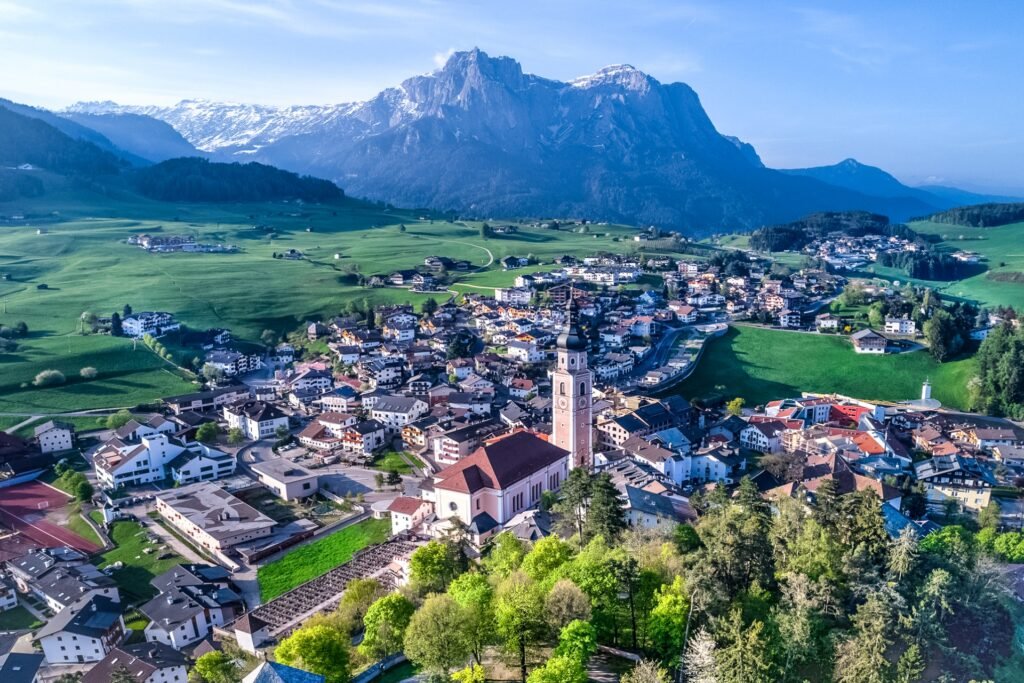
Castelrotto (Kastelruth in German) is a picture-perfect Alpine village in the heart of the Val Gardena, surrounded by the dramatic peaks of the Dolomites. This region only became part of Italy after World War I; before that, it was Austrian, and the Germanic heritage remains strong. Most locals speak German as their first language, street signs are bilingual, and you’re as likely to find strudel as tiramisu.
Mountains That Changed My Perspective
I visited Castelrotto in late September, when autumn was painting the mountain meadows in shades of gold. The village was impossibly charming traditional Tyrolean houses with painted facades and flower-filled balconies, a baroque church with a distinctive spire, and views of the jagged Dolomite peaks in every direction.
But the real revelation came when I took the cable car from nearby Ortisei up to the Alpe di Siusi (Seiser Alm), Europe’s largest high-altitude Alpine meadow. At 2,000 meters, I stood on rolling grasslands that stretched to the horizon, surrounded by peaks that glowed pink in the afternoon light the famous “enrosadira” phenomenon that gives the Dolomites their rose-colored sunset glow.
I spent the afternoon hiking through this extraordinary landscape, passing wooden mountain huts where I could stop for speck (smoked ham) and knödel (bread dumplings) washed down with local beer. The air was so clean it almost hurt to breathe, and the silence was profound, broken only by cowbells and the occasional cry of a hawk.
What struck me most was how different this felt from the rest of Italy I knew. Yet it was still unmistakably Italian in the warmth of the people, the quality of the food, and the attention to beauty in every detail. This region offers a side of Italy few foreign travelers experience, and I felt privileged to discover it.
Practical Tips for Your Visit
Best time to visit: June-September for hiking and alpine activities. December-March for skiing. Late September offers stunning autumn colors with fewer crowds. Spring can be rainy, and many mountain facilities close in November.
How to get there: The nearest airports are Bolzano (30 km), Innsbruck, Austria (90 km), or Verona (160 km). Castelrotto is accessible by bus from Bolzano. If driving, the A22 autostrada runs through South Tyrol. Note that the region requires a special toll pass (Brenner Pass) if arriving from Austria.
Insider tip: Purchase the Val Gardena Mobil Card, which includes unlimited public transport and cable cars essential for accessing hiking trails. Don’t miss the town’s famous Törggelen season (October-November), when local taverns serve new wine, roasted chestnuts, and traditional autumn dishes. Learn a few words of German; while Italian is spoken, locals appreciate the effort. For a unique experience, stay in a traditional mountain hut (rifugio) on the Alpe di Siusi.
Conclusion: The Italy You’ll Never Forget
After countless trips to Italy, I’ve learned that the country’s true magic isn’t found in the places everyone visits it’s discovered in moments of unexpected beauty in places you’ve never heard of. It’s the grandmother in Civita who invited me for coffee, the fisherman in Procida who shared his family’s secret fishing spot, the woman in Alberobello who showed me her centuries-old home with such pride.
These seven destinations represent just a fraction of Italy’s hidden treasures. There are countless other villages perched on hillsides, islands floating in turquoise seas, mountain meadows bursting with wildflowers, and ancient towns where you might be the only tourist. Each offers something increasingly rare in our overcrowded world: space to breathe, time to connect, and the chance to experience authentic culture rather than just observe it.
Planning a trip to these lesser-known places requires more effort than booking a hotel in Rome or Venice. You’ll need to rent a car for some destinations, learn a few words of Italian (or German, in South Tyrol), and embrace a slower pace. But the rewards are immeasurable. You’ll have the freedom to wander without crowds, the opportunity to form genuine connections with locals, and the satisfaction of discovering places that feel like your own secret.
So yes, visit the Colosseum and the canals of Venice if it’s your first time in Italy. But then venture beyond the guidebook highlights. Take that wrong turn, follow that unpromising road, stay in that village no one’s heard of. Because in Italy’s hidden corners, you won’t just see the country you’ll feel it, taste it, and carry it with you long after you’ve returned home.
Buon viaggio, and may your journey through Italy’s hidden gems be as transformative as mine has been.
Ready to explore Italy’s hidden treasures? Start planning your Italian adventure to these off-the-beaten-path destinations and discover the authentic Italy that few travelers experience. Whether you’re drawn to ancient cave cities, colorful island escapes, or Alpine meadows, these lesser-known Italian destinations offer unforgettable travel experiences away from the crowds.