
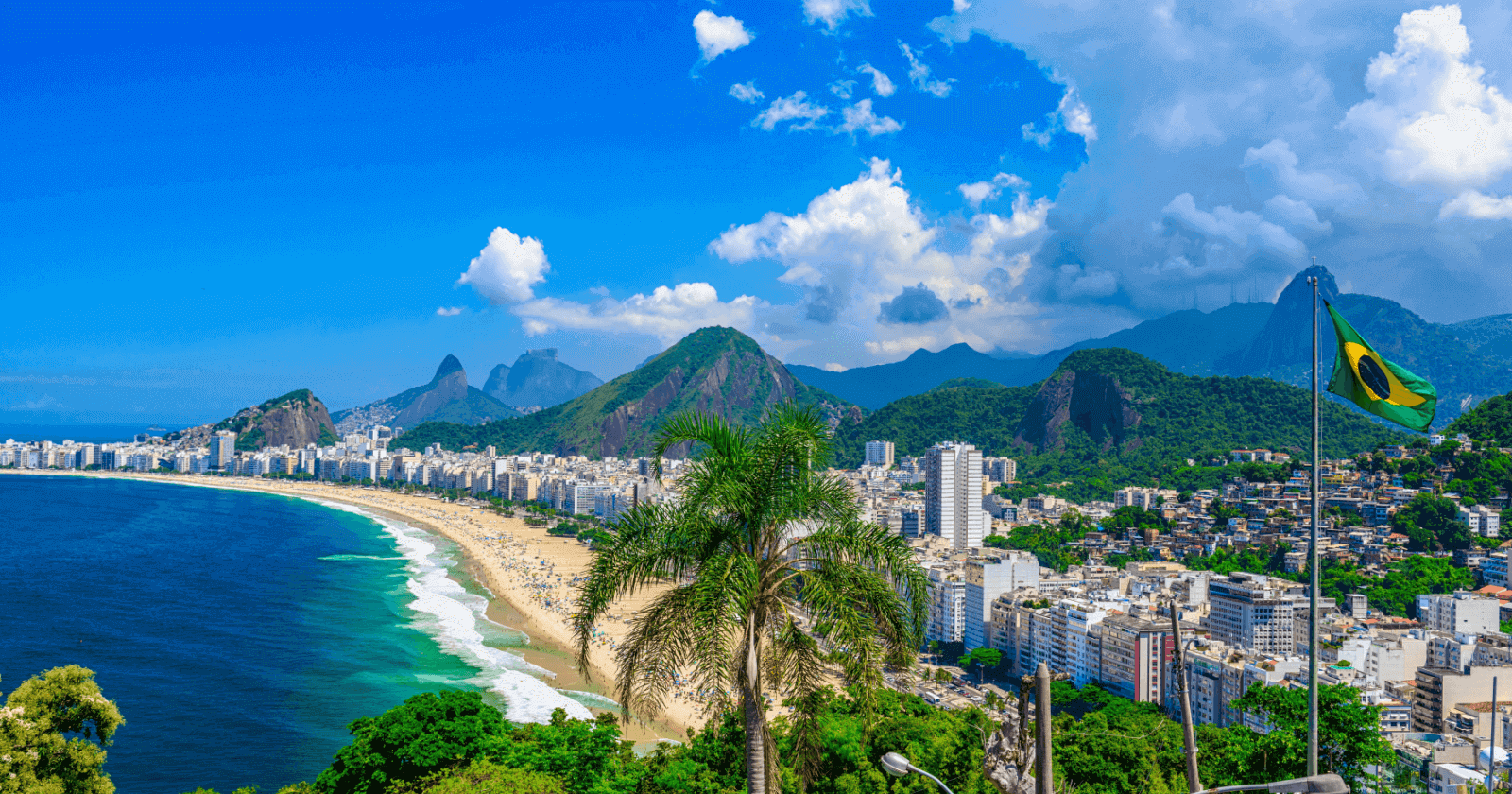
Let me tell you something most travelers never discover about Brazil: while everyone flocks to Rio’s beaches and São Paulo’s skyscrapers, the country’s most jaw-dropping destinations remain blissfully hidden in plain sight. I learned this truth during my third visit to Brazil, when a local friend asked me, “Why do tourists always go to the same five places?” That question changed everything.
If you’re craving an unbelievable trip in Brazil that goes beyond the postcard clichés, you’re in for a treat. The Brazil I’m about to share with you is raw, authentic, and so stunning that you’ll wonder why these places aren’t on every traveler’s bucket list. These hidden gems Brazil offers will transform the way you see South America’s largest country from otherworldly desert lagoons that shouldn’t exist to underwater rivers so clear you can see every pebble 40 feet below.
This isn’t your typical travel guide. This is your insider’s passport to the Brazil that locals cherish and savvy travelers guard like a precious secret. Ready to discover what an off-beaten-path Brazil adventure really looks like? Let’s dive in.
Lençóis Maranhenses National Park: Where the Desert Meets Paradise
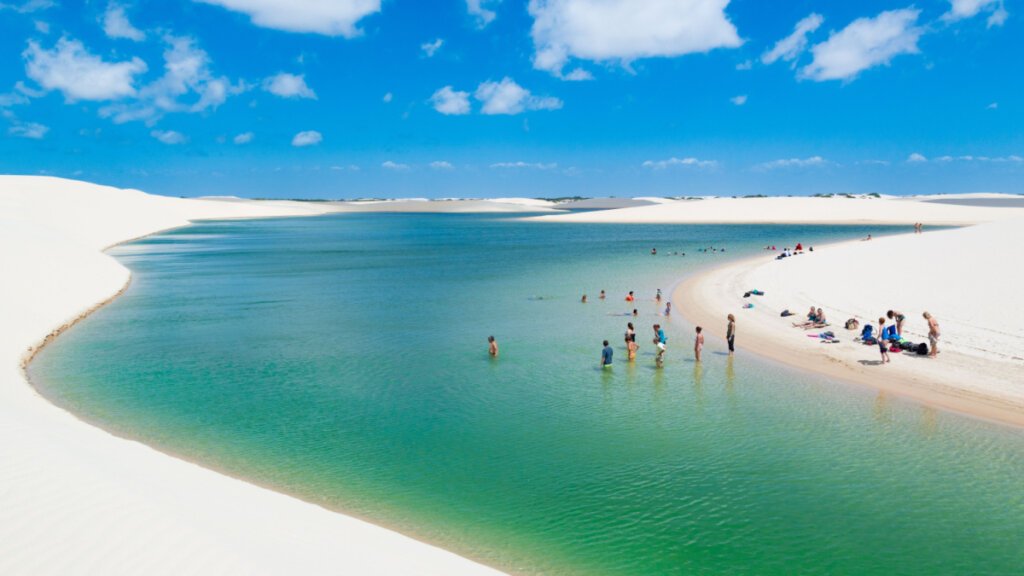
Picture this: endless white sand dunes stretching to the horizon, but instead of scorching desert, thousands of crystal-clear lagoons shimmer between each valley. Welcome to Lençóis Maranhenses, one of the most surreal landscapes on Earth and the perfect start to your unbelievable trip in Brazil.
Located in Maranhão state in northeastern Brazil, this isn’t actually a desert it’s a coastal ecosystem that receives just enough rainfall to create temporary lagoons between June and September. I’ll never forget the moment I crested my first dune and saw the landscape unfold: white sand waves dotted with turquoise and emerald pools, like nature decided to paint an abstract masterpiece.
What makes this place truly special? You can swim in these lagoons. The water is fresh, warm, and incredibly inviting after hiking through sand dunes. Lagoa Azul and Lagoa Bonita are the most famous, but locals will tell you that the unnamed lagoons you stumble upon often steal the show.
Getting there requires commitment you’ll fly into São Luís, then take a bus to Barreirinhas, the gateway town. But trust me, the journey is part of the adventure. Book a 4×4 tour with a local guide who knows which lagoons are fullest during your visit. The landscape changes weekly based on rainfall, so their expertise is invaluable.
Pro tip: Visit during the full moon if possible. Moonlight tours across the dunes are otherworldly, and you’ll have the lagoons virtually to yourself.
Bonito: The Aquarium You Can Swim In
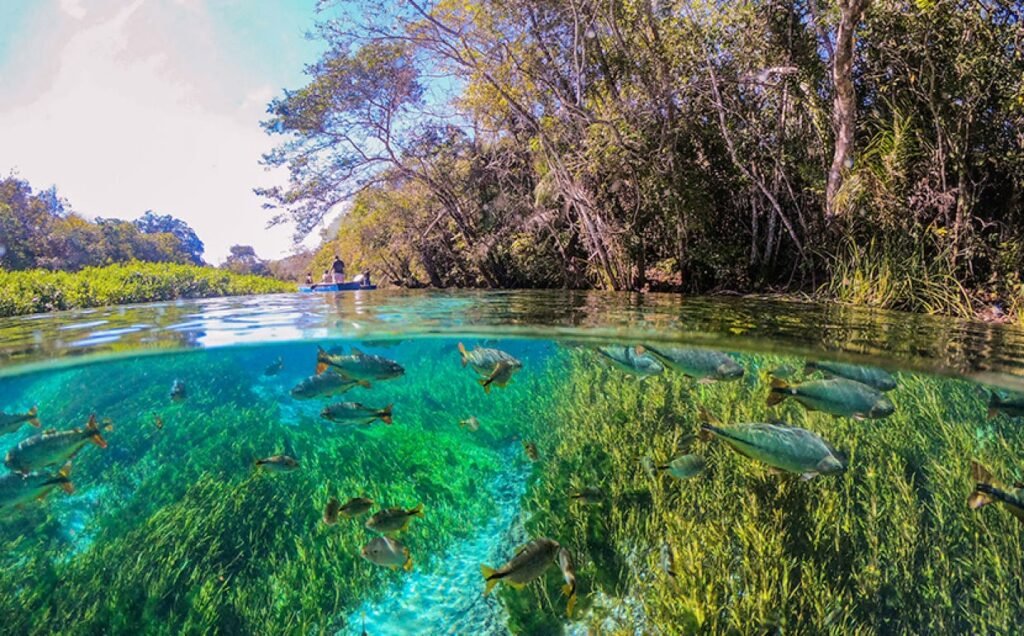
If someone told you that you could snorkel in water so transparent you’d feel like you’re floating in air, you’d probably think they’re exaggerating. Then you visit Bonito, and you realize they undersold it.
Nestled in Mato Grosso do Sul, Bonito is the epicenter of ecotourism done right, offering some of the most unique Brazil travel experiences you’ll find anywhere. The Rio da Prata and Rio Sucuri have visibility of up to 50 meters—yes, meters—making them some of the clearest rivers on the planet. As you drift downstream in your snorkel gear, schools of dourado fish swim alongside you, completely unbothered by your presence.
But Bonito’s magic extends beyond the rivers. The Gruta do Lago Azul (Blue Lake Cave) houses an underground lake of such intense blue that photographers struggle to capture its true color. Sunlight filters through the cave entrance at certain times, creating a light show that seems almost artificial in its perfection.
What really sets Bonito apart is its commitment to sustainable tourism. Visitor numbers are strictly controlled at each attraction, meaning you’ll never feel crowded. This is ecotourism at its finest you’re not just visiting nature, you’re helping preserve it.
Book your activities in advance through authorized agencies in town. Each site has daily visitor limits, and popular spots like Rio da Prata sell out days ahead during peak season (July and December-January). The best time to visit is during the dry season (April-October) when water visibility peaks.
Chapada Diamantina: Brazil’s Answer to the Grand Canyon
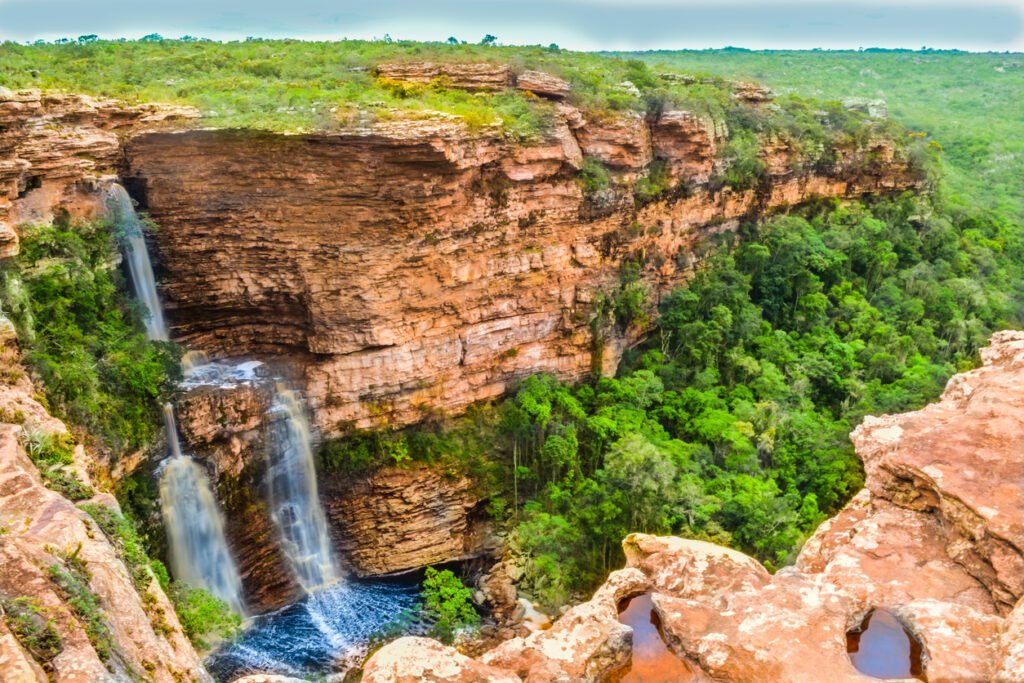
When I first hiked to the top of Morro do Pai Inácio and watched the sun set over the endless table mountains of Chapada Diamantina, I understood why this region captivates everyone who visits. This is Brazil’s adventure playground, and it’s criminally underrated on the international travel circuit.
Located in the heart of Bahia state, Chapada Diamantina National Park spans over 152,000 hectares of dramatic landscapes think towering plateaus, hidden waterfalls, and caves with underground rivers. The Cachoeira da Fumaça (Smoke Waterfall) plunges 340 meters, making it one of Brazil’s highest waterfalls. During dry season, the wind atomizes the water before it reaches the bottom, creating the “smoke” effect that gives it its name.
But here’s what makes this a perfect destination for those seeking secret destinations Brazil offers: you can hike for hours without seeing another soul. The town of Lençóis serves as your base camp, a charming former diamond mining town with colorful colonial buildings and welcoming pousadas (guesthouses).
The Poço Azul and Poço Encantado are underwater caves where sunlight beams penetrate the darkness at specific times of day, illuminating the crystal-clear water in shades of blue that don’t seem real. You can snorkel in these caves, floating above ancient rock formations while light dances around you.
Hire a local guide for multi-day treks they know the trails, the weather patterns, and the hidden spots that aren’t in any guidebook. I discovered my favorite swimming hole this way, a natural pool surrounded by orchids that my guide’s family had been visiting for generations.
Alter do Chão: The Caribbean of the Amazon
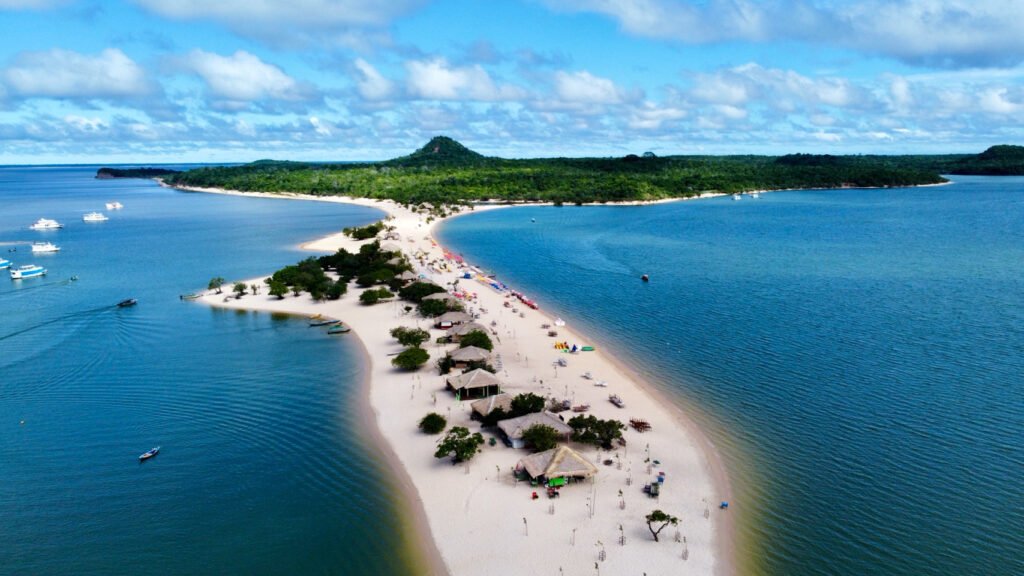
Ask any Brazilian about the most beautiful beach in Brazil, and many will skip the coast entirely and point you toward Alter do Chão. Yes, you read that right a beach in the Amazon.
This small village on the Tapajós River, about 30 kilometers from Santarém in Pará state, is where the Amazon reveals a side few tourists ever see. Instead of impenetrable jungle, you’ll find white sand beaches, clear blue waters, and an island (Ilha do Amor) that appears during dry season and becomes the focal point of village life.
What makes Alter do Chão extraordinary is the convergence of ecosystems. You can swim in the river in the morning, kayak through flooded forests in the afternoon, and watch pink river dolphins at sunset. The water is surprisingly clear for the Amazon, tinted green-blue by the Tapajós’s origins in the Brazilian Shield rather than the muddy Andean runoff that colors the main Amazon.
Locals here have perfected sustainable tourism without losing their authentic character. You’ll eat fresh fish caught that morning, sleep in simple but comfortable pousadas, and participate in community-led tours that directly benefit the residents.
The best time to visit is between August and December when water levels drop and the beaches appear. But shoulder seasons (July and January) offer a nice balance of beach time and higher water levels for exploring flooded forests.
This is truly an unbelievable trip in Brazil territory most international travelers have never heard of it, yet it regularly wins “best beach in Brazil” awards.
Jericoacoara: Where Time Slows Down
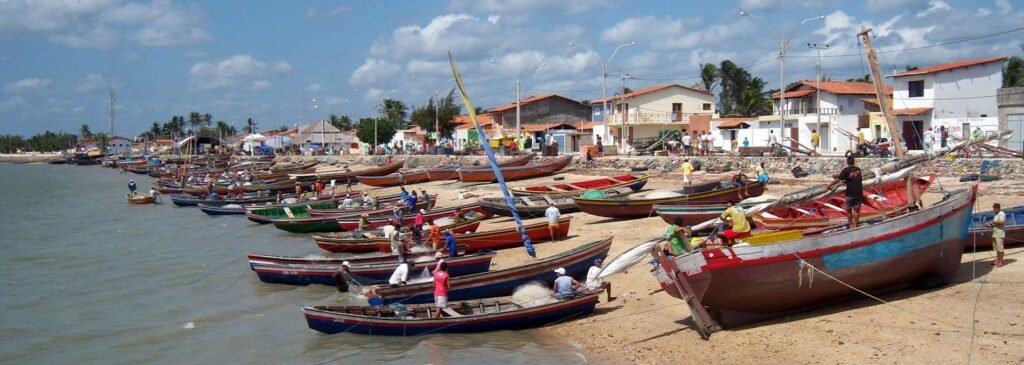
There’s something magical about a place so remote that cars are banned and the streets are made of sand. Jericoacoara—or simply “Jeri” as everyone calls it—is that place, and it might just steal your heart.
Tucked into the northwestern corner of Ceará state, Jeri was completely isolated until the 1980s. Even today, reaching it requires a journey through Jijoca de Jericoacoara and then a 4×4 ride across sand dunes and shallow lagoons. But this remoteness is precisely what has preserved its laid-back charm.
The village sits between massive dunes and the Atlantic Ocean, creating a playground for kitesurfers, sandboarders, and sunset watchers. The Pedra Furada (Pierced Rock), a natural stone arch on the beach, has become Jeri’s symbol, and watching the sun set through its opening is practically mandatory.
What I love most about Jeri is how it manages to be both developed and rustic. Yes, there are excellent restaurants and stylish pousadas, but donkeys still wander the streets, and locals gather every evening at the main dune to watch the sunset together a tradition they invite travelers to join.
Don’t miss the nearby lagoons Lagoa Azul and Lagoa do Paraíso are perfect for lazy afternoons spent floating in hammocks suspended in the water. (Yes, hammocks in the water. Trust me on this.)
The wind season (July-January) brings kitesurfers from around the world, while February-June offers calmer conditions for swimming and relaxation. Either way, you’re in for something special.
Ouro Preto: Colonial Charm Frozen in Time
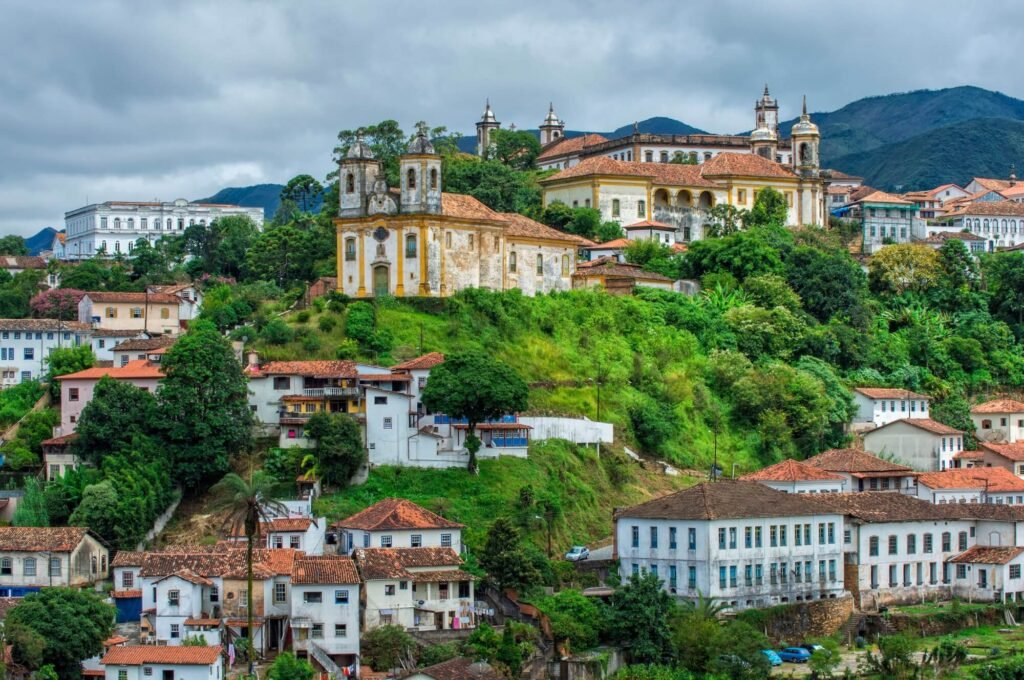
Not all hidden gems Brazil treasures are natural wonders. Ouro Preto, a UNESCO World Heritage Site in Minas Gerais, is living proof that Brazil’s cultural treasures rival its natural beauty.
This former gold mining town, whose name literally means “Black Gold,” transported me back to 18th-century colonial Brazil the moment I walked its steep cobblestone streets. Baroque churches covered in gold leaf dot the hillsides, their interiors adorned with works by Aleijadinho, Brazil’s most celebrated colonial artist.
What makes Ouro Preto special isn’t just its preserved architecture it’s how alive the town feels. University students bring youthful energy to ancient buildings, local artists display their work in colonial-era galleries, and traditional restaurants serve Minas Gerais cuisine that’s remained unchanged for generations.
Stay in a colonial mansion converted to a guesthouse, where you’ll sleep in rooms with original details but modern comfort. Wake up to church bells echoing through the valley, and spend your days getting lost in alleyways that reveal new treasures around every corner.
The surrounding region offers even more: nearby Mariana has equally stunning colonial architecture with fewer tourists, while the Inhotim Museum combines contemporary art with botanical gardens in one of the world’s most unique cultural experiences.
Visit between March and May or August and October to avoid both rainy season and peak tourist times. Weekdays are quieter than weekends, giving you more intimate encounters with this colonial jewel.
Planning Your Unbelievable Trip in Brazil: Practical Tips
Now that I’ve shared these secret destinations Brazil has been hiding in plain sight, let’s talk logistics. Planning an off-beaten-path Brazil adventure requires a bit more effort than booking a package to Rio, but the rewards are exponentially greater.
Transportation: Brazil is massive the fifth-largest country in the world. Internal flights are often necessary and relatively affordable if booked in advance. GOL and AZUL are the main domestic carriers. For reaching remote destinations like Lençóis Maranhenses or Jericoacoara, you’ll combine flights with buses and 4×4 transfers. Embrace this as part of the adventure.
Best Times to Visit: Brazil’s seasons are opposite to the Northern Hemisphere, and timing matters significantly for these destinations. Generally, April-September offers the best weather across most regions, but specific destinations have their optimal windows:
- Lençóis Maranhenses: June-September (when lagoons are fullest)
- Bonito: April-October (dry season for best visibility)
- Chapada Diamantina: April-October (dry season for hiking)
- Alter do Chão: August-December (beach season)
- Jericoacoara: Year-round (wind season July-January)
- Ouro Preto: Year-round (avoid heavy rains January-March)
Language: Portuguese is the official language, and English is less common in these off-beaten-path destinations. Download Google Translate’s Portuguese pack for offline use, and don’t be afraid to use gestures and smiles Brazilians are famously warm and patient with travelers.
Budget: These hidden gems are generally more affordable than Brazil’s famous tourist hotspots. Expect to pay $30-80 per night for good accommodations, $10-25 for excellent meals, and $30-80 for organized tours and activities. Your biggest expense will likely be internal flights.
Your Brazilian Adventure Awaits
Here’s what I wish someone had told me before my first trip to Brazil: the country’s real magic isn’t in the places everyone photographs it’s in the destinations that make you stop, look around, and think, “I can’t believe more people don’t know about this.”
From the surreal lagoons of Lençóis Maranhenses to the crystal rivers of Bonito, from the dramatic plateaus of Chapada Diamantina to the unexpected Amazon beaches of Alter do Chão, these hidden gems Brazil offers will redefine what you think a South American adventure can be. Add in the windswept dunes of Jericoacoara and the colonial splendor of Ouro Preto, and you have the ingredients for an unbelievable trip in Brazil that few travelers experience.
The Brazil I’ve shared with you today isn’t hiding it’s simply waiting for travelers curious enough to venture beyond the obvious choices. These destinations will welcome you with open arms, pristine landscapes, and authentic experiences that package tourism could never replicate.
So go ahead. Book that flight. Pack your sense of adventure. And prepare to discover a Brazil that will surprise, delight, and inspire you at every turn. Your unbelievable Brazilian journey is calling and trust me, you’ll never regret answering.
What are you waiting for? Start planning your unique Brazil travel adventure today, and get ready to create memories that will last a lifetime.