A 14-hour flight from London to Singapore. Eleven hours from New York to Johannesburg. Sixteen hours from Los Angeles to Melbourne. These are not abstract numbers — they’re significant chunks of your life, and how you spend them determines whether you arrive ready to experience a new place or ready to lie face-down in a hotel room for 24 hours recovering from the journey itself.
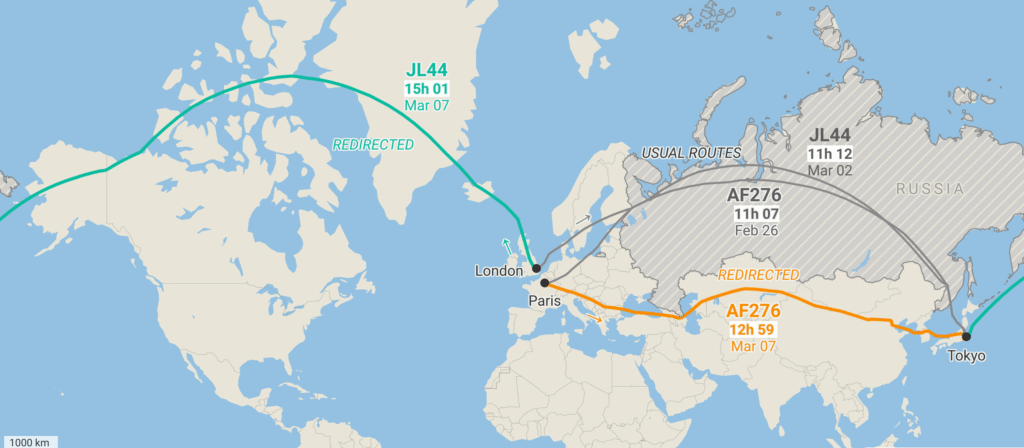
At TrotRadar, we’ve collectively logged enough long-haul hours to know the difference between the approaches that work and the ones that don’t. These long haul flight tips for travelers go beyond the obvious (drink water, bring a neck pillow) to the more strategically useful — the approach differences that genuinely separate travelers who arrive in good shape from those who stumble off the jetway looking like they’ve lost an argument with time.
TrotRadar Tip: How you arrive on a long-haul flight directly affects your first days in a destination. For everything you need to pack to make the journey manageable, read TrotRadar’s carry-on only packing guide — it covers the exact bag setup that makes long-haul travel work. And before booking, compare long-haul flight deals on our offers page for the best current fares.
48 Hours Before a Long-Haul Flight: Pre-Flight Tips
The choices you make in the two days before a long-haul flight have more impact on how you feel at the other end than almost anything you do on the plane itself.
Adjust your sleep timing. If you’re flying eastward (say, from Europe to East Asia or Australia), start going to bed 30–60 minutes earlier each night for two nights before departure. Westward flights (to the Americas from Europe) are generally easier to adjust to; stay up a little later than usual. These small pre-adjustments make the destination timezone slightly less brutal on arrival.
Hydrate aggressively the day before. Aircraft cabins maintain humidity levels of around 10–20% — significantly drier than most indoor environments and closer to a desert than your living room. Your body arrives at the flight already dehydrated from the airport experience (stress, walking, recycled terminal air). Starting well-hydrated gives you a meaningful buffer.
Avoid alcohol the night before. Unpopular advice but accurate — alcohol disrupts sleep architecture and increases dehydration, both of which compound badly with a long flight the following day.
Choose your seat deliberately. If you’re in economy, window seats offer a wall to lean against for sleeping and mean you’re not disturbed by seatmates needing the aisle. Aisle seats give you easier access to stand and move, which matters for flights over 10 hours. Avoid middle seats on any flight over 6 hours unless forced. Tools like SeatGuru allow you to check the specific seat map for your aircraft type.
How to Sleep on a Long-Haul Flight in Economy
Sleep on long-haul flights is the single biggest determinant of how you feel at destination. Getting even 4–5 hours of genuine sleep on a 12-hour flight transforms the arrival experience. Here’s the TrotRadar approach to maximizing that probability:
Match your sleep attempt to the destination night. If you’re landing in the morning local time, try to sleep for most of the flight. If landing in the afternoon, sleep for the first half and stay awake for the second. Aligning your on-board sleep with the destination’s night accelerates timezone adjustment.
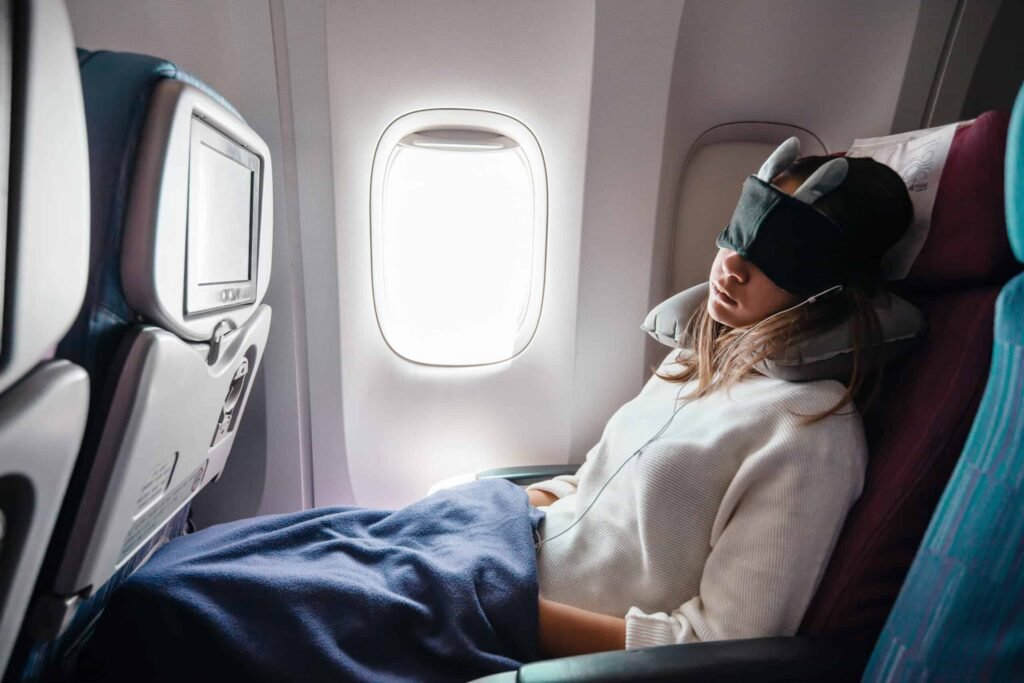
Use melatonin carefully. Low-dose melatonin (0.5–1 mg, not the 5–10 mg doses common in US formulations) taken 30–60 minutes before your intended sleep period on the flight can meaningfully help initiate sleep. Melatonin is a timing signal for the body, not a sedative — it works best when used to support a sleep attempt rather than force one. Consult your doctor if you have any concerns or take other medications.
The TrotRadar gear list that actually helps:
- A contoured memory foam neck pillow (not the U-shaped inflatable variety) — Trtl and Cabeau Evolution are well-reviewed options that compress small
- A sleep mask that fits without pressing on your eyelids — the 3D contoured style allows your eyes to move naturally and creates genuine darkness even in a lit cabin
- Noise-cancelling headphones — engine noise runs at a frequency that disrupts sleep even when you can’t consciously hear it. ANC headphones running white noise or gentle audio are more effective than passive earplugs
Long-Haul Flight Health Tips: DVT, Ear Pressure and Comfort
Deep vein thrombosis (DVT) risk is real on flights over 6 hours — and the risk increases with longer flights, limited movement, dehydration, and certain health conditions. The mitigations are simple and effective: stand up and walk the aisle every 1.5–2 hours, do seated calf raises and ankle circles regularly, and wear compression socks (properly fitted ones) from the moment you board.
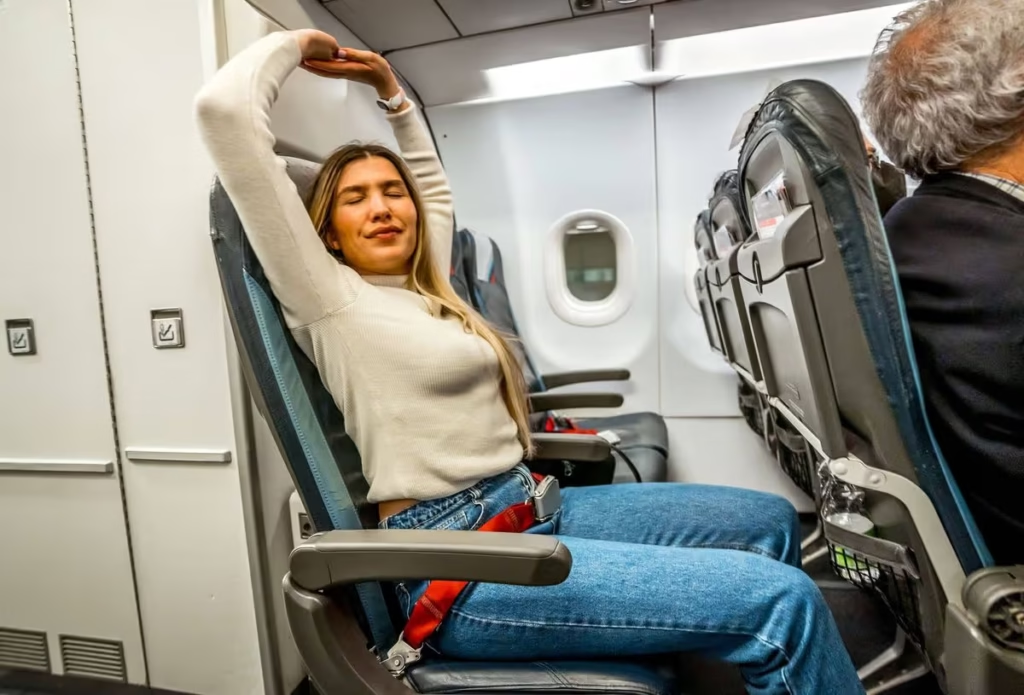
Compression socks reduce lower-leg swelling on long flights for virtually everyone, regardless of DVT risk. The difference in how your legs feel after an 11-hour flight in compression socks versus without them is notable enough that the TrotRadar team considers them non-negotiable.
Ear pressure on descent is manageable. The Valsalva maneuver (pinching your nose and gently blowing) equalizes pressure most of the time. If you frequently experience painful pressure, EarPlanes pressure-regulating earplugs worn for the last hour of descent slow the pressure change enough to prevent the worst discomfort.
Skin care. Cabin air desiccates your skin measurably over a long flight. A small tube of facial moisturizer applied mid-flight makes a real difference to how you look and feel on arrival. Lip balm and nasal saline spray also address the most uncomfortable effects of extremely low humidity.
Long-Haul Flight Packing List: What to Keep in Your Personal Item
Everything you need for the flight itself should be in your under-seat bag, not in the overhead bin. Getting up repeatedly to retrieve items disrupts everyone around you and breaks your own sleep.
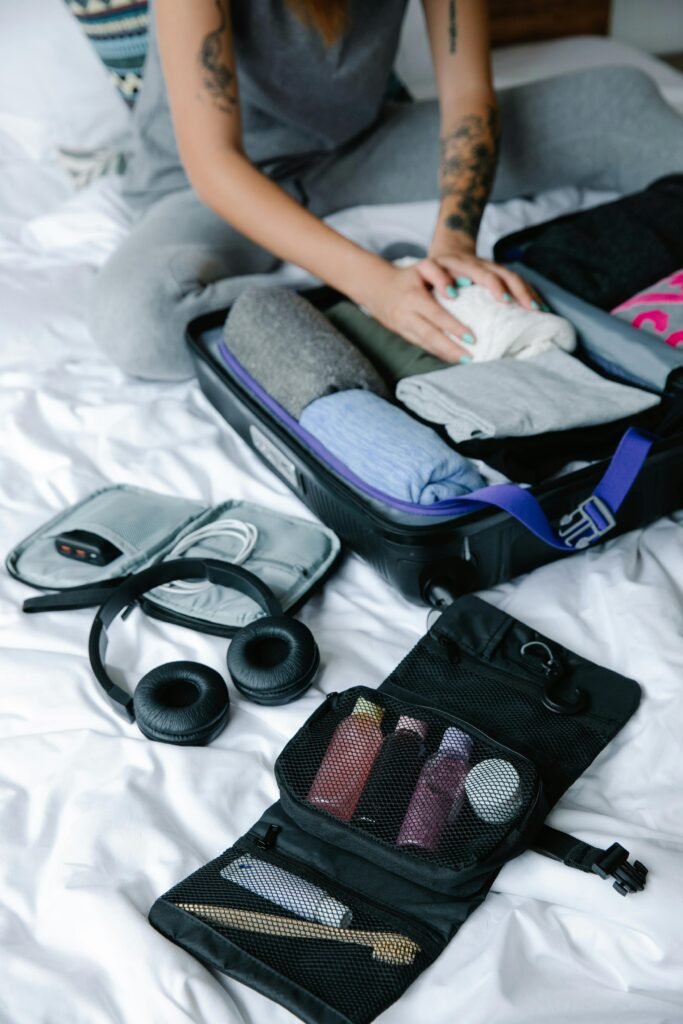
The TrotRadar non-negotiables:
- Noise-cancelling headphones or earbuds
- Eye mask and neck pillow
- Compression socks (put them on in the terminal, not on the plane)
- A full 1-liter water bottle, empty through security, filled at the terminal fountain
- A snack (granola bars, nuts, or dried fruit — something that keeps you from dependence on the airline meal timing)
- Small toiletries: moisturizer, lip balm, toothbrush/toothpaste, deodorant wipe
- A change of socks and underwear in a small zip bag — putting on fresh socks in the final 2 hours of a long flight is a disproportionately effective comfort reset
Entertainment: Download films, podcasts, and reading material before boarding — in-flight Wi-Fi is unreliable and expensive. For the full what-to-pack breakdown for your carry-on, TrotRadar’s carry-on only travel system guide covers exactly what fits and what to leave at home.
How to Recover From Jet Lag After a Long-Haul Flight
Jet lag is circadian disruption — your body clock is still on home time while the external world is running on destination time. It cannot be completely prevented on major timezone crossings, but it can be managed significantly with the right approach.
The most effective single rule: Stay awake until local bedtime on your first arrival day, regardless of how you feel. The temptation to take a 2-hour nap on arrival is strong and almost always counterproductive — it anchors your body clock to the wrong time and can extend jet lag by an extra day.
Get sunlight immediately on arrival. Light is the primary signal your body uses to set its internal clock. Morning sunlight exposure at destination accelerates adaptation more effectively than any supplement. Walk outside within an hour of reaching your accommodation, even for 20 minutes.
Strategic caffeine. Caffeine has a half-life of approximately 5–7 hours. On the first day at destination, use it purposefully — in the morning to extend your wakefulness, and then cut it off by early afternoon to avoid interfering with your first proper night’s sleep.
Melatonin timing at destination. Take 0.5–1 mg of melatonin approximately 30 minutes before your target bedtime at the destination for the first 2–3 nights. This helps reset the clock toward the new timezone more quickly.
The Upgrade Question: Is It Worth Trying?
Points and miles: If you’ve been accumulating frequent flyer miles without a redemption plan, long-haul flights are the highest-value redemption category. Business class across the Atlantic or Pacific on points costs roughly the same number of miles as multiple shorter domestic redemptions — and the experience difference is dramatically larger. TrotRadar’s guide to the best long-haul destinations for every budget covers how flight cost factors into total trip value.
Bid upgrades: Many airlines now offer pre-flight upgrade bid systems. These allow you to bid below the cash upgrade price for a business or premium economy seat. Minimum successful bids on some routes can be remarkably low — worth investigating for any long-haul booking.
Premium economy: If a full business class upgrade isn’t available or affordable, premium economy on any flight over 10 hours is worth pricing seriously. The extra recline, wider seat, and additional legroom meaningfully reduce fatigue on arrival. For flights over 12 hours, the cost-benefit math shifts significantly toward the upgrade.
The TrotRadar Final Boarding Thought
Long haul flight tips for travelers ultimately come down to one underlying principle: treat the flight as part of the trip to be managed strategically, not an ordeal to be endured. The travelers who arrive in best shape are the ones who made deliberate choices — about their seat, their sleep strategy, their hydration, their movement — rather than leaving everything to chance and airline defaults.
Pack the compression socks. Download the podcasts. Drink the water. Arrive ready — that’s the TrotRadar way.
Find Your Long-Haul Flight Deal
TrotRadar compares long-haul flight deals across all major carriers and routes — from economy to premium economy. Make the journey as good as the destination. Browse TrotRadar’s long-haul flight offers →