You know that feeling when you stumble upon a place so special, so unexpectedly magical, that you almost want to keep it to yourself? I’ve been chasing that feeling across America for years now, and I’m convinced our country’s greatest treasures aren’t always the ones with lines around the block or hashtags trending on Instagram. In this guide, I’m sharing the hidden gems USA rarely puts in its brochures.
Don’t get me wrong, I love the Grand Canyon and Times Square as much as the next person. But there’s something deeply satisfying about discovering a destination that doesn’t appear on every “Top 10” list, where locals outnumber tourists, and you can actually have an authentic moment without photobombing someone’s selfie stick. These hidden gems offer something the famous spots can’t: the chance to experience America as it’s actually lived, not just as it’s marketed.
I’ve spent the better part of a decade seeking out these off-the-beaten-path destinations, from desert ghost towns that became artist havens to coastal villages where time seems negotiable. What I’ve learned is that some of America’s most unforgettable experiences happen in places you’ve probably never heard of. So grab your curiosity and come along I’m about to share eight secret spots that transformed the way I think about American travel.
1- Marfa, Texas: Where the Desert Meets the Avant-Garde
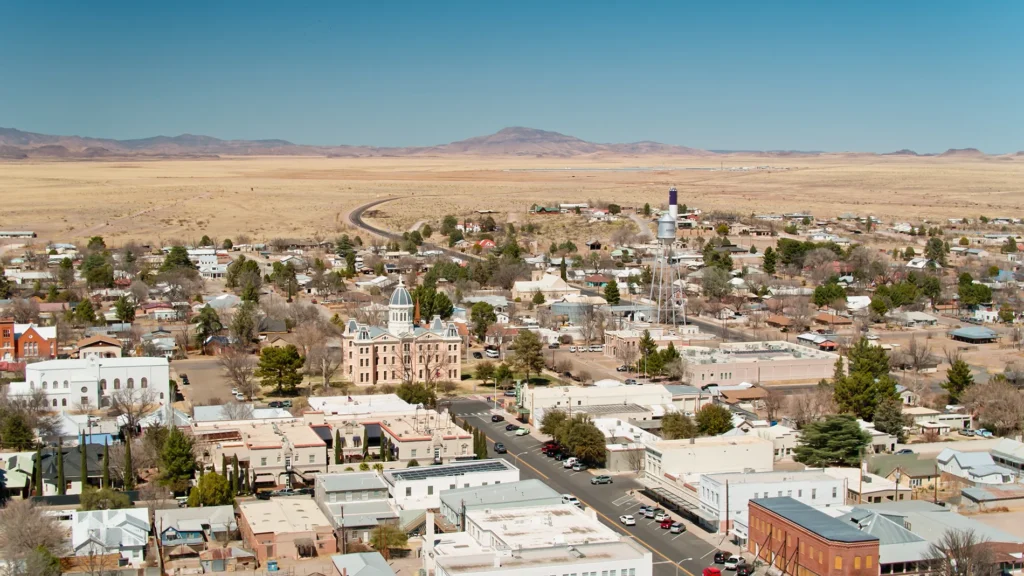
Picture this: You’re standing in the middle of the Chihuahuan Desert, surrounded by nothing but scrubland and sky for miles. Then you walk into a former military base and find yourself face-to-face with world-class contemporary art installations. Welcome to Marfa, population 1,700, where the weird and wonderful collide.
I first visited Marfa on a whim during a cross-country road trip, expecting to spend maybe an hour checking out the mysterious Marfa Lights. I ended up staying four days. This tiny West Texas town has somehow become one of the art world’s most important destinations, thanks largely to minimalist artist Donald Judd, who transformed old military buildings into stunning permanent art installations in the 1970s.
But Marfa isn’t just about art it’s about atmosphere. The light here has a quality I’ve never seen anywhere else, turning golden hour into something almost otherworldly. Spend your mornings exploring the Chinati Foundation’s massive concrete sculptures, grab lunch at a food truck serving surprisingly sophisticated tacos, then watch the sunset paint the desert in impossible shades of pink and orange. At night, drive out to the viewing platform and watch for the Marfa Lights, those mysterious dancing orbs that have puzzled observers since the 1880s.
The town has exactly the right mix of eccentric locals, visiting artists, and curious travelers. Stay at the vintage El Cosmico, where you can sleep in a restored trailer or a Sioux-style tipi, and you’ll understand why this remote desert outpost has captured so many hearts. Fair warning: Marfa doesn’t have chain restaurants or big-box stores, and that’s entirely the point.
2- The Apostle Islands, Wisconsin: Sea Caves and Solitude on Lake Superior
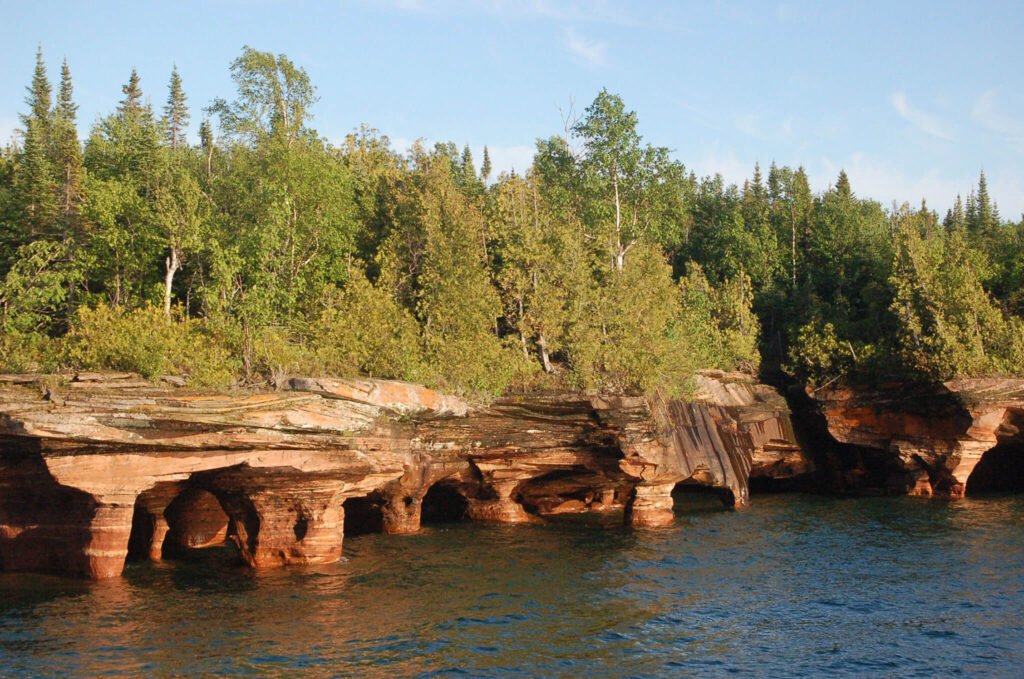
Most people don’t associate Wisconsin with sea caves and pristine archipelagos, which is precisely what makes the Apostle Islands so special. This collection of 21 islands scattered across Lake Superior’s southern shore offers one of the most unique outdoor experiences in the Midwest and it remains blissfully under the radar.
I’ll never forget kayaking into the sea caves on a June morning, paddling through passages carved by thousands of years of waves and ice. The sandstone walls towered above me, striped in rust and amber, with openings that framed Lake Superior like nature’s own picture windows. In winter, when the lake freezes solid, those same caves transform into ice cathedrals dripping with icicles that shimmer blue and turquoise in the sunlight.
The islands themselves are a hiker’s dream, crisscrossed with trails through old-growth forests where black bears occasionally make appearances. Visit Raspberry Island for its beautifully restored lighthouse, or catch a ranger talk about the islands’ fascinating history of logging, fishing, and quarrying. The beaches here rival anything you’d find on the ocean soft sand, clear water, and the kind of solitude that’s increasingly hard to find.
Base yourself in Bayfield, a charming lakeside town that’s managed to preserve its 19th-century character without becoming precious about it. The locals are genuinely friendly, not tourist-friendly, and they’ll point you toward the best berry farms and fish boils without making you feel like an outsider. Visit in early October for the Apple Festival, when the whole town celebrates harvest season with the kind of small-town authenticity that’s vanishing from much of America.
3- Bisbee, Arizona: A Copper Mining Town Reborn
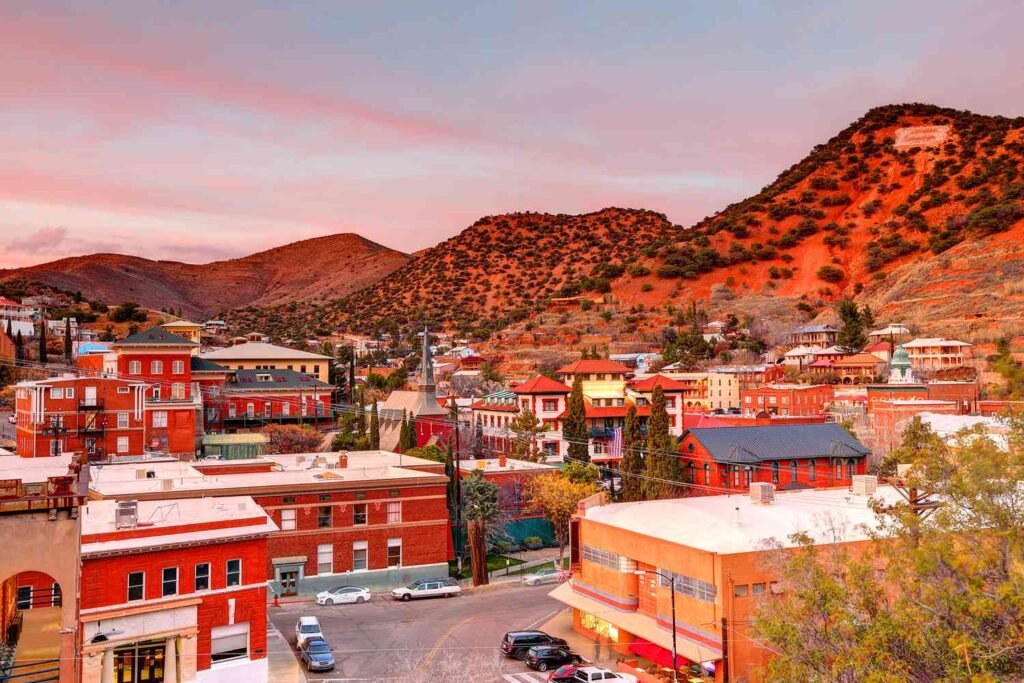
Tucked into the Mule Mountains of southern Arizona, Bisbee looks like it wandered in from a different century and decided to stay. This former copper boomtown, once home to over 20,000 miners, nearly became a ghost town in the 1970s when the mines closed. Instead, artists and free spirits discovered the Victorian houses selling for pennies and transformed Bisbee into one of the Southwest’s most eclectic communities.
Walking through Bisbee’s winding streets feels like exploring a living museum. Houses painted in wild colors cling to hillsides at improbable angles, connected by staircases that served as shortcuts for miners heading to work. I spent an entire afternoon just wandering up and down these steps, discovering tiny galleries, artisan studios, and cafes tucked into spaces that once housed saloons and boarding houses.
The Copper Queen Mine tour is absolutely essential you’ll descend into the mountain wearing a hard hat and headlamp, following the path of miners who extracted over eight billion pounds of copper from these tunnels. Your guide is likely a former miner, and their stories bring the hard reality of mining life into sharp focus. Above ground, explore the Lavender Pit, an enormous open-pit mine that’s been transformed into an unexpected landmark.
What really makes Bisbee special is its community. On any given weekend, you might stumble into an art walk, vintage market, or impromptu music session. The Bisbee 1000 Stair Climb happens every October, when hundreds of people race up and down the town’s staircases in a celebration that’s equal parts athletic event and block party. Stay at the historic Copper Queen Hotel, where friendly ghosts are part of the experience, and spend your evenings at Cafe Roka, where the Italian cuisine would impress even jaded city dwellers.
4- Great Sand Dunes National Park, Colorado: Desert Meets Mountains
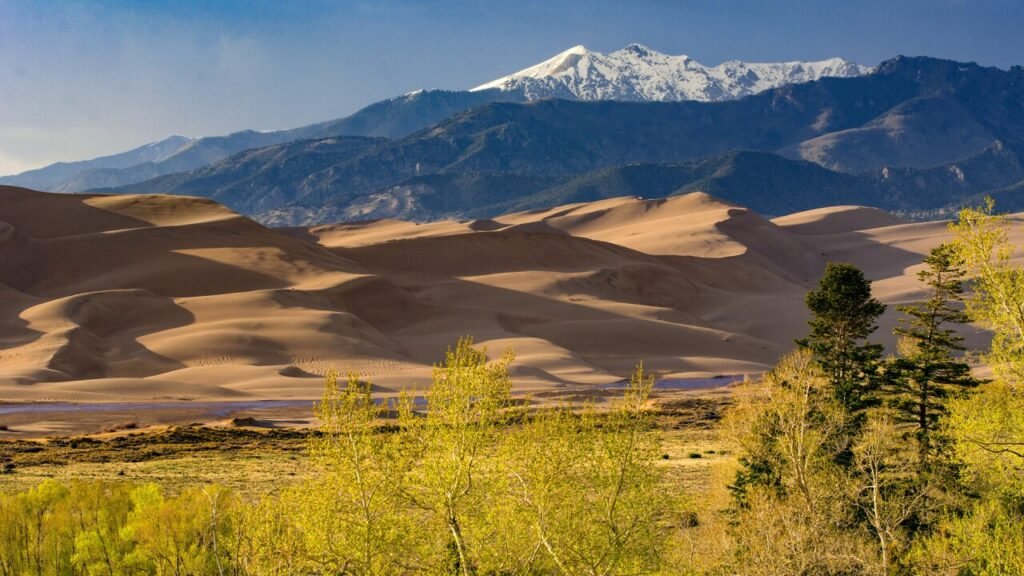
The first time someone told me about Great Sand Dunes, I thought they were confused. North America’s tallest sand dunes at the base of the Rocky Mountains? In Colorado? It sounded impossible, but reality is even more surreal than the description suggests.
Standing at the base of Star Dune, which rises 750 feet above the San Luis Valley floor, I felt like I’d been transported to the Sahara except for the snow-capped Sangre de Cristo peaks creating a backdrop that belongs in a fantasy novel. The dunes shift and reshape constantly, carved by winds that can gust up to 40 miles per hour, creating ridge lines so sharp they could cut paper.
The best way to experience the dunes is barefoot in early morning or late evening, when the sand won’t scorch your feet and the light turns everything golden. Climbing to the top of High Dune (not the tallest, but substantial at 650 feet) is harder than it looks sand gives way with every step, turning a straightforward hike into a serious workout. But reaching the summit and watching the wind create serpentine patterns across the sand is worth every breath.
What surprised me most was Medano Creek, which flows along the base of the dunes from late May through early July. This shallow, sandy-bottomed stream creates a beach atmosphere that’s deeply surreal given the setting. Kids build sandcastles while the massive dunes loom overhead, and something about the juxtaposition makes the whole scene feel like a beautiful fever dream.
Come in winter for a completely different experience sledding and sandboarding down the dunes against a snowy mountain backdrop is one of those experiences that recalibrates your sense of what’s possible in the natural world.
5- Paducah, Kentucky: A UNESCO Creative City on the Ohio River
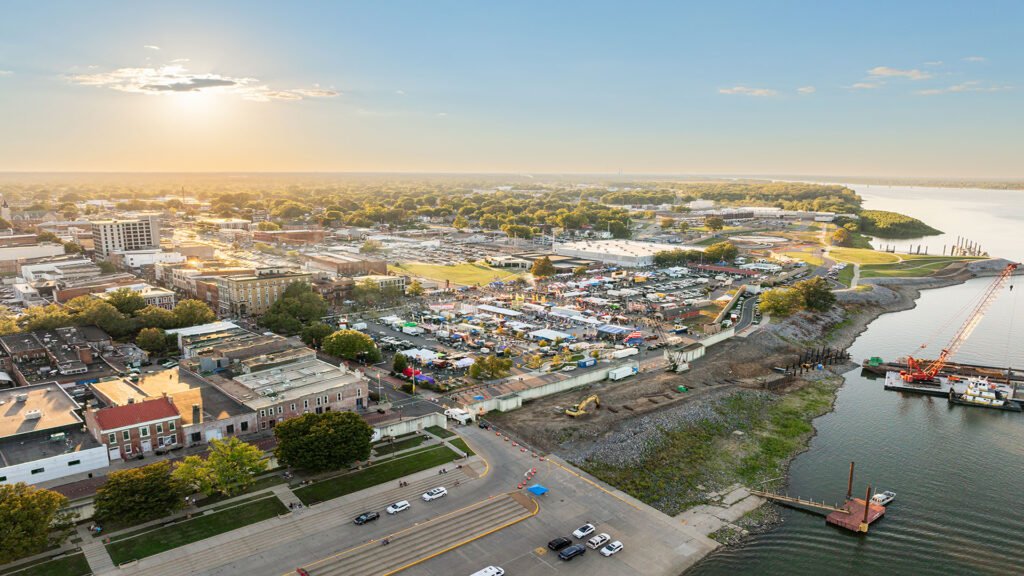
I’ll admit it, I drove past Paducah three times before I finally stopped, and I’ve been kicking myself ever since for waiting so long. This small city on the Ohio River has reinvented itself as one of America’s most vibrant arts communities, and it’s done so with a genuine, unpretentious spirit that makes larger “arts destinations” seem contrived by comparison.
Paducah’s renaissance began with the Artist Relocation Program in the early 2000s, which offered incentives for artists to move to the historic Lower Town district. The result is a neighborhood where nearly every house is occupied by working artists, painters, sculptors, quilters, glassblowers and many open their studios to visitors. Walking through Lower Town feels like being invited into the creative process itself.
The National Quilt Museum is worth the trip alone, displaying textile artworks so intricate and innovative they’ll change your entire understanding of what quilting can be. Even if you think you’re not interested in quilts, trust me on this one. I spent three hours there, mesmerized by pieces that looked more like paintings or photographs than anything sewn from fabric.
Beyond the arts, Paducah’s riverfront has been beautifully revitalized with murals depicting the city’s history, from its Native American heritage through its role in the Civil War and beyond. Grab lunch at Kirchhoff’s Bakery, a local institution since 1873, where the pastries are still made using recipes from the founding family. Stay for First Friday Art Walk, when galleries stay open late and the streets fill with locals and visitors mingling over wine and conversation.
What I love most about Paducah is its lack of pretension. This isn’t art as an exclusive club it’s art as community, as daily life, as something accessible and welcoming to everyone.
6- Mendocino, California: Victorian Charm Meets Rugged Coastline
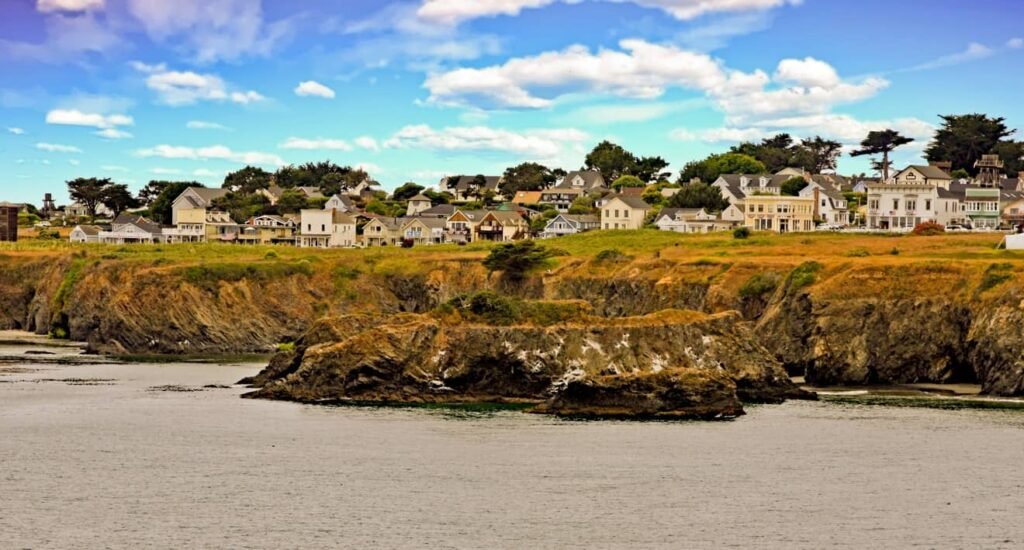
Perched on dramatic bluffs overlooking the Pacific, Mendocino looks like a New England fishing village that somehow ended up on the California coast. This tiny town, with its weathered water towers and Victorian cottages, has been protected from development by strict preservation laws, creating a time-capsule quality that’s increasingly rare along Highway 1.
I first visited during a winter storm, when massive waves crashed against the headlands and the whole town felt like it was bracing against the elements. The raw power of the ocean here is humbling you can watch from the safety of the bluffs as swells travel thousands of miles across the Pacific before exploding against the rocky shore. On calmer days, explore the tidepools at Portuguese Beach or walk the Mendocino Headlands Trail, where you might spot migrating gray whales spouting offshore.
The town itself is walkable end-to-end in about fifteen minutes, but you could spend days exploring its galleries, bookshops, and cafes. Many of the historic buildings house working artists, and the quality of craftsmanship—from hand-blown glass to fine woodworking—reflects a community that values skill and creativity over commerce.
Don’t miss the Kelley House Museum, where volunteers share stories of Mendocino’s logging past and its transformation into an artists’ colony. For dinner, skip the tourist spots and head to Café Beaujolais, where the French-inspired California cuisine has been exceptional since 1977, or grab fish and chips from the Mendocino Café and eat on the bluffs while the sun sets over the Pacific.
Stay in one of the historic bed and breakfasts many occupy original Victorian homes and offer an authenticity that chain hotels can’t match. The Stanford Inn is particularly special, with its organic gardens and meditation pool overlooking the ocean.
7- The Palouse, Washington: America’s Most Underrated Landscape
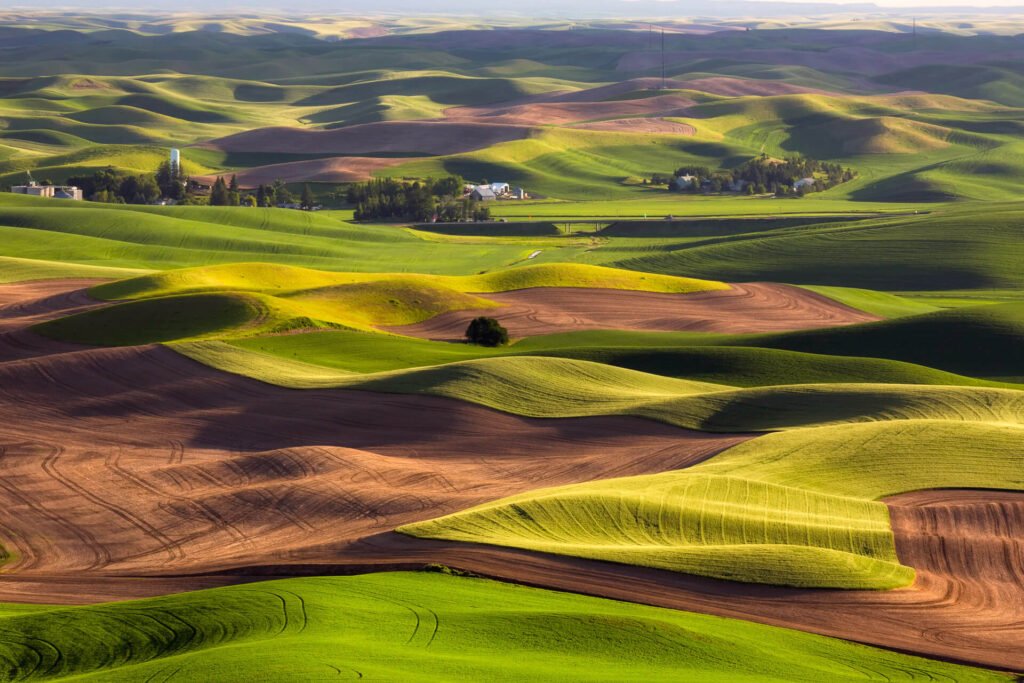
If you’ve never heard of the Palouse, you’re not alone this agricultural region in southeastern Washington rarely appears on tourist itineraries. But for photographers and anyone who appreciates landscapes that look like abstract paintings come to life, the Palouse is nothing short of extraordinary.
The region’s rolling hills, covered in wheat, barley, and lentils, create patterns and color combinations that change throughout the year. In late spring, the green wheat fields ripple like an ocean frozen mid-wave. By harvest time in late summer, the hills stripe gold, amber, and bronze under enormous skies. The topography is so undulating that farmers use specialized equipment to work the dramatic slopes.
I visited in June and spent three days driving backroads, getting lost on purpose, and stopping every few miles to photograph another impossible vista. Steptoe Butte, a quartzite island rising from the surrounding fields, offers 360-degree views that stretch to three mountain ranges on clear days. I climbed to the summit at sunrise and watched the shadows retreat across the hills as the light turned everything golden.
The Palouse isn’t about activities or attractions in the traditional sense, it’s about slowing down, appreciating subtlety, and reconnecting with the quiet beauty of working landscapes. Visit the small towns like Colfax and Palouse, where coffee shops and grain elevators sit side by side, and locals are genuinely surprised to see visitors.
Pullman makes a good base, especially during the academic year when Washington State University brings energy to the region. But the real magic happens on those lonely backroads, where you might drive for thirty minutes without seeing another car, surrounded by hills that look hand-sculpted by an artist with infinite patience.
8- Crystal River, Florida: Swim with Manatees in Clear Springs
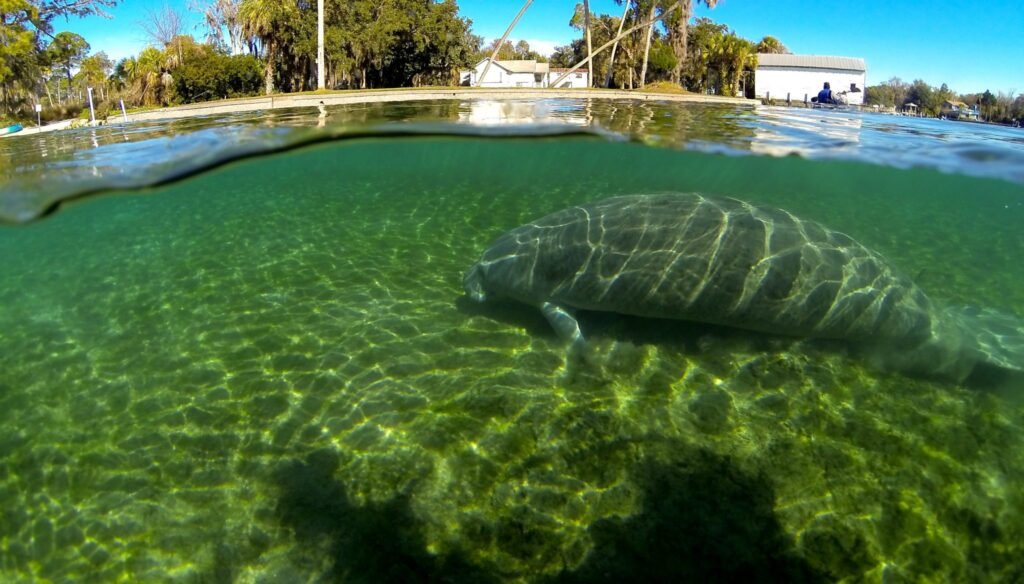
While most of Florida’s visitors flock to theme parks or Miami beaches, Crystal River offers something infinitely more memorable, the chance to swim alongside wild manatees in their natural habitat. This small Gulf Coast town sits among a network of pristine springs where hundreds of manatees gather during winter months, seeking the constant 72-degree water temperatures.
I’ll be honest I was skeptical about this experience, worried it would feel touristy or exploitative. Instead, I found it deeply moving. Following strict guidelines to protect these gentle giants, I floated quietly in Kings Bay as a massive manatee swam beneath me, curious and unafraid. These animals, some weighing over 1,200 pounds, move with surprising grace, and being in the water with them feels like a privilege, not a performance.
The springs themselves are worth visiting even without manatees. Three Sisters Springs, accessible through a boardwalk and underwater viewing area, offers crystal-clear water so transparent you can see every grain of sand twenty feet down. In summer, when manatees disperse to warmer coastal waters, the springs become perfect for swimming, kayaking, and paddleboarding.
Crystal River has managed to balance tourism with conservation better than many places. The local tour operators genuinely care about protecting manatees, and the rules—no touching, no chasing, no cornering—are strictly enforced. Book your experience with a reputable operator like River Ventures or Crystal Lodge Dive Center, and go midweek if possible to avoid crowds.
Beyond manatees, the town itself maintains an old Florida charm that’s vanishing elsewhere. Waterfront restaurants serve stone crabs and grouper fresh from the Gulf, and the pace of life moves at speeds measured by tides rather than traffic lights.
Your Own Hidden Gems in the USA Await
These eight destinations represent just a fraction of the incredible places hiding in plain sight across America. What they share isn’t just their lack of crowds or their absence from typical tourist itineraries it’s their authenticity. These are places where communities have maintained their character, where the landscape still takes your breath away, and where travel feels like discovery rather than checking boxes on a list.
The beauty of seeking out hidden gems is that everyone’s definition is different. Your perfect off-the-beaten-path destination might be a desert ghost town, a mountain hot spring, an island accessible only by ferry, or a small city that’s mastered the art of livability. The common thread is curiosity, the willingness to take the backroad, stay an extra day, talk to locals, and see where the journey leads.
So next time you’re planning a trip, resist the urge to default to the famous spots. Instead, look at the map and find the places you’ve never heard of. Read the blogs written by people who live there, not just pass through. Choose the destinations that make you wonder “what’s that like?” rather than the ones you’ve already seen a thousand times on social media.
Because here’s what I’ve learned after years of chasing hidden gems: The best travel stories don’t come from seeing what everyone else has seen. They come from finding those places that surprise you, challenge your assumptions, and remind you that the world—even the familiar parts—is far stranger and more wonderful than you imagined.
Now get out there and find your own secret America. It’s waiting.